

The gaming sector has developed multiple ways to play video games which go beyond traditional computers and console systems. The introduction of portable gaming devices together with gaming laptops represents one of the most thrilling advancements in portable gaming technology. Which option better fits your requirements? We will analyze the advantages and disadvantages which each device offers.
1. Portability
Handheld gaming devices succeed because they combine multiple features which make them easy to transport. The Nintendo Switch and Steam Deck operate as portable gaming systems which enable players to enjoy their games from any location. These portable gaming devices function as small, lightweight devices which include built-in screens and controllers. You can use them as portable items which you can easily carry during your daily activities or when you are at home.
The Alienware m18 R2 and Asus ROG Zephyrus function as portable systems which provide gamers less mobility than other devices. The devices weigh between 2-4 kg and their thinnest variants need multiple areas to operate comfortably. Gaming laptops provide users with portable gaming capabilities although their design makes them more suitable for home play and fixed-location gaming rather than for continuous mobile gaming.
Dell Alienware M18 R2 Gaming Laptop, NVIDIA RTX 4090 16GB GDDR6, Intel i9 14900HX, 18″ 2.5K QHD+ (2560×1600) 165Hz 3ms, 64 GB DDR5, 2 TB SSD, WiFi 7, Bluetooth 5.4, Windows 11 Pro:
2. Performance
Gaming laptops offer higher performance capabilities than their competitors. The system can operate AAA titles at maximum graphical settings because it contains high-end processors which include Intel i7/i9 and AMD Ryzen 7/9 and strong Nvidia RTX series graphics processing units. The Alienware m18 R2 and MSI Titan GT77 laptops provide users with desktop computer capabilities in a space-saving, portable design.
Handheld gaming devices face operational restrictions which stem from their physical dimensions and their energy usage requirements. The Steam Deck has improved its performance capabilities but still falls short of delivering the same computational strength which gaming laptops provide. Handheld gaming devices use either custom AMD APU chips or entry-level processors which provide sufficient power to run basic games and mobile-optimized games.
3. Display and Controls
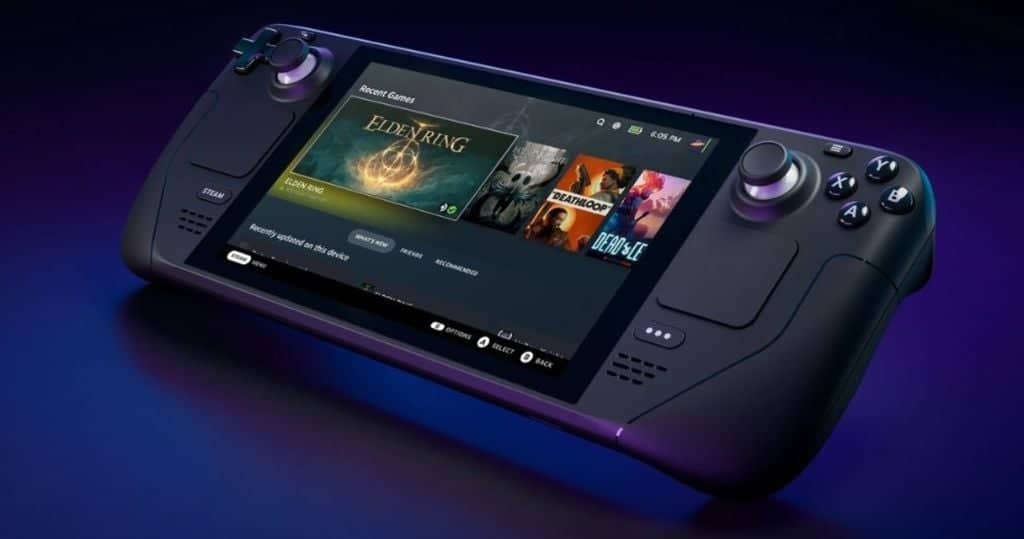
Gaming laptops display content through their 15 to 17 inch screen range while handheld gaming devices provide users with 7 to 8 inch screen size options. Handheld gaming devices deliver players an engaging experience through their smaller displays which maintain high refresh rates and touchscreen functionality whereas gaming laptops show content on their bigger screens which have higher display resolutions. The Steam Deck includes a 7-inch 1280 x 800 px LCD touchscreen which provides an ideal display for playing mobile games.
The controls on both devices are tailored to their size and intended use. Gaming laptops depend on either a keyboard and mouse or an external controller which provides superior accuracy during competitive gaming. Handheld devices provide built-in gamepads which enable users to experience console gaming although they lack the precision of keyboard and mouse controls yet they work well for casual gaming and most popular video games.
Valve Steam Deck – 256gb Console (UK) (PC):
4. Battery Life
Handheld gaming devices show superior battery performance when compared to laptops. The Nintendo Switch performs from 4 to 6 hours on a single charge which depends on the selected game, while users get approximately 3 to 5 hours of gameplay from the Steam Deck. The battery life provides enough power to support brief gaming sessions and medium-length gaming sessions which users can enjoy while traveling.
Gaming laptops encounter difficulties with their battery performance. Gaming systems require high power usage which restricts most gaming laptops to 1 to 3 hours of gameplay when users play demanding graphical content. The Asus Zephyrus G14 laptop provides better battery life than most products but it still falls short of the battery performance found in portable gaming systems.
ASUS ROG Zephyrus G14 AI Gaming Laptop 14.0″ 120Hz Display (AMD Ryzen 9 270, GeForce RTX 5070 8GB, 32GB LPDDR5X, 1TB PCIe SSD, RGB Keyboard, WiFi 7, Webcam, Win 11 Pro) w/DKZ USB Port Expander:
5. Price and Value
Handheld gaming devices provide better budget options than gaming laptops according to their pricing structure. The Nintendo Switch starts at around $300, while the Steam Deck ranges from $400-600.
The prices for these products fall below the gaming laptop range which starts at $1000 and goes up to $3000 depending on the chosen configuration. Handheld gaming devices provide casual gamers with a more affordable solution, even though laptops deliver superior multitasking, performance, and versatility.
6. Conclusion
Handheld devices and gaming laptops provide separate benefits which match different gaming requirements. Handheld gaming devices such as the Steam Deck and Nintendo Switch become suitable options when your main requirements include portability and convenience and low-cost solutions.
A gaming laptop such as the ROG Zephyrus G14 or Alienware m18 R2 will meet your requirements when you need maximum performance together with top-level gaming capabilities and multiple task handling.
The choice between a handheld gaming device and a gaming laptop depends on your personal preference for portable gaming equipment compared to powerful gaming systems which fit your budget.


Tech Reviewer & Product Analyst
Định Bia has spent over 10 years testing consumer electronics with a focus on smart technology. He work as a product advisor at Biareview where he helped customers find the right devices for their needs. He personally tests every product featured on this site using a consistent evaluation framework covering quality, durability, and value. All reviews are based on experience, not influenced by the manufacturer.