Often after first getting a watch, most people leave everything as is and begin running. This can cause issues with your workouts because manufacturer defaults, especially when it comes to your heart rate, often aren’t ideal for your body.
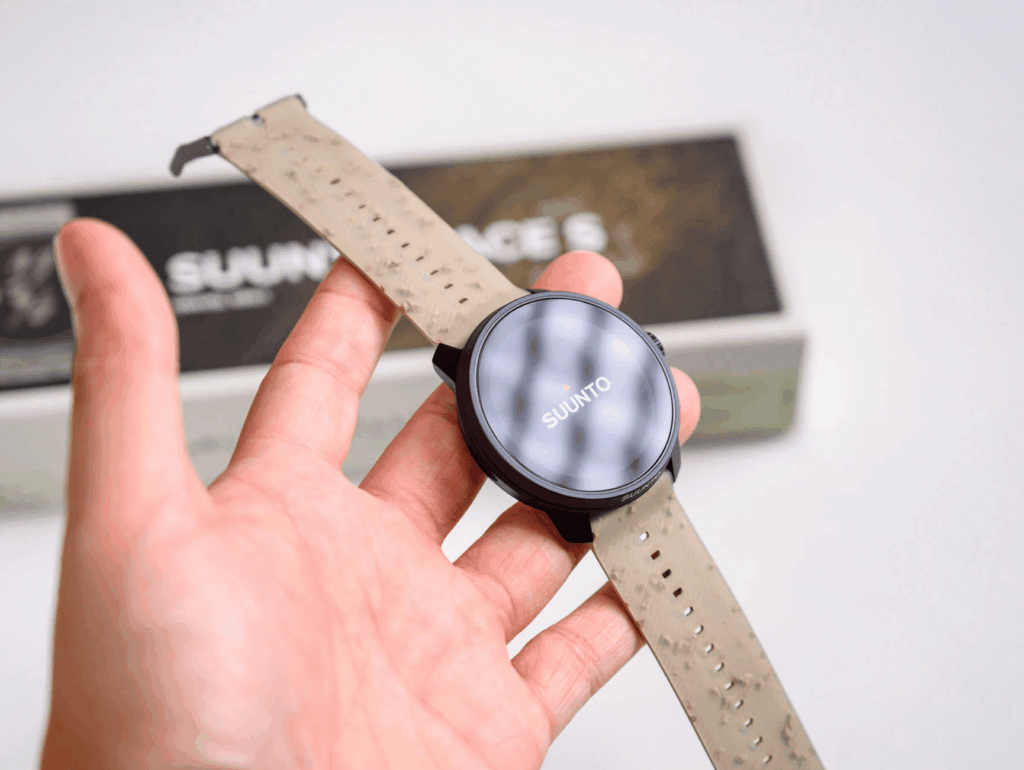
When I first set up my Suunto Race S, it set my Zone 2 bottom range at 139 and top range at 149 before starting my Zone 3. Many default settings in smartwatches and workout apps set ranges high. I used my defaults, and the smartwatches said my Zone 2 run went well, and congratulated me on it, but while running in that zone I was gasping for air, and my legs were cramping. This made me realize the smartwatch defaults, as I suspected, were not correct.
Working out your Zones using AI
To get heart rate zones that are closer to the actual physiology of a 30 year old, I used the maximum heart rate formula of HR Max = 220 – Age to divide up the 5 standard heart rate zones.
- Zone 1: <114 bpm (60% HR Max), light walking or warm up where breathing is normal.
- Zone 2: 115 – 133 bpm (60-70% HR Max), this is the optimal zone for fat burn, while running you are able to carry a full conversation.
- Zone 3: 134 – 152 bpm (70-80% HR Max), quickened breathing where you can only speak short sentences and fat burning switches to sugar burning.
- Zone 4: 153 – 171 bpm (80-90% HR Max), lactic acid starts to build up and your legs feel heavy and dead. This is an uncomfortable zone you can’t maintain.
- Zone 5: 172 – 190 bpm (90-100% HR Max), this zone is a flat out all out effort.
According to the AI, a 30-year old’s Zone 2 max is 133 bpm. Anything above this, say 134 bpm, is Zone 3.
What is the fascination with Zone 2?
Most beginners to the running world think this way: “The faster I go and the more I run, the more fat I’ll lose. I will run in Zone 3 and 4 since my heart rate will be high.” This is the wrong way to think about weight loss. If you lose weight too quickly, you lose all the hard-earned muscle as well.
I had the same thinking, but after doing some research, it depends on what you want to achieve and what your body can handle.
In the 115-133 bpm heart rate range (Zone 2), your cardiovascular system is operating at a pace that is sufficient for circulating enough oxygen to all the cells. In the Zone 2 range, the body will tap into your fat cells to oxidize and break down excess visceral fat, as well as the stubborn belly fat.
When your heart rate hits 134+ bpm and you move into Zone 3, your oxygen supply is insufficient to support this faster pace. Your body is forced to start burning glycogen stored in your liver and muscles, and fat consumption becomes a very small portion of your total energy consumption.
In the case that you are burning through all of your glycogen in Zone 3 and have already limited the amount of food that you eat to create a caloric deficit, your body enters a stressed state that releases a hormone called cortisol. Cortisol triggers a process that begins the degradation of muscle tissue to compensate for the emergency energy demand. This is also called muscle catabolism. Ultimately, you may lose some weight and become thinner, but you will not have achieved your goals of losing body fat to reveal more definition.
What’s more, there’s an increased cost of recovery. In running the higher intensity zones, like Zones 3-5, there’s more cumulative recovery demand. My recovery numbers are usually low for my running, but this has little to do with volume, as I struggle to even return to my previous baseline for training, which can be an entire 24 hour recovery period, even for runs that weren’t very long at all.
There’s a reason this intensity range is called the ‘Gray Zone.’ At this pace, your recovery is slow, but your cardiovascular performance doesn’t see a large enough adaptation in comparison to Zone 4 and 5 workouts.
Another downside of this intensity is the uncontrollable urge to eat. After running in Zone 3, you are burning your sugar stores and are essentially releasing hunger-inducing hormones in your body. Being a runner that is busy and eating after 9 pm makes it easy for me to completely fall off my diet.
The consequences of getting it wrong.
Everything is a first time, right? I learned the watch and my body had differing thoughts after just a few runs. I checked, and they had every right to because my heart rate zones had default values. That had to change, and fast. Fortunately, most modern sports watches are built to have editable HR zones, but it all comes down to the model.
With my Suunto I can either set them via the mobile app or directly on the watch. I learned that you also have to turn Intervals OFF on the watch. Otherwise, you’ll end up doing two concurrent interval sessions. It’s the same for Runna, and structured runs you have programmed in Suunto’s app.
The first issue I see is related to syncing run activities from your watch to Strava or Runna. Each platform (including your watch itself) has its own way of calculating the various training zones (typically, intensity zones). Unless you take the time to re-configure all your training zones for each app, a workout that Suunto deems as a perfect Zone 2 intensity, Strava may end up deeming it a Zone 3.
As someone just starting out, it’s best not to focus on pace and try to replicate how advanced runners train. The adaptations that occur within the cardiovascular system (e.g., thickening of the heart, expansion of the capillary system) take time. Trying to train beyond your level while running in the conditions typical to Ho Chi Minh City, such as humidity and heat, will rapidly increase the heart rate into Zone 4 even when running slowly for three or four minutes.
The most effective strategy to get results in the long run is a plan with a focus on zone 2 training. I will incorporate run-walk intervals with a focus on staying within the desired zone. First, warm up with three to five minutes of brisk walking to slowly get the heart rate up into zone 1, then go for short run segments of one to two minutes at a rapid pace. Once the heart rate starts to hit 130 to 133, walk at a pace of my choice for one to two minutes to return the heart rate to 115 to 120 and start again.
As long as the workout is about health and losing fat, there is no need for racing to the finish line of who is most physically broken. Keep the ego at the door, as running slowly to get to zone 2 heart rate is the most efficient method of building a strong aerobic foundation.
SUUNTO Race S GPS Sports Watch, 1.32″ AMOLED Touchscreen w/Crown Gravel Gray & SUUNTO 22 ATH6 Silicone Strap Powder Gray S+M: Check Availability on Amazon
SUUNTO Race S GPS Sports Watch, 1.32″ AMOLED Touchscreen w/Crown All Black & SUUNTO 22 ATH6 Silicone Strap Powder Gray S+M: Check Availability on Amazon
SUUNTO Race S GPS Sports Watch, 1.32″ AMOLED Touchscreen w/Crown Powder Pink & SUUNTO 22 ATH6 Silicone Strap Powder Gray S+M: Check Availability on Amazon
SUUNTO Race S GPS Sports Watch, 1.32″ AMOLED Touchscreen w/Crown Powder Gray & SUUNTO 22 ATH8 Silicone Strap Wave Blue S+M: Check Availability on Amazon
SUUNTO Race S GPS Sports Watch, 1.32″ AMOLED Touchscreen w/Crown Powder Orange & SUUNTO 22 ATH6 Silicone Strap Powder Gray S+M: Check Availability on Amazon
SUUNTO Race S GPS Sports Watch, 1.32″ AMOLED Touchscreen w/Crown Powder Blue & SUUNTO 22 ATH8 Silicone Strap Wave Blue S+M: Check Availability on Amazon
Related Posts