

The table below summarizes the 10 most important parameters you need to know before reading the detailed review.
| Specification | Details |
| Display | 6.1-inch OLED, 2532 × 1170 pixels, 460 ppi, 60Hz |
| Chip | Apple A15 Bionic (5nm), 5-core GPU |
| RAM / Storage | 6GB RAM / 128GB, 256GB, 512GB |
| Rear Camera | 12MP f/1.5 (main) + 12MP f/2.4 ultra-wide (120°) |
| Front Camera | 12MP f/1.9, Autofocus |
| Battery | 3,279mAh, 20W wired charging, MagSafe 15W, Qi wireless 7.5W |
| Water / Dust Resistance | IP68, up to 6 meters for 30 minutes |
| Operating System | iOS 16 (upgradable to iOS 26.4) |
| Connectivity | 5G Sub-6GHz, Wi-Fi 6, Bluetooth 5.3, Lightning port, NFC |
| Dimensions / Weight | 146.7 x 71.5 x 7.8mm / 172g (6.07 oz) |
The first question which people tend to ask after they learn about the fundamental setup of the system is to inquire about the actual enhancements which the iPhone 14 brings when compared to its predecessor the iPhone 13.
The existing enhancements to the iPhone 13 system show whether a user should proceed with their update to the new system.
The following list shows all major differences between the iPhone 13 and its successor which users should consider before they make their decision to upgrade their current device.
The GPU upgrades from its previous 4-core design to its new 5-core design. The system shows 18 percent improved graphics performance which users will see most clearly while they play high-demand games and render videos through their devices.
The front camera now includes autofocus which represents a new feature for all iPhone models. The aperture has also increased from f/2.2 to f/1.9. The iPhone 13 shows major improvements in selfie quality through its FaceTime feature which enables users to take pictures in low-light environments.
The Photonic Engine system replaces the previous imaging processor through its new image processing technology. The system uses RAW image data to create images that maintain superior quality because of the advanced processing methods which convert original data into final products. The result shows that night photography now achieves 49 percent better results when compared to previous technology.
The new Action Mode system provides a complete solution for video stabilization. The system uses a 10 percent frame rate reduction to handle camera shakes which occur when users perform active shooting without using a gimbal system.
The RAM capacity increased from 4GB to 6GB. The most important enhancement improves everyday use because it decreases background application reloading while users can run multiple tasks without interruptions to their work.
The sixth feature consists of Crash Detection and emergency satellite SOS. Crash Detection uses automatic systems to identify strong impacts and contact emergency services when users do not respond to their situation.
The two generations maintain identical design elements because their exterior design remains unchanged, their display continues to operate at 60Hz, and their connectors maintain Lightning compatibility. The upgrade from iPhone 13 to newer models does not provide enough value to make spending extra money worthwhile. The more sensible choice involves waiting until used iPhone 15 or 16 devices become cheaper in the future.
Apple iPhone 14, 128GB, Midnight – Unlocked (Renewed):
Apple iPhone 14, 128GB, Blue – Unlocked (Renewed):
Apple iPhone 14, 256GB, Starlight – Unlocked (Renewed):
Apple iPhone 14, 512GB, Yellow – Unlocked (Renewed):
Apple iPhone 14, 256GB, PRODUCT Red – Unlocked (Renewed):
Design & Color: What is the hand holding experience?
Design Language & Materials
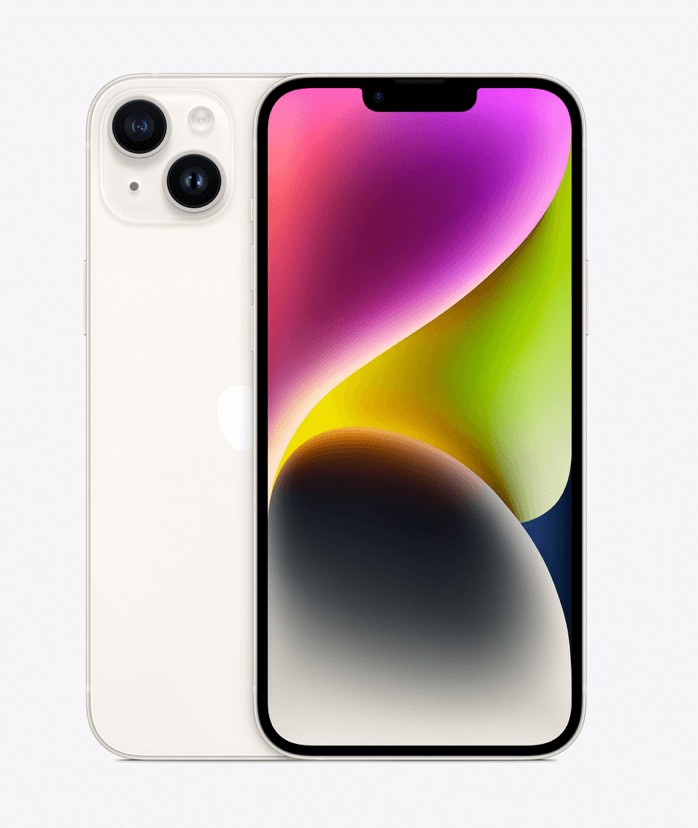
The iPhone 14 uses Series 7000 aerospace-grade aluminum production The iPhone 14 uses a dual-texture matte glass back The iPhone 14 uses a Ceramic Shield front. The Ceramic Shield material consists of nano-crystal glass which provides better impact protection than standard phone glass and it remains intact when subjected to flat surface drops.
The common misconception about the standard iPhone 14 Dynamic Island feature needs clarification because many people believe it exists. The device maintains its traditional notch design which has appeared in earlier models. The iPhone 14 Pro and 14 Pro Max The main reason users select the iPhone 14 Pro model according to their financial capabilities. The matte glass back material shows less fingerprint accumulation compared to glossy glass back material while it maintains its original appearance for an extended period. The object provides a stable grip because it has solid weight.
The Evaluation of Practical Hands-on Experience focuses on which equipment type: Compact or Bulky equipment.
The iPhone 14 weighs 172 grams and its dimensions are 146.7 x 71.5 x 7.8mm which makes it easier to operate with one hand than most competing Android devices that belong to its category. The device provides accessibility for users who prefer to operate their devices with one hand and for users who want to avoid using large phablet devices. The standard iPhone 14 design provides users with a lighter and more portable device compared to the iPhone 14 Plus which weighs 202 grams and has a 6.7-inch display. The device weighs almost the same as the Samsung Galaxy S22 which weighs 168 grams because its dimensions are smaller.
The iPhone 14 display provides users with beautiful visual content but it contains one major limitation. The actual display quality of the system shows the following results. The iPhone 14 displays a 6.1-inch OLED screen which meets the following technical specifications. Color accuracy meets professional calibration standards which enable designers to display basic graphic design work through Delta E below 1.
True Tone technology automatically modifies color temperature based on surrounding light conditions to help users reduce eye strain when they work in dim environments or bright outdoor settings.
The display maintains visual clarity because it reaches peak brightness of 1200 nits which enables users to see content clearly during direct outdoor sunlight exposure.
The P3 Wide Color system provides a broader color range which enables users to display colors that appear sharper and more vibrant in their photos and videos.
The iPhone 14 Pro and higher models provide users with access to this feature which remains unavailable in all other devices.
The primary disadvantage of the system exists because it operates at 60Hz which creates an actual effect on user experience.
The iPhone 14 shows its most significant performance drop in comparison to Android devices at similar price points during the year 2026 because it operates at 60Hz. The Android market has already provided 120Hz screens to budget devices between $300 and $400 for two to three years, while Apple restricts 120Hz (ProMotion) feature access to its Pro models.
The impact of your usage patterns determines its full extent. The scrolling experience on social media and web pages shows less fluidity than 120Hz screens. The mobile games Arena of Valor and PUBG Mobile require 60fps performance because it meets most current game requirements. The 60Hz refresh rate does not create problems for watching movies and online videos because the content operates at 24fps.
Your experience with 120Hz screens will determine your ability to perceive the difference. The first day of using your new iPhone 14 will show you the changes which exist between your current 120Hz Android phone and the new device. The A15 Bionic chip maintains its competitiveness with the A15 Bionic chip which Apple first introduced as a 5nm processor in 2021. Its Antutu v10 score achieves approximately 1.28 million points.
| Test | iPhone 14 (A15) | Android Reference |
| Antutu v10 | ~1.28 million | Snapdragon 8 Gen 1: ~1.29 |
| Geekbench 6 Single-core | ~2.310 | Snapdragon 8 Gen 1: ~1.650 |
| Geekbench 6 Multi-core | ~5.520 | Snapdragon 8 Gen 1: ~4.050 |
The A15 processor maintains its high performance level through three years because Apple develops both its hardware and operating system through its exclusive approach to system design. iOS requires less RAM than Android needs for its operations to run smoothly without interruption. Apple will continue to support iOS on the A15 chip until 2027-2028 because the device will receive both security patches and new functionality during the upcoming years.
6GB RAM: How is multitasking in practice?
The iPhone 14 showcases a major upgrade because it offers 6GB RAM which exceeds the 4GB RAM of its predecessor the iPhone 13. The device shows excellent performance when handling these real-world challenges:
The user can open 15 to 20 applications at once without experiencing any need to reload the programs.
The user experiences no performance issues while using 10 Chrome tabs together with Spotify Instagram and Camera.
Lightroom Mobile and CapCut enable users to process and render 4K video content without any performance delays.
Important note: 6GB RAM on iOS cannot be compared linearly with 6GB RAM on Android. The efficient memory management system of iOS enables users to experience better performance than what their device specifications indicate.
Gaming & Temperature
| Game | Settings | Real-world Performance |
| Arena of Valor | Ultra, 60fps | Stable, no frame drops |
| PUBG Mobile | HD + HDR | Smooth at 40fps, no lag |
| Genshin Impact | Medium | Stable 60fps for 30 minutes |
The phone reaches a temperature between 38 to 40 degrees Celsius after 30 minutes of nonstop gaming. The phone felt slightly warm, but not uncomfortably so. The iPhone 14 did not use thermal throttling which limits device functionality through automatic performance reduction during heat incidents while some Android devices from the same market used this feature.
iPhone 14 Camera: Real-world Photo & Video Shooting
The camera is a major reason many people choose iPhones over similarly priced Android phones. The iPhone 14 allows users to capture images but also presents specific restrictions. Below is a real-world review of each camera.
12MP f/1.5 Main Camera: What is Photonic Engine?
Photonic Engine refers to Apple’s latest technology for image processing which operates as its new image processing system. The system uses raw (RAW) light data as its processing base while it uses image compression as its base processing method. The new image processing system creates images with better detail preservation because it captures more details in shadow areas and between light and dark regions.
The iPhone 14 has a larger aperture size because its f/1.5 aperture exceeds the f/1.6 aperture size of the iPhone 13. A larger aperture enables the sensor to obtain additional light within the same period needed for exposure. Apple claims this adjustment produces 49% improvement in nighttime photography for the current model compared to the previous model.
Real-world results:
Daytime: The system produces images with clear details and authentic colors which do not reach the high saturation levels that some Android devices show. The HDR system effectively manages scenes which have backlighting.
The system enters Night Mode at nighttime which lowers background noise to a substantial degree. The iPhone 14 produces superior night photos when compared to the iPhone 13 under identical environmental conditions.
Deep Fusion System activates at indoor twilight medium brightness level which enables it to create extensive detail on surfaces and objects through its automatic system.
The 12MP Ultra-Wide Angle Camera: Which requirements does it fulfill?
The iPhone 14 ultrawide camera with 120° field of view which operates at approximately 13mm focal length allows users to do the following:
Capture extensive outdoor scenery and building designs and indoor room layouts
Capture large groups in confined spaces
Capture wide street and tourist area views
Apple’s automatic distortion correction manages curved lines at the edges of the frame more effectively than typical ultrawide cameras found in Android devices with matching price range. The system contains two essential restrictions which require complete recognition. The first restriction states that the ultrawide camera does not have Macro Mode which exists exclusively on the iPhone 14 Pro. The standard iPhone 14 device does not provide users with a solution for taking close-up pictures of tiny objects. The main camera produces better night shots than the system. The first ultrawide camera produces more nighttime noise while its details become more uncertain at nighttime. The iPhone 14 ultrawide camera shares a typical weakness which exists in almost all ultrawide cameras currently available in the market.
The 12MP Autofocus Front Camera provides the most stealthy enhancement to the system. The front camera of the iPhone 14 delivers its most significant improvement over the iPhone 13 because few people recognize this fact. The front camera now features its first autofocus system which marks a historical milestone for iPhone devices. Previous generations only used fixed focus. The iPhone 14 front camera uses its aperture of f/1.9 to produce better low-light performance than its predecessor which had an aperture of f/2.2.
The practical effects you’ll notice immediately:
You will receive better results for selfies which display improved clarity from any distance.
Video call participants will see better results because movement between them and the camera does not impact their appearance.
Autofocus technology performs better at identifying subjects which leads to improved portrait mode selfies with background blur.
The users who experience both devices in actual environments prefer the iPhone 14 because it performs better than the iPhone 13 which looks similar to its predecessor.
Video Recording: Action Mode & Cinematic Mode
The iPhone 14 allows users to record through these available recording modes:
The main and front cameras can record 4K video at 24fps 30fps and 60fps.
Users can record 1080p video at 120fps which delivers slow motion playback at four times normal speed.
Users can record 1080p video at 240fps which delivers slow motion playback at eight times normal speed.
The iPhone 14 introduces Action Mode as its first-ever function. The system uses automatic frame crop to stabilize footage by cutting 10 percent from each border which allows it to track movement in real-time. The result is that videos shot while running, cycling, or riding a motorcycle are as smooth as if using a handheld gimbal. The system requires no external equipment and it eliminates the need for post-production work.
Cinematic Mode 4K@30fps simulates the rack focus technique used in filmmaking, which enables automatic and manual focus switching between different subjects. The Photos app includes a special feature that permits users to modify focus points after they have finished recording. The video output delivers Dolby Vision HDR support which works with premium television sets and display devices.
The iPhone 14 lacks a telephoto camera system which causes this restriction. The device offers no optical zoom capabilities because its 0. The 12MP sensor offers 2x zoom which results in digital cropping that decreases quality when printed in large formats. The iPhone 14 Pro provides better performance for users who require 3x optical zoom.
How long does the iPhone 14 battery last throughout an entire day?
People want to know how the iPhone 14 battery performs after two to three years of usage. We need to examine battery performance before we reach our main discussion point.
The battery test shows which user can operate their device throughout an entire day.
The 3,279mAh battery provides inferior performance to most Android smartphones in the same price category which typically have batteries between 4,500 and 5,000mAh. Android operating systems consume power less efficiently than iOS which makes direct system capacity comparisons impossible between the two platforms.
The test results show different performance outcomes for distinct user groups who use the service. The battery maintains its power for 1.5 days when light users make calls and send texts and browse the web without using social media. The actual battery life for average users who use social media and take photos and listen to background music lasts between 9 to 10 hours which provides enough power for a workday. The users who engage in heavy usage activities such as gaming and 4K video recording and multiple app operations need to recharge their devices when the sun sets. Apple states that their devices can display videos continuously for 20 hours. The theoretical measurement demonstrates how iOS achieves efficient power consumption through its optimization process.
Does Android offer faster or slower charging speeds than its fast and slow charging options?
| Charging Method | Time to 50% | Full Charge Time |
| 20W Wired (USB-C PD) | ~30 minutes | ~1 hour 20 minutes |
| MagSafe 15W | ~45 minutes | ~2 hours |
| Qi Wireless 7.5W | ~60 minutes | ~2 hours 30 minutes |
When you purchase the iPhone 14, you need to understand that the product package excludes a charger, which requires you to acquire a separate 20W USB-C PD charger for maximum charging performance. The iPhone 14 charges at a speed that supports typical daily activities, but it does not match the charging performance of Android phones that cost the same and offer higher charging capabilities. Android devices provide users who need extremely fast charging, while the iPhone 14 meets all essential requirements for users who use Apple products.
5 groups of people who should buy an iPhone 14:
People currently using an iPhone X, XS, or iPhone 11. The most valuable upgrade available at present. The A15 chip delivers 40-50% better performance than the A13 chip, while it doubles the RAM capacity and introduces autofocus to the front camera for the first time. You will feel the difference clearly from day one.
People entering the Apple ecosystem for the first time, with a budget of $300-460. The best entry point into the Apple ecosystem through a used iPhone 14 exists at this price range because the device offers strong performance and numerous features while receiving iOS updates from Apple for an additional two to three years.
The product suits users who require a small phone that they can operate with a single hand. The product design, which features a weight of 172g and a 6.1-inch display size, enables ease of use by users with smaller hand sizes. The iPhone 14 stands as the most compact choice which exists in the current premium market for users who dislike large smartphones such as the iPhone 14 Plus or 6.5 – 6.7 inch Android phablets.
The iPhone 14 ProMotion feature is unnecessary for web browsing and movie watching and regular photo taking because you do not play demanding games which require 120Hz display. Parents who want secure systems which receive updates for long periods should use the iPhone 14 because it features an A15 Bionic chip and will receive iOS updates until 2027-2028.
5 groups of people who shouldn’t buy an iPhone 14:
People using an iPhone 13 should avoid upgrading to another phone because both devices have insufficient differences to justify the 120-200 dollar price increase. The two devices maintain identical designs which include identical screens and identical Lightning ports. The upcoming iPhone 15 and iPhone 16 will provide better value when their prices decrease during the upcoming months. People who need a 120Hz display and a 3x telephoto camera and Macro Mode should use these three features which exist only on the iPhone14 Pro. If these requirements constitute fundamental needs use your budget to purchase either a used iPhone 14 Pro or a premium mid-range Android device which costs between 100 and 150 dollars.
Users who require charging speeds which exceed 65W must have fast charging capabilities. The iPhone 14 charging speed of 20W creates a significant disadvantage compared to other devices. All three brands of OPPO and Xiaomi and Samsung provide complete battery charging within 30 to 45 minutes. The fast charging needs of your daily activities make Android the better choice for you.
The iPhone 14 uses Lightning, which Apple removed completely from the iPhone 15, for users who require USB-C to connect accessories or achieve high-speed data transmission. Users who need USB-C for MacBook or computer or modern accessory connections should choose either an older iPhone 15 or an Android device that supports USB-C 3.2.
The iOS platform maintains stricter control over interface design and direct application installation from non-official sources than Android permits to its users. Android provides better support for users who need to operate third-party APKs and customize their widgets and launchers.
Comparing iPhone 14 with alternatives
iPhone 13 vs iPhone 14 vs iPhone 15
| Criteria | iPhone 13 | iPhone 14 | iPhone 15 |
| Chip | A15 Bionic (4 nhân GPU) | A15 Bionic (5 nhân GPU) | A16 Bionic |
| RAM | 4GB | 6GB | 6GB |
| Front Camera | 12MP f/2.2, no Autofocus | 12MP f/1.9, Autofocus | 12MP f/1.9, Autofocus |
| Dynamic Island | No | No | Yes |
| Port | Lightning | Lightning | USB-C |
| Display Refresh Rate | 60Hz | 60Hz | 60Hz |
| When to Choose | Budget under $300, basic use | Best value balance ($300–$460) | Need USB-C, Dynamic Island |
The iPhone 14 represents the most equal position among three generations which exist in 2026. The device offers better RAM and front camera specifications than the iPhone 13 but the price difference between the two devices remains too small to affect its worth. The iPhone 14 stands as the best option when your budget ranges from $350 to $460 between the three available alternatives.
iPhone 14 vs. Samsung Galaxy A55
People often use this comparison to evaluate the two operating systems which exist in the $380 to $460 price range. The Samsung Galaxy A55 offers better scrolling performance through its 120Hz screen which enables smoother movements and its 50MP main camera provides higher resolution images and its 25W wired charging speed exceeds the iPhone 14’s 20W charging speed together with its USB-C port which offers users better convenience and its storage capacity costs less than competitors’ products.
The iPhone 14 outperforms the Galaxy A55 because it uses the A15 Bionic chip which delivers greater power than the Exynos 1480 chip and The A15 Bionic chip delivers superior processing power Exynos 1480 chip because it uses dedicated Secure Enclave chip for hardware protection and The 5-6 years of updates provided by Apple iOS operating system exceed The 4 years of updates provided by Samsung. The Photonic Engine delivers superior image and video processing capabilities for The system.
The Galaxy A55 serves as a suitable option for users who prefer to keep using their existing Android system because it provides necessary functionality. The iPhone 14 serves as the superior value choice at this price point for customers who wish to join the Apple ecosystem and need a secure device that offers advanced image and video processing capabilities.
The iPhone 14 review delivers complete assessment of the device through its examination of design performance camera battery life and pricing information. Readers who complete the review can find answers to their questions in the following section which provides brief responses to common inquiries.
Frequently Asked Questions about iPhone 14
Question Yes/No
Will the iPhone 14 still receive iOS updates?
Yes. The iPhone 14 will continue to receive iOS 18 updates until the year 2026. Apple provides software support for six years after the release of each product which means the iPhone 14 will receive updates until at least iOS 19 which will come out between 2026 and 2027.
Is the iPhone 14 waterproof?
Yes. The IP68 rating allows the device to withstand water at a depth of 6 meters (approximately 20 feet) for up to 30 minutes. Important note: Apple’s warranty does not cover water damage, even if the device meets the IP68 standard.
Does the iPhone 14 have 5G?
Yes. The device supports 5G Sub-6GHz, compatible with the 5G network infrastructure currently being deployed in Vietnam.
Question Definition
What is Photonic Engine and is it really different?
Photonic Engine is Apple’s name for its new image processing process: instead of processing images after compression, the system intervenes directly with raw (RAW) light data before compression.
The actual result is that night photos retain more detail, shadows have less noise, and colors are more accurate in low-light conditions. This isn’t marketing; the difference is clearly observable when comparing night photos from the iPhone 14 and iPhone 13 under the same conditions.
How does Crash Detection on the iPhone 14 work?
The device uses a high-speed accelerometer (up to 256g) combined with a collision recognition algorithm to detect car accidents. When a strong collision is detected, the device automatically displays a warning and a 20-second countdown. If the user doesn’t respond, the device automatically calls emergency services (112 in Vietnam) and sends the GPS location to pre-set emergency contacts.
The iPhone 14 best meets the needs of three groups which include students who want to enter the Apple ecosystem for the first time with a reasonable budget and office workers who require high data security with extended software support and individuals who take selfies and make video calls and require stable front-facing camera performance.
What iPhone 14 versions are there?
The iPhone 14 comes in four versions: Standard 6.1-inch (this review focuses on this version), Plus 6.7-inch (the device costs around $100 more because of its bigger display and its bigger 4,323mAh battery), Pro 6.1-inch (Dynamic Island, 120Hz ProMotion display, 3x telephoto camera, A16 Bionic chip), and Pro Max 6.7-inch (all Pro features, largest screen).
Comparison Question
iPhone 14 or iPhone 14 Pro: Is it worth spending an extra $100-150?
The Pro version becomes necessary when users require Dynamic Island and 120Hz ProMotion display and 3x optical zoom telephoto camera and Macro mode. The purchase fails to provide value when your essential activities include making phone calls and sending text messages and using the internet and taking standard photographs and watching films. Most users in the latter group won’t take full advantage of that price difference.
New or used (99% condition): Which is a better deal?
The best value option exists as a used phone when it reaches 99% condition from a trustworthy store. A phone will perform like a new device after battery replacement which costs between $100 and $150 because the savings from buying a new phone cover this expense.
iPhone 14 or Samsung Galaxy A55 (2026): Which should you choose?
iPhone 14 or Samsung Galaxy A55 (2026): Which one should you choose? Choose the Galaxy A55 if you prioritize a 120Hz screen, fast charging, and staying within the Android ecosystem. The iPhone 14 provides users with access to the Apple ecosystem while its processor delivers much better performance and it will receive software updates for an extended time.
Durability & Lifespan: How long does an iPhone 14 last?
This question is especially important for those buying a used phone. The iPhone 14 needs evaluation after three years of usage to determine its actual current state.
Physical Durability After 3 Years of Actual Use
The user feedback shows which components sustain their operational status after actual usage.
- Ceramic Shield Front: Less prone to scratches than regular glass. Most phones used for 2-3 years without a screen protector still have no deep scratches unless directly exposed to sharp objects.
- 7000 Series Aluminum Frame: The corners of this material become easily scratched and dented when it falls onto a hard surface. This is the most vulnerable part. The frame requires protection through a protective case which should be applied from the first day of use.
- Matte glass back: The matte glass back material demonstrates better fingerprint and scratch resistance when compared to a glossy glass back. The matte back maintains its aesthetic appeal after 3 years better than models which use glossy glass.
- IP68 water resistance: The internal water-resistant gasket degrades over time and after each disassembly and repair. The IP68 standard appears in the specifications but users should not submerge their 2-3 year old phones in water.
The Battery needs replacement after 2-3 years because it has reached its end of life.
The Li-ion battery on the iPhone 14 will lose about 85-88% of its capacity after about 500 full charge cycles which equals 1.5-2 years of normal use.
The user needs to navigate to Settings>Battery>Battery & Charging Health to perform a quick check. The displayed number shows the remaining battery capacity in comparison to a brand new battery. Apple recommends replacing the battery when this number drops below 80%.
Facts to know when buying a used phone:
- A phone used for 2 years usually has around 87-90% battery capacity if the previous owner charged it correctly.
- A phone used for 3 years may have 80-85%, depending on the previous user’s charging habits.
- If the battery is below 85%, you should negotiate a further price reduction to cover the cost of a battery replacement.
The iPhone 14 serves as the most balanced choice among Apple’s products which fall between 300 and 460 US dollars during 2026. The A15 Bionic chip delivers sufficient processing power for all practical applications. The front-facing autofocus camera delivers improved performance compared to its predecessor. The iOS operating system will receive Apple support for a minimum duration of two to three additional years.
The three main strengths of the product include A15 chip performance which matches Android phones in the $460-$570 price range and a 12MP front-facing camera with autofocus which represents the best option in Apple’s sub-$500 market and the longest software support duration which applies to all current iPhone models 13 14 and 15.
The first problem which users must accept deals with the 60Hz display that performs worse than similar-priced Android phones. The second problem exists because the Lightning port today lacks acceptance as a universal standard since USB-C became the standard starting with iPhone 15 and newer models.
The product becomes valuable to users who own iPhone X/XS/11 devices and want to explore the Apple ecosystem or need a small yet robust phone that costs between $340 and $460. The product becomes unsuitable for users who currently own an iPhone 13 and need a 120Hz display and want fast charging capabilities that exceed 65W.


Tech Reviewer & Product Analyst
Định Bia has spent over 10 years testing consumer electronics with a focus on smart technology. He work as a product advisor at Biareview where he helped customers find the right devices for their needs. He personally tests every product featured on this site using a consistent evaluation framework covering quality, durability, and value. All reviews are based on experience, not influenced by the manufacturer.