
The Sony NEX-F3 is small enough to take anywhere and turns out good photos and video, which makes it a strong option for keen photographers heading off on a long trip.
Design
It’s a mirrorless interchangeable-lens camera and the successor to the NEX-C3. It comes in black, white or gray. Our review unit came with the 18–55mm f/3.5–5.6 kit lens and a lens hood.
The body weighs 321g with the battery and SD card. With the kit lens attached, that rises to 513g.
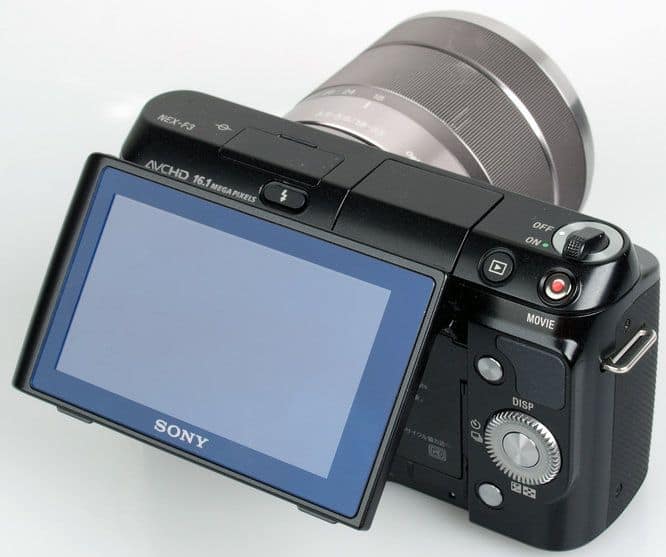
The 3-inch, 921,000-dot LCD is sharp and shows colors accurately. It isn’t a touchscreen, which some rival cameras offered at the time.
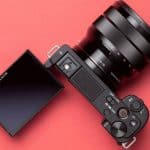
The screen’s best trick is that it flips up 180 degrees, so you can frame a selfie or film yourself. It only tilts down about 13 degrees, though, which makes it awkward to hold the camera above your head and still see what you’re shooting.
The sensor is a 16.1-megapixel Exmor APS HD CMOS, APS-C in size. Just above the E-mount sits a built-in stereo microphone for video. The rounded grip is comfortable enough to shoot with one hand.
The NEX-F3’s shutter button is moved to the front bezel rather than the top of the bezel, as is the case with other models, making it easy for users with small hands to operate. The NEX-F3 incorporates a built-in flash, which at first glance looks unstable but actually very flexible, which can change the angle of the projector quite effectively in many shooting situations. In addition, the NEX-F3 also has a focus light, but the position is slightly low, so sometimes covered by the user’s hands.
Despite its built-in flash, the NEX-F3 still has a removable flash unit (purchased separately). When the button is open, the integrated flash spring pops up very strongly, you can “startle” if you use the machine for the first time.
The camera’s power button is on top, while the image view button and video capture button are on the back. Two sides with metal hooks are sure to hook the strap attached.
The control system on the back of the NEX-F3 is very simple, almost concentrating on the multi-way rotary button allows the user to quickly select the options in the interface of the screen. This rotary button takes care of navigation in the menu interface and also selects different shooting modes. However, this design still takes much more work than the physical rotary button as is commonly seen on DSLR models.
Connectors inside the cabinet have a discreet cover on the bottom of the machine: Mini HDMI port for outputting images to the TV and microUSB port for charging via an attached adapter or a PC. You can also charge the battery in the camera by plugging it into a computer through the micro-USB port. That’s handy if you forget the charger, or if there’s no wall socket nearby but your laptop still has some charge.
The battery sits in the base, just below the grip. Sony rates the 1080mAh pack at 470 shots per charge. Throughout use, Test Lab found that the battery life of this model is not complaining enough to take pictures and video all day. In addition, on the screen of the machine also shows the battery capacity by percentage, easy to identify.
The memory card slot supports SD / SDHC / SDXC cards or MS Pro Duo / MS Pro-HG Duo cards. The NEX-F3’s lower edge also has a tripod (sold separately).
Image quality and features
In general, the image quality of the Sony NEX-F3 is not inferior to many popular DSLR cameras. With the 16.1-megapixel APS-C image sensor, the Sony NEX-F3 reproduces images in excellent quality in light, sharpness and high detail, true colors when viewed on LCD screen of the machine and the computer.
NEX-F3’s low light capability is also superior thanks to the wide ISO range of 200 to 16,000. However, at ISO 1600, the image has begun to appear particle and detail is reduced but still acceptable. At ISO 3200 and above noise appears quite a lot, but only when zoomed to see clearly.
The NEX-F3’s interface is similar to Sony’s previous NEX models – an advantage for users familiar with the NEX. Sony is also more subtle in adding colors and intuitive navigation for each NEX-F3 menu, making it beautiful and easy to use for all audiences.
During testing, Test Lab found that NEX-F3’s built-in flash caused black shadows commonly seen on some DSLRs when shooting with 18-55mm lens hoods. However, with the flexible base design as described above, users can adjust the flash direction for the best lighting effect, even adjusting the 90 degree straightening to the ceiling. This is a remarkable point that the integrated flash of almost all current DSLR line can not be obtained.
Focusing on the upgraded user interface from the point-and-shoot (PnS) point-and-shoot (PnS) point-and-shoot camera, the Sony NEX-F3 features a number of features, filters and modes commonly found on these models.
Besides common shooting modes such as Manual Exposure (M), A (Aperture Priority), S (Shutter Priority) and P (Program Auto), there are also Intelligent Auto, Scene (SCN), anti-blur (Anti Motion Blur) and panorama modes Sweep Panorama and 3D Sweep Panorama. In particular, in Intelligent Auto and Superior Auto mode, users can flexibly adjust many parameters such as Background Defocus, Brightness, Or color intensity (Vividness).
Sony NEX-F3K/B 16.1 MP Mirrorless Digital Camera with 18-55mm Lens (Black): Buy it now
Sony NEX-F3K/S 16.1 MP Mirrorless Digital Camera with 18-55mm Lens (Silver): Buy it now
Sony NEX-F3K/BBDL 16.1 MP Mirrorless Digital Camera (black) with 18-55mm Lens, 55-200mm Lens, Card and Bag Bundle: Buy it now
Sony NEX-F3/S 16.1 MP Compact System Camera Body Only (Silver): Buy it now
In addition, users can also use the effect of color filters (Picture Effect) to apply immediately to the picture. This is also a popular feature used today.
A new feature that Sony has equipped for NEX-F3 is Auto Framing Portrait. This is a combination of facial recognition with a 9×9 frame-by-frame algorithm to create a copy of the portrait, then analyze the image and automatically crop. To optimize the frame layout. In particular, the image after cropping still retains full resolution compared to the original image.
However, according to Test Lab, this feature works randomly, not really at the photographer’s will. Besides, creating an image of equivalent resolution will take up more space on your memory card. Therefore, users should consider and can disable this feature in the menu of the machine.
The Sony NEX-F3 also supports HDR (high dynamic range) shooting. In this mode, a continuous burst of 3 images then combines them into one, giving the final result impressive images with brightness detailed and honest.
Due to the Bionz processor, the NEX-F3 has a fast processing speed. The NEX-F3 got its first launch time and took less than 3 seconds. In the Speed Priority Continuous shooting mode, the camera has a speed of up to 5.5 fps. In the test, Test Lab found that the focus system of the machine works well. However, in a complex light environment, the machine takes longer. The NEX-F3 also supports focus by hand quite effectively in some situations.
Sony’s NEX-F3 Full HD video recording capabilities are also impressive. The quality of the videos shot from the NEX-F3 is pretty good, the picture detail as well as the color is very good. The sound quality of the integrated microphone system is honest and clear. Noise filtering also works well in windy environments. However, the integrated speakers of the machine have a small volume. The machine allows to save video in the formats AVCHD and MP4.
In short, with the passion for photography demanding the high quality of DSLR cameras but still fond of the compact size of the PnS, the Sony NEX-F3 will be a perfect choice.
Related Posts



Tech Reviewer & Product Analyst
Định Bia has spent over 10 years testing consumer electronics with a focus on smart technology. He work as a product advisor at Biareview where he helped customers find the right devices for their needs. He personally tests every product featured on this site using a consistent evaluation framework covering quality, durability, and value. All reviews are based on experience, not influenced by the manufacturer.