Design
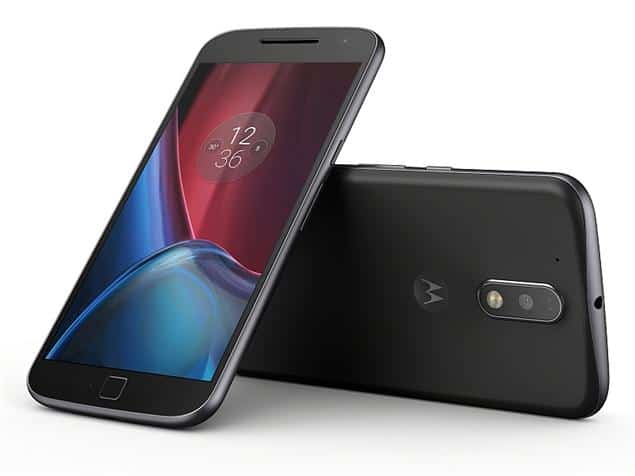
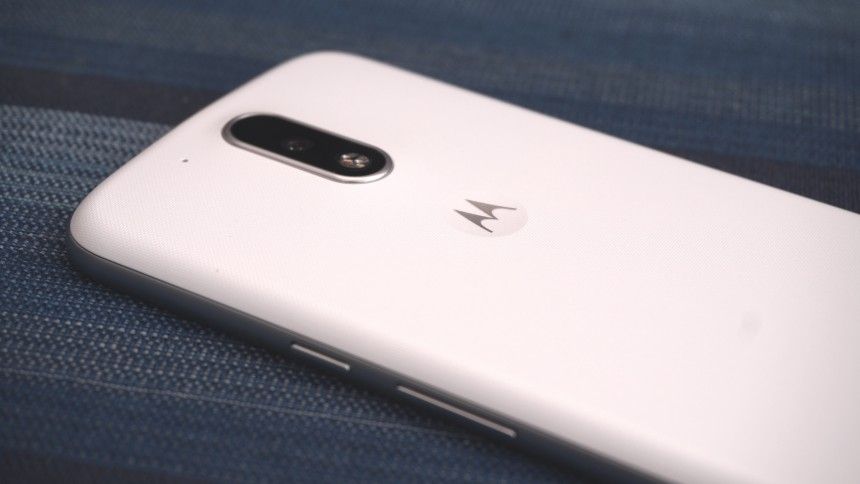
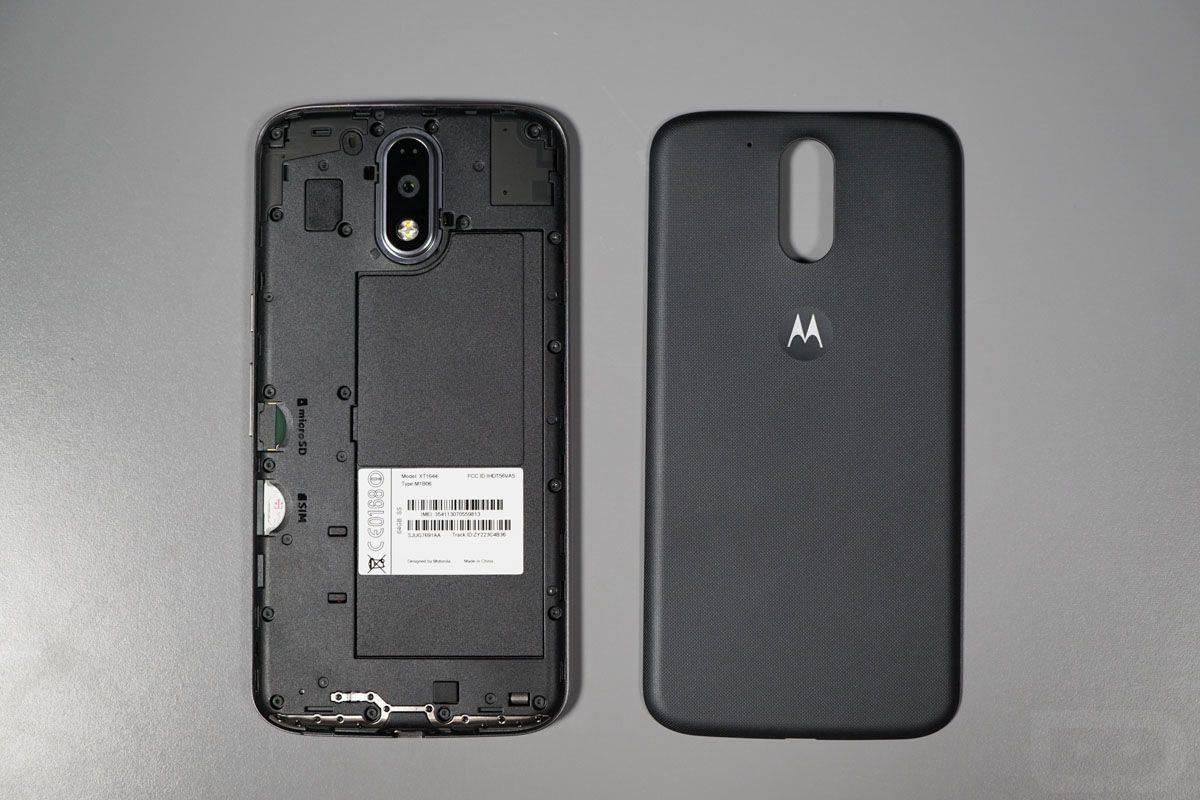
Weight is my first impression when holding the phone. Smooth, more comfortable X Style. The rounded edges, the plastic back cover with a thin rubber coating make the grip a safe, non-slip and comfortable grip. The front of the phone is a 5.5 inch screen with fingerprint sensor. I thinks that the fingerprint sensor protrudes ungainly, badly scratching the front of the phone pretty much.
Screen
The FullHD display is clearly visible when used outdoors in the sun. The colors on the Moto G4 Plus are still brilliantly lively but still somewhat less comparing to their predecessors like the Moto X Style or even the first Moto G.
In particular, the look and feel of the Moto G4 Plus has a yellowish tint (in the default color mode) compared to the Moto G’s. This makes the user’s eye feel more comfortable when using the machine at night. However, the true color is so affected.
Display
Screen Quality and Resolution
The Moto G4 Plus comes with a 5.5-inch IPS LCD screen, and it runs at 1080 x 1920 pixels which gives you a pixel density around 401 PPI. It’s basically Full HD, and yeah it was a real step up from the 720p panel on the Moto G3 before it. So the Moto G4 Plus kind of sits right along with a lot of other mid-range phones from that period, no big surprise there.
In day to day use the display looks sharp and lively, with solid color reproduction plus decent contrast. Text, and images feel clean, like properly focused, it’s nice for web surfing, reading long pages, or watching videos. The IPS tech also helps a lot with viewing angles, so even if you tilt it a bit, colors don’t do that dramatic weird shift like on some other panels.
Brightness and Outdoor Visibility
Another big win is how bright the Moto G4 Plus display really gets. The screen is bright enough that you can still make out what’s on it in most environments, even outdoors with direct sun. That means it’s a good fit for people who use their phones outside a lot. There’s also auto-brightness, and it actually performs decently, it tweaks the brightness based on the surrounding light. The idea is clear: keep things readable, while not wasting battery unnecessarily.
Color accuracy and tweaking
On the Moto G4 Plus you get two color modes , like Standard and Vibrant, so you can pick what feels right for you—either more color accuracy or more saturated hues. In Standard mode the tones tend to look more natural, not overly glossy or loud. Then Vibrant mode turns things up, boosting saturation for anyone who wants sharper, punchier visuals, basically that slightly showy look. Having these options is a nice bit of customization too, it gives people more control over how the screen feels day to day.
All in all, the display on the Moto G4 Plus is honestly one of its best points. It delivers a high-quality visual experience, and it kind of manages to beat the expectations you’d normally set for a phone in this price bracket.
Camera
The camera 16MP, f / 2.0 is powered by Phase Detection Autofocus (AF) technology with laser focus, fast and accurate focusing. In bright enough conditions, the image from the camera sharp color. Under artificial lighting conditions or lack of brightness, the picture quality is acceptable, but when zoomed it is not difficult to see the picture noise and details are reduced considerably. (Tip: always keep HDR Auto)
Video quality is also a compliment to the Moto G4 Plus. Electronic anti-vibration equipment, it is not difficult to get a nice video even in low light environment. While shooting, you can completely change focus as well as exposure.
A big plus for the Moto G4 Plus is that the Camera app has been modified with the addition of a shutter button. I used to be annoyed to use the Camera app on the X Style, with focus and focus modes only. With the G4 Plus you can focus and adjust the exposure of the image and keep it long to lock the focus is very useful. If you want the picture to be what you want, professional shooting mode lets you manually adjust the Focal length, WB, speed, ISO.
Moto G Plus (4th Gen.) Unlocked – Black – 16GB – U.S. Warranty: Buy it now
Moto G (4th Generation) – Black – 32 GB – Unlocked – Prime Exclusive – with Lockscreen Offers & Ads: Buy it now
Moto XT1644 G4 Plus (4th Gen) 5.5 Inch full HD 64GB Storage 4 GB RAM , Unlocked, U.S. Warranty – (Black): Buy it now
Moto G Plus (4th Gen.) Unlocked – White – 64GB – U.S. Warranty: Buy it now
Moto G Plus (4th Gen.) Unlocked – White – 16GB – U.S. Warranty: Buy it now
User experience
With the Snapdragon 617 chip, 3GB of RAM and the original Android 6.0.1, the machine runs extremely smoothly, without any lag. My needs are pretty basic, besides listening, texting, surfing the Web with Chrome, chatting with Viber, Facebook, Machine running cool and almost no reloading of the app.
Some minor features such as picking up the Doze screen, shaking the flash, turning the camera will also make the experience of using the machine very comfortable.
The fingerprint sensor on G4 Plus is very fast. You do not need to hit the source, just put your finger up in less than 1s the phone will unlock. I made a small comparison with the Apple iPhone 6, the response rate of the Moto G4 Plus is slightly better.
Pin
With average usage, listen for 60 minutes, surf the web 1h30, and check email. Machine will stand after about 3h30 on screen. Enough for a day starting from 7am to 6pm. Even in the case of urgency, with Turbo Charge only 30p to reach 80% of battery life to help you use almost a day more.
With basic needs, the Moto G4 Plus meets all requirements. 2 sim 2 waves, good quality camera, fingerprint sensitive sensor, bright and sharp screen, smooth operation, good battery life. The Moto G4 Plus is one of the best phones you can buy at the moment.
Performance and Hardware
Processor and GPU
The Moto G4 Plus is driven by the Qualcomm Snapdragon 617 chipset, an octa-core thing with four Cortex-A53 cores running at 1.5 GHz, and the other four Cortex-A53 cores at 1.2 GHz. Then there is the Adreno 405 GPU alongside it for graphics , and yeah , for the stuff that tends to get heavy.
Back when the Moto G4 Plus came out, the Snapdragon 617 was more of a mid-range processor, so it kinda lands on that nice middle ground between speed and power savings. The octa-core setup also helps for multitasking , because the faster cores step in when apps get more demanding, while the slower cores keep things efficient during lighter usage.
RAM and Storage Options
For RAM, the Moto G4 Plus showed up in three main configurations: 2 GB paired with 16 GB internal storage, 3 GB with 32 GB, and 4 GB with 64 GB. So basically , there was a choice for different needs and budgets, without making it too confusing.
In general , the 3 GB RAM / 32 GB storage model was the go-to. It felt like a sweet spot for price and performance. With 3 GB of RAM, the phone could keep multiple apps open, and it would not usually slow down in a noticeable way. For storage, the 32 GB internal space gave room for apps, games, photos, and videos too, plus there’s a microSD card slot for more space, supporting cards up to 256 GB.
Everyday performance
Day to day, the Moto G4 Plus felt mostly smooth and pretty responsive, like it knew what you wanted even when you were bouncing between things. For normal use, it managed web browsing, social networking, and messaging without much fuss . App launching was quick enough, and hopping between apps was usually seamless, in particular on the 3 GB and 4 GB RAM versions.
The Adreno 405 GPU could deal with everyday gaming without drama. Titles such as “Clash Royale” and “Candy Crush” ran along nicely, while heavier picks like “Asphalt 8” and “Modern Combat 5” worked fine, but you’d keep to medium graphics. So yeah, it wasn’t made for hardcore sessions, yet it was more than enough for most people’s actual needs.
Benchmark performance
When you look at benchmark results, the Moto G4 Plus does pretty well for a mid tier phone. In AnTuTu it usually landed around 45,000 to 50,000 points, which puts it firmly in the mid-range pool. That number basically shows it can manage a wide mix of tasks without serious lag, even if it can’t quite match flagship models that use more advanced, top tier processors.
In Geekbench, it scored roughly 700 in the single-core test, and about 3,000 in the multi-core test. Those results line up with other devices that use the Snapdragon 617 chipset, confirming the Moto G4 Plus as a solid, dependable mid-range performer.
Camera Performance
Rear camera
The Moto G4 Plus really has that 16 MP rear camera thing going for it, and it’s not just the number—there’s an f/2.0 aperture, phase detection autofocus (PDAF), and also laser autofocus. In general this arrangement felt like a step up from the 13 MP camera on the Moto G3, and yeah it became one of the main reasons people bought the G4 Plus, because it sounded good on paper and in use too.
When the light was decent, the Moto G4 Plus could pull off photos that looked detailed and kind of lively, with colors that didn’t veer too far off. The PDAF and laser autofocus, they teamed up nicely and you got quick, accurate focus so grabbing a crisp shot was pretty easy even when the scene was a bit annoying. On top of that the camera’s dynamic range did fairly well, and HDR mode helped smooth things out a bit, so bright areas and darker areas weren’t fighting as much in high-contrast moments.
Then there’s the camera app and its various shooting modes and extra features, including that “Professional mode” which lets you fiddle around manually with ISO, white balance, and shutter speed. For folks who care about photography, this felt like a solid extra layer, more tweakable rather than just point and shoot and hope.
In low light, though, things got more restricted. The Moto G4 Plus can still produce images you can use, but you’ll see more grain , and the fine details noticeably blur or fall away. That part is kind of normal for a mid-range phone camera, and the f/2.0 aperture does help some by getting more light onto the sensor, however it still makes it pretty clear the Moto G4 Plus is mainly happiest during daylight, where everything stays more consistent.
Video recording
On the Moto G4 Plus the rear camera was able to record 1080p video at 30 frames per second, which is pretty standard but still, it does the job.
The overall video quality was decent really. Colors came out fairly accurate and the detail held up well when the scene was bright. Most users probably wouldn’t feel limited by the 1080p resolution either, since it looked sharp enough for social sharing or for watching on larger displays. That said, the absence of optical image stabilization, OIS, was noticeable. When you held the phone by hand the clips could get a little shaky, particularly if you were walking or moving around. There’s electronic image stabilization (EIS) too , and it helped somewhat, but it didn’t match the smoother results you get from OIS on pricier models.
When light dropped , video recording became harder. The camera had trouble keeping focus steady, and noise went up quite a bit. So the footage ended up grainy, with fewer fine details. Still, this felt pretty much like what you’d expect from a mid-range phone from that era. It isn’t the kind of feature that screams “wow”, however the Moto G4 Plus video recording was usable enough for everyday, casual moments.
Front Camera
The Moto G4 Plus comes with a 5 MP front-facing camera, f/2.2 aperture too, so yeah it was meant for selfies and video calls more than anything. When the lighting was good, the front camera did a solid job—decent selfies, pretty accurate colors, and a reasonable amount of detail. The wide-angle lens, also kind of helpful, made group selfies easier because you didn’t need to reach your arm out too far.
Still, just like the rear camera, things dropped off when it got dark. There’s no front flash, so indoor shots and night selfies tended to look grainy and kind of flat in terms of detail. Using the screen flash feature did help a bit, it lights up your face with the display, but honestly it wasn’t on the same level as a real LED flash.
For video calls, the front camera was fine overall. Under proper lighting it delivered clear video quality, and it even supports 1080p video recording, which is a nice bonus for a mid-range phone. So your calls stayed smooth and easy to watch.



Tech Reviewer & Product Analyst
Định Bia has spent over 10 years testing consumer electronics with a focus on smart technology. He work as a product advisor at Biareview where he helped customers find the right devices for their needs. He personally tests every product featured on this site using a consistent evaluation framework covering quality, durability, and value. All reviews are based on experience, not influenced by the manufacturer.