Hardware
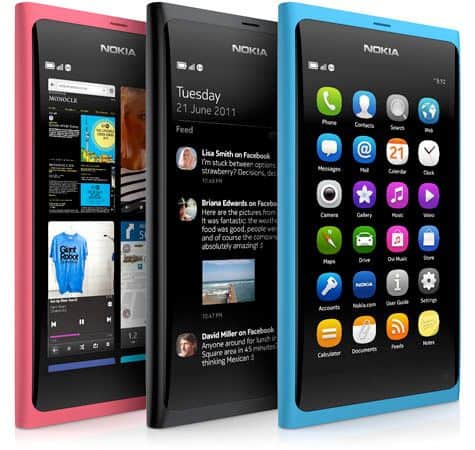
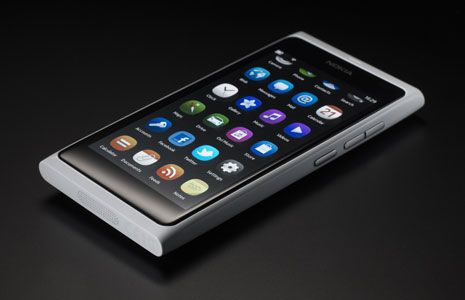
Only 12.1 mm thick with polycarbonate unibody shell colorful scratch resistant very tough and uncertain. Slightly convex on the back of the Nokia logo, Flash and 8 MP camera lens Carl Zeiss Tessar. Front panel is curved Gorilla glass screen and silver headset slot behind the locomotive. N9 uses AMOLED ClearBlack screen 3.9 inch FWVGA 854 x 480, the image and the content displayed is very clear and comfortable. One thing especially N9’s camera located in front of the bottom of the screen instead of at the top as the other smartphones.
The machine 4 corners square and on the right you can see the volume control keys and key locking / power. Speaker and microphone are placed in the end of the machine and at the top is 3.5mm headphone slot, microUSB port and the microSIM slot. With a weight of 135g and compact design.
On the hardware inside, N9 use OMAP 3630 SoC of Texas Instruments. This system includes CPU Cortex A8 a single-core 1 GHz and GPU PowerVR SGX530, 1GB of RAM.
Like other Nokia phones, the N9 support band GSM / EDGE 2G and UMTS / HSPA (14.4 Mbps) 3G. WiFi-connected machine a/b/g/n, Bluetooth 2.1, NFC support and EDR, GPS / AGPS. It also has enough sensors such as light sensors, rotation sensors, compass …
According to Nokia, N9 for call quality and very good waves. The sound quality is also excellent, but one of the headphones for audio bit small. Compared with powerful specs, the battery of the N9 is pretty stable with 1,450 mAh capacity, enough for one day use comfort.
Camera
With 8MP camera, Carl Zeiss F2.2 lens with autofocus and 2 LED flash and recording 720p HD video capability, though not by legendary Nokia N8 but Nokia N9 still has video and image quality very good. The color of photos very honest and full of detail, though sometimes a bit noise. In low light conditions, sometimes the fault of the machine is about focus. When the machine does not use flash automatically color balance, however this is not the big problem when N9 available 1 photo editing program very well with the “auto”.
N9’s camera interface is simple and easy to use. Machine offers optional continuous autofocus, tap to focus and automatic face detection, but lacks the features typically found on high-end smartphones such as panorama or HDR.
Video recorded with the N9 for 720p HD resolution at 30fps with stereo sound. The video quality is quite good, but sometimes still missing some frame.
Nokia N9 16 GB Unlocked GSM Phone with MeeGo OS, 8MP Camera, NFC, Wi-Fi and GPS – Black: Buy it now
Nokia N9 16GB 3G Wifi GPS NFC GSM Unlocked Meego Touchscreen (Cyan | Blue): Buy it now
Nokia N9 Unlocked Smartphone – Black – 16GB – International Version: Buy it now
Software
MeeGo 1.2 Harmattan brings one new wind and if not because it has been continuously developed, then perhaps you will soon charm OS. MeeGo is built on the Linux platform with one interface modern, sophisticated, simple and easy to use. MeeGo supports multitasking and built many of the online services.
N9 pre-installed applications such as OVI Music, Facebook, Twitter, AccuWeather, AP Mobile, Skype, Track & Protect, Angry Birds Magic, Galaxy On Fire 2, Need For Speed Shift and Real Golf 2011. You can install add other applications from the app Store by Nokia (though not much, but also one of useful applications such as file management, recording …).
Browsing on the N9 is also very good. Computer browser supports HTML5, runs on WebKit and work quite well, but does not support Flash, and no browsing history. Every time you open one window, you will be asked to set keywords for that site and the keywords you select will be taken directly to the appropriate page – one pretty smart features of the N9.
MeeGo operating on N9 very well. Including multitasking went to 20 applications, the machine is still running smoothly. However, if you open and shut so fast continuous application is likely to lead to crashes.
Performance
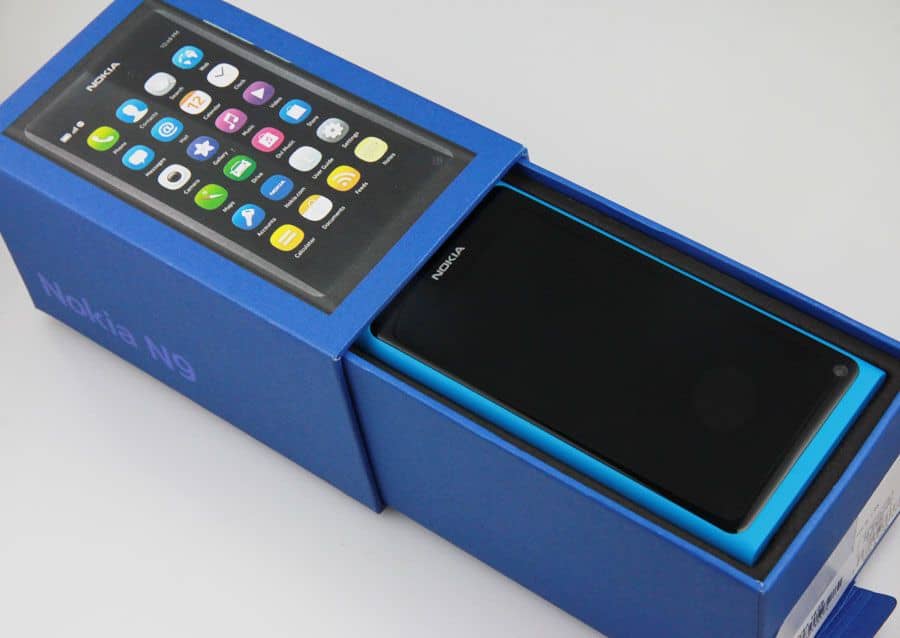
Under the hood, the Nokia N9 is kind of basically powered by a 1 GHz Cortex-A8 CPU , and then it’s backed up by 1 GB of RAM and a PowerVR SGX530 GPU. On paper, those numbers could sound a bit small compared to what people expect now, but in 2011 they were, honestly pretty competitive for a phone. Day to day, the N9 feels smooth, like things respond right away, and most tasks move along with almost no friction.
When it comes to using the interface, it’s mostly fluid, you don’t really spot noticeable lag, or stuttering when you swipe between screens , or when apps open. That 1 GHz chip can keep up with multitasking, web browsing, and media playback without turning it into a slow ordeal. Still, if you throw heavier stuff at it—especially 3D games—then the hardware can get pushed pretty hard, and you may see the occasional frame drop or wait a little longer for things to load.
As for the 1 GB of RAM, it’s enough to keep multiple apps going at the same time, and the operating system seems tuned to deal with memory in a pretty sensible way. So even if you’ve got several applications sitting in the background, the phone stays snappy, and switching between tasks feels quick rather than clunky.
The PowerVR SGX530 GPU also does a decent job with graphics, like basic gaming and video playback, it just works mostly without too much drama. that said, it’s not really in the same league as the newer GPUs you see inside some more modern smartphones. If someone is buying mostly for play sessions first, then the N9 might feel kinda underwhelming, at least next to those devices.
Overall, the Nokia N9 delivers solid performance for everyday use, with the hardware and software kinda aligning well together, so the whole experience feels responsive, no big hiccups. It isn’t a gaming beast or a workstation replacement for resource hungry apps but it’s definitely more than enough for what most people actually need.
Connectivity and Networking
The Nokia N9 is built with a set of connectivity options that felt pretty normal, for a high end smartphone back then. You get quad band GSM and pentaband 3G , so it works across a lot of network types worldwide . On top of that it has Wi‑Fi 802.11 a/b/g/n, which means you can hop onto wireless networks for browsing the web and moving data around.
Bluetooth 2.1 shows up too , with A2DP and EDR , so you can share files without cables , and also pair with Bluetooth enabled gear like headsets, speakers and the like. There’s also NFC, or Near Field Communication. At the time, that was still kind of fresh, so it made quick pairing easier when a compatible device is close by. It also helps with mobile payments , in a way that doesn’t require much fiddling.
Audio and Multimedia
When it comes to sound, the Nokia N9 gives a pretty steady audio experience. The music playback and the voice calls both sound decent , and the built in speaker ( down at the bottom of the phone ) is loud enough and pretty clear. That makes it fine for videos and songs even if you are not wearing headphones . Still, as with a lot of phone speakers, there’s no deep bass , and at higher volume levels it can get a little tinny, not exactly rich.
If you want something better , there’s a 3.5mm headphone jack. It works with many kinds of headphones and earbuds. The phone supports several audio formats , including MP3, AAC and WMA. You also get a basic music player app that lets users sort and play music. It includes familiar things like playlists, album art, and the usual shuffle / repeat style modes, so it’s not bare bones.
The N9 also really does well with video playback, mostly because of its AMOLED display, it gives this bright look and a pretty solid deep contrast, too. It can handle several video formats like MP4, H.264, and WMV so users can watch different stuff without getting bothered about extra codecs. The video player app kind of stays simple but still works, with little controls for playback speed , screen brightness, and aspect ratio, so you can tweak it when you feel like it.
One thing where the N9 is kind of standout is the FM radio support , which at that time was getting less and less common on smartphones. The FM radio app lets you tune in to nearby stations, so you can catch live broadcasts while not burning through data. On top of that, there’s RDS support, the Radio Data System part, it shows station details and what’s playing, like the current song or program.
Gaming
The Nokia N9 isn’t exactly built for gaming, but somehow it still pulls off casual games that you can grab from the Nokia Store. The PowerVR SGX530 GPU , teamed with a 1 GHz processor , is generally solid for 2D games and even some 3D titles, yet if the game turns out more demanding, it may start feeling a bit strained or sluggish.
Since the MeeGo ecosystem had kind of a narrow app catalog, the game lineup isn’t as wide as you’d see on Android or iOS. Still, you can get hold of popular staples like Angry Birds and Cut the Rope, and in most cases they run pretty smooth on the hardware. The touchscreen feels responsive, and it’s also fairly accurate, so it works well for games that really depend on precise touch inputs.
For folks into retro gaming, there’s this open source side of MeeGo that kind of makes things easier, like you can install emulators, and the N9 can then play classic games coming from older consoles. It gives gamers a bit more versatility for those who still like the nostalgic titles, you know.
Durability and Longevity
The Nokia N9 is made with staying power, mostly thanks to that durable polycarbonate unibody , plus a display protected by Gorilla Glass. The whole build feels solid, no creaks, no real flexing, and the materials seem less eager to show wear and tear over time. Also, because it’s polycarbonate, scratches and scuffs don’t stand out as much, since the color runs consistently through the material, not just on a surface layer.
That said, even with all that durability the N9 isn’t waterproof, and it also isn’t dustproof , so people should be careful if you’re using it where there’s water splash risk or dirt in the air. Still, the design is sturdy enough for everyday bumps and the occasional drop , at least in normal situations.
One more thing, with older phones like the N9 , it can be tricky to locate replacement parts and batteries as they get older. The battery is non removable , so if it starts losing capacity over time, swapping it out isn’t as straightforward. Plus, because the N9 had a limited production run and it has that unique layout, replacement components—like screens or buttons—can be harder to track down than on more common models, where parts are basically everywhere.
When it comes to how long the software lasts, MeeGo, as an operating system, really hasn’t gotten any updates or any kind of real support since Nokia moved over to Windows Phone. So basically people get left with whatever OS version came on the device in the first place, and there aren’t any official upgrades, or security patches, to fall back on. Still, because MeeGo is open-source, there’s a small group, kind of quiet but serious, of developers who keep working, on custom ROMs and various updates for the N9.
Conclude
With the N9, Nokia gave us this awkward, one-time kind of decision. An advanced smartphone with a sharp design, solid hardware, and also software that, at least for its time, stays stable. But the MeeGo operating system itself makes a lot of users hesitant, because it feels like it’s already fading, you know.


Tech Reviewer & Product Analyst
Định Bia has spent over 10 years testing consumer electronics with a focus on smart technology. He work as a product advisor at Biareview where he helped customers find the right devices for their needs. He personally tests every product featured on this site using a consistent evaluation framework covering quality, durability, and value. All reviews are based on experience, not influenced by the manufacturer.