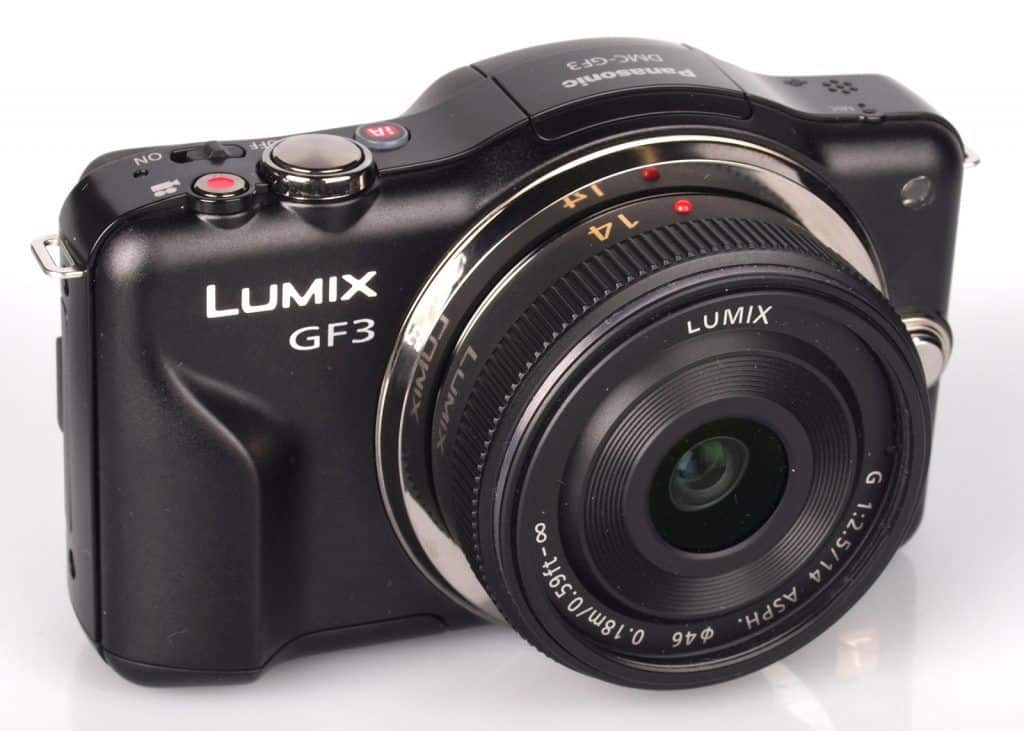
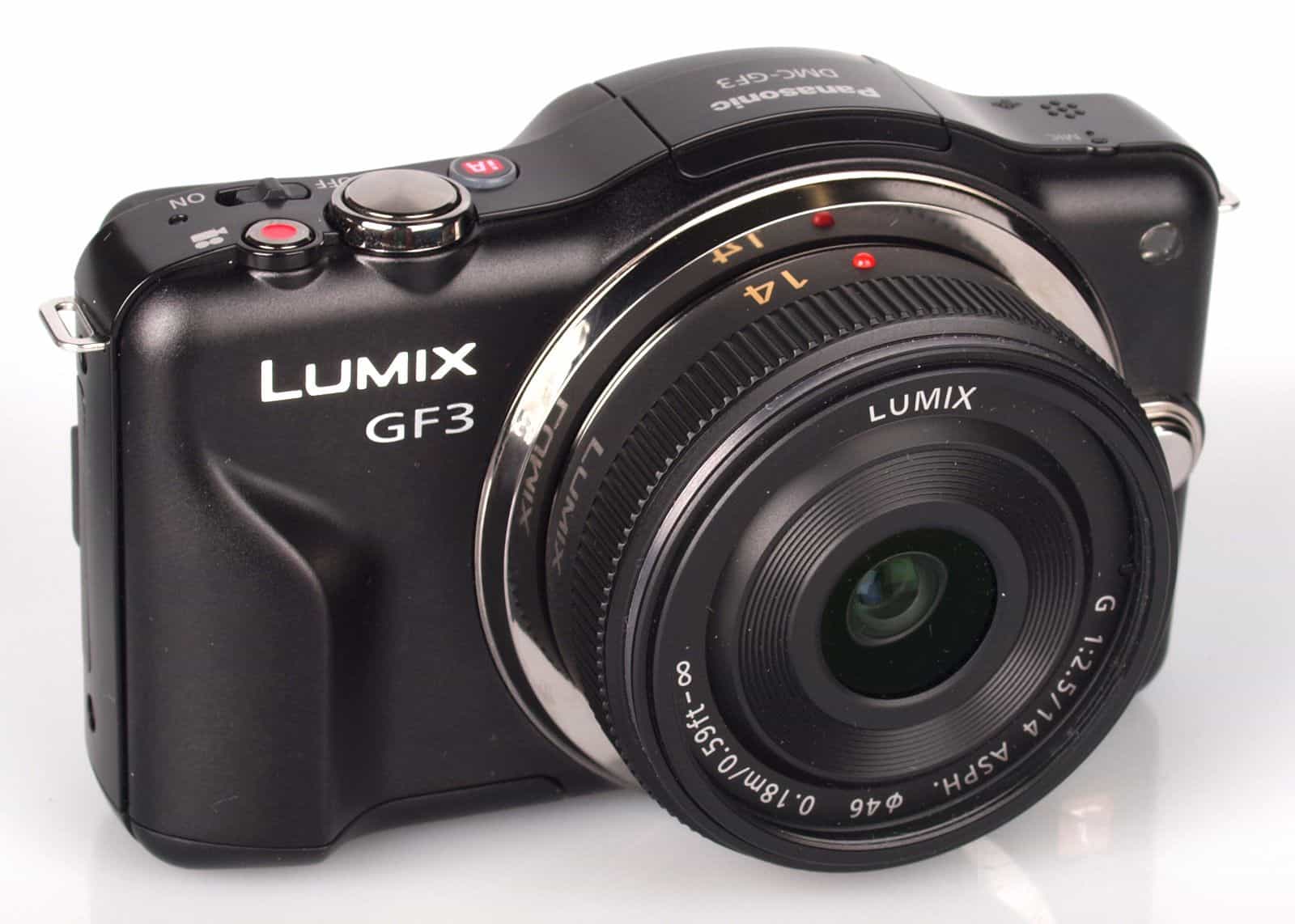
The Panasonic Lumix GF3 is an upgraded version of the Panasonic Lumix GF2 with many improvements in both styling and interior. This model is slightly lighter than its predecessor to 17 and 15% respectively. Panasonic Lumix GF3 also comes with a new image chip. It helps the camera lock focus quicker. It also improves how pictures are handled versus earlier models.
The Lumix DMC-GF3 uses a 12-megapixel Live MOS sensor. That part is the same size as the GF2. Still, the camera has a faster processor. Because of that, it supports autofocus up to 120Hz.
This unit can shoot Full HD 1080i video in AVCHD format. Its ISO range runs from 160 to 6400. You can use features for focus help, and you can pick a focus point from 23 areas.
On the back there is a 3 inch screen. The screen shows 460,000 pixels.
Panasonic Lumix DMC-GF3KK 12 MP Micro 4/3 Mirrorless Digital Camera with 3-Inch Touchscreen LCD and 14-42mm Zoom Lens (Black) (Discontinued by Manufacturer): Buy it now
Panasonic Lumix DMC-GF3CK Kit 12.1 MP Digital Camera with 14mm Pancake Lens: Buy it now
Design and Build Quality
At 108.0 x 67.0 x 32.0mm and 225g with battery and card, the GF3 was one of the smallest mirrorless cameras around at launch. The look stays simple and neat. The corners are rounded, and you can pick black, white, red, or brown. It uses matte plastic instead of metal. Still, it feels sturdy. Even with the small size, it seems built to last.
The controls are kept basic. That choice is for folks who are just starting with swap lens cameras. On the top you get the power button, the shutter button, and the movie record button. The mode dial is on the back, along with the directional pad. The 3.0-inch, 460,000-dot touchscreen does a lot of the work here — touch focus and touch shutter, plus menu navigation. There’s no viewfinder, which keeps the body small but means composing entirely on the screen.
Image Sensor and Performance
The 12.1MP Live MOS sensor is Micro Four Thirds — bigger than a point-and-shoot sensor, smaller than APS-C, which is the usual trade-off for this format. It’s a real step up from older CCD sensors in noise handling and color.
Images are sharp and accurate at lower ISOs, with noise picking up as you push higher (ISO range runs 160-6400). Panasonic’s Intelligent Resolution tech helps keep detail intact without piling on noise, and there’s a set of film modes and filters if you want to adjust the look in-camera.
Autofocus is contrast-detection, and for its time it was quick and reliable — single, continuous, and face-detection modes are all here. Burst shooting tops out at 3.8fps, which isn’t fast by current standards but covers casual action shots fine.
Lens Options and Compatibility
It’s usually sold with the 14-42mm f/3.5-5.6 kit lens (28-84mm equivalent) — a decent, unremarkable lens with OIS built in, covering everyday shooting without being especially sharp or fast. Being Micro Four Thirds, though, the GF3 opens up to a wide lens ecosystem from Panasonic, Olympus, and third parties — wide-angle, telephoto, macro, whatever you need.
Display and Viewfinder
The 3.0-inch, 460,000-dot touchscreen is responsive and handles touch-to-focus and touch-to-shutter well, though the resolution and brightness fall short of newer screens — fine for composing and reviewing shots, just not class-leading.
There’s no built-in viewfinder, electronic or optical. An external EVF is available separately if you want one, but given the camera’s whole pitch is portability, most people using this won’t miss it.
Video Recording
Video maxes out at 720p/30fps in AVCHD Lite or Motion JPEG — enough for casual clips, not enough if you want proper HD or 4K. Continuous autofocus works during recording, but there’s no external mic input or real audio control beyond the built-in mic.
Connectivity and Additional Features
USB 2.0 and HDMI handle the basics. There is no Wi-Fi. There is no GPS.
Editing inside the camera lets you crop images. You can also resize files. Brightness can be changed. Contrast can be adjusted too.
You also get scene modes like Portrait and Landscape. Night Portrait is included as well. Sports is there for faster action.
There are art filters too, such as Pop Art. High Dynamic is another option.
For full hands off use, Intelligent Auto does the shooting for you.
Pros and Cons
The size is the headline pro — this is genuinely one of the smallest mirrorless cameras you could buy at the time, and the touchscreen interface makes it approachable rather than intimidating. Image quality holds up well for the sensor size, and Micro Four Thirds compatibility means the lens options don’t run out anytime soon.
On the downside: no viewfinder (an external one costs extra and adds bulk), video tops out at 720p with none of the newer HD/4K options, the screen resolution is dated, there’s no Wi-Fi or GPS, and autofocus — while solid — doesn’t match phase-detection systems found elsewhere.
Conclusion
The GF3’s whole case rests on size and ease of use, and it delivers on both — this is about as unintimidating as an interchangeable-lens camera gets. Image quality is good for what it is, and the Micro Four Thirds lens system means you’re not stuck with just the kit lens. There are real trade-offs. You lose the viewfinder. The video quality is not modern. Wireless support is also missing. If you care more about being light and easy to use than about top specs, it still works well as a second camera.
Related Posts

Tech Reviewer & Product Analyst
Định Bia has spent over 10 years testing consumer electronics with a focus on smart technology. He work as a product advisor at Biareview where he helped customers find the right devices for their needs. He personally tests every product featured on this site using a consistent evaluation framework covering quality, durability, and value. All reviews are based on experience, not influenced by the manufacturer.