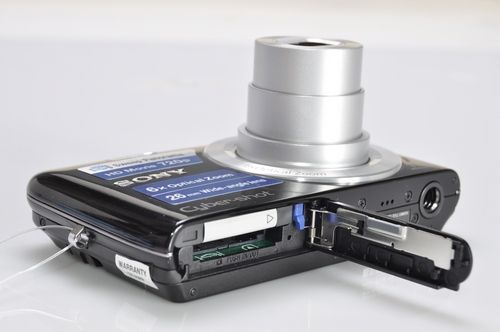
With changes in hardware as well as in design, the Sony Cyber-shot DSC-W670 brings the user comfort and picture quality at a decent level.
Also a new representation of the compact digital camera range of Sony, but the Cyber-shot DSC-W670 is sleeker and much softer than the Cyber-shot DSC-W610. Test at Test Lab. In terms of looks, Cyber-shot DSC-W670 has quite a variety of colors (black, pink, silver and blue), but the machine is a bit thicker (thickness about 20mm) compared With brother DSC-W610.
The W670 gets a bump to a 16.1-megapixel Super HAD CCD sensor, up from 14.1 megapixels on the W610. The lens has a longer range too. It runs from 4.6mm to 27.6mm, which works out to 26mm at the wide end in 35mm terms, and gives a 6x zoom. Sony has also added optical image stabilization (Optical SteadyShot), which the W610 doesn’t have. In addition, the Sony Cyber-shot DSC-W670 is equipped with a larger built-in flash along with focus light on the front of the machine.
When viewed from behind, the Sony Cyber-shot DSC-W670 and its brother DSC-W610 almost identical in design control system as well as the 2.7 “LCD screen. The only difference is that the Sony Cyber-shot DSC-W670 controls the same color scheme as the DSC-W610, while the DSC-W610 is equipped with a distinctive silver paint button system.
In addition to the integrated memory card that can store up to 8 images at maximum resolution (4608×3456 pixels), the Sony Cyber-shot DSC-W670 also comes equipped with memory card slots such as SD / SDHC / SDXC, MicroSD, Memory Stick Duo and USB / AV Out. Besides the ability to capture up to 16M resolution, the Sony Cyber-shot DSC-W670 is also outstanding by shooting 720p HD at 30 frames per second in MP4 format.
The included accessories include a strap, NP-BN battery and USB / AV Out cable.
Sony DSC-W670/B 16.1MP Cybershot Digital Camera with 2.7-Inch LCD Screen (Black): Buy it now
Sony DSC-W670/L 16.1MP Cybershot Digital Camera with 2.7-Inch LCD Screen (Blue): Buy it now
From the practical experience, the T-Mobile DSC-W670 feels like a handy gesture when it comes to performance, with a weight of 141g (including battery and memory card). The LCD monitor also offers a much better display quality than the DSC-W610, although it is still slightly pink and somewhat brighter than the actual image. The Sony Cyber-shot DSC-W670’s manual control system also feels a lot lighter, but the newcomer may mistake the fast shutter button and the power button on the side – They are relatively small in size and are located quite close together. Continuing through the menu interface of the Sony Cyber-shot DSC-W670, Test Lab also found almost no change compared to the DSC-W610. This also means that new users will also have to spend less time getting used to mastering this camera.
After testing some images with the default settings of the machine, Test Lab found that the image of the Sony Cyber-shot DSC-W670 is much better than the DSC-W610 brother. In good light, images taken from the Sony Cyber-shot DSC-W670 are brighter than the real thing, but still looks natural and harmonious. In low light conditions, due to the built-in AF assist light, the Sony Cyber-shot DSC-W670’s focus speed is better than the DSC-W610. However, the noise reduction capability of the Sony Cyber-shot DSC-W670 in low light conditions is not much different from that of the DSC-W610 brother, which produces heavy noise from the ISO 400 range.
Three Sony’s Cyber-shot panorama modes, the DSC-W670, also offer nearly identical picture quality to the DSC-W610. The image is not very impressive in detail, but the color of the image can be said to be quite honest and create a very wide sense of space.
In terms of recording capabilities, the Sony Cyber-shot DSC-W670 looks superior to the DSC-W610 brother when it supports 1280×720 pixel resolution and allows users to use the optical zoom function while recording. . The picture quality is also quite clear, the sound is clear with low background noise. However, the built-in speakers of the volume is quite small so it is difficult to hear clearly if the user is watching directly on the machine.
Overall, with some improvements to the hardware, the image of the Sony Cyber-shot DSC-W670 has been upgraded to a decent level. In addition, the changes in the design of the machine also contribute greatly to bring comfort to the user during the Picnic.
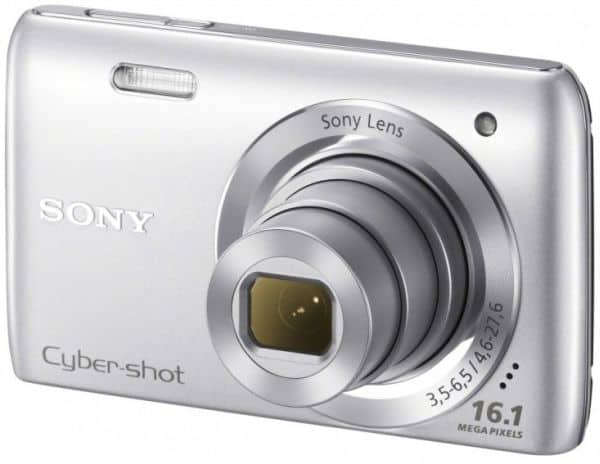
The DSC-W670 is Sony’s cheap, pocketable camera for people who want to take pictures, not learn photography. You get 16 megapixels, a 5x zoom and a menu system you can figure out in five minutes. In exchange you give up video quality, low-light performance and any way to send photos to your phone without a cable.
What’s inside
The W670 uses a 16.1-megapixel Super HAD CCD sensor, with Sony’s BIONZ processor handling noise reduction and color. That’s more resolution than most people need. It’s plenty for a normal print or anything you post online. The processor also keeps the camera responsive, so you’re not left waiting after each shot.
The zoom
The zoom is what sets the W670 apart from the most basic compacts. At the wide end, the 5x zoom is equivalent to 25mm, enough to take in a whole beach. At the long end it reaches 125mm, close enough to frame someone standing a fair way down the path. The aperture is f/2.7 when you’re zoomed out and f/6.3 when you’re zoomed in. With a sensor this small, don’t expect the soft, blurred backgrounds you get from bigger cameras.
Sharpness is good through the middle of the range and slips a little at both ends. For family snapshots you won’t notice.
Screen and controls
The 2.7-inch Clear Photo LCD has 230,000 dots. Framing and checking shots is easy enough, but it’s not a sharp screen, and outdoors in strong sun it washes out. There’s no viewfinder to fall back on, which is standard for a camera at this price.
Menus make sense and settings are easy to read on screen. The mode dial, shutter button and zoom lever fall under your fingers where you’d expect and have a positive click. The buttons are on the small side. Most people will get used to them quickly.
Setup is quick. Turn it on, set the date, time and language when the camera asks, and start shooting.
Modes
Auto is where most owners will stay. The camera reads the scene and sets everything. Program Auto hands you ISO and white balance if you want a bit of control. Scene modes cover the usual situations, including Portrait, Landscape, Macro and Night Scene. There’s no manual exposure.
How the photos look
Give it daylight and the W670 produces sharp, well-colored pictures. That’s the camera’s comfort zone.
Take it indoors or out at dusk and quality falls off. The f/2.7 aperture helps a little, but noise creeps in as ISO climbs and fine detail gets lost. Auto white balance mostly gets it right. Under mixed light, say a warm lamp next to a window, you’ll sometimes see a color tint.
Focus and shutter
In good light, focus is quick and lands where it should. Indoors it takes longer to settle, and moving subjects give it trouble. Expect a few blurry shots of the dog chasing a ball or a kids’ football match.
The shutter tops out at 1/1,000 second and goes no slower than 1/4. Ordinary photos are fine, but night shots with a long exposure are off the table.
Video
Clips come out at 640 x 480, 30 frames per second, with audio from the built-in mic, and digital zoom works during recording. Played back on a phone, a short clip looks fine. On a bigger screen the low resolution shows, and with no optical stabilization, handheld video wobbles. It’s a camera for photos first.
Battery and connections
The NP-BN battery is rated for about 260 shots. That gets you through a day out. On a trip, a spare is cheap insurance.
For getting files off the camera there’s USB to a computer and AV out to a TV. There’s no Wi-Fi or Bluetooth. If you post a lot on social media, that means a detour through a computer every time, which gets old fast.
Who it suits
For holidays and family get-togethers, the W670 does what it needs to. It’s slim and light enough to take everywhere, and anyone in the family can pick it up and use it. The 6x zoom helps when you can’t get closer to your subject.
It’s a weaker fit if you take a lot of photos indoors or want them on your phone without a cable. Video fans should also skip it.
Rivals
The Canon PowerShot A2400 IS is the closest match. It has a 16-megapixel sensor and optical image stabilization, the same as the Sony, but its zoom stops at 5x. On paper that gives the W670 a slight edge, since it reaches a little further. In practice, the choice mostly comes down to which one is cheaper when you buy and which feels better in your hand.
The Nikon Coolpix L28 has a 20-megapixel sensor and a 5x zoom. Those extra pixels won’t matter much for prints and online use. The Sony gives you more zoom and is slightly smaller, which may tip the choice if you want something that really fits in a pocket.
Verdict
The DSC-W670 is good value for anyone who wants easy daylight photos and a useful zoom in a small body. It falls short in low light and on video, and there’s no wireless. If low light and video matter to you, the Canon A2400 IS is the better buy. For wireless sharing, you’ll need a newer model.
Related Posts



Tech Reviewer & Product Analyst
Định Bia has spent over 10 years testing consumer electronics with a focus on smart technology. He work as a product advisor at Biareview where he helped customers find the right devices for their needs. He personally tests every product featured on this site using a consistent evaluation framework covering quality, durability, and value. All reviews are based on experience, not influenced by the manufacturer.