Table of Contents
1. Olympus OM-D E-M5
The Olympus OM-D E-M5 is a retro-styled mirrorless camera with a 16MP Live MOS sensor, a 3-inch OLED screen, and a 1.44-million-dot electronic viewfinder. It records 1080p video and shoots up to 9fps. Two function buttons can be assigned to whatever setting you change most, which suits people who like to set a camera up their own way. It’s an older camera, so check whether a used one is still worth the price against newer models.
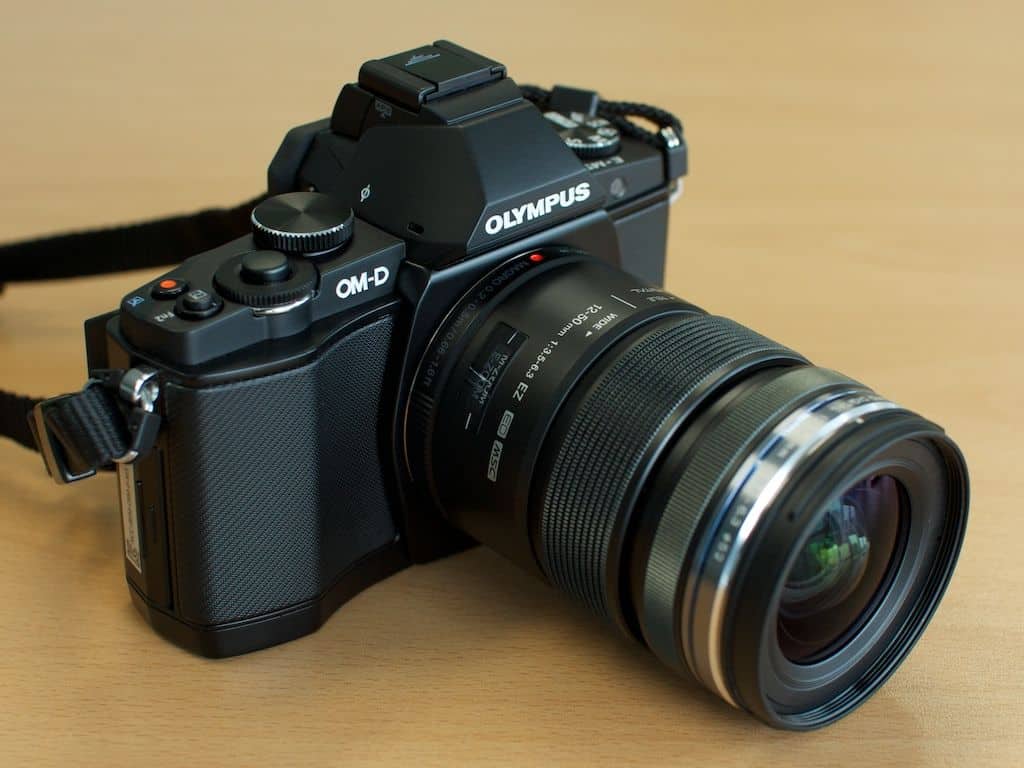
Olympus OM-D E-M5 16MP Live MOS Mirrorless Digital Camera with 3.0-Inch Tilting OLED Touchscreen [Body Only] (Black) (Discontinued by Manufacturer): Buy it now
Design and Build Quality
The Olympus OM-D E-M5 came out in 2012 as the first OM-D. The body is magnesium alloy in a retro SLR style, 121 x 89.6 x 41.9 mm and about 425 g without the battery. It’s dust-proof and splash-proof, so a bit of drizzle isn’t a problem.
Image Quality
The sensor is a 16.1MP Micro Four Thirds Live MOS paired with the TruePic VI processor. Micro Four Thirds is smaller than APS-C, which is why the camera and lenses stay small, and the price is less light-gathering. Colors look good and dynamic range is decent. Noise is manageable at moderate ISO, but in dim light a larger-sensor camera will beat it.
Lens and System Capabilities
The right choice for this camera is the E-M5 series, as it supports practically every Micro Four Thirds lens on the market, allowing for much versatility in different shooting environments. Wide-angle to telephoto lenses offered by Olympus and other manufacturers are there for the photographer to choose from; these include top-quality primes and zooms. Additionally, the camera has the incredible 5-axis IBIS image stabilization system that compensates for camera shake horizontally and vertically, as well as pitch, yaw, and roll motions. This is a truly workable system that assures fairly sharp images and smooth video recording with non-stabilized lenses.
Performance
The On the performance front, the E-M5 offers responsive operation with swift autofocus performance. Olympus’s FAST AF system incorporates contrast detection and on-chip phase detection focusing mechanisms, ensuring rapid and precise focusing. AF operation is excellent under any and all lighting circumstances and includes low light, where it sets the target of interest into sharp focus with minimal hunting. Minimal shutter lag due to processor speed and continuous shooting at 9 frames per second (fps) fit action and wildlife shoots very well.
Video Recording
Video Recording
The E-M5 records 1080p at 30fps with stereo sound from the built-in mic. You can set exposure manually while filming. For better audio you can add an external microphone, but I believe that needs Olympus’s SEMA-1 adapter, since the camera body has no 3.5mm jack. The 5-axis stabilization works in video too and takes a lot of shake out of handheld clips.
Electronic Viewfinder and Display
Electronic Viewfinder and Display
The EVF has 1.44 million dots and 100% coverage. It shows exposure and white balance changes before you take the shot, which an optical viewfinder can’t do. The 3.0-inch OLED screen has about 610,000 dots and tilts up and down. It also takes touch input, so you can tilt it for a low angle and tap to set the focus point.
Battery Life
The BLN-1 is rated at about 360 shots per charge. That’s a CIPA figure, and it assumes flash use and screen review that don’t match every shooting style. Leaving the EVF and screen on all day will cut it, so keep a spare in your bag.
Software and Features
The manufacturer includes a wide variety of shooting modes and advanced features to meet different photographic approaches and personal styles seen in the OM-D E-M5. The camera supports Full Manual Control for setting exposures entirely manually, while also offering semi-automatic exposures of aperture priority and shutter priority. Advanced modes include HDR, Multiple Exposure, and Focus Peaking, wherein users can highlight in-focus areas for manual focusing, thereby opening up creative potentials, ensuring maximum control in shape and form in image composition.
Usability and Handling
The OM-D E-M5 has been made to be ergonomically easy to handle and intuitive to operate, with a weather sealing finish and a deep grip alongside button controls placed within comfortable reach. The relatively small and lightweight body of the camera makes it an easy carry along for long shooting hours and travel, whilst the dual control dials and customizable function buttons provide very efficient workflow in terms of quick access to frequently used settings. Having the EVF and the touchscreen monitor on the opposite end also complements usability as it adds additional methods for accurate shot composition and easy navigation through menus.
Conclusion
The Olympus OM-D E-M5 is a compact, weather-sealed mirrorless camera with a 16MP Micro Four Thirds sensor and in-body stabilization. It suits travel, street photography, and casual outdoor use. It’s an older camera, so it lacks the resolution and autofocus of newer models. That matters less if you want a small kit that survives rain. This camera turns out to be a handy choice for both pro usages and artistic experimentation, as well as the quotidian art of capturing moments, from users that correspond to portability, versatility, and excellent image quality in an elegantly styled, compact retail system.
From this point of view, this review strives to give you a complete overview of the Olympus OM-D E-M5, which highlights characteristics in its design, image quality, performance, features, usability, and the overall value proposition.
2. Sony Alpha NEX-5N
Since launching its wood-block designs at the PMA, Sony has been eager to launch the NEX-5 and NEX-3 Alpha-3 lenses – ILCs. The smallest to the present, with many features, attract both professional photographers and professional photographers. However, some shortcomings can make you unhappy: These two cameras are identical in only two: the first is the body design of the more advanced NEX-5 made of composite Needle mags, while NEX-3 is made of polycarbonate. The second one is the NEX-5, which offers full HD AVCHD video recording.
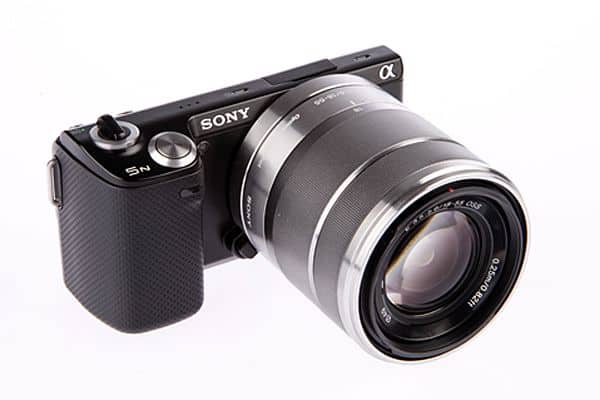
Sony NEX-5N 16.1 MP Compact Interchangeable Lens Touchscreen Camera With 18-55mm Lens (Silver): Buy it now
Design and Build Quality
The Sony Alpha NEX-5N came out in 2011 and fits an APS-C sensor into a very small body: 110.8 x 58.8 x 38.2 mm and about 269 g. The body is magnesium alloy and polycarbonate. It feels solid for its size, but the grip is shallow, so big lenses make it front-heavy.
Image Quality
The sensor is a 16.1MP APS-C Exmor CMOS, paired with Sony’s BIONZ processor. APS-C is the size used in many DSLRs, so you get more detail and less noise than from a compact, particularly in dim light. BIONZ handles noise reduction at high ISO. The kit lens is the weak link. Swapping it for a better one usually improves your shots more than any menu setting.
Lens and System Capabilities
Compatibility with Sony’s E-mount lenses is among the strengths of the NEX-5N, catering to varied shooting scenarios. From wide-angles to telephotos, Sony and other third-party lens manufacturers have options ranging from select primes to zooms. The camera features SteadyShot INSIDE, or sensor-shift image stabilization, which counters camera shake for stabilization during both photo and video recording. This stabilization system proves highly effective in helping produce sharp images and steady walk tests, especially with non-stabilized lenses.
Performance
From a performance point of view, the 5N can handle quite a lot with responsiveness, including fast focusing. Equipped with the Fast Hybrid AF system, the camera augments contrast detection with phase-detection autofocus to focus quickly and accurately. Different lighting conditions pose no threat to the Fast Hybrid AF system in getting sharp focus onto the subject with minimum lag. Thanks to the BIONZ processor, the NEX-5N can shoot continuously at 10 fps in Speed Priority Continuous mode, thus giving it a place as an option to shoot fast-action scenes and sports photography.
Video Recording
The NEX-5N records 1080p video with stereo sound and 720p at 30fps. You can set exposure by hand and adjust audio levels. That is good for a camera this small, though I don’t believe it has a dedicated microphone jack on the body, so serious audio work means another recorder. During video recording, the Full-time Continuous AF ensures smooth focus transition and tracks the moving subjects with great efficiency.
Electronic Viewfinder and Display
The 3.0-inch tilting LCD monitor with approximately 921,600 dots resolution is used in composing shots. The tilting LCD monitor can tilt up to 80 degrees and tilt down up to 45 degrees, giving one the freedom to shoot at high and low angles, self-shoot, or shoot at ground level. Sony does not provide any built-in EVF with this camera; however, those who wish to pursue the traditional way of shooting with real-time composition and framing can avail themselves of the FDA-EV1S OLED Electronic Viewfinder.
Controls and Customization
Made with manual control enthusiasts in mind, the NEX-5N pays attention to nearly everything with a mode dial and customizable function buttons to quickly access specific shooting modes and settings. A controlwheel is included in the camera for manual adjustments of exposure compensation, aperture, shutter speed, or other shooting settings. Sony incorporates Creative Styles and Picture Effects so that the photos may be artistically touched-up all within the camera, giving creativity and versatility to photo composition.
Connectivity and Storage
In terms of connectivity, the NEX-5N holds a Micro HDMI port for the connection of a TV or monitor-compatible gear to allow the viewing of photos and videos; it features a Multi Interface Shoe to connect external accessories such as a flash or microphone. It accommodates SD, SDHC, and SDXC cards to store plenty of images and videos in high resolution. Sony also offers additional accessories such as the LA-EA2 Mount Adapter, which will allow the attaching of A-mount lenses onto the NEX-5N with full autofocus support.
Battery Life
This camera derives its power from a rechargeable NP-FW50 lithium-ion battery pack. Sony specifications state a nominal battery life of around 430 shots per charge on LCD monitor power consumption, but under average usage conditions. To increase shooting time, users will consider carrying spare batteries or using external power sources, especially while on travel or professional assignments.
Software and Features
Sony offers different shooting modes and several advanced features in the NEX-5N to accommodate different types of photography and personal styles. There is the Sweep Panorama mode for very wide panoramic shots, as well as Auto HDR mode that bestows dynamic range upon scenes with high contrast. Advanced features include Multi-frame Noise Reduction which reduces noise in low light, and D-Range Optimizer that brings out shadow and highlight details, literally enlarging the creative possibilities as well as image quality.
Usability and Handling
The NEX-5N is small enough to disappear in a jacket pocket, and it’s comfortable in one hand with a small lens. With a big lens on the front, the shallow grip starts to hurt. The physical controls are sparse, so most settings go through the on-screen menu. That’s fine once you set up the customizable buttons, but slower than a camera with a mode dial and separate wheels. The tilting LCD helps for high and low angles.
Conclusion
The Sony Alpha NEX-5N is a compact mirrorless camera with a 16MP APS-C sensor and a good choice of lenses. It’s a strong pick for travel and everyday shooting, mostly because it’s small and the sensor is larger than what you get in a compact or a phone. The trade-offs are a shallow grip, a menu-heavy interface, and no built-in viewfinder, so you’ll be composing on the screen in bright light. If you want an inexpensive way into APS-C, it’s worth a look, but check newer used models at the same price.
3. Canon EOS 600D
The Canon EOS 600D is a good-value DSLR for video and for creative stills. Image quality is good for its class. Its weakness is fast action. Autofocus and burst speed are modest, so sports, kids, and pets will give you a lot of missed shots. The 600D’s main draw over the older 550D is its vari-angle screen, which flips out and rotates. It’s handy for video and for awkward angles. If you don’t need that, the 550D is usually the cheaper way to get the same sensor.
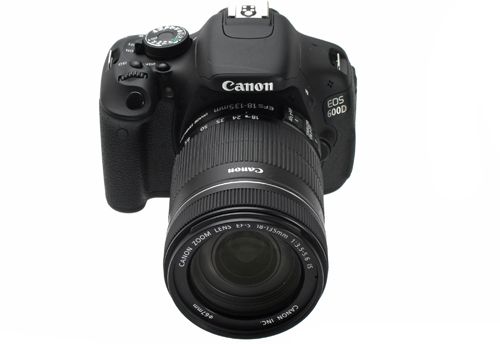
Canon EOS 600D (European EOS Rebel T3i) 18 MP CMOS Digital SLR Camera and DIGIC 4 Imaging with EF-S 18-55mm f/3.5-5.6 IS Lens: Buy it now
Design and Build Quality
Canon released the EOS 600D in 2011, one step above its entry-level DSLRs. It’s for beginners who want manual control and for enthusiasts who don’t need a pro body. The body is a conventional DSLR shape, 133.1 x 99.5 x 79.7 mm and about 570 g. It’s polycarbonate and feels it, though the grip is comfortable.
Image Quality
The camera has an 18MP APS-C CMOS sensor and the DIGIC 4 processor. APS-C gathers far more light than a compact or a phone, so you get good detail, natural color, and low noise at low to moderate ISO. Dynamic range is decent for the class, not class-leading. Noise gets more obvious as ISO climbs, and DIGIC 4’s noise reduction can only do so much about it.
The Lens Compatibility and the System Capabilities
One of the strengths of the EOS 600D is that it is compatible with the whole Canon EF and EF-S line of lenses and allows for various shooting conditions. Many manufacturers, including Canon and third-party ones, make lenses from wide-angle to telephoto, including fancy primes and zooms. The camera is equipped with a 9-point AF system with the center point being cross-type for accurate focusing and tracking of subjects. Some Canon lenses are also equipped with Optical Image Stabilization and minimize the adverse effect of camera shake to allow for clear stills and a steady rendition of video.
Performance
The EOS 600D is responsive and delivers fairly reliable autofocus performance. The camera relies on Canon’s AI Servo AF to continue tracking autofocus of moving subjects, which made this camera attractive for sports photography and action scenes. DIGIC 4 enables a continuous shooting speed of 3.7 fps, so the user can shoot multiple shots very quickly and nail that decisive moment.
Video Recording
The EOS 600D supports Full HD 1080p recording at 30 frames per second with stereo sound. One can also record HD 720p videos at 60 fps to keep the motion smooth. Canon offers manual exposure control and adjustable audio levels while recording the video, giving the user great flexibility in their work. Movie Servo AF works with video recording circuits to carry out continuous autofocus tracking, making sure smooth focus transitions and tracking subjects in real time.
Viewfinder and LCD Display
The EOS 600D is equipped with a pentamirror-type optical viewfinder that provides approximately 95 percent frame coverage and 0.85x magnification for composing shots. An optical viewfinder would have been preferable as it gives undistorted views of the scenes, and adjustments in exposure and white balance could be seen before capture. There’s another 3-inch Vari-angle Clear View LCD monitor on this camera—a screen with around 1.04 million dots. The Vari-angle structure allows the LCD to articulate and rotate, so users can freely shoot from high or low angles or position the LCD to capture self-portraits or ground-level shots.
Controls and Customization
The EOS 600D has a mode dial and a straightforward layout that beginners can pick up quickly. ISO has its own button on top of the camera, and white balance sits on the cross keys on the back. Exposure compensation is done with a button and the main dial. If you want more control, there’s a Q button that brings up a quick-settings screen. It has only one control dial, so if you shoot in manual mode you’ll switch between aperture and shutter speed more often than on a two-dial camera. Regarding Creative Filters and Picture Styles, Canon has the camera capable of applying simple artistic effects to photos to enhance creative expression and extend the capabilities of photo composition.
Connectivity and Storage
The EOS 600D has a USB port for transferring photos and shooting tethered from a computer. HDMI-out connects to a TV, and I believe it’s a mini-HDMI port, so you’ll need a specific cable. Cards can be SD, SDHC, or SDXC. The camera has no built-in Wi-Fi, so wireless transfer means an Eye-Fi card, if you want it at all. Canon’s BG-E8 battery grip adds a second battery and a vertical shutter button, and wired or wireless remotes are sold separately.
Battery Life
Powering the EOS 600D is a rechargeable lithium-ion battery pack, LP-E8. The company rates battery life at approximately 440 shots per charge when using the optical viewfinder under regular usage. Users will want to carry spare batteries or perhaps even external power if more serious shooting, especially when traveling or doing gigs, is on the agenda.
Software and Features
The EOS 600D features a diverse array of shooting modes and advanced features to cater to specific personal preferences and photography styles. Full Manual control gives users the capability to manually select their own exposure settings, and so does automatic exposure, set in aperture or shutter priority mode. While the advanced features include Basic+ Creative Auto, which allows the user to adjust settings appropriately, Multi-shot Noise Reduction to lessen noise in dimly lit scenes, and HDR Backlight Control to accommodate high dynamic range in scenes with strong contrast.
Usability and Handling
The camera was designed for ergonomic handling with intuitive operation. The body feels sturdy, and the grip is deep yet comfortable. Controls are well arranged, contributing to a smooth flow of work and rapidly changing between various presets, freeing one’s mind to concentrate on framing and capturing the decisive moment. With a Vari-angle LCD monitor, it boosts functionality in giving shooting flexibility and device positioning to achieve precise composition, especially under any awkward or challenging shooting situation.
Conclusion
The Canon EOS 600D is a flexible, highly capable DSLR camera that excels in image quality, performance, and usability. Combining an excellent autofocus system and high res-images with a lens system that provides practically endless choices, ergonomic design, and sufficient processing capabilities, it’s an all-around fantastic shooter under virtually any shooting condition. In terms of portraits, landscapes, or sporadic sports and video recording, EOS 600D is still a solid option for the users requiring flexibility, dependability, and the best image quality in a compact, fully equipped user-friendly DSLR.
This review will give an extensive overview of the Canon EOS 600D, stressing its capabilities in design, image quality, performance, features, usability, and its overall value proposition.
4. Nikon D5100
We often see Canon and Nikon leapfrog over each other in terms of product release times and technology updates, but they finally confronted directly in the DSLR market this year. The Nikon D5100 series replaces the two-year-old D5000, which is now competing with the Canon EOS 600D. Upgraded to the D5000 series in most respects, the D5100 completes itself enough to make it into the lineup of DSLRs priced under $ 1,000.
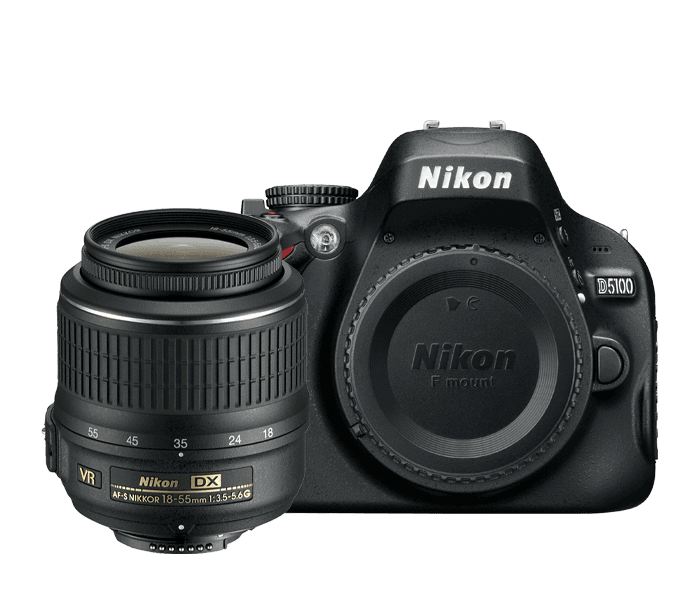
Nikon D5100 16.2MP CMOS Digital SLR Camera with 3-Inch Vari-Angle LCD Monitor (Body Only): Buy it now
Design and Build Quality
Nikon released the D5100 in 2011 as a step above its entry-level DSLRs. It’s a good fit for beginners who’ve outgrown a basic camera. The shape is conventional, 128 x 97 x 79 mm, and it weighs about 560 g. The polycarbonate body is light and feels plastic, though the deep grip holds well.
Image Quality
The D5100 camera is equipped with the 16.2MP DX-type CMOS sensor, plus Nikon’s EXPEED 2 image processor for image processing. Being a DX-format sensor size allows for good light-gathering capability and produces images with genuinely recorded colors, acceptable noise levels, and good dynamic range. The EXPEED 2 processor makes image preparation faster, lowers noise at high ISO settings, and makes quick work of handling operations of any sort. It is ideal for all types of photography, including portraits, landscapes, and low-light settings.
Lens Compatibility and System Capabilities
One of the fortes of the D5100 lies in being compatible with Nikon’s vast catalog of F-mount lenses, allowing more flexibility depending on the picture taking with various kinds of lenses. Nikon and third-party makers produce a variety of lenses from wide-angles to telephoto including some really great primes and zooms. The camera uses an advanced 11-point autofocus (AF) system with a cross-type center point for better focusing accuracy and subject tracking. Embracing the concept of lens technology, Nikon incorporates Vibration Reduction (VR) technology in some lenses, which helps to reduce the effects of camera shake and keeps the images sharp and the videos stable.
The Performance
In terms of performance, a faster execution of operations and predictable autofocus probably sit higher on the list for the D5100. The camera employs Nikon’s 3D Tracking AF for keeping permanent autofocus on moving subjects, meaning that this camera is good for sports picture taking and capturing action scenes. With the EXPEED 2 processor, one captures eight shots at 4 frames per second continuous. This processor assists a user in clicking multiple shots in rapid succession to capture the perfect moment.
Video Recording
The D5100 records 1080p at 30fps with stereo sound, and 720p at up to 60fps if you want smoother motion. Full-time autofocus works while you film, but it’s slow and hunts in dim light, and the lens motor can end up on the audio track. Exposure and audio levels can be set by hand, and I’d use an external mic if sound matters.
Viewfinder and LCD
The pentamirror viewfinder covers about 95% of the frame at 0.78x. It shows the real scene with no lag, plus exposure information, though it’s dimmer than a pentaprism finder. The 3-inch, 921,000-dot LCD is the camera’s best feature. It flips out and rotates, so you can shoot over a crowd, near the ground, or of yourself, and you can fold it in against the body to protect it.
Controls and Customization
The D5100 is camera designed with beginners and advanced users in mind,a creative mode dial and intuitive control represent one of the means for quick access in selecting shooting modes and settings.The camera does incorporate dedicated buttons for important functions like ISO sensitivity,white balance,and exposure compensation.Nikon includes Scene Modes and Picture Controls for creative effects that can be applied directly to photos inside the camera for further creative expression and for versatile photo compositions.
Connectivity and Storage
The D5100 has a USB port for moving photos to a computer and a mini-HDMI output for a TV, so you’ll need a specific cable for the second. Cards can be SD, SDHC, or SDXC. There’s no built-in Wi-Fi, so wireless transfer would mean an Eye-Fi card, if you want it at all. For accessories, Nikon sells the ML-L3 infrared remote, and there’s a wired option for long exposures.
Battery Life
The D5100 derives its power from a rechargeable EN-EL14 lithium-ion battery pack. Under normal circumstances, Nikon hence rates the battery life for around 660 shots per charge through the optical viewfinder usage. Maybe the users have option(s) to keep spare batteries or, for longer hours of shooting, tap into external power supplies, especially if they are venturing out for shoots or doing professional assignments.
Software and Features
To suit different modes of photography and preferences, Nikon has installed numerous shooting modes and advanced features in the D5100. The camera has Full Manual Control with proper exposure setting, plus semi-automatic modes of aperture priority and shutter priority. Advanced features: optimization of dynamic range with Active D-Lighting; combines exposures with HDR (High Dynamic Range) Mode; Night Vision Mode to take pictures underwater.
Usability and Handling
The D5100 has a deep grip and a layout that’s easy to learn. The Fn button on the front and the AE-L/AF-L button on the back can each be assigned to a setting you use a lot, such as ISO, which saves a trip into the menu. Past those two, there isn’t much to customize. The single command dial is the bigger limit: in manual mode you hold the exposure compensation button while turning it to change aperture, and that gets old fast. To boost the camera’s usability, the Vari-angle LCD monitor enriches shooting experiences with multiple angles for comprising compositions and surveys plots at awkward or rather unusual elevations.
Cost Effectiveness
The Nikon D5100 was really a bargain. It featured numerous advanced options, top image quality, and lens versatility on top and fancy that an easy-to-keep setup for an amateur-level DSLR camera. It appealed to photography enthusiasts and those beginners wanting to start working with a capable camera and try their hand at creative photography. Although the camera is no longer considered new and is consciously put on the shelves for almost-forgotten articles, its DX-format sensor, Full HD video, and extensive sets of features still give it some sort of commercial value for any user looking for a sturdy and adaptable DSLR that weighs-in to countless genres of photography.
Conclusion
The Nikon D5100 is a multi-purpose, high-grade DSLR camera, which provides best results in image quality, performance, and usability. A fine blend of high-resolution sensors with high-tech autofocus capabilities, lens versatility to suit any photography type, and ergonomic design to allow ease of shooting ensures one gets nothing but stellar results when shooting for portraiture, landscape, sport, or video recording with the D5100, basically outside the realms of creativity.
This review will offer you a complete description of the Nikon D5100, emphasizing the feature sets in terms of design, image quality, performance, features, usability, and value.
5. Canon EOS 5D Mark III
Canon released the EOS 5D Mark III in 2012, more than three years after the 5D Mark II. It has a 22.3MP full-frame CMOS sensor and the DIGIC 5+ processor, in a weather-sealed body. The biggest upgrade over the Mark II is the 61-point autofocus, which is much better on moving subjects. ISO runs from 100 to 25600, expandable from 50 to 102400. Two card slots, CF and SD, let you back up or split your files. Video is 1080p at 30, 25, and 24fps. The Mark III is expensive and heavy, so it’s a serious tool for people who need the full-frame quality.
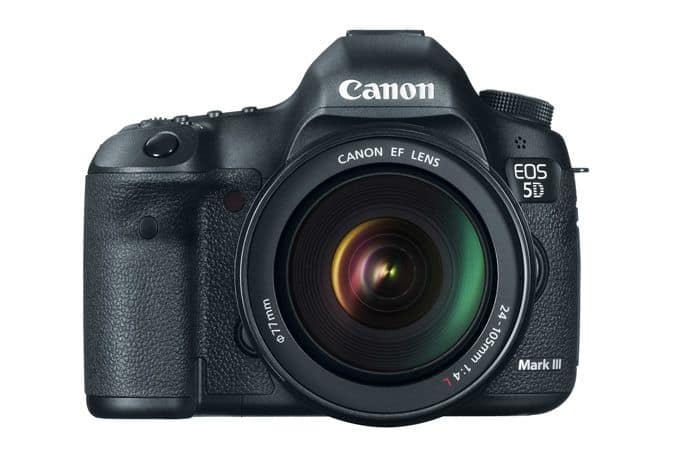
Canon EOS 5D Mark III 22.3 MP Full Frame CMOS with 1080p Full-HD Video Mode Digital SLR Camera (Body): Buy it now
Design and Build Quality
The Canon EOS 5D Mark III came out in 2012 as a full-frame DSLR for working photographers and serious enthusiasts. The body is magnesium alloy with weather sealing, 152 x 116.4 x 76.4 mm, and about 950 g with the battery. It’s a big, heavy camera, and a day of carrying it with a fast lens will make your shoulder notice. The grip is deep and the button layout is well thought out, so the main controls fall under your thumb and fingers.
Image Quality
Powered by a 22.3 MP full-frame CMOS sensor and DIGIC 5+ processor of Canon, the 5D Mark III can produce supreme-quality images. Full-frame sensors are large and allow light to hit in well-gathering, making an image that is highly detailed, low in noise, correctly colored-with a good dynamic range. The DIGIC 5+ processor offers speedy image processing, noise reduction for high ISO applications, and swift operational speed. This equips the 5D Mark III to become an all-rounder in photography, perfect for portraiture, landscape, or even low-light photography.
Lens Compatibility and System Capabilities
One distinct advantage that the 5D Mark III asserts is its compatibility with the entire range of EF lenses, thus offering the professional photographer and amateur versatility. One may choose from any number of different types of Canon and third-party lenses, with options ranging from wide-angles to telephoto, including high-end primes and zooms. It boasts a formidable 61-point autofocus system with 41 cross-type points that enhance accuracy and subject tracking, making it ideal for shooting fast subjects and retaining focus in hard situations. Image stabilization (IS) is included within some Canon lenses to reduce camera shake, thus ensuring an image and video close to crisp and stable.
Performance
When talking about performance, the 5D Mark III shines in the area of promptness of operation and hence, pinpoint accuracy. The camera makes use of Canon’s AI Servo AF, which is a continuous autofocus that tracks moving subjects; thereby, making it embattled in sports photography and action scenes. It is also capable of capturing at a speed of 6 frames per second (fps) and hence, the DIGIC 5+ processor helps one in firing a series of shots in short succession, capturing any decisive moments.
Video Recording
The 5D Mark III can record 1080p Full HD video at 30 frames per second with stereo sound. The camera also can record HD 720p video at 60 frames per second for smooth motion. Canon offers full manual control over video exposure, and in-cam audio levels can be adjusted during recording, an advantage for work in video environments. The Movie Servo AF function offers continuous autofocus tracking during recording, keeping focus transitions in real time and following subjects perfectly through tracking.
Viewfinder and LCD Display
The camera is equipped with a pentaprism optical viewfinder for composing shots, which covers about 100% of the frame and magnifies 0.71 times. The optical viewfinder displays a clear and precise view of the scene, where exposure is time-based and white balance changes are observed in real-time before capture. On the other hand, the 5D Mark III features a 3.2-inch Clear View II LCD Monitor with approximately 1.04 million dots. This anti-reflective LCD is easier to view in bright conditions and supports Live View for composing and accurate focus checking.
Controls and Customization
The Canon EOS 5D Mark III is designed for photographers requiring absolute control over their shooting parameters and need customization. The camera offers two control dials, alongside dedicated buttons to control ISO sensitivity, white balance, and exposure compensation. Canon also incorporates Custom Controls and My Menu settings where workflow preferences can be stored. Functions can be assigned to buttons and dials for quick access in the field. Picture Styles and Creative Filters are also featured by the camera to apply artistic effects on photos directly in-camera, therefore allowing greater artistic expression and application in photo composition.
Connectivity and Storage
In the way of connectivity, the 5D Mark III comes with a USB 3.0 port for fast data transfer, an HDMI output for displaying photos and videos on a compatible TV or monitor. The camera offers support for CompactFlash (CF) and Secure Digital (SD) memory card formats for storage, thus allowing ample storage space to save those high-resolution stills and movies. Canon also makes other accessory options available for the camera, amongst them the WFT-E7A Wireless File Transmitter with provisions for wireless connectivity and remote shooting, battery grips, and external flashes for enhanced function.
Power
The 5D Mark III uses an LP-E6 lithium-ion battery, which Canon rates at about 950 shots per charge when shooting through the viewfinder. That is a lot for a DSLR, and one battery will usually get you through a full day of stills. Live View and video use more, so carry a spare if you shoot either. The BG-E11 grip holds two batteries and adds a vertical shutter button, which helps with portrait-orientation shots.
Features and Software
Canon’s array of advanced features and shooting possibilities guaranteed to appeal to all photographic styles and preferences are added to the 5D Mark III. The camera enables Full Manual Control of exposure, aperture priority, and shutter priority. It also presents more advanced options, including HDR mode (lot of exposures combined together), Multiple Exposure mode used for making double exposures creatively, and Dual Pixel RAW for adjusting focus and bokeh within the frame after capture.
Practicality and Handling
Ergonomic comfort and ease of operation distinguish the 5D Mark III, which has a rugged weather-sealed body and comfortable grip. Owing to its dual card storage slots, the camera can record simultaneously to a CF and an SD memory card, allowing for backup and overflow storage options. An intuitive interface, along with fully customizable controls, ensure that a photographer’s work flows smoothly, allowing for rapid adjustments to key settings-commonplace, in essence-so the photographer can concentrate on framing shots and capturing decisive moments rather than fussing over settings.
Conclusion
With respect to image quality, performance, and usability, the Canon EOS 5D Mark III is still considered among the flagship full-frame DSLR cameras. It earns its keep with a high-resolution sensor, very good AF capabilities, a wide range of lenses, and a solid ergonomic design that serves well in all kinds of shooting scenarios opportunities. Be it studio photography, event documentation, or outdoors, the 5D Mark III keeps its promise, offering photographers an unbeatable combination of reliability, versatility, and superior image quality in a professional DSLR.
This review thoroughly looks at the Canon EOS 5D Mark III architecture, highlighting all the strengths of the Camera system in terms of design, image quality, performance, features, usability, and overall value.
Related Posts




Tech Reviewer & Product Analyst
Định Bia has spent over 10 years testing consumer electronics with a focus on smart technology. He work as a product advisor at Biareview where he helped customers find the right devices for their needs. He personally tests every product featured on this site using a consistent evaluation framework covering quality, durability, and value. All reviews are based on experience, not influenced by the manufacturer.