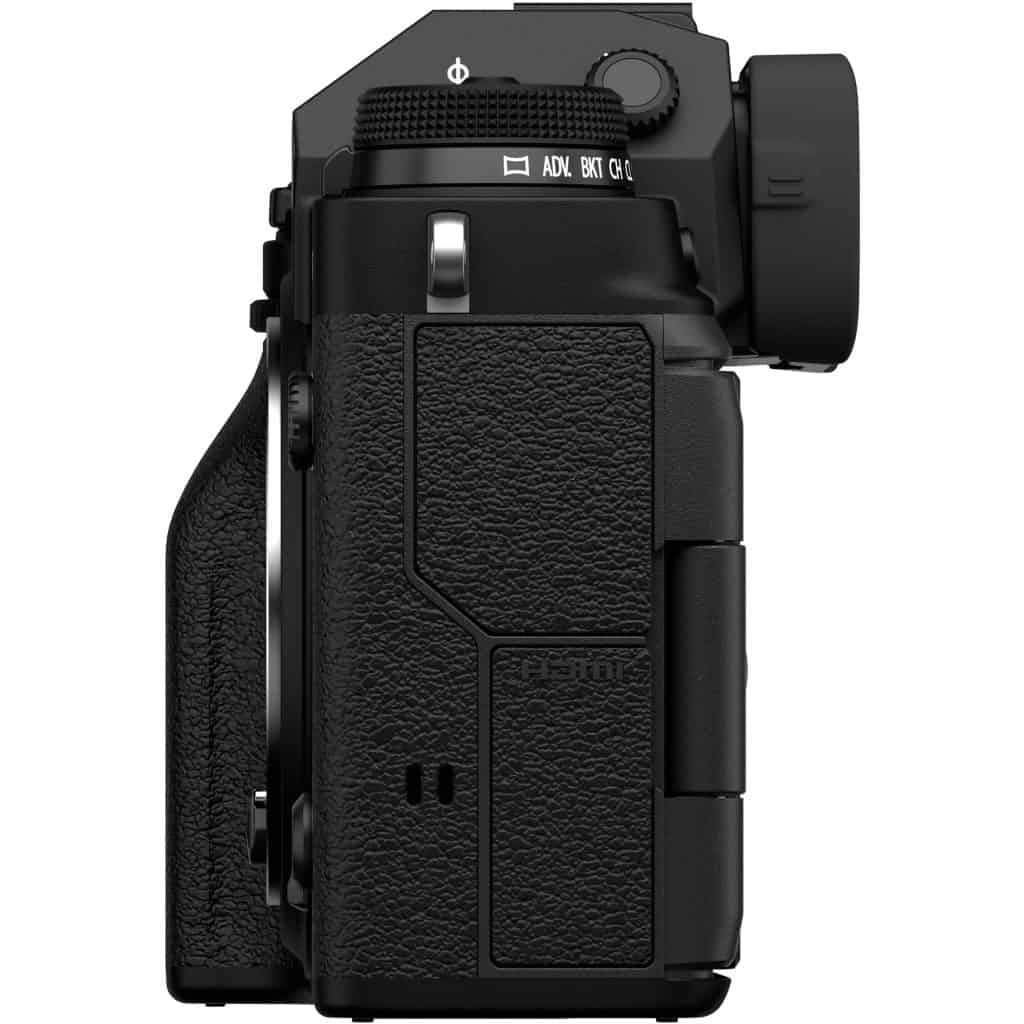
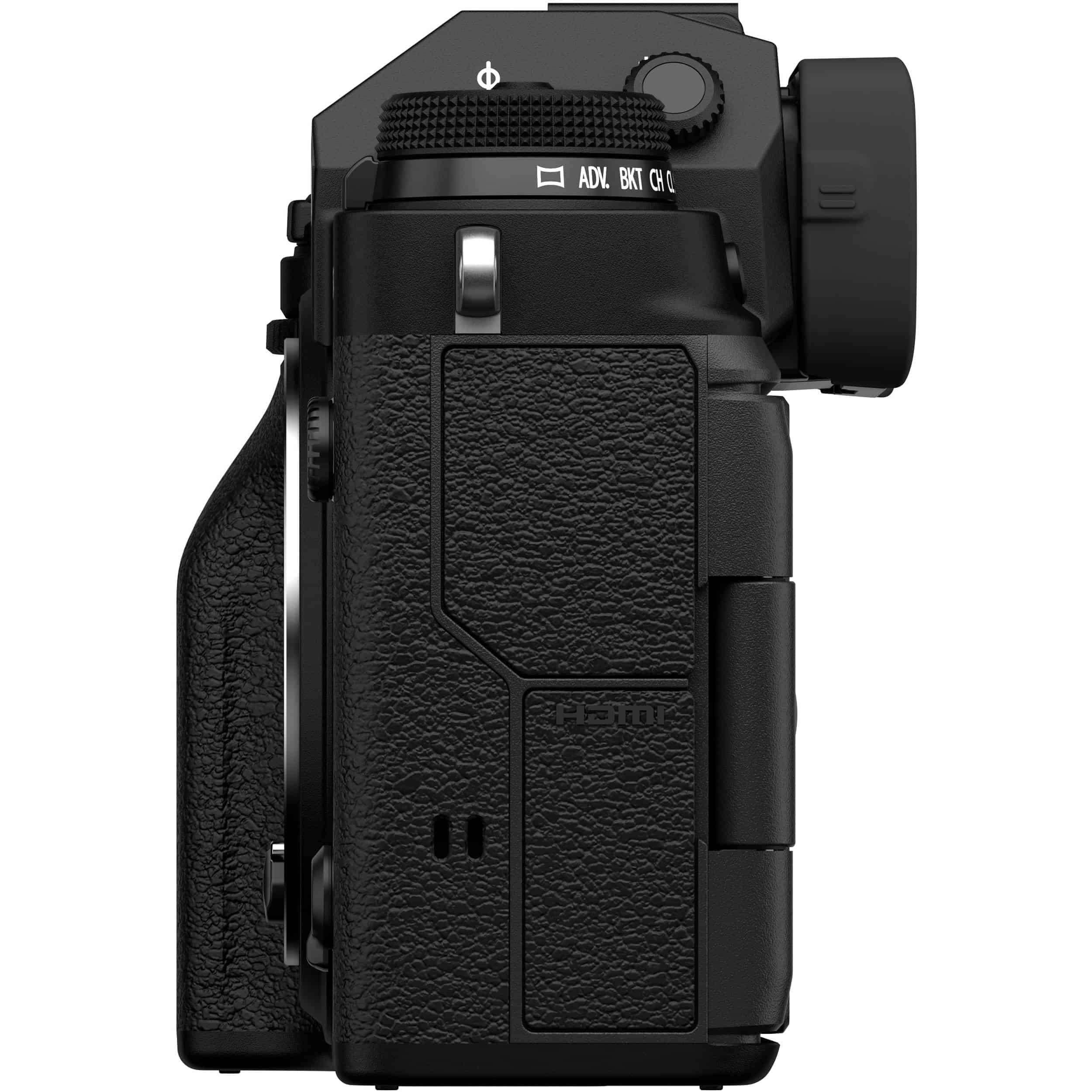
From the very first moment it was held, it could be felt that the X-T4 was quite a bit on the heavier side compared to the earlier X-T3, an obvious primary conclusion when hand-holding; the body hardware changes are thus more appreciable. In fact, Fujifilm has provided X-T4 with an IBIS in-body stabilization system, which was available earlier only on the X-H1; this advancement offers 6.5 stops of stabilization for the user’s ease in performing handheld photo and recording video stabilization.
Sensor and processor are unchanged from the X-T3 — same 26.1MP X-Trans 4 chip, same X-Processor 4, same 425-point phase-detection AF spread across the whole frame. What Fujifilm did rework is the shutter mechanism, and it shows: 15fps mechanical burst shooting, same as before, but now there’s a 30fps electronic option too if you can live with the 1.25x crop that comes with it.
To fulfill vlogger users, the video recording function on the X-T4 has been made more user-attractive; it shoots 4K at 60FPS with a bit rate of up to 400Mbps, Full HD at 240FPS, and records 10-bit 4:2:0 straight into the memory card without the use of an external receiver.
Externally, as per design and style, the X-T4 does not differ much from the X-T3, but Fujifilm tweaks its styling in a manner suitable for video users. Firstly, the mode dial on the left is now rearranged, and the metering mode dial is replaced by a simple mode switch between STILL and MOVIE, enabling users to shift quickly between these two shooting or recording modes.
Plus, Fujifilm also rearranged the Menu and separated the Shooting and Returning Menus.
In addition, another small change is that the Q and AF-L function buttons have been swapped. But the big change that surely both users of photography and video recording will love is that now the X-T4 has a rotating screen. Users will have freer camera angles with this screen, not being constrained compared to the previous flip screen on the X-T3. The machine’s screen is an LCD touch screen with a resolution of 1.62 million pixels, compared to the X-T3’s 1.04 million pixels only.
Best of all for X-T3 users upgrading, the mode gear button on the back is bigger and long in the journey, so when sliding at this feels just so much better.
The gear is more accurate, and A quick operation is an upgrade experience.
Quality has remained the same as with the X-T3, with good noise suppression at ISO 6400 and ISO 12800; this image quality is still perfectly good enough for you to feel comfortable using and posting it on social networks; at higher levels, quality fell quite considerably.
The reuse of the sensor like on the X-T3 may not much improve the strength of the machine, but the provision of IBIS has really made a huge improvement, and this is in much better image quality in both shooting and recording. Indeed, it has made special moments so much easier to capture at low shutter speeds.
Fujifilm also has widened the customization options in the Q menu, with the Highlights Tone, Shadow Tone, and step differences from 0.5 being added, as well as the exclusive Bleach Bypass color profile normally found only on the X-T4, in addition to the Classic Neg colorway from the X-Pro3.
Also, Fujifilm’s X-T4 takes in upgrade battery life on that new NP-W235 battery with a complete storage power of 2350 mAh -as much as twice of what NP-W126S offers to the X-T3. Reportedly from Fujifilm, the X-T4 can shoot up to 500 photos in standard mode and 600 in eco mode. Not meant for using these old batteries, obviously, is the X-T4.
Fujifilm X-T4 Mirrorless Camera Body – Black: Buy it now
Fujifilm X-T4 Mirrorless Digital Camera with XF 16-80mm f/4 R OIS WR Lens (Silver) Bundle, Includes: SanDisk 64GB Extreme SDXC Memory Card, Spare Battery + More (6 Items): Buy it now
Connectivity and Configuration
Wi-Fi and Bluetooth are both here, and they do what you’d expect — Wi-Fi moves photos and video to your phone or laptop, Bluetooth handles quick pairing for remote shutter control or sharing. None of it requires digging through menus to figure out.
Ports and Slots
Mic in, headphone out, HDMI (type D), USB-C for charging and transfer — Fuji covered the bases here. Two SD card slots, both UHS-II compatible, so you’re not stuck waiting on write speeds or running out of room mid-shoot.
User Interface
The menu system doesn’t fight you — it’s laid out sensibly and Fuji lets you customize nearly everything, which matters once you’ve figured out how you actually like to shoot. The touchscreen backs that up, putting whatever setting you need one tap away instead of buried three menus deep.
Battery Life and Power Management
Battery Capacity
Fuji swapped in a new battery here — the NP-W235, replacing the X-T3’s smaller NP-W126S — and the difference is noticeable. Rated around 500 shots a charge, which sounds modest until you remember the old one didn’t get you nearly that far. Good news if you’re shooting all day or rolling video for extended stretches.
Charging Options
The X-T4 camera system supports USB-C charging, allowing battery charging even in the camera. This is convenient during travel and shooting. In addition, the camera is also compatible with an optional dual battery charger that charges two batteries at the same time.
Comparison against Competitors
Fujifilm X-T3
The Fujifilm X-T4 builds on all the good aspects of the X-T3 with a few more major improvements. In particular, the in-body image stabilization (IBIS), a massive upgrade over the X-T3, is hugely advantageous as it further stabilizes stills and video. The larger battery, better ergonomics of the camera, and enhanced video features with 4K recording at 60p are some other improvements in the X-T4. It would be fair to still say that the X-T3 is a camera in its own right; however, the X-T4 represents a bigger leap forward towards versatility and power.
Sony Alpha a7 III
The Sony alpha a7 III, a full-frame mirrorless camera that goes on to compete with the X-T4 in terms of high-performance segment. The a7 III has a larger full-frame sensor, which can help with improved low-light performance and depth of field control. But then, there’s the other side: it has an APS-C sensor, as well delivering excellent quality images but in a compact and lightweight design. With the 4K video-recording capability, it is also deprived against the X-T4 with in-body image stabilization and video-centric features making it really tough competition for those pro video creators.
Panasonic Lumix GH5
The Panasonic Lumix GH5 has been winning lots of fans both at home and abroad, being a favorite among video users and professionals. Like the X-T4, it also has 4K video recording with 10 bit, 4:2:2 internal recording. The main highlights of the GH5 are its very video-centric features and superb stabilization. Compared to the X-T4, though, you also get autofocus superiority, a bigger battery, and ergonomics designed with the shooting professional in mind, whether stills or video.
Target Audience
Major Types of Use
Adventurers and Advanced Amateurs
The Fujifilm X-T4 is the ideal camera for the passionate and advanced amateur who covets a high-performance machine with all the bells and whistles. Such feature set and image quality, autofocus’, and video capabilities make it well-suited to every possibility from portrait through landscape to action and travel.
Professionals
For such professionals, the camera will serve as a versatile tool that one can use and be great at taking stills as well as moving pictures. Built to last, with high-quality construction, advanced autofocus, and in-body stabilization, the camera is reliable in tough shooting environments. An excellent advantage is that the camera has also proven its quality in terms of image production and video with such professionals operating in areas classified into commercial, editorial, and event photography.
Video Creators and Vloggers
Well reputed, the Fujifilm X-T4 is as good as gold in the minds of many video creators and attractive. That combination of 4K recording at up to 60p, 10-bit 4:2:2 internal recording will make for pretty rich imagery plus almost unlimited potential in color grading. Hand-held shots typically benefit from the built-in body image stabilization (IBIS) to curb unwanted camera movement or jostling. Plus, there’s a vari-angle touchscreen LCD to make framing easy when vlogging or recording oneself; hence, it ticks all the boxes for a serious content creator interested in producing top-notch video and shooting versatility.
Pros and Cons
Pros
Exceptional Image Quality; indeed, the 26.1-MP APS-C X-Trans CMOS 4 sensor produces a sharp and highly detailed image with excellent rendition of colors. Other advanced noise reduction and high-ISO performance make it capable in versatile shooting conditions at the same time elevating image quality so that an X-T4 could suit one’s needs in various shooting conditions.
Complex Autofocus System: The hybrid AF system boasts of 425, bringing a mix of phase-detection and contrast-detection points which work fast yet accurately to focus in really challenging situations. Some specific features like Eye AF and Face Detection can also be useful with portraits and events.
In-Body Image Stabilization: IBIS system allows stabilization up to 6.5 stops, making hand-held photography much more comfortable and reducing shake with stills and video.
Excellent 4K Video Quality: The X-T4 records 4K video up to 60p with ten bits 4:2:2 internal on-board recording and possesses a good video-related high qualification, versatility for post-processing. Moreover, the camera has a number of excellent video modes, such as high frame-rate recording and various picture profiles.
Battery: A ‘number’ NP-W235 will give longer sustained battery life for camera usage, an estimated 500 frames per charge. Addressing those kinds of long shoots and long periods of video recording comes as an improvement.
User-Friendly Interface: You will not have any problems understanding the X-T4 comprehensive menu system. It is automatically configured to be more user-friendly and generally well organized for customization. The use of specialized controls and a vari-angle touchscreen adds on to enhancing the overall experience.
Cons
The X-T4 isn’t cheap, and for a lot of people that’s the whole conversation right there. You’re paying more than you would for most APS-C mirrorless cameras in this class. Whether that’s justified depends on how much you actually use the features you’re paying extra for some people it’s an easy yes, for others it’s a hard pass.
Size and Weight: Compared with the previous one, this one fat and a bit heavier than its older sibling. Although the bulging part itself serves to hold the added feature IBIS inside, it is not the best idea for a user wanting smaller and lighter gear.
Short Native Lens Selection: Although there are many XF lenses, supplied by Fujifilm, they still might appear to be limited when compared with other manufacturers. However, this issue can be eased as the X-T4 is open for third-party lenses and adapters.
No built-in GPS either, which is a mild annoyance if you like your shots automatically tagged with location. You’ll need a companion app on your phone to make that happen — the camera itself won’t do it for you.
Firmware updates and futures of promise
Fujifilm has a long history of releasing firmware updates that improve the abilities of their cameras based on user feedback. Future firmware updates are expected for the X-T4 for the purposes of adding functionalities or improving them. Further improvements in technology would mean that a camera like the X-T4 is going to keep being further improved to remain contemporary in the fast-paced world of photography.
Conclusion
Fujifilm X-T4 is such a neat, powerful camera that meets all the requirements of a hardcore photographer and a moviemaker. Excellent high quality, autofocus, in-body image stabilization, and heavy-duty video recording all make it perfect for users ranging from enthusiasts to professionals. There are also some plus points such as its sturdy built, improved battery life, and easy user interface.
Although the price may be an important consideration for some buyers, as well as the slightly larger dimensions of the camera, the feature set and the overall performance merit that investment. As a flagship model in the X-series, the X-T4 essentially is an exhibit of the commitment of Fujifilm to continual innovation and excellence, as it can offer a camera that does brilliantly in just about any scenario for shooting.
If you are looking for a high-performance mirrorless camera that prides itself on advanced functionality and versatile shooting abilities, Fujifilm X-T4 is really one of the best offerings that will stand the test as it continues to raise the bar within the photography and cinema spheres.
Related Posts


Tech Reviewer & Product Analyst
Định Bia has spent over 10 years testing consumer electronics with a focus on smart technology. He work as a product advisor at Biareview where he helped customers find the right devices for their needs. He personally tests every product featured on this site using a consistent evaluation framework covering quality, durability, and value. All reviews are based on experience, not influenced by the manufacturer.