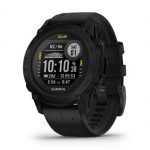
What everyone asks about the Fenix 9 Pro is the screen, and what they mean is brightness. In direct sun the pace field and the map stay readable, which was not true of the last one. The questions I still had after a few weeks were whether it holds up in every light and what the battery pays for it.
Why it reads well outdoors
Checking a watch in hard sun usually turns into a small routine of tilting your wrist until the glare slides off the glass. That mostly goes away here.
3,000 nits
The number is the headline and this time it isn’t just a spec sheet thing. The panel punches through midday sun. The ambient sensor registers strong light and pushes the screen to high power almost instantly, so pace and heart rate stay as two readable numbers instead of a grey smear you have to interpret. If you’re coming off an older Fenix the difference shows up inside the first run, which I wasn’t expecting since I’d never found the old one unusable, just annoying about four times per run.
The coating on the sapphire glass
There’s an anti-reflective layer on the sapphire now. It scatters glare rather than returning it to your eyes. The benefit is narrower than the spec sounds: mainly, when you raise your wrist, your own shadow stops falling across the numbers, which is the thing that used to make me lift and re-lift my arm. Two years of scratches and sunscreen might change the picture and nobody can tell you yet.
Sapphire glass helps with viewing
Contrast and map colors shift by themselves
Starting an outdoor activity raises the interface contrast automatically. Garmin also redrew the TopoActive colors in stronger tones. On road this barely registers. On trail it’s the difference between reading the terrain shading at a glance and stopping to look properly, and the fitness graphs survive bright light better than before.
On the run
There’s a stretch of my usual loop, maybe 5 km, with no shade whatsoever, and it was the most useful part of testing this. Flick the wrist, the numbers are there. I didn’t once stop to cup a hand over the display, which I used to do without thinking about it.
Metrics are clear without shading the screen with your hand
Auto brightness steps down when you move into shade and does it smoothly enough that you don’t catch it happening. That’s doing serious work for battery life on long sessions. Measured against a memory-in-pixel screen, though, it still costs you, and if you’re coming from a transflective Fenix you should plan on charging noticeably more often. Most people won’t care. If your weekends involve six hour efforts, you probably will.
The one thing that irritates me: go from blazing sun into deep shade at speed and the panel sits bright for roughly a second before it adapts. Small, but on tree-lined routes it repeats endlessly and I did start noticing it.
The screen is why I’d choose it, assuming you can live with the charging. I’m still not sure I’d recommend upgrading if your current Fenix works.
Garmin fēnix® 9 Pro, inReach®, Titanium, 51mm, Graphite/Black:
Garmin fēnix® 9 Pro, Titanium, 47mm, Autumn Orange/Spark Orange:
Garmin fēnix® 9 Pro, Titanium, 47mm, Graphite/Black:
Garmin fēnix® 9 Pro, inReach®, DLC Titanium, 47mm, Black/Pebble Gray:

Related Posts