Design and Build Quality
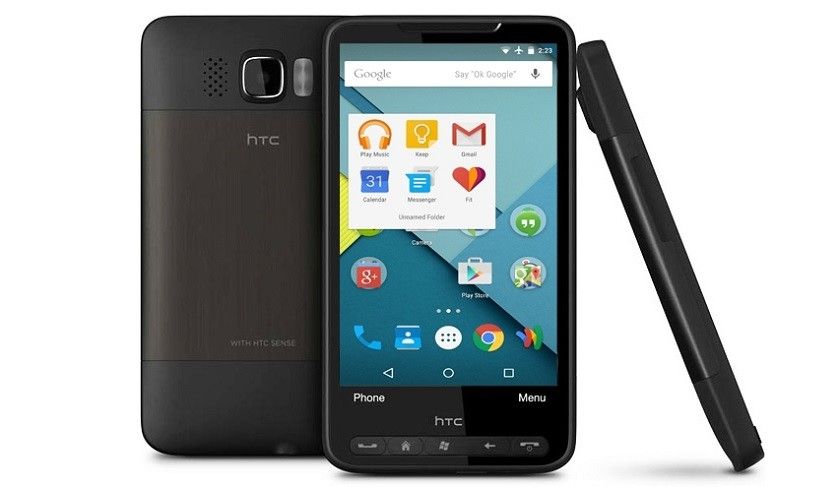
The HTC HD2’s design was kinda groundbreaking for its time, in a way that felt… bold i guess. Back in that 2009 period, most smartphones were still on the smaller side and relatively compact, while the HD2 went and introduced a big 4.3-inch capacitive touchscreen display, which people were calling massive then. In hindsight, it was kind of a precursor to the phablet trend, the whole “bigger-than-before” vibe that would later take over the market. Even the phone’s size, 120.5 x 67 x 11 mm, and its weight of 157 grams helped it feel solid and premium, without getting too bulky for the screen it carried.
As for the body, the HD2 used a unibody layout, made with materials that mixed metal and plastic, and somehow managed to look clean but also hold up well. The front basically revolved around the display, with a thin bezel that pushed the screen real estate as far as it could go. Under the screen, there were five physical keys, for call, home, start, back, and end. They were placed in a way that didn’t really break the sleek look, which sounds small but actually matters.
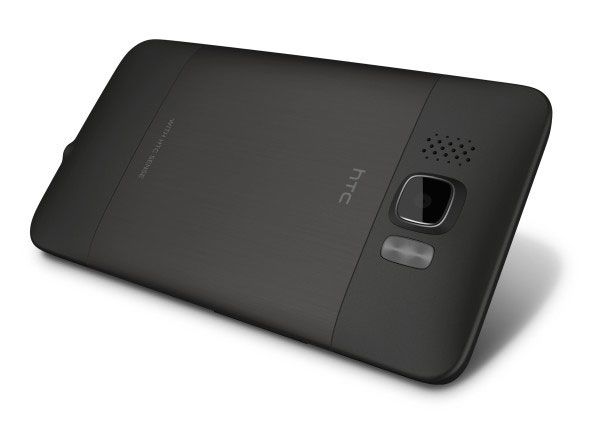
Turning it over, the back cover used a soft-touch plastic finish. It made the grip feel more comfortable and it also reduced fingerprints, so it didn’t look messy after normal handling. The camera area sat in the center near the upper part, and next to it was a dual-LED flash. You could also spot the HTC and Windows logos embossed on the back, subtle enough to keep the whole thing professional.
What really stands out though, is the build quality. HTC had already built a reputation for making devices that felt properly assembled, and the HD2 matched that expectation. When you held it, it had that “nothing rattles” confidence. No creaks, no obvious flexing when pressure was applied, just a firm feel overall. That kind of construction level made the HD2 feel premium, comparable to other flagship-ish phones from the era like the iPhone 3GS and the Nexus One, even if the design choices were different.
Display
The HTC HD2 was among the first smartphones to come with a big capacitive touchscreen display, and honestly it was a pretty big step away from the smaller resistive screens that were kind of everywhere in the market back then. The 4.3-inch TFT panel offered a resolution of 480 x 800 pixels, so that worked out to roughly 217 PPI, which at the time, felt very sharp. Of course compared to today’s phones it might look modest, but in 2009 it was considered high-resolution and it gave a clear, clean viewing feel.
It could show 65,000 colors, which was pretty standard for that era. Still , what really stood out was the overall display quality. The colors showed up bright, and the contrast looked excellent, so for media , web browsing, and general day to day use, it was genuinely enjoyable. The capacitive design also supported multitouch gestures , and that was starting to matter more and more as smartphones like the iPhone made those interactions normal.
On top of that, the HD2’s screen was responsive, like really fluid , giving a smooth and intuitive experience. Touch inputs were registered with a lot of accuracy, and because the display was large, typing on the onscreen keyboard was easier than on several other devices at the time. The glass over the display felt sturdy enough, although it wasn’t as scratch-resistant as Gorilla Glass that showed up later on newer models.
Outdoor visibility was decent, but the display could get a bit reflective in direct sunlight, you know like that glare that just shows up when you least want it. It was a pretty typical headache for a lot of smartphones back then, and the HD2 didn’t really dodge it either. Even with that little drawback , overall display quality on the HTC HD2 stayed as one of its better points and it helped a lot with why it became so popular.
Hardware and Performance
Inside, the HTC HD2 was driven by the Qualcomm Snapdragon QSD8250 processor, and this included a 1 GHz Scorpion CPU along with an Adreno 200 GPU. At the time, this counted as one of the strongest mobile chips around, sort of a big jump in day to day speed. With 448 MB of RAM in the mix, the HD2 could deal with multitasking, gaming, plus multimedia use, without too much fuss.
Performance was also one of the HD2’s most praised sides. Because it had a brisk processor and a decent amount of memory, Windows Mobile 6.5 Professional usually ran smoothly. Using the interface, launching applications, and moving between tasks felt quick , and responsive in that way you notice right away. The HD2 also landed among the earlier phones that supported a 1 GHz processor, and it kind of set the bar, performance wise, for the mobile industry.
Storage on the HTC HD2 was a little tight if you compare it to modern devices, since it offered only 512 MB of internal storage for apps and system files. Still , it could be expanded with a microSD card slot, and those cards could go up to 32 GB. So users could keep a fair amount of media, like music, video files, and pictures, without constantly worrying about space running out.
The device also had a 1230 mAh removable battery, so it could still give you decent battery life, mostly because the display wasn’t small, and the processor was pretty capable too. On a single charge, the HD2 could easily get you through an entire day of moderate use, things like web browsing, calls, messaging, and media playback. Then again power users might feel the need to top it up sooner, like more often, especially if they were into gaming or just running long stretches of video.
For connections, the HTC HD2 came with 3G (HSDPA 7.2 Mbps), Wi‑Fi b/g, Bluetooth 2.1 with A2DP, and GPS supporting A‑GPS, pretty much as you would expect. It also had a 3.5 mm headphone jack and a microUSB port,used for charging and for data transfer too, in a sort of straightforward way. The GPS part mattered a lot for navigation, plus location based services, which were getting popular back then, very quickly it felt.
Software and User Interface
The HTC HD2 shipped with Windows Mobile 6.5 Professional, which was a meaningful jump from the older builds, but it still didn’t quite keep up with the newer ecosystems such as iOS and Android, mainly in day to day user experience. Windows Mobile 6.5 brought a more touch friendly feel, with bigger icons and that “honeycomb” Start menu. The idea was that it would be easier to move around on touchscreen devices, and not just for people using a stylus.
One of the defining features of the HD2 was HTC’s own custom user interface, people usually called it HTC Sense, but it was also kinda the vibe, layering on top of Windows Mobile. Instead of feeling like the standard Windows Mobile look, Sense made things seem more current, more polished too, visually speaking. With HTC Sense you got stuff like a home screen that you could actually tweak, plus widgets, then the weather app, with those animated graphics, and a contact system that felt more natural day to day. In practice, these changes made the HD2 feel more user-friendly and it sort of helped hide some of the rough edges of Windows Mobile.
HTC Sense also brought along the TouchFLO 3D interface, which let the phone do these smoother, 3D-like moves between screens and apps, not just the basic switching. That alone felt like a step up from the default Windows Mobile interface, because the stock version could come off clunky and, honestly, a bit behind the times. So yeah, having HTC Sense on the HD2 became a big selling point, it helped the device stand out against other Windows Mobile phones back then, not just in specs but in daily feel too.
Still, even with all that, Windows Mobile 6.5 had limitations. The operating system was built on a base that was first meant for stylus use, and that history sometimes slipped through. You would notice it in those small buttons, or menus that were kinda hard to press, plus they weren’t always tuned for finger navigation. Also the app ecosystem was weaker compared to iOS or Android, so there were fewer well made third party apps around, and it showed if you were picky about what you wanted installed.
But maybe the most interesting part of the HTC HD2’s long legacy is how it could run a pretty wide range of operating systems, way beyond what anyone originally planned. With a lot of hard work coming from the developer community, the HD2 finally got to the point where it could run Android, Windows Phone 7, Ubuntu, and even those early Windows RT builds. It’s that kind of wiggle room, and also the hardware being strong enough to keep on going, that really explains why the device stayed popular with tech enthusiasts ,and modders for so long.
Camera and Multimedia
So the HTC HD2 had a 5-megapixel rear camera, pretty standard back in 2009 for high-end smartphones. It came with autofocus, a dual-LED flash, plus the option to record video at 480p. Overall the camera specs sounded strong on paper ,but when you actually use it, the results felt kinda mixed, not fully consistent.
When the lighting was good ,the HD2 could pull off photos that looked pretty detailed and punchy. Autofocus was usually quick enough and pretty accurate, and that dual-LED flash did help when things got darker, like inside rooms or evening shots. Still, even then, it ran into the usual smartphone issue from that era—dynamic range wasn’t great. You’d often see highlights getting overexposed, while shadows ended up too dark , like the sensor just couldn’t hold both at the same time.
Low-light performance was even more uneven. In dim environments, you could spot quite a bit of noise and you’d lose fine detail, so the pictures didn’t feel as crisp. The dual-LED flash improved the situation some, but it didn’t fully make up for the limits of the camera sensor. Even with all that, the HD2 camera could still produce decent photos, enough for sharing online or just viewing on the screen without much complaint.
Video recording on the HTC HD2 was kinda restricted to 480p, and honestly that felt normal back then, like… what most phones were doing. The footage looked decent enough for casual moments, but it really wasn’t matching the high-definition video recording that later would become the default thing on smartphones in just a few years. Also, there was no front-facing camera which was pretty limiting, because video calls were starting to pick up steam as services like Skype got more common.
When it came to multimedia stuff, the HTC HD2 was more like a strong hand than a weak one. The big display made it a nice gadget for watching videos, and the built-in media player handled a pretty broad set of audio and video formats, such as MP3, AAC, WMA, and MP4. You also had a 3.5mm headphone jack so connecting your favorite headphones, or even external speakers was pretty straightforward for a better audio experience. The output through the jack was really good, you could hear things clearly and the balance stayed even. The built-in speaker however wasn’t super loud, and it wasn’t exactly full-bodied, but it was still fine for everyday listening and for hands-free calls.
There was also a dedicated music player app, and it sat inside the HTC Sense interface. The music player had a simple, easy feel, so browsing and organizing your music library was fairly smooth. It supported album art too, and it included the usual playback controls such as shuffle and repeat. On top of that it came with an equalizer, with several presets, letting you tweak the sound the way you wanted, more or less.
For video playback, the HD2’s large screen made it a capable device for watching movies and TV shows on the go. The video player supported standard definition content, and while it couldn’t handle HD video files natively, it still provided a good viewing experience for the formats it did support. The device also had an FM radio, a feature that was becoming less common in smartphones at the time but was still appreciated by many users.
HTC HD2 Windows 3G Wi-Fi GPS Cell Phone | T-Mobile (Unlocked): Buy it now
Battery life
The HTC HD2 came with a 1230 mAh removable battery, which was sort of a standard capacity for a phone with that kind of body and power draw. In day to day reality, the battery life was pretty decent, especially when you remember the big display and the fairly capable processor. With normal usage, like web browsing , email, social media, and some media playback the HD2 could usually make it through a full day on just one charge.
That said, when the device got pushed hard, meaning gaming, long video playback, or using GPS for navigation, the battery would drop faster than you’d like. If you were the type of person who uses everything a lot, power users might end up topping up mid day, mostly when those higher-demand features were running all the time.
A removable battery was kind of the key point here, because it let users keep a spare battery on hand for longer stretches away from outlets, or just swap it out if the battery started to wear down and degrade. A move like this was very common for folks who relied on their phones for work schedules, travel, or those long sessions where charging isn’t really an option.
To charge the HD2, it used the microUSB port, which was the usual choice back then. There was no fast charging of any sort, so going from empty to full typically took about 2 to 3 hours . Not super quick, but honestly it felt acceptable for the time and era.
Connectivity
The HTC HD2 had quite a lot going on when it comes to connectivity options. It was set up for 3G networks (HSDPA 7.2 Mbps), so at the time you could still get decent mobile internet speeds. Back then 4G LTE wasn’t really common yet , but honestly the HD2’s 3G side was more than enough for most online tasks, like surfing the web, checking email, and streaming audio.
For faster access when possible, the phone also supported Wi‑Fi using the 802.11 b/g standards. So when a wireless network was around , you could switch over and browse a bit easier. It also included Bluetooth 2.1 ,and with A2DP support, meaning you could pair it with other devices like wireless headsets, car stereos, or even speakers.
Then there’s GPS, which is a big deal for location services. The HD2 supported A‑GPS, helping it figure out where you are with reasonable accuracy, which made navigation and other location based applications a lot more practical. GPS wasn’t just a standalone feature either, it was tied into HTC’s pre-installed navigation software, so you got turn-by-turn directions plus the usual map related needs, without much fuss.
On the physical side, it came with a 3.5mm headphone jack for audio , a microUSB port for charging and data transfer, and a microSD card slot for expanding storage. That microSD slot was especially handy, because it let you expand your storage capacity for media files and other documents, pretty quickly.
Software and Customization
One of the big selling points people talked about with the HTC HD2 was that it felt really flexible, software wise, and you could customize it in a lot of ways through the HTC Sense interface. It shipped at first with Windows Mobile 6.5, but it was the HTC Sense layer that sort of made the experience feel a bit more natural, and yes, more good looking too.
HTC Sense was also pretty flexible in practice, so users could throw in widgets, shuffle the home screens around, and basically change the overall vibe of the interface. The Sense UI came with a bunch of built-in widgets, like weather, calendar, music, and social networking options. These things gave at-a-glance info, plus quick shortcuts to stuff people usually use without thinking too much.
Even though it was technically a Windows Mobile handset, the HD2 somehow kept going because it had a huge scene around it, developers and modders in particular. Their work mattered a lot for why the device stayed popular for so long. Because of them the HD2 got a reputation as one of the more adaptable smartphones of its era, and it could run a lot more than just what it started with, beyond that original Windows Mobile setup.
The community managed to port multiple Android versions to the HTC HD2, which is why it became one of those rare devices you could say supports both Windows Mobile and Android. In a practical sense, the HD2 turned into a dual boot setup, so people could swap operating systems when they wanted. Later on, over time, additional operating systems showed up too, including Windows Phone 7, Ubuntu, and even early releases associated with Windows RT, which really highlighted how far the device could be pushed, in a way that surprised a lot of folks.
This level of customization and the possibility to install various operating systems made the HTC HD2 kind of a darling for tech enthusiasts, and for developers too. It turned into a symbol of what mobile tech can do, plus a practical case of how community driven development can push a device ,so to speak, way past its official support window.
Legacy and impact
The HTC HD2’s legacy is pretty meaningful , not only due to its solid hardware ,and software strengths, but also because it left a real mark on the smartphone industry. In a lot of areas the HD2 felt ahead of its time, and it quietly helped steer where smartphone design and app development were going next.
One major piece of that story is how the HD2 helped nudge the world toward big screen smartphones. Back then most phones were still rocking displays smaller than 4 inches and the HD2’s 4.3 inch screen was seen as huge. That sort of momentum supported the phablet trend that later got more attention, and basically got amplified, through devices like the Samsung Galaxy Note line.
The HD2 also kind of proved, (not in a loud way but still) how crucial software flexibility is, plus how much a strong developer community matters. The fact that the device could handle multiple operating systems, even some that were not officially supported, made it pretty clear that smartphones could be more than just those fixed-function tools. And that whole thought kept on evolving, now today’s smartphones give people much deeper customization, and they can run custom ROMs, plus other software add-ons, edits and little modifications too.
Also, beyond any influence on hardware and software design, the HTC HD2 is still remembered as a gadget that really caught the mood of invention and tinkering from the early smartphone era. It felt like a device that pushed boundaries, and it also questioned the status quo in a sort of stubborn way. Even now you can feel its impact in the phones we use, even if we don’t always connect the dots.
Conclusion
The HTC HD2 was a bold smartphone, and it left a lasting mark on the industry. Between its big capacitive touchscreen, solid hardware, and software that you could actually tailor, the HD2 sat ahead of its time. Its legacy as a highly adaptable, experimental device is still being appreciated by tech enthusiasts, plus developers, and it keeps showing up as a symbol of what happens when hardware and software team up in a genuinely remarkable way.
In the years after it was released , the HTC HD2 picked up a cult following, and its reputation as a device that kinda pushed the boundaries of what could be done keeps lingering. Whether it is remembered for that pioneering big display, its role in the early days of Android, or simply for being able to juggle a broad range of operating systems , the HTC HD2 still feels like a landmark smartphone in the timeline.
Strength
– Slim layout, sturdy built
– Large capacitive touch screen, it looks brilliant
– Quick and pretty impressive speed
– Beautiful interface that feels smooth
– Support for multiple applications like social networking
– High speed Wi-Fi connection
– Includes a 3.5mm headphone jack
– Support multi-point, rotate screen functionality
– 5 Megapixel camera takes good photos with two LEDs
– Battery performance is strong
Weak
– Screen rotation is not perfect
– The body is slightly larger
– Back camera is convex, a bit high


Tech Reviewer & Product Analyst
Định Bia has spent over 10 years testing consumer electronics with a focus on smart technology. He work as a product advisor at Biareview where he helped customers find the right devices for their needs. He personally tests every product featured on this site using a consistent evaluation framework covering quality, durability, and value. All reviews are based on experience, not influenced by the manufacturer.