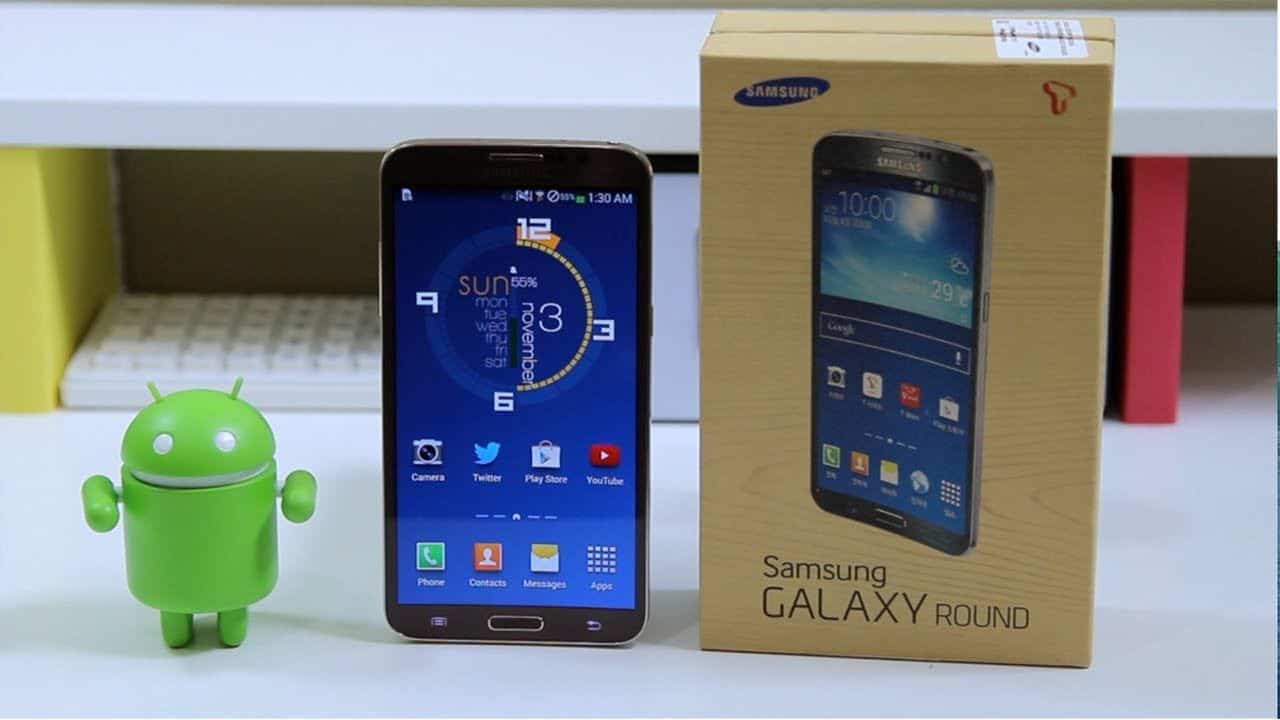
Design
In appearance, Samsung Galaxy Round is almost 1 version no stylus as Samsung Galaxy Note 3. Along the dorsal ownership pattern plastic skin, 5.7 inch screen, USB 3.0, it is difficult to distinguish when the Samsung Galaxy Round only seen from a distance. Besides, it is difficult for the user to feel the curvature of the machine, especially when only looking at the back. However when holding the product on hand immediately apparent difference.
Firstly, the weight, the Samsung Galaxy Round slightly lighter than Note 3, this difference is not clear due to the machine missing stylus or the battery level of the Round lower than Note 3 (2800mAh vs 3200mAh).
Furthermore, despite the same size screen 5.7 inches, the Samsung Galaxy Round for feeling comfortable grip than Note 3. We can say with screen size more 5 inches, you will hardly find product bring feeling better grip as Galaxy Round.
Samsung Galaxy Round SM-G910S Real Round Curved Display smart phone Factory unlocked: Buy it now
Screen
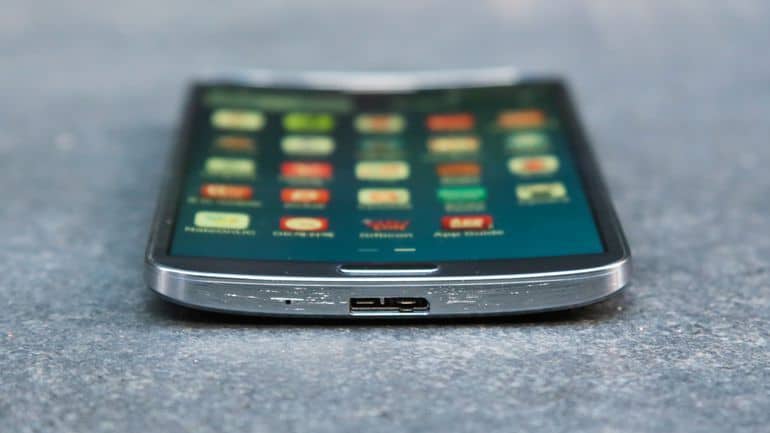
Perhaps this is the main point of interest to users Galaxy Round, It is one of the pioneering equipment for curved display technology, the Galaxy Round is expected to be a decisive factor viability, development ideas on the curved screen smartphone.
As for the visual effect must be acknowledged that in addition to the screen feels a bit strange to look for the screen surround effects of the Galaxy Round hardly brought little improvement in image and visibility except resistance to glare in the sun seems to be slightly better than the Note 3 by the curved screen inside. Can see the screen of the Galaxy Round is also used in conjunction with Note 3, synonymous with color, brightness and great detail. The curved screen horizontally not affect the use of machines such Lanscape mode when watching movies, browsing the web because their actual shape curvature is not too much.
Display Quality
Super AMOLED Brilliance
The Samsung Galaxy Round ’s display was kinda one of the better things about it , not only because it curved in that familiar way , but also because of the quality of the Super AMOLED panel. You could feel the sharpness right away , with a 1080 x 1920 pixel resolution and about 386 ppi for pixel density , so text and details looked clean and clear. The Super AMOLED tech brought deep blacks, bright shades, and strong contrast levels, which basically made staring at it feel pleasant.
That 5.7-inch screen size was pretty sweet for media , whether you were watching videos, playing games, or doing the usual web browsing. The curved design was meant to make the whole viewing experience more immersive, like the phone is hugging what you’re looking at. Still, the curve was not huge, and while it did help, at least a bit , to cut down glare from surrounding light, the change wasn’t so dramatic that it totally changed how people used their phones day to day.
Viewing Angles and Brightness
A big plus of Super AMOLED is typically the broad viewing angles, and the Galaxy Round matched that expectation. Colors stayed consistent and vivid even when viewing from more extreme angles, which came in handy if you were sharing photos or showing something on screen to someone nearby. Brightness was also enough for normal outdoor use, though under direct sunlight it could get a little tough, which is a pretty common story for AMOLED displays.
Impact of the Curved Screen on Usability
The curved screen had a sort of mixed effect on usability. Like on the one hand it gave this unique look and feel, and the Galaxy Round sort of stood out in a busy market. On the flip side it brought up durability doubts, specially about what happens if the phone gets dropped, yeah. The curve also made it hard to get the right kind of screen protectors and cases, because most of the accessories that you could actually find were built for flat displays.
Still, the Galaxy Round display was generally liked by people. It showed Samsung was willing to try new things, even if the actual execution wasn’t 100% tidy. The curved screen was more like a conversation starter than a total breakthrough, but it did help open the door for future changes in smartphone design.
Performance
Hardware Specifications
Under the hood, the Samsung Galaxy Round ran on a Qualcomm Snapdragon 800 chipset , which at the time was considered among the most powerful options. It included a quad-core Krait 400 CPU that was clocked at 2.3 GHz, plus an Adreno 330 GPU, so the experience stayed smooth across different everyday tasks. It also shipped with 3 GB of RAM which was plenty for switching between apps and handling heavier applications, without too much fuss.
The Galaxy Round came with 32 GB of internal storage , and you could add more using a microSD card slot. It supported cards up to 64 GB. Put together, the hardware felt pretty solid for its era, so the device could manage the usual stuff, plus heavier workloads like gaming ,and even video editing without too much fuss.
Real-World performance
day to day, the Samsung Galaxy Round did pretty well. The Snapdragon 800 chipset delivered fast enough responsiveness, apps opened quickly and multitasking stayed mostly smooth. Also the 3 GB of RAM helped it keep several apps alive in the background, so you didn’t get that constant slow down, even when you switched between programs.
For games, the experience was surprisingly fluid, mostly because of the Adreno 330 GPU. Titles such as “Asphalt 8: Airborne” and “Real Racing 3” ran properly, with steady frame rates and nothing that really looked like stuttering. The curved display brought a distinct visual twist, but it didn’t really change gameplay in a dramatic way.
When you look at benchmark results, the Galaxy Round held up nicely in general. In AnTuTu, it often landed above 30,000, so it was close to the better devices from that period. On Geekbench, it hovered around 950 for single-core and about 2,900 for multi-core, which pretty much matches its overall strong performance profile.
Software and User Interface
The Samsung Galaxy Round came out of the box with Android 4.3 Jelly Bean , and on top of that Samsung placed its TouchWiz UI. TouchWiz was kinda famous for a feature-heavy feel, with lots of tweaking options , plus extra extras you generally don’t see on stock Android. At the same time though people said it felt bloated, and yes sometimes it could lead to those small but noticeable performance slowdowns.
A standout thing on the Galaxy Round was the “Roll Effect,” basically it used the curved display in a neat way. If you tilted the phone, you could view things like alerts, battery information, and other bits without having to fully wake the screen . It was a clever bit of engineering, still it was more of a novelty show than a true daily requirement.
The Galaxy Round also brought along typical Samsung additions, including Multi-Window, so you can use two apps at the same time , side by side. Then there was Smart Stay, which kept the panel lit while you were actually looking at it. These parts genuinely improved the day-to-day experience, but they also made the overall TouchWiz setup feel heavier, like more layers than you asked for.
Samsung’s choice to ship the Galaxy Round with a lot of preloaded apps and functions drew mixed reactions. Some people liked having more tools ready instantly , while others felt the software was overly complicated and kind of cluttered. The good side is many of those built-in apps could be turned off, and Samsung kept sending software updates , aiming to improve performance and stability.
Battery Life
So the Samsung Galaxy Round came with a 2,800 mAh removable battery , which felt pretty normal for a handset of that size and those specs. Day to day use was OK, like decent rather than amazing. If you kept things moderate web browsing, social feeds ,and a bit of gaming—it could usually get you through an entire day on one charge.
Still, if you were the sort who did long gaming marathons or watched a lot of video streaming, you might end up grabbing the charger while the day was still going. And the curved display, even though it looks fancy, really didn’t change the battery behavior all that much. It was still an AMOLED panel, and AMOLED is generally pretty frugal, especially when it shows darker scenes.
On top of that, the Galaxy Round had fast charging , which was slowly showing up more in phones around that era. That meant you could top up the battery quickly, and honestly that helped a lot, because the average battery life wasn’t exactly huge. Plus, because the battery was removable, people could bring a spare battery along for longer stretches. Nowadays, that “carry an extra cell” option is way less common.
Connectivity and Network Performance
In terms of connections, the Samsung Galaxy Round was basically loaded. It supported 4G LTE , and in 2013 this was still pretty fresh tech, so it gave solid data speeds for browsing, and streaming. It also had Wi-Fi 802.11 a/b/g/n/ac, plus Bluetooth 4.0, NFC, and an IR blaster. With that IR bit, the phone could act like a remote for a bunch of home devices, which is kind of a handy trick in everyday life.
Call quality on the Galaxy Round was mostly good, like clear audio, and solid signal reception too, though not always perfect. The curved body didn’t seem to mess with the antenna work, and users said connectivity stayed pretty steady even when the signals were weaker in certain zones. Having the 3.5mm headphone jack was also a real win because it let people keep using their existing headphones, no adapter needed or anything like that.
For GPS, the Galaxy Round did fine, it delivered quick and quite accurate location locks. That made it a dependable gadget for navigation, be it with Google Maps or other location based apps you already have. The phone also supports GLONASS, which can boost location accuracy in some regions, especially where reception behaves a bit differently
Conclude
Flexible display tech is still basically in the early stage of pregnancy or close to it, so the Samsung Galaxy Round is really just the first tiny step in a long marathon toward exploring this new equipment segment. So dont rush to decide the success or failure of the whole product line, or even this one idea version draft like the Galaxy Round.
Related Posts


Tech Reviewer & Product Analyst
Định Bia has spent over 10 years testing consumer electronics with a focus on smart technology. He work as a product advisor at Biareview where he helped customers find the right devices for their needs. He personally tests every product featured on this site using a consistent evaluation framework covering quality, durability, and value. All reviews are based on experience, not influenced by the manufacturer.