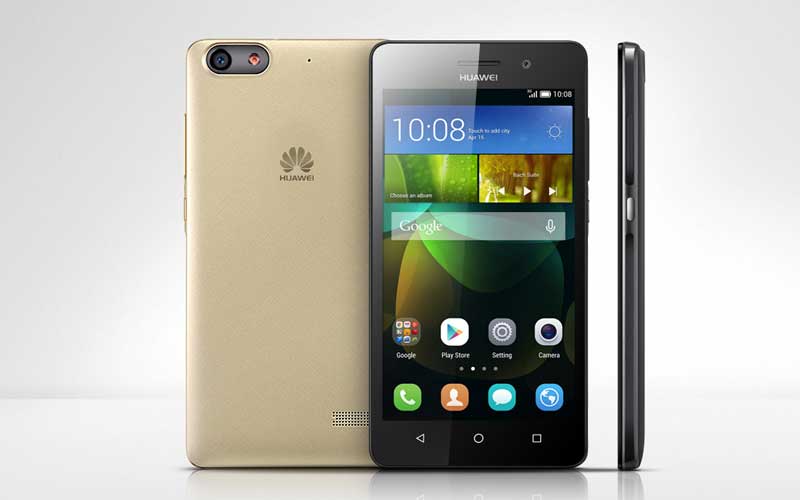
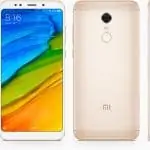
The Huawei G Play Mini, it has this sort of look that’s useful but also kinda pleasant to see, even if it doesn’t really shout “one of a kind” the way some phones do. It measures 143.3 x 71.9 x 8.8 mm, and it lands around 162 grams, so it feels fairly compact, and also pretty manageable to hold without wobbling too much.
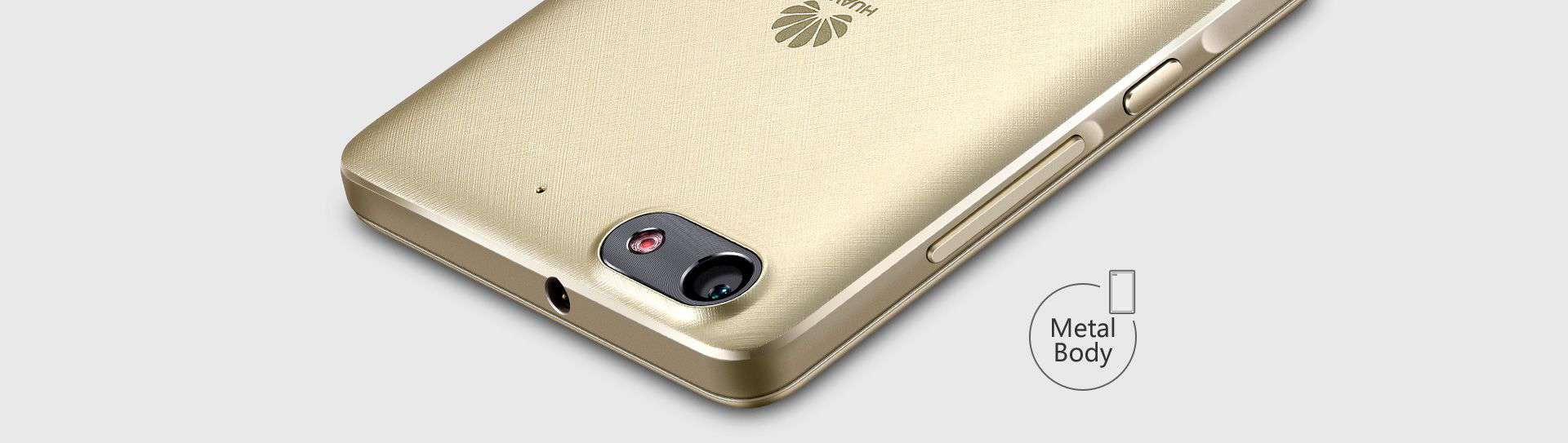
From a materials angle, it’s mostly plastic, which is pretty normal at this budget level, but Huawei still managed to make it feel sturdy. The rear has a textured surface, that thing helps you grip it better, and it can reduce smudges or fingerprints, though it still isn’t totally immune to them.
For the camera area, the back stays simple, with the camera module sitting in the top left corner. Just under that there’s a single LED flash, nothing fancy but it gets the job done. The Huawei logo is positioned a little closer to the middle, so the back looks clean and calm, rather than crowded or overly busy.
On the front it’s kind of standard-ish, and the bezels feel pretty obvious , especially on the top and near the bottom. There’s a black frame surrounding the display, and honestly it could have been trimmed a bit more, if they were aiming for a more modern vibe. On the upper bezel you’ll see the earpiece, the front facing camera, and the proximity sensor. Meanwhile the lower bezel is mostly blank , and it doesn’t really bring any capacitive buttons, because the phone relies on on-screen navigation keys instead.
The power button and volume rocker are on the right side of the device, sort of easy reachable with one hand. They feel tactile and responsive, you get this satisfying click when you press them . On the left side there’s basically nothing going on at all, all blank, while the top area has the 3.5mm headphone jack. Down at the bottom you’ll find the micro-USB charging port and the speaker grille.
All in all, the Huawei G Play Mini design is practical and it works, even if it probably won’t wow people who want something more premium or more innovative. The build quality is solid for a phone in this price bracket, and that textured back is a really decent little detail that boosts daily usability too.
The Huawei G Play mini also features the Honor 4x Series, which has a good-looking, monolithic design with a glossy is the highlight.
Hidden in the pretty neat design of the Huawei G Play mini is the 5-inch IPS HD screen, 8-megapixel 1.2GHz Kirin 620 processor, 2GB of RAM, 8GB of onboard memory, microSD card slot, 13MP main camera included. LED flash, selfie 5MP camera, 2,550mAh battery and running Android 4.4.2.
From the actual exposure, Test Lab found the Huawei G Play mini looks rather masculine with a traditional, lightweight four-sided bar, a bronze-coated bronze overlay and an engraving of interwoven motifs. Pretty fashionable. Compared to the Honor models tested, the Huawei G Play mini is much stronger.
However, the Huawei G Play mini has not yet achieved a high score in terms of looks, as the product is still equipped with a speakerphone on the back of the camera, a narrow angle camera and a touch padded button chain. Android still does not support LED backlight.
In terms of display quality, the 5-inch screen on the Huawei G Play mini generally outperformed most of the sharpness tests at Test Lab with fairly convincing scores. The color quality of the Huawei G Play mini over the test results shows that the color saturation is still somewhat limited (greenish), which makes the image look a little cooler than it actually is. This also makes the black-and-white on the 5-inch panel look unnatural even if you just look at the naked eye.
Fortunately, this 5.5-inch screen satisfies most of the multi-touch operation that Test Lab tests. The viewing angle of the screen is quite wide and the brightness is also sufficient to ensure the display quality when used outdoors.
As far as performance is concerned, with the hardware mentioned above, the performance of the Huawei G Play mini is essentially no more than the Huawei Honor 4X. Performance scores across the tests also show this as the gap between the Huawei G Play mini and the Honor Brothers 4X is almost negligible.
The Huawei G Play mini’s single-processor performance in the GeekBench test is 544 points, just slightly lower than the Honor 4X achieved 551. In the 3DMark – Ice Storm test, the Huawei G Play mini scored 5,825 points and there was not much difference compared to the previous score of 3,846 points earned by the Honor Brothers.
Test Lab found that Huawei’s new smartphone model can best meet the needs of everyday usage, including multiple tabbed browsing, social networking updates, connectivity. Get in touch with friends, entertain with online video channels.
One noteworthy feature is that despite the same processor as the Honor 4X, the Huawei G Play mini at Test Lab was able to play well-known games previously reported by Google Play as not supporting Brother In Arms 3: Son of war.
Of course Huawei G Play mini can also “weigh” some other powerful graphics games such as N.O.V.A. 3, Unkilled. Nevertheless, the real-world experience with Modern Combat 5: Blackout shows a lot of graphic effects that are not as expected.
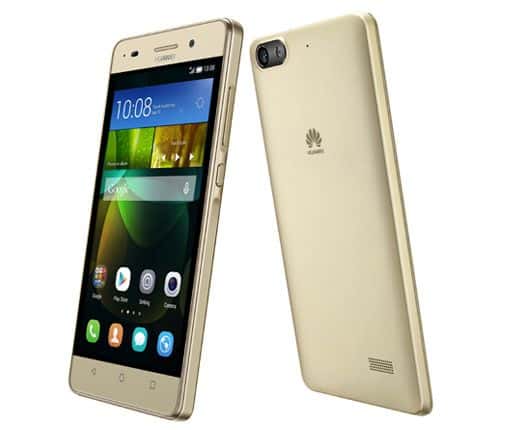
Table of Contents
where can you get a Huawei G Play mini online
Huawei G Play Mini gold: Buy it now
Particularly in terms of camera, in most experimental contexts, the Huawei G Play mini shows limited autofocus. It is because of this that the photographer will sometimes miss a beautiful moment and the results are sometimes not as sharp as expected. The color quality of the photos taken in the light environment is generally good, as the test results show that the color saturation and contrast are still limited. Huawei G Play mini camera is still less than Honor 4X.
Overall, the Test Lab was pleased to see that Huawei has integrated the previous focus, focusing on the Huawei G Play mini, and the results achieved by using this feature as well as expected.
Throughout the process, Test Lab also found that the interface design on the Huawei G Play mini has improved significantly compared to the EMUI that Huawei equips for products aimed at saving investment. For example, users have a lot of opportunities to customize the display interface, download beautiful themes, new to the machine or simply from the lock screen can still access many necessary functions such as flashlight, camera , Computer, or recording easily.
The Huawei G Play mini has got some pretty noticeable improvements in graphics, good performance over the price range, a fairly sharp display, less unnecessary apps and better battery life. Unfortunately, with the limited built-in repository, plus the camera restrictions that make the Huawei G Play mini hardly worth the extra attention compared to other product same price range.
Value for Money
When it came out, the Huawei G Play Mini was sort of framed as a mid-range phone, giving a decent bundle of features at a price that felt fair. It’s not chasing the flashy specs you get on flagship models, but it still works as a dependable, everyday smartphone for people who don’t really care about having the newest and best tech.
A standout part of the G Play Mini, honestly, is the camera. For what it costs, it performs well enough and gives satisfying results. The build and the overall design may not feel “premium” but they do feel sturdy, and kind of practical. Also, having dual SIM support plus expandable storage is a nice extra, it makes the phone more adaptable depending on what you need, or how you use it.
That said, there are a few weak spots. The software is a bit outdated, the internal storage is limited, and there’s no 4G LTE support. For some users this will be a dealbreaker, especially if they’re the type who wants a device that stays current for longer, without feeling stuck.
In places where the Huawei G Play Mini was sold for less, it looked like a good value for money. That’s especially true for users who care about camera results and battery endurance. But if you’re in a region where the price is closer to newer, higher-end mid-range options, then the missing modern touches might make it feel less appealing.
When looking at the Huawei G Play Mini, you really do have to compare it with what the other options were around at the time, especially since the mid range smartphone world in 2015 was pretty crowded. A lot of people were pushing “almost the same” hardware, but the details ended up mattering more than they probably should
One of the closest rivals was the Moto G (3rd Generation). It was basically famous for a near stock Android feeling, plus it had water resistance, and performance that stayed pretty steady. On paper, it was not that far from the G Play Mini either , with a 5-inch 720p screen, a Snapdragon 410, and a 13-megapixel rear camera. Still, the Moto G seems to win in the practical side of things, it received software updates faster and it also brought 4G LTE support, so it felt more future proof than the G Play Mini
Then there was the Samsung Galaxy J5, and it kind of leaned hard into that more vivid look, because it uses an AMOLED panel, which usually translates to richer colors and deeper blacks, compared with the LCD you get on the G Play Mini. It also had 4G LTE, and it came with a 13 megapixel camera that looked pretty close in practice. Still, it wasn’t as solid underneath, with a slightly weaker chipset and less RAM, so it can get a bit stressed when you toss heavier apps at it, or when multitasking gets a little annoying.
The Xiaomi Redmi 2 kind of felt like another budget friendly option, it gave solid performance for what you paid. It came with a Snapdragon 410 processor, 4G LTE support, and a 4.7 inch 720p display. And yeah the camera on the Redmi 2 wasn’t as strong as the one you got on the G Play Mini, but it did bring a clean user friendly MIUI interface, plus the possibility of getting regular software updates too.
When you compare it to these competitors, the Huawei G Play Mini still manages to hold its ground in camera performance and build quality. But then it sort of drops off in a few areas, like software updates, 4G LTE support, and the overall value for your money. Especially when you line it up against devices that had more modern features for a similar price.
In conclusion ,the Huawei G Play Mini feels like a solid mid range phone ,kind of in that nice middle where you get more than you expect, for the money. It kind of stands out with its camera performance, battery endurance and also its build quality. Because of that, it works well as a dependable gadget for people who want something practical ,and not a total financial hit.
That said ,it also has its issues. The software still feels outdated, there’s no 4G LTE support, and the internal storage is rather limited . These points can seriously reduce its overall appeal, specially if you want a handset that stays current ,and keeps being relevant over a longer period.
So, overall ,the Huawei G Play Mini is a good fit for users who care most about a strong camera and long lasting power in a budget friendly package. It might not deliver the newest bells and whistles ,but it does give a decent smartphone experience if you are fine with a no frills ,reliable daily device . Still, if someone is after newer features, plus better long term updates, you may want to look at other choices in the same price bracket.
Related Posts

Tech Reviewer & Product Analyst
Định Bia has spent over 10 years testing consumer electronics with a focus on smart technology. He work as a product advisor at Biareview where he helped customers find the right devices for their needs. He personally tests every product featured on this site using a consistent evaluation framework covering quality, durability, and value. All reviews are based on experience, not influenced by the manufacturer.