Design and Build Quality
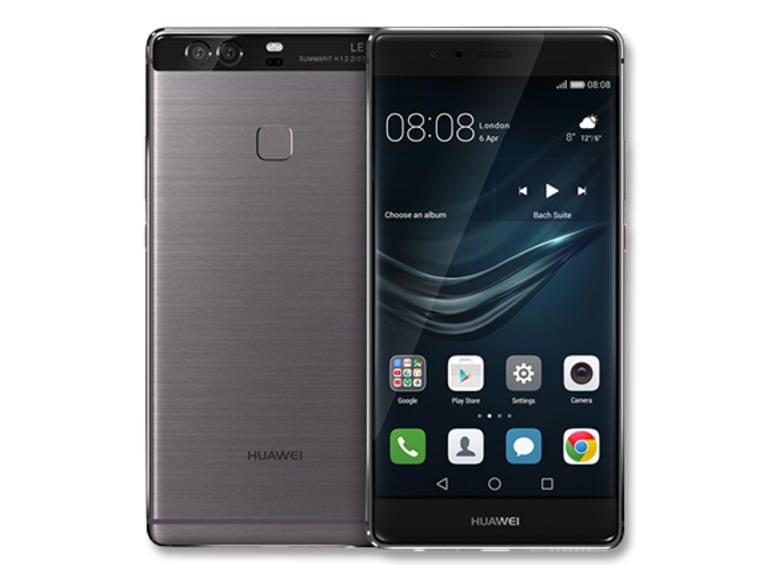
From the moment you first get your hands on the Huawei P9 Plus, it’s sort of clear that somebody was paying close attention to details. The device comes with an all-metal unibody construction which really does feel premium and dependable. You can pick it up in several colors like Quartz Grey, Ceramic White, or Haze Gold , and each shade gives the phone that little extra polish in your everyday use. The anodized aluminum surface has this smooth, satin like touch , plus the edges are rounded so it stays comfortable to grip even when you’re holding it for awhile.
In terms of size the P9 Plus sits at 152.3 x 75.3 x 7 mm and weighs 162 grams , so yes it’s slim and not too heavy for its category. The build feels sturdy too, there’s no odd creaking or unwanted flex if you press the chassis lightly. The metal construction doesn’t just make it tougher it also gives that premium visual presence, the kind you don’t really get with phones that lean on plastic, or even those with glass backs.
Then there’s the rear camera setup, one of the more noticeable design choices. The P9 Plus uses a dual-lens camera system mounted on the back, and the module sits flush with the rear panel, so there’s no camera hump poking out like on many other smartphones. It’s a small thing but it helps the overall look stay sleek and streamlined. Below that camera area you’ll find the fingerprint sensor, set in a way that feels natural for index finger access. It’s quick to respond and accurate enough that unlocking becomes easy, and overall it feels secure without being a hassle.
The front of the Huawei P9 Plus kinda steals the show with a 5.5-inch AMOLED display, thin bezels running along the sides, but a bit more bezel up top and also at the bottom . The screen-to-body ratio is straight up impressive, so the whole phone ends up lookin modern and pretty immersive. Right above the display, you’ve got the earpiece, the front-facing camera, and that little notification LED, then at the bottom bezel you’ll spot the Huawei logo. Because there aren’t physical buttons on the front, the design stays clean and minimal , and you navigate mostly through on-screen controls.
Down at the bottom, the P9 Plus places a USB Type-C port , mainly for charging and data transfer, and next to it there’s a 3.5mm headphone jack plus a single speaker grille. I’ll be honest , having the headphone jack here feels like a solid win, since lots of recent smartphones have started dropping that classic audio port. Sound from the speaker is loud enough and clear , but it doesn’t quite bring the same depth and richness you may get from other devices with dual speakers or upgraded audio setups.
Overall, the design and build quality of the Huawei P9 Plus are really outstanding. The device feels premium, it’s put together well, and it shows off a sleek , stylish look that should match up nicely with people who care about appearance just as much as performance.
This is also what Huawei does very well on its products. The Huawei P9 + is equipped with a high quality aluminum frame along with smoothly milled ‘stripe line’ running along the sides. These stripe line are well rounded for the feeling of holding the machine gently without feeling uncomfortable hands.
Slightly slimmer than the super-slim Samsung Galaxy S7 with ultra-thin bezel, the P9 + promises to give users a ‘front glass-back metal’.
With impressive slim, I think P9 + will eliminate some redundant details. But, Huawei retains all of the basic physical keys, audio jacks and special USB-C ports to give people the best experience.
The machine has 5.5 inch screen instead of 5.2 inch as Huawei P9, but you should note that the screen uses a Super AMOLED panels, not IPS NEO like P9. The screen is brighter but it will be slightly lighter and slightly pale slightly due to only a full HD resolution.
Display
The Huawei P9 Plus comes with a 5.5-inch AMOLED display, set to 1080 x 1920 pixels. That works out to about 401 pixels per inch , so it looks pretty crisp for day to day use. Now, yes , it’s not quite on the same level as the Quad HD (1440p) panels some rival flagships have, but honestly the 1080p screen on the P9 Plus is plenty, for most people it still gives sharp detail and bright, lively visuals.
On top of that, the AMOLED panel brings the usual strengths—deep blacks, vivid colors, and strong contrast. The tone of the colors looks full and well saturated, so photos, clips and even simple UI elements feel more real and a bit more engaging. The dark parts are especially good, because the display can shut off individual pixels, which creates true black and gives you that deeper contrast , basically it pulls you into what you’re watching.
Brightness is also fairly solid, which means you can use the phone comfortably across different lighting scenarios , even outdoors when it’s sunny. Plus, the responsiveness feels smooth, there’s no obvious delay when you swipe, tap, or do multi-touch gestures. From the side, the viewing angles stay impressive too, with very little color shift and not much brightness drop when you look at the screen off-axis.
One of the more stand out things about the P9 Plus display is Huawei’s Press Touch, you know, that techy “thing” like Apple’s 3D Touch on the iPhone. Press Touch can read different levels of pressure, so the screen can unlock extra actions based on how firmly you press. Like, pressing a bit harder on an app icon might pull up a contextual menu, with quick shortcuts to specific functions right there inside the app. So yeah it’s a kind of novel feature, though honestly its practical value feels a little capped, because third party apps don’t really use it much. Still it adds this extra layer of back and forth interaction , and it can be pretty useful if you spend most of your time inside apps that actually support it.
Another cool point on the P9 Plus display is the color temperature adjustment settings. You can manually steer the color temperature to match your taste, from cooler, more bluish tones, to warmer, more reddish vibes. This lets people tune the general look of the screen, which is kind of handy for easing eye fatigue when you’re staring at it for long stretches, or when you’re in dimmer light, late in the evening, you know.
All things considered, the Huawei P9 Plus display is a solid performer. It brings punchy colors, deep blacks, and decent brightness. Even if it doesn’t quite hit the resolution level of some competing flagship models, the 1080p AMOLED panel still gives a nice, satisfying visual experience that most users should be pretty happy with.
Camera
The Huawei P9 Plus carries a 12-megapixel dual-camera camera that uses a high-end lens from Leica with an aperture of f / 2.2. This combination is something that many people find interesting when a lens is used to create the detail of a photo with the creation of black and white scenes, while the rest of the lens takes on color. RPG recognition capabilities.
Both will work together, taking advantage of each other to finally give the user a photo with the highest quality possible.
Theory is so, the fact is slightly different, the quality of the picture can not be compared with other high-level opponents, just enough to satisfy ordinary users rather than excellent. Perhaps due to the ‘immaturity’ experience, Huawei has not done it well.
Features ‘Black-and-White’ shooting from strange camera cluster:
Perhaps this is a good feature to help P9 + offset the loss of ability to capture images compared to the opponent, the machine produces a good picture details. The new ‘Black-and-White’ layout hopes to appeal to users.
The front camera does not seem to be inferior to the back panel, as with the 8 MP, the Huawei P9 Plus offers a great experience in selfie shooting. Fresh colors, great detail, hope to please the user. The only thing that is too sharp to expose all the shortcomings of the photographer.
Huawei P9 Plus (P9+) VIE-L29 64GB 5.5 Inch 12 MP Dual SIM LTE Factory Unlocked – International Stock No Warranty (QUARTZ GREY): Buy it now
Huawei P9 Plus (P9+) VIE-L29 64GB Gold, Dual Sim, 5.5″, 12MP, GSM Unlocked International Model, No Warranty: Buy it now
Huawei P9 Plus 5.5″ 4GB RAM Dual SIM Kirin 955 Octa Core Dual 12 MP Camera 4G LTE Smartphone (Haze Gold/64GB): Buy it now
Huawei P9 Plus 5.5″ 4GB RAM Dual SIM Kirin 955 Octa Core Dual 12 MP Camera 4G LTE Smartphone (Quartz Grey/64GB): Buy it now
Software – performance and battery life
A similar 3D Touch feature on the iPhone is launched, but not much difference. Just show the Options menu, the zoom gestures.
In terms of performance, everything on the P9 + completely knocked you down, the response speed with basic applications (messaging, calling, viewing …) instantly and without extremely low latency. The main disadvantage is the GPU graphics core, the effects in the game slightly pitting and not beautiful. However, the processing speed is worthy of Top.
With the perfect combination of high capacity, an Android platform with a lot of battery-saving features, the SuperAMOLED screen is extremely well optimized for power, and the Full HD screen resolution is not overwhelming. The ability to use for a long time with the device is not too difficult.
Specifically, Huawei promises to bring the usage up to 1.5 days with high intensity and even up to 2 days in normal intensity. Not only has long battery life, but battery charging On the device is also optimized when users can provide 70% of the capacity lost in 60 minutes, and 100% in less than 2 hours.
Related Posts





Tech Reviewer & Product Analyst
Định Bia has spent over 10 years testing consumer electronics with a focus on smart technology. He work as a product advisor at Biareview where he helped customers find the right devices for their needs. He personally tests every product featured on this site using a consistent evaluation framework covering quality, durability, and value. All reviews are based on experience, not influenced by the manufacturer.