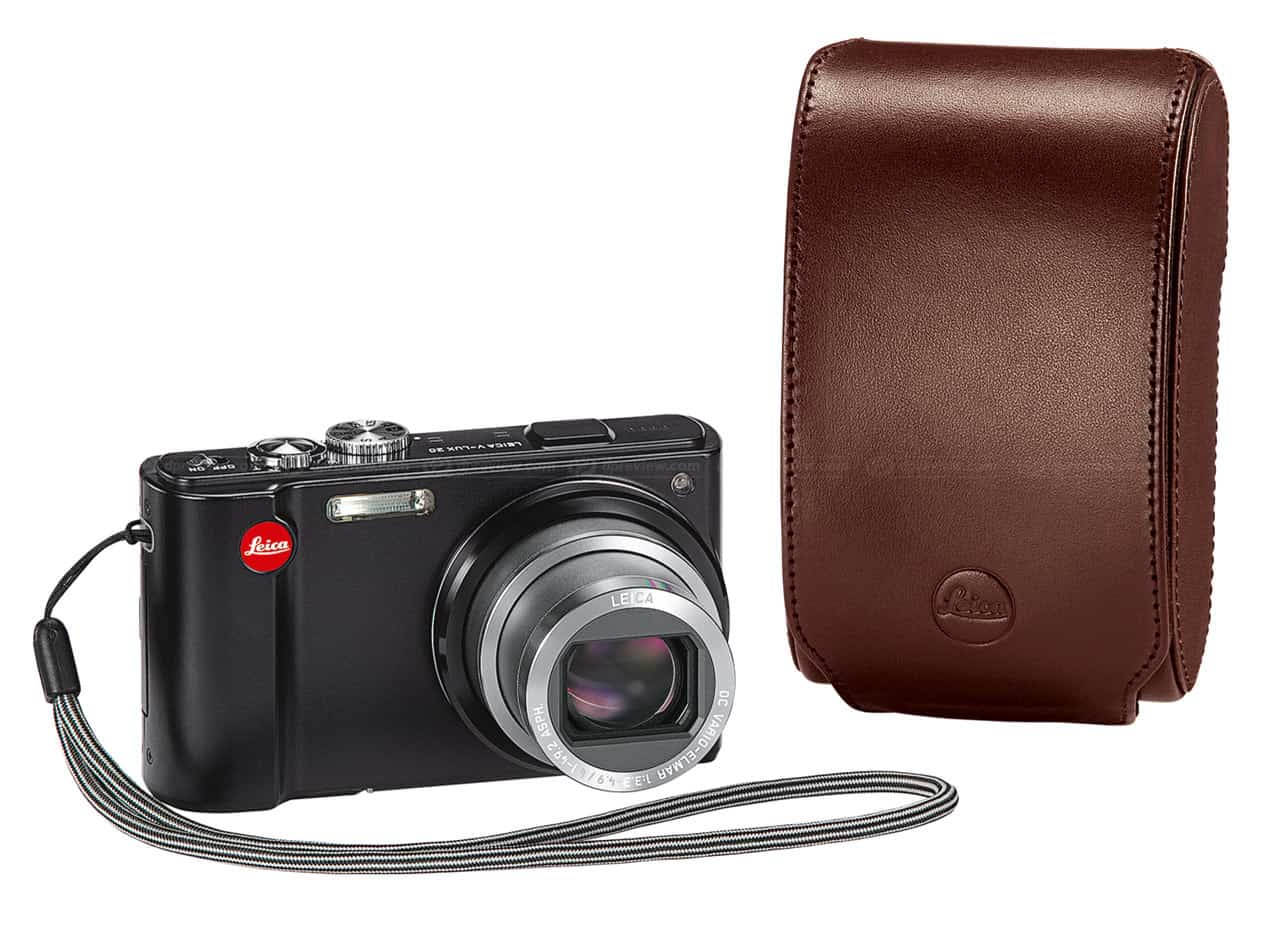
In terms of design, the V-Lux 20 is quite similar to the Panasonic TZ10, reflecting the long-term business relationship that exists between the two companies in the exchange of lens and camera technology. The front of the V-Lux 20 is simpler to design, featuring a red circle and Leica tone. Unlike most other cameras, the V-Lux 20 is bare, except for the lenses specifications printed on the tube.
The V-Lux 20 version is printed in small letters on the upper surface. There is also a mode dial, a shutter button, a zoom ring, and a power switch. Although on the surface there are also stereo mic, mono and GPS speakers, but no words or signs attached to explain the presence of these devices.
The adjustment ring is quite similar to that of the TZ10 with full support for PASM modes, only slightly different is the intelligent iA mode on the TZ10 converted to only one letter on the V-Lux 20. Even the system menu, though a little different but can say these two versions are still brothers together.
On the configuration, again can see the similarity between the TZ10 and V-Lux 20 when this version has 12 million pixel CCD sensor, 12x optical zoom, 3 inch LCD 460,000 points and supports the mode Hand adjustment. However, instead of HD video recording in advanced AVCHD format and more space saving, V-Lux 20 still only shoot in the MPEG classic format.
In terms of performance, the V-Lux 20’s boot time takes about 2 seconds with a shutter lag of 0.1-0.4 seconds, which is quite similar to the TZ10. However, in terms of focusing speed, the V-Lux 20 proved to be outstanding, although not really different, especially in good lighting conditions. Speed advantage is only promoted in low light conditions, when V-Lux 20 still guarantees high reliability while TZ10 has started struggling with object sharpening.
An inconvenience of both the V-Lux 20 and TZ10 is that the GPS mechanism once activated will continue to operate even when the machine is off, so that the battery life will continue to wear out. However, the level of consumption is still acceptable.
In terms of image quality. There is a wide ISO range of 80-1600. But as with other travel machines, the photographer should maintain the ISO level from 400 to re-assure the level of quality.
Leica V-LUX 20 12.1 MP Digital Camera with 12x Wide Angle Optical Zoom and 3.0-Inch LCD: Buy it now
At high ISO, the V-Lux 20 maintains a uniform color display instead of the reduced color quality on the TZ10. The color reproduced looks quite natural, slightly warm. The image stabilization mechanism works well, keeping the image sharp even when zoomed in under low light conditions. The metering mechanism also works very precisely, in true Leica style, even in more complex lighting conditions than these features on the TZ10.
Obviously, the cousin’s looks and configuration are almost identical, and it’s hard for some people to understand why the V-Lux 20 is twice as expensive as the TZ10. However, when it comes to buying the Leica, not only the user who buys a travel machine, but also the purchase of a quality and classy device has been confirmed.
Despite similar configurations, the image quality and performance of the Leica V-Lux 20 are much more reliable than the Panasonic TZ10, though not a single zone. In addition, the included V-Lux 20 software package is Adobe Photoshop Elements 8, much more professional than Panasonic’s PhotoFunStudio. The V-Lux 20 will be the brightest choice for those who want quality, class. If less money, TZ10 will also be a reasonable choice when not inferior to features and configuration.
Lens and Zoom
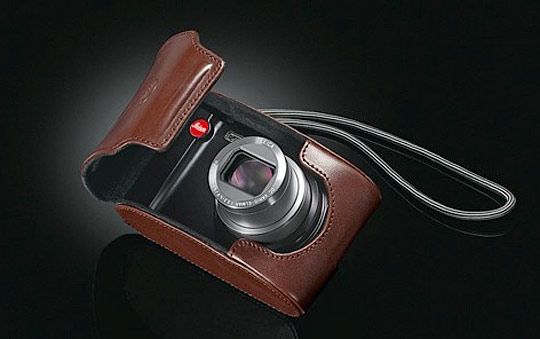
The Leica DC Vario-Elmar 4.1-49.2mm f/3.3-4.9 lens lets the V-Lux 20 cover a 12x zoom span, listed as 25-300mm on the equivalent scale. That range works for wide scenes and also for far away details.
The lens build is made to hold up image quality. It helps keep distortion and color fringing under control while you zoom through the whole span.
Optical image stabilization also plays a role. It is most helpful when you are at the long end or when light is low. This means you can take handheld shots and the blur from camera shake is less likely to show.
Image Quality
The 14.1MP CCD sensor (1/2.33-inch) delivers solid detail for a compact — enough for large prints or cropping without things falling apart. Color and dynamic range hold up well thanks to the processing engine.
Low light is the weak spot: past ISO 800, noise becomes noticeable, which is the trade-off of a small sensor. Shooting RAW gives you some room to clean that up afterward.
Macro is genuinely strong — a 3cm minimum focus distance lets you get in close on flowers, insects, textures, with real detail.
Autofocus and Speed
AF contrast detection is fast and holds up well when the light is strong. In most cases you can stick with either the single option or the face detection option. Continuous use is also covered, and it stays usable.
For sports and fast moments, burst rate hits about 6 frames per second. It is not best in class, but it should cover normal action photos.
Video looks decent for what it is. At launch, 720p felt competitive. Today it looks limited since it does not offer Full HD, and it also misses 4K. Colors come out fairly true, and motion stays smooth. The zoom can change while recording.
Audio is okay for casual clips. The camera has a built in stereo mic, but there is no jack for an external mic. It can also catch small mechanical sounds tied to zooming.
GPS
Built-in GPS geotags your shots automatically — genuinely useful for travel photography. It can struggle to get a signal in dense cities or under heavy tree cover, which is a known limitation of compact GPS receivers in general.
User Interface and Controls
The menu is simple, and the items are laid out in a neat line. You can run the full manual mode if you want, and you also get aperture priority, shutter priority, and program mode for quick changes. On top of that, there are scene modes. For example, Portrait, Landscape, Sports, and Night Portrait are there when you are new. If you often shoot the same types of scenes, you can save your own settings into the custom slots.
Battery Life and Storage
About 300 frames per charge. That is fine for a normal day or a quick outing. If you plan to stay out longer, having an extra battery helps.
It stores SD, SDHC, and SDXC cards. You can record JPEG or RAW. Pick RAW if you want more room to adjust later.
USB and HDMI let you move files and watch them on a TV. The flash supports auto, red-eye help, slow sync, and a manual option.
Leica also offers cases, straps, and extra batteries if you want more parts for the setup.
Practical Use Cases
The V-Lux 20 works well for travel. It is small, has a flexible zoom, and adds GPS data so your photos sort by where they were taken.
You can also use it at home. It suits day to day moments and family pictures without feeling hard to carry.
The zoom range helps when you cannot get near wildlife or plants. It lets you frame subjects from a distance.
At events, the autofocus feels steady. Face detection helps you catch candid shots fast, and the camera stays out of the way.
Pros and Cons
Leica’s build quality stands out immediately — a metal body with the fit and finish you’d expect from the brand. The zoom range, OIS, and GPS make this a strong travel camera specifically, and the ergonomics and macro performance are genuine strengths beyond that.
The trade-offs: low-light image quality is limited by sensor size, video maxes out at 720p, battery life is fine but not exceptional, there’s no external mic input, and the Leica name comes with a price premium over comparable specs from other brands.
Conclusion
The V-Lux 20 earns its keep as a travel camera specifically — the zoom range and GPS tagging solve real problems for that use case. Low light and video are dated by current standards, and you’re paying extra for the Leica badge, but the build quality and macro performance make a real case for it if travel and everyday shooting are what you’re after.
Related Posts

Tech Reviewer & Product Analyst
Định Bia has spent over 10 years testing consumer electronics with a focus on smart technology. He work as a product advisor at Biareview where he helped customers find the right devices for their needs. He personally tests every product featured on this site using a consistent evaluation framework covering quality, durability, and value. All reviews are based on experience, not influenced by the manufacturer.