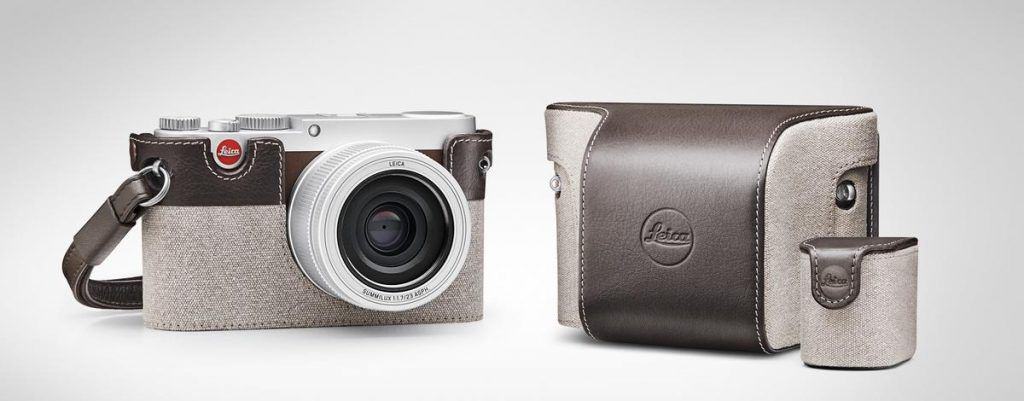

The line started with the X1 — a compact with a fixed 23mm f/2.8 lens and a 12-megapixel APS-C sensor. Leica followed it up in 2012 with the X2: 16 megapixels, plus a mount for an external electronic viewfinder. The X (Type 113) is next in that lineage.
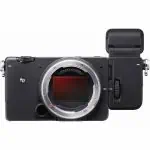
The Leica X very much resembles the Leica M in appearance and size, except that it is just a little smaller, since the body does not mount a direct viewfinder. This is also, indeed, a drawback on the Leica X. Most ‘players’ still expect more viewfinder for the successor.
The Leica X was inspired by the X Vario, and all the minutiae were elaborated. The front and back covers are made from a magnesium shell, while the top and bottom consists of aluminum.
The size of the rear LCD on the Leica X has been redesigned so as to be larger than its predecessor. The LCD measures 3.0 inches and has a resolution of 920,000 pixels. It incorporates a large size APS-C CMOS image sensor with a resolution of 16.5 megapixels. One more advantage over the predecessor is that the Leica Summilux 23mm f/1.7 ASPH
The connectors are minimal: USB 2.0, HDMI, and headphone jack. In contrast to other cameras in today’s market, it lacks connectors for a microphone and remote control. The memory card socket is located on the bottom along with the battery. The Leica X accepts standard SD memory cards (SDHC, SDXC, and Eye-Fi).
Leica X (Type 113) Black 18440 Digital Camera: Buy it now
Image Quality
A 16.2MP APS-C CMOS sensor, bigger than the compact cameras’ sensors, adorns this Leica X. This sensor size and Summilux’s fine lens make superlative image quality: superb detail, clarity.
Color reproduction is absolutely superior; the hues are rich and true to life. The tonal range of shadows and highlights is impressive because it captures both really deep shadow tones and bright ones. The camera cleans up nicely under different lighting conditions, allowing for some really beautiful clean images even with high ISO.
The Summilux 23mm f/1.7 is a huge part of the appeal here. Wide aperture means better low light and the kind of background blur people buy Leicas for. Corner to corner sharpness holds up even wide open, and you’d have to go looking to find any distortion or chromatic aberration. Combine that lens with the APS-C sensor and you’ve got real image quality packed into a small body.
Autofocus and Performance
In general, when it comes to contrast-detection autofocus systems, the Leica X has quite an accurate and reliable one. They may not match the phase-detection autofocus on the speed that some other cameras have, though the performance is more than enough for any case conditions under which you put the camera to test. There is also manual control of the camera. A focusing ring on the lens adds precise control for a smooth focusing experience.
The Leica X gets quite a response when it comes to the overall performance of copious efficient capture, zippy startup, relatively painless shutter lag, and you can easily capture those fast-moving moments. Continuous shooting mode is respectable at five frames per second, enough for action shots.
If there were one indeed from the Leica X that could be improved upon, it would be the buffer capacity. As it is, the buffer fills quite quickly when shooting in RAW mode, and shooting speed is thus limited during extended bursts. But even this limitation is not going to be something most casual and enthusiast photographers mind.
Low Light Performance
Low-light performance from the Leica X is impressive thanks to the wide-aperture lens in collaboration with good high ISO results from the APS-C sensor. The ISO range is 100 to 12,500, therefore giving huge flexibility with regard to the various lighting situations. Noise control is pretty good up to IS030200 where some noise is noticeable, while typical higher ones start bringing up more noise. In general, the fine-grain noise is not so distracting, permitting the taking of usable pictures even at a very high ISO range.
The f/1.7 aperture is what makes the Summilux worth it, more light hitting the sensor, faster shutter speeds, especially useful once you’re somewhere dim. End result: sharp shots without pushing ISO or breaking out a tripod.
Video Features
While primarily intended for still imaging, the Leica X does provide video capabilities. It can record Full HD 1080p video at 30 frames per second, giving good video quality with excellent sharpness and color fidelity. The shallow depth-of-field effects open room for creative video work, all thanks to the wide fixed lens of the camera.
The high-end video features typical of a video camera in the category or even some compact cameras are absent from the Leica X. There can be no 4K recording, and there are no mic input or headphone output, putting a spanner in its wheels for the professional shooter. The autofocus system for video shooting is also rather slow and does not make this camera a good candidate to use for fast-paced shooting.
Battery Life
Battery’s a rechargeable BP-DC8 lithium-ion, rated around 350 shots a charge decent for a compact, though how you actually shoot will move that number up or down. That is just sufficient battery life for a casual day or short photo outing, but it is highly recommended to keep a spare battery for trips or heavy shooting.
The connectivity set-up and storage.
With built-in Wi-Fi, the Leica-X allows Wi-Fi for image transfer and remote control using the Leica Image Shuttle app. The app is available for both iOS and Android devices, so it is an easy way for transferring images to your smartphone or tablet for fast social media sharing. The app also includes camera remote control functions such as adjusting camera settings and shooting; very useful for self-portraits and group photos.
Recording is performed by SD/SDHC/SDXC memory cards, which provide ample internal storage for high-resolution images and videos. The single card slot is housed in the battery compartment, which can be accessed from the bottom side of the camera.
Customization and Controls.
Leica X is customizable; therefore, a photographer may wish to customize its operation to suit individual needs. The camera menu offers a simple system for navigating easily, with a logical layout and intuitive controls. This tactile and satisfying way of making adjustments to the aperture and shutter speed through its physical dials, along with the quick access customizable function button for frequently used settings, makes it a great delight to use.
It offers several shooting modes considered relevant, such as Program, Aperture Priority, Shutter Priority, and Manual, giving photographers complete freedom over exposure settings. Besides, there are many creative modes such as panorama, multiple exposure, and time-lapse that can be exploited for creative expression.
Construction and Endurance
Of all, the very best qualities of a Leica camera are build quality and reliability, as far as Leica X is concerned. It feels solidly built and has been constructed with an upscale polished surface that looks impressive. It’s made of magnesium alloy and aluminum at the top and bottom, so it’s pretty resistant against wear and tear.
It also adds elegance to the camera and enhances the grip, comfortably holding it through an extended shoot. Compact but solid, making it perfect for travel and street photography, where portable and durable is at the very core.
Performance of the Lens
Honestly, the glass is the whole reason to care about the Leica X — fixed Summilux 23mm f/1.7 ASPH. Sharp like Leica lenses tend to be, and f/1.7 does most of the talking: better low light, bokeh that’s genuinely good for pulling someone out of a crowded street or softening a portrait background.
Distortion and chromatic aberration stay in check thanks to the aspherical elements, so wide open at f/1.7 it’s still clean instead of going soft in the corners the way you’d expect. Focus down to about 0.2m, close enough for real subject-background separation.
Processing Images
The power of image processor is high in the Leica X so that quick with efficiency handles the image data. It’s pretty good on JPEGs that are well-balanced and natural-looking, straight out of the camera. For photographers who prefer optimizing their shots during post-processing, Leica X comes with an added RAW shooting capability.
For the most part, accurate results with the camera’s white balance and metering systems will be achieved across various lighting situations. In post processing, highlights and shadows may recover well, thanks to the excellent dynamic range of the camera.
Handling and User Experience
Handling the Leica X is an enjoyable experience because of the intuitive controls and thoughtful design. It has a simple and uncluttered body with an eye for manual controls for the kind of photography lover who enjoys the physical experience of adjusting these things. Controlling the exposure via the dials for aperture and shutter speed is a joy to use and is direct with immediate gratification.
The menu system is very easy to operate and understand, with a logical organization and intuitive settings. Further enhancement to the user experience would involve the customizable function button that permits instant access into frequently used settings to fit well with a shooting style for photographers.
Shoot from Experience
Shooting with the Leica X is an absolute delight, a real inspiration, and a most enjoyable shooting experience. Sharp and responsive, with output comparable to cameras of much higher price levels, it is a sheer joy to use under all conditions, when shooting street scenes, landscapes, portraits, or even just the everyday moments of life.
Another high point of the camera experience is its manual focus. The focus ring of the Summilux lens moves smoothly and accurately, making it easy to hit the critical focus. Focus peaking, which outlines the areas in focus on the LCD screen, adds another layer of assistance in achieving manual focus and makes the process more accurate. It’s especially useful for photographers who like to be in control of just where things come into focus.
Durable and Weather Proof
Well, the Leica X is certainly designed to be durable, though it must be said that there isn’t very much weather sealing built into the camera. Regular use and an occasional sprinkling of light rain or dust is what this camera can take; beyond that, the leica x can’t be relied upon. Such protection would probably prove useful to photographers looking for a camera to take through rough conditions or a camera more rugged than this.
The Price and Value
The Leica X truly is an entry among premium compact cameras, and obviously the price reflects the fine name of quality and construction by which this brand is known. It is pricier than most other compact cameras, and therein lies the justification for the premium price: quite simply, the Leica X presents a very singular combination of features, build quality ,and image performance that indeed cannot readily be found elsewhere.
A good investment for photographers who value the Leica name and the experience of using a finely crafted camera, Leica X makes sense. The incredibly fine imaging, superb finish, and feel of controls create a shooting experience both rewarding and inspirational.
Comparisons with Other Cameras
While the Leica X stands distinct among the models in its category, it is helpful to compare it with some of the other cameras to check its strong features and weak points more clearly.
Leica Q: Another compact with one fixed lens by Leica, with a full-frame sensor and a wider 28mm f/1.7 lens, the Leica Q offers a greater quite similar quality in images to that of the Q but affords better adaptability in dim-light photography on account of its relatively larger sensor. For all that, Leica Q is heavier and higher in price in comparison with the Leica X. The choice will be determined by which of the two a photographer prefers, sensor size or focal length.
If you want a comparison point, look at the Fujifilm X100V 26.1MP APS-C sensor, fixed 23mm f/2 lens, sits at the top of Fuji’s compact lineup. It’s got a few things this doesn’t: 4K video, a hybrid viewfinder, a tilting screen. The Leica X makes up, however, in that it delivered build quality and the tactile experience of its manual controls.
Sony RX1R II: This compact camera has a full-frame sensor that is fixed with a 35mm f/2 lens. It is certain to provide great image quality and comes with lots of advanced features, like pop-up electronic viewfinder. It costs much more than the Leica X and is a consideration for full-frame performance body compactness seeking photographers.
Ricoh GR III: Small and light, the Ricoh GR III is fantastic: 24.2-megapixel APS-C. It has a fixed 28mm f/2.8, which is cheaper than Leica X but more portable. The GR III has neither the build quality nor the opening of the Summilux lens.
Conclusion
The Leica X (Type 113) is a brilliant and compact camera, at the core of which is the Leica stamp of class and excellence. Timeless in design, delivering exceptional build quality and photographic performance beyond one’s imagination, the camera ranks highly on the list of must-have cameras among very serious photographers. Stunning image quality is possible due to the Summilux 23mm f/1.7 lens, while excellent detail and dynamic range are ensured by the APS-C sensor.
The Leica X does not have some great features one expects to see in a modern camera but simplicity and concentrating on the essentials in photography renders it special. The feel and smoothness of interaction while working the manual settings blend with strong reliability and physical durability of the camera in bringing forth pleasurable satisfy feelings in shooting.
Leica X is for the photographer who has an inclination to the brand and feels that a finely crafted camera would continue a satisfying experience in photography. It has been known to demand a good price but offers returns bartered for the investment in terms of top-quality image capture, build quality, and optimum shooting experience. For the Leica lover or the serious photographer looking for a compact camera with a high that will certainly impress and inspire.
Related Posts


Tech Reviewer & Product Analyst
Định Bia has spent over 10 years testing consumer electronics with a focus on smart technology. He work as a product advisor at Biareview where he helped customers find the right devices for their needs. He personally tests every product featured on this site using a consistent evaluation framework covering quality, durability, and value. All reviews are based on experience, not influenced by the manufacturer.