Cameras Sensor and Image Quality
Sensor Specifications
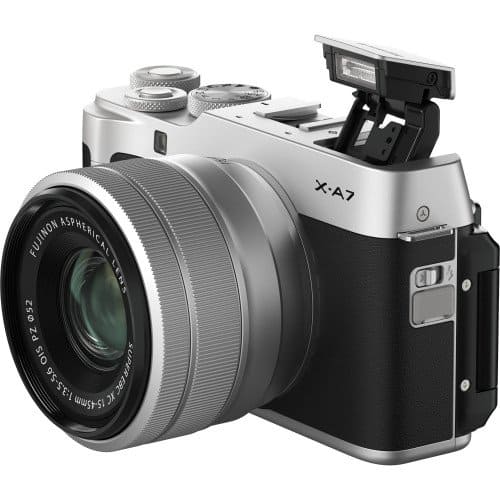
Incorporated Inside the Fujifilm X-A7 is a CMOS APS-C sensor with an effective resolution of 24.2 megapixels. The sensor size increases from the smaller ones found in many of the compact and even some smartphones, which allows for much-improved image quality control and depth of field. Thus, APS-C retains the balance between having a bigger pixel area for resolution and noise performance, while being able to take detailed images and avoid digital noise.
Image Quality and Performance
Image quality is quite spectacular in the X-A7; it’s got punchy colors, fine detail, and very good dynamic range. Its color science, very much like a mark of Fujifilm’s X-series cameras, has deep and very true colors, particularly with the different film simulation modes.
It has been shown to do extremely well in most situations regarding the amount of available light. The somewhat above-average performance of the X-A7 in a relatively darker atmosphere does not make it the best low-light performer, as one will see that the camera produces more noise with an increase in ISO. The noise reduction in the cameras is well-placed but sometimes compromises fine detailing in an image.
Film Simulation Modes
Fujifilm’s film simulations are the thing people who’ve never touched a Fuji camera don’t get until they try one. The X-A7 ships with Provia, Velvia, Astia, Classic Chrome actual recreations of film stocks the company’s been making for decades, baked right into the sensor’s output. Instead of shooting flat and fixing it later, you pick the look before you press the shutter, and it just looks like that. In terms of instant creative enhancement of images toward a particular look, these modes can be quite fruitful for an excellent capture.
Autofocus and Performance
Autofocus System
The Fujifilm X-A7 features a hybrid autofocus system that combines phase detection and contrast detection into its 91-point system. This makes the camera appropriate for almost all shooting conditions and leaves no doubt about the focusing performance. The autofocus operation in this camera was indeed responsive and goes as fast as acquiring focus in a well-lit environment.
In addition to such features, the X-A7 has face and eye detection functions, which are really valuable when taking portrait shots as they tend to keep the face of a subject in sharp focus during the shoot, even when it’s in motion.
Continuous Shooting
Burst photography can be performed on the X-A7 with a continuous shooting mode. The camera could shoot at a burst of 6 frames per second (fps) with the mechanical shutter. It allows capturing fast subjects moving about and is ideal for quite normal action photographing but not quite enough for more demanding situations.
Shutter and Performance
The camera’s shutter is responsive, which causes little delay when pressing it and capturing an image. In addition to its mechanical shutter, the X-A7 also uses an electronic shutter that allows shooting in deep silence and therefore not disturbing quiet environments. This electronic shutter is especially good when shooting in noisy settings where the sound of a mechanical shutter can be rather disruptive.
Video Features
Video Recording
On offer with the Fujifilm X-A7 is the recording of videos in 4K at a frame rate of 30 frames per second, enabling such finely defined and detailed imagery to the high-resolution video. The camera also supports the recording of videos in Full HD up to 60 frames per second, which allows one to capture smooth playback and sorts of slow motion. On the whole, video quality is good with color accuracy and sharpness.
The many video recording modes available with the X-A7 are range of frame rates and resolutions, and video settings including manual exposure and focus control, allow creative video production.
Audio Connectivity
Stereo microphones have been built into the X-A7 for audio recording. It produces good audio quality, but if you want higher audio fidelity in recordings, it will disappoint you since this version of the video camera does not have a microphone input hole. The camera’s HDMI output allows external monitors and recorders to be attached for more flexibility in video production.
Video Stabilization
No internal stabilization is offered on the X-A7 camera; this does limit handheld video-taking capability. But the digital image stabilization (DIS) of the camera could minimize camera wobbling in videos. Thus, tripod or gimbal application should guarantee higher effectiveness with smoother video footage.
User Interface and Controls
Touchscreen Interface
The one touch feature with the Fujifilm X-A7 is its 3.5-inch touchscreen LCD. This vast screen will lend you a clear and detailed view to see your images and settings besides making composing shots easier with the menu navigation. The touchscreen is also very sensitive to touch and thus initiates quick access to different settings.
The touch interface also includes various gesture-based functionalities including tap, swipe and pinch. These gestures assist in knowing the positional orientation for viewing individual photos, menus, and performing adjustments or edits. This also supports touch-to-focus, which allows you to select the focal point by simply tapping on it on the screen.
Menu System
Well-organized and user-friendly, the X-A7 menu system is a pleasure to work in. It splinters into some tabs to divide camera menus into shooting settings, playback settings, and custom settings. The menu layout is simple, clearly labeled, and contains familiar icons allowing easy location and adjustment of settings.
Reassign enough of the buttons and dials and the camera starts working the way you do — ISO, white balance, whatever you’re constantly reaching for lands somewhere your thumb finds without thinking. Do that setup once and menus mostly disappear from the process.
Battery Life and Connectivity
Battery Life
NP-W126S is the battery here, and 440 shots a charge is a solid number for something this compact. Casual use, you won’t think about it. A full day of shooting, though, and you’ll want a second one in the bag — that’s just how it goes with a body this size.
Connectivity
Also, X-A7 has specs for a Wi-Fi and Bluetooth connect. This lets users wirelessly transmit their images and videos to smartphones and tablets. Besides, the Fujifilm Camera Remote mobile application provides remote control of the camera while also assisting in transferring images, thus enhancing the shooting experience.
The camera comes with a USB-C for charging and data transfer. This modern interface facilitates fast connectivity to other compatible devices and accessories.
Comparison to Competitors
Canon EOS M50
Occupying the same space as the Fujifilm X-A7 in the entry-level mirrorless camera market, Canon’s EOS M50 is a direct competitor to it. Similar features abound-the APS-C sensor has 24 megapixels, while the 4K recording possibilities feature in both models. The M50 also has a slightly better resolution viewfinder and a mic input for better audio recording.
On the other hand, the X-A7 has a larger, more responsive LCD touch screen which provides for better manipulation in navigating menus and composing shots when compared to the M50. Film simulation modes of the X-A7 with such a plethora of color profiles simulating traditional Fujifilm film is such an added bonus for people who want to achieve specific looks straight out of the camera.
Sony Alpha a6100
Sony’s a6100 is worth putting next to the X-A7. Same sensor, roughly 24.2 megapixels, APS-C — and the autofocus is genuinely quick, 425 phase-detection points doing the work. It’ll shoot 4K as well. Where it falls short is the touchscreen, which is there but barely functional compared to what Fuji built into the X-A7.
In short, the better autofocus system of the a6100 really suits action and wildlife photography. But, in many respects, the easy operation and creative flexibility offered by the X-A7 with its large touchscreen and film simulation modes may be features more appealing to the consumer.
Olympus OM-D E-M10 Mark III weighs 395 grams in total. It’s a mirrorless camera with a Micro Four Thirds sensor, which is approximately smaller than the X-A7 which has an APS-C sensor. Thus, OM-D E-M10 Mark III is very good in producing quality images, coupled with a strong internal image stabilization system that is very helpful for shooting photos hand-held.
Olympus has everything great in stabilization coupled with a built-in viewfinder, while Fujifilm-X A7 comes with features such as a gigantic touchscreen that enables a wide and varied film simulation modes. However, considering low-lighting performance and interactivity in shooting, the bigger sensor paired with a more sophisticated touchscreen interface would have made it easy for the user to choose between the two.
Pros and Cons
Advantages
This beauty of a model has features such as a 3.5-inch touchscreen LCD, which deserves to be called ‘large’ since it serves a very handy mode of operations for viewing and composing flight paths.
Film Simulation Modes: Fujifilm’s film simulation modes offer a variety of creative procedures so that users may have numerous different looks and styles without the need for post-processing.
What’s good
Small enough that you’ll actually bring it somewhere instead of leaving it in a drawer.
The 24.2MP sensor pulls its weight — colors pop, detail’s there, dynamic range doesn’t disappoint.
The interface doesn’t require a manual. Menus are laid out sensibly enough that you’re not hunting for basic settings.
What’s not
No in-body stabilization, so handheld low-light shots come out shakier than they should.
Battery’s okay for a normal day out, but a long shoot will outlast it.
No mic input — a real problem if you actually care about audio in your videos, not just an afterthought spec.
No proper viewfinder either. If you’re someone who wants to put your eye up to something rather than stare at a screen, this isn’t that camera.
Conclusion
The X-A7 looks good, travels well, and doesn’t make you fight the interface to get a decent shot — which, for a camera at this price, is most of what people actually want. Between the big flip screen, the film simulations, and the overall design, it’s not just a beginner’s camera; it’s genuinely appealing to someone who’s been shooting for a while and just wants something small that still delivers.
The X-A7 does not feature in-body stabilization available on competing models and passing viewfinder options found on higher-end versions, yet intuitive control and creative potential of the camera with a different color science make up for it. The Fujifilm X-A7 is a well-rounded package for users stepping into mirrorless photography or upgrading from a compact camera, one that is functional and fun to use.
Be it an upcoming photographer, travel blogger, or just someone who appreciates everyday moments-the Fujifilm X-A7 boasts heavy features that are truly useful in various branches of photography. A classic approach to modern technology with Fujifilm’s retro aesthetics ensures its continued horning anywhere in the mirrorless market.
To sum up, the Fujifilm X-A7 is great at producing high-quality images and incorporating creative features, all while being easy to use. It is an endorsement of Fujifilm’s initiative to provide accessible and forward-looking solutions for photo enthusiasts, thus marking it as a good option for all who are looking for a functional, trendy mirrorless camera.