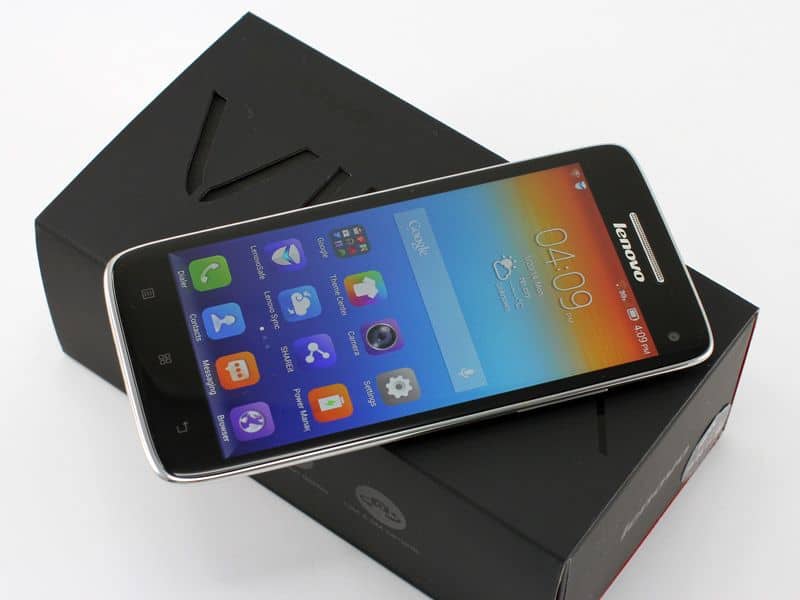
Lenovo Vibe X configuration is quite “nice” with the quad-core chip, Full HD screen … but this smartphone works not smooth as expected. In return, it has a beautiful appearance, bright screen and front camera is 5 megapixel with a people like “take a selfie” to share on social networks.
Table of Contents
Design
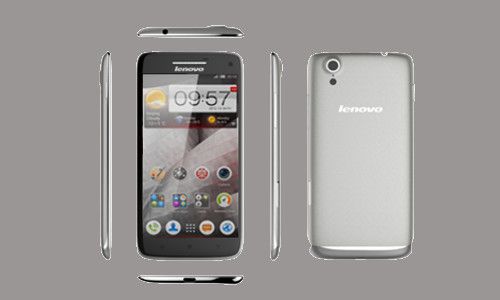
Lenovo Vibe X lovely designed with soft lines, look not to whether there is a 5-inch screen. The weight of the machine is only 120 grams, the equivalent of the iPhone 5 only use 4-inch screen. Although slender, Vibe X still feels pleasant, certainly when holding. 6.9 mm thinness equals Lenovo k900 but Vibe X more attractive, especially to women, so that no box-shaped and slightly rounded corners beveled at the back.
The back cover is not removable and machine made from plastic but feels like metal, decorated delicate, enabling the machine not pick up fingerprints. Similarly, surrounded polycarbonate frame, plating a layer of metal shiny outside. Overall, the device is quite polished, but it is unclear whether to keep it looks bright in the process of using long time or not.
Volume button on the right side, power button located on the left side. Due to the slim design of the camera of Vibe X so slightly bulging and SIM slot is also slightly skewed to the back bench.
Overall, the design of the Vibe X pretty nice if users are not too interested in plastic or metal casing.
Screen
Another surprise in this mid-range smartphone 5-inch screen is quite nice with Full HD resolution, 441 ppi pixel density, the same Samsung Galaxy S4. Text and images are displayed smooth, clear and crisp, not pitting.
IPS technology also helps colors and good contrast. The screen has a wide viewing angle, bright enough and the quality has not changed significantly in the majority of circumstances of use, but not good enough under the sun.
The screen is equipped with Gorilla Glass 3 layer relatively high sensitivity and increase the product level. Large screen size but has a compact design helps Vibe X good support web browsing, social networking updates, e-mail, watch video …
The display on the Lenovo Vibe X really was one of those , standout things you notice right away. The phone had a 5 inch IPS LCD screen with a Full HD setup, 1920 x 1080 pixels, and that worked out to around 441 ppi. Honestly that was pretty impressive for a mid-range smartphone back in 2013, because the pictures looked sharp and punchy. It was good for pretty much everything, like checking pages online or kicking back with some videos.
Color-wise, the Vibe X screen generally stayed accurate, with rich hues and vivid tones that made multimedia feel more “alive” or , pop. The viewing angles were also pretty commendable, mostly because IPS technology keeps the panel readable. Even when you’re not looking straight at it, the text and overall image still stays clear, without getting that weird washed effect too fast.
Brightness was decent, enough for indoors and for outside when the light is not too intense. Still, direct sunlight could be a bit of a problem, which is kinda normal for many phones from that time. The display was covered with Corning Gorilla Glass 3, so it had at least solid protection against scratches and those minor drops you accidentally cause.
Now, one small downside: sometimes the colors felt a little too oversaturated, like it was trying a bit hard to look vibrant. People who want more natural color shades might not love that. But for most users, it ends up being a minor gripe, and overall the display quality stayed a real strong point for the Vibe X.
Camera
13 megapixel camera Vibe X, support for picture fairly, color stability and honest, but felt lacking contrast images. In low light conditions, software on the machine significantly reduces noise but makes the picture is not clear.
Highlights located in front camera with image sensor 5 MP – only appear in a few smartphones on the market. This shows that Lenovo is directed to young people like self-portraits to share on Facebook. It was so, when using the front camera, bottom of the screen will have more bar to smoothing adjustment levels from 1 to 7.
Regarding imaging features, Lenovo seems to take a bit more when equip different mode settings that users glitzy and reduce the speed of the operation.
SNAPit software provides many shooting modes in different environmental conditions. Thanks to a wide aperture (up to 84 degrees), the user can select the shooting mode Fish Eye to take “take a selfie” with a lot of people.
Meanwhile, the software to view and edit photo images SEEit support reasonable arrangements to view and allows editing directly on the photo just by touching your finger as whitening, smooth skin, large eyes more beautiful.
Performance
Vibe X is well configured but in reality is not as expected. Therefore, it will also have difficulty in attracting users because this segment is strong competition with formidable opponents like Google Nexus 5.
Lenovo’s smartphone uses 1.5 GHz quad-core MediaTek and RAM up to 2 GB, but the action is slow. This is what may be acceptable for a mid-range smartphone, however, the speed of Vibe X less than Lenovo K900, Nexus 5 and Samsung Galaxy SIII.
Latency of the machine can be clearly seen when users swipe the Home screen, open the app switcher or photo library. One reason for this may be due to the Vibe X run on Android 4.2.2 and Lenovo has customizable user interface different way.
Graphics performance of Vibe X disappointing when only 28.9 frames per second, according to the tool Nenamark 2. Meanwhile, one other smartphones also come from China, and also the same price as Huawei Ascend P6 reaches 60.9 frames/sec.
Despite its slim design, the battery life is quite good, can run all day if used in moderation. Besides, the machine has built-in battery management software and the user can select the mode depending on the need to extend the operating time of the battery.
Software and User Interface
The Lenovo Vibe X came out with Android 4.2.2 Jelly Bean ready to go , straight from the box, and on top of that Lenovo had its own proprietary user interface, sometimes called Vibe UI. In general it was a pretty big shift away from stock Android, and it looked more colorful and kind of fun, with a lot of settings you could tweak.
A really easy thing to notice was the lack of an app drawer, which is more common on Chinese phones. Instead, the apps were all placed directly on the home screens, a setup that feels closer to iOS, and yeah for some people that was going to be a love it or hate it thing. Still, it can be softened a bit by installing third party launchers that bring back a more familiar Android flow, if you really want that.
Vibe UI also came with several pre loaded apps and extra features. Some were genuinely handy, other parts felt like surplus, like extra stuff you didn’t ask for. For example, Lenovo included a theme engine so you could reshape the whole look , changing icons, wallpapers, and even system fonts. Alongside that there were utility apps too, like a file manager, a backup tool, and a power management app aimed at keeping battery life a bit more efficient.
Overall the software experience was decent, but it wasn’t exactly flawless. The interface didn’t feel as smooth or as responsive as certain big name skins like Samsung’s TouchWiz or HTC’s Sense. There were moments where it would hesitate , or stutter a little, especially when you were moving around inside the system menus, or jumping between apps quickly. On top of that, updates were not that consistent either, the Vibe X didn’t get software updates in a timely manner, and Lenovo’s history of rolling out Android upgrades was… well, not great.
Audio Quality
The Lenovo Vibe X came with one speaker, set at the back of the device, pretty much the same setup you’d see on a lot of smartphones in this price bracket around then. Honestly it did the job for everyday stuff like videos, music, and those hands-free calls, but as far as audio quality goes, it wasn’t really anything to brag about, it felt a bit flat.
What the speaker put out was fairly loud, but it didn’t have much depth, or that crisp feeling people expect. At higher volumes you could notice some distortion starting to creep in. Bass was fairly minimal , so the whole sound signature landed on the “mids and thinness” side more than anything warm or full. And because the speaker sits on the rear, placing the phone on a table or any flat surface could muffle things, like the audio gets quietly smothered.
If you want something more enjoyable, headphones are the safer bet. The Vibe X includes a standard 3.5mm headphone jack, which is always nice, because you can plug in your usual headphones or earphones right away, without having to hunt down any adapter nonsense.
Call audio was generally solid though. Calls sounded clear on both ends and the voice capture stayed crisp. There’s also built in noise-cancellation, which helps cut down the background ruckus, so conversations in noisy places were easier to follow.
Conclusion
So, the Lenovo Vibe X really felt like Lenovo was trying to step up , and become the kind of name people take seriously in the smartphone world. In a lot of ways it worked out , because it brought a good looking style, a quality display, and an overall experience that was pretty decent, especially when you look at it as a mid-range phone. It was also slim, not too heavy, so using it day to day was honestly a breeze. And the 1080p screen? That was a main highlight , it separated it from a bunch of competitors in the same bracket.
But yeah , it wasn’t perfect. The Vibe X handled most routine tasks with no real drama, yet when things got heavier, like demanding apps or gaming, it started to wobble a bit. On top of that, the lack of expandable storage was a real anchor. With only 16 GB inside, there wasn’t much room to stretch, and that became more obvious the more you used it. Plus, no 4G LTE support was another letdown, especially as mobile networks moved forward and got faster.
The camera situation is sort of mixed. In bright or comfortable lighting it could take solid photos, but in low light it struggled a lot, like it was searching for clarity. And the software experience… it had some annoying moments. There was occasional lag, and the updates felt slow, or rather, not timely enough.
In the end, the Lenovo Vibe X is still a steady mid-range option, with fair value, particularly if you care most about design and screen sharpness. However, it’s not like it was alone up there, other devices in the same class were competing hard. Because of weaknesses in places like performance, battery stamina, and software support , some users might have leaned toward alternatives.
If you could live with those issues, then the Vibe X was a stylish and capable phone that did what it set out to do. Still, if your needs are tougher, or you want longer term software attention, then other smartphones around the same price could end up giving a smoother overall experience.
Related Posts


Tech Reviewer & Product Analyst
Định Bia has spent over 10 years testing consumer electronics with a focus on smart technology. He work as a product advisor at Biareview where he helped customers find the right devices for their needs. He personally tests every product featured on this site using a consistent evaluation framework covering quality, durability, and value. All reviews are based on experience, not influenced by the manufacturer.