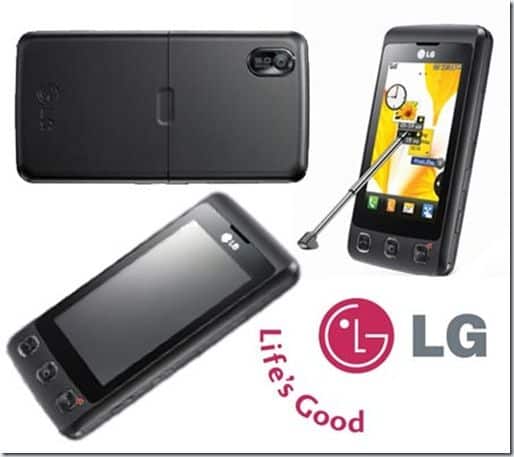
The LG KP500 , also called the LG Cookie, was a touchscreen mobile phone that LG released in late 2008. Back then it got attention for being affordable, so the whole “touch-first” experience felt more reachable for a wider crowd. You could kind of say it tried to slide between the pricier, feature packed smartphones and the simpler, everyday mobile phones that were still everywhere around that time. The KP500 stood out for a sleek design, a decent feature balance, and a user-friendly interface, all wrapped up in a price that made it easy to pick up for a lot of consumers.
In this review we’ll go through the LG KP500 more closely, looking at its design , display , user interface, overall performance, multimedia capabilities, connectivity options, and then the full day to day user experience. By the end you should see why the LG KP500 mattered in its era and how it helped push forward the evolution of touchscreen phones.
Design and Build Quality
The LG KP500 had a look that felt modern, and honestly stylish, for the period. The phone used a plastic body that was assembled pretty well and it felt firm in your hand. It measured 106.5 x 55.4 x 11.9 mm , and it weighed about 89 grams, so it stayed light and pocket friendly. Even with that plastic, the KP500 didn’t really come across as “cheap.” The materials seemed reasonably solid, and the overall finish stayed smooth , which gave it a more polished vibe even if it was a budget device.
The front of the phone was pretty much taken over by the 3.0-inch resistive touchscreen display, and under that you had three physical buttons , a call button , an end call button , and a middle button that acted like a shortcut to the home screen. On the sides of the phone there were a bunch of controls including the volume rocker lock button, and also a dedicated camera button too. Turning to the back, there was a 3.2-megapixel camera with no flash, which was pretty normal for phones in this sort of category around that time.
One of the more curious design choices on the LG KP500 was that it came with a stylus, it was tucked away neatly in a little compartment at the top right corner. That mattered, because a resistive touchscreen usually needed more deliberate taps, sort of more careful input, compared to capacitive touchscreens that started showing up far more often in later years.
Over all, the design and build quality of the LG KP500 felt solid. The look was sleek and pretty modern, something that basically fit a wide range of people , and the phone was light enough that it stayed comfortable during longer use. The stylus being included was a nice idea, it improved day to day usability especially when you had to deal with tasks where precision actually matters.
The LG KP500 came with a 3.0-inch resistive touch screen display, at a resolution of 240 x 400 pixels. Sure, compared to what people expect now, that number feels kinda small, but for a phone in that price bracket back then it was still enough. It could show 262,000 colors so the colors looked fairly decent, and the menus plus media bits did have a sort of lively vibe.
That said, the resistive touch panel aspect meant it was not as quick feeling as the capacitive touchscreens later on became common. You really had to press a bit more, to get the device to notice your input, and sometimes that made everything feel less smooth, more stop and go. Also, the included stylus was basically handy—more than just “nice to have”—especially when you wanted accuracy, like tapping tiny icons or dealing with text entry on the virtual keyboard.
Visibility was also kind of mixed. Indoors the display worked well enough, but outdoors in bright sunlight it struggled. Brightness could be tweaked, but even when it was turned up to the max, reading it in direct sun was still a chore. honestly this was pretty typical back then, not really something that only happened to the KP500, for a lot of touch phones it was the same story.
Despite it’s limitations, the display on the LG KP500 was still pretty functional and it served its purpose, especially given the price point. For basic chores, it handled things fine like browsing through menus, checking photos, and playing games. Still, the resistive touchscreen was kind of an obvious clue that it was meant to be a budget device. If someone wanted a more responsive, more fluid touch experience, then they’d probably need to move up to higher-end models.
User Interface and Usability
The LG KP500 ran on a proprietary operating system from LG, and the user interface felt made to be easy to figure out, and kind of simple to navigate. It clearly followed the trends of that era, with big icons, and controls that lean into touch. The main menu came in a grid of icons, and in turn it could be customized to match what the user preferred. On top of that, there were multiple themes and wallpapers, so users could give the device a more personal look.
One of the more noticeable things about the LG KP500 interface was the “widget” system. Users could drag and drop different widgets onto the home screen, like a clock, calendar, or music player controls. Honestly, this was somewhat advanced for a budget phone, and it gave a kind of custom level that you didn’t often see on devices in this same price bracket.
The phone also included a virtual keyboard, which could be used for texting, and for entering data too. With the resistive touchscreen, typing on that virtual keyboard felt a bit less fluid, than you would see on later capacitive touchscreen devices. Still, the predictive text input did help, it kind of eased some of the problems, so composing messages faster was… at least more manageable.
Another notable thing on the LG KP500 was its accelerometer, which let the screen orientation automatically rotate between portrait and landscape, when the phone was tilted. That was pretty useful for stuff like browsing the web or viewing photos, because it gave a more comfortable viewing layout , overall.
About the user interface, the LG KP500 was kind of made with simplicity in mind. It was aimed at people who were still getting comfortable with touchscreen devices, not only the more experienced, advanced sorts. You could find a lot of customization options and extra features , some of them felt a bit too capable for a budget phone in that period, and yet it all still fit. The resistive touchscreen could reduce the overall day to day usability, but the interface stayed pretty intuitive and easy to handle, so in practice it ended up working well as an affordable touchscreen option.
Performance
Under the hood, the LG KP500 used a single-core processor. That was enough for the jobs it was built for. The phone wasn’t trying to be a powerhouse, and its performance matched what you’d expect from other budget devices from that era. Basic duties like making calls, sending texts, and moving through the menus were handled smoothly, with only minimal lag.
But when it got into more demanding stuff, like web browsing, or running a bunch of apps all at once , you could really see the phone’s limits. The browser did work , but it was a bit slow loading pages, and because the RAM was limited , the phone could get kinda sluggish if too many apps stayed running in the background .
Despite all that, the LG KP500 managed to do the essentials without too much trouble . In practice, it felt okay for people who just wanted something dependable for communication, basic multimedia, and light internet use. Yet if someone wanted more advanced options, then the KP500 simply would not have been the smartest pick.
Battery life on the LG KP500 was honestly one of its better sides. It came with a 900 mAh removable battery, and that gave enough power for a full day , assuming moderate use. Since power draw was relatively low, it could usually get through a day of calls, texting, and the occasional web session . If battery life was a priority for you, that benefit mattered quite a lot.
Overall, the LG KP500’s performance was decent for its intended audience . It wasn’t really for heavy users , but if you were looking for a straightforward, affordable touchscreen phone , it delivered a pretty stable and consistent experience.
Multimedia Capabilities
As a budget phone, the LG KP500 was kind of not really meant to go head to head with the high-end smartphones for multimedia capabilities, but it did provide a decent set of features, for the money. It had a 3.2-megapixel camera, and that felt fairly typical for phones in this kind of range back then. The camera didn’t include a flash , so in low light it was a bit limited… still, in proper lighting it could take photos that looked pretty ok.
The camera app itself was pretty direct, you could tweak things like white balance, exposure, and image resolution. Plus there were a couple of playful add ons, like a “Smile Shot” mode that would trigger a picture when a smile got spotted. It wasn’t exactly a star performer, but it was good enough for casual photography, and for sending images through MMS or Bluetooth.
The LG KP500 also came with a music player, and it supported a range of audio formats such as MP3, AAC, and WMA. The player screen was straightforward, with the basic buttons—play, pause, skip, and repeat. You could build playlists and sort your media collection by artist album, or genre, which was convenient. The built in speaker worked fine, but it wasn’t that loud, and the sound quality wasn’t super full either, so headphones were the better idea if you wanted a richer listening session.
For video playback, the KP500 handled common formats like MPEG-4, and H.263 too. That said the phone had a little screen and the resolution was kind of restricted , so video wasn’t really its strong point. The clips did play smoothly though , but the whole viewing feel was more “practical” than cinematic.
The handset also came with an FM radio, which was a pretty well liked feature back then. The radio needed headphones , because they acted like the antenna, and it was a nice way to vibe to music or catch up on news while moving around. The interface itself was simple , yet it worked, with choices to scan for stations and then save presets without too much fuss.
As for storage, the LG KP500 shipped with 48 MB of internal memory, which was… limited in a real way. Still, it supported microSD cards up to 8 GB, so you could stretch things for music, pictures, and video files. For people wanting the phone as a portable media player, this kind of expandability was pretty necessary.
All in all, the multimedia side of the LG KP500 was modest, but it stayed functional. It wasn’t meant to be a multimedia powerhouse, it was more like “enough” for everyday entertainment. The 3.2-megapixel camera wasn’t revolutionary, but it was usable for casual shots. Meanwhile the music player plus the FM radio gave users decent audio options if listening on the go was the main plan. The microSD expansion mattered a lot, especially when the internal space was so small.
However it’s kind of important to say that the KP500’s multimedia performance was, in a way, in line with its budget situation. So if someone wanted a phone mainly for media consumption , or for really crisp photography, they would probably feel disappointed with the KP500. It kind of fit better for people who just needed a plain inexpensive phone, with a bit of extra multimedia spice, not as a full on entertainment tool.
Connectivity Options
The LG KP500 had a bunch of connectivity choices that were pretty normal for phones of that time period. For example, it supported quad-band GSM, which basically let it work across many regions worldwide, for everyday stuff like voice calls and SMS. Still it did not support 3G or 4G networks. That meant its data access stayed on GPRS and EDGE only , and those slower speeds made web browsing and most internet actions feel a bit sluggish, compared to what more modern devices could do.
For nearby wireless use, the KP500 shipped with Bluetooth 2.1 , and it also had A2DP on board. So basically users could link the phone with wireless headsets , speakers, and other Bluetooth enabled gadgets. On top of that it handled file transfer over Bluetooth, so sharing pictures , music, and other documents was pretty easy, either with friends or between two devices .
The phone also used a microUSB port for charging and data transfer. It worked fine, but that microUSB port was mostly there to plug the phone into a computer for file movement, or to charge the unit. A big drawback was that Wi-Fi was missing , and that felt annoying for people who wanted to reach the internet without depending on mobile data.
The KP500 supported SMS and MMS messaging too, so users could send plain text messages, but also multimedia messages that carried photos, audio clips, and other attachments. The messages app itself was pretty simple and user friendly , plus it supported threaded conversations, which grouped messages by contact, making it easier to track what was being said.
For web browsing, the LG KP500 came with a basic WAP 2.0/xHTML browser. Because the device had limited processing power and the data connection could be slow, surfing the web was usually sluggish, and often it felt a bit frustrating. This browser was good enough for quick checks , like news headlines or weather updates, but it wasn’t made for heavier activities such as streaming video or digging through complicated sites.
In summary, the connectivity options on the LG KP500 seemed to match its budget kinda vibe. It didn’t have the extra bells and whistles, like 3G/4G connectivity or Wi‑Fi , but it still covered what most people needed for everyday chatting and basic file sharing. So, if someone wanted a phone for stronger internet use or newer connectivity features , they’d probably have to look beyond this model, because it just wasn’t made for that kind of thing.
Battery Life
Battery life was, honestly, one of the better points on the LG KP500. The phone came with a removable 900 mAh Li‑Ion battery. It’s pretty small compared to modern standards, but for this handset it was still enough. Since the hardware wasn’t demanding and there weren’t any power hungry features, the battery tended to last a while.
In normal use, like making calls, texting, listening to music, and doing occasional web browsing, the KP500 could usually make it through an entire day on one charge. And for users who kept things mostly simple, sticking to basic communication, it wasn’t rare to reach two days or even more.
Another small reason for that solid endurance was the resistive touchscreen and the relatively lower resolution display. Those details generally use less power than pricier devices with capacitive touch and larger, brighter screens. That energy saving effect helped the battery feel more impressive than you might expect.
Charging the phone was pretty straightforward, with the included microUSB cable and charger. The battery was also removable, so you can carry a spare battery if needed, which is a thing that feels way less common on modern smartphones nowadays, but still nice.
Overall, the LG KP500’s battery performance was solid, especially for a budget device. It gave a dependable battery life, the kind that mostly fits what its target audience actually needs, and the removable battery added this extra bit of convenience for people who need longer runtime while out and about, on the go.
User Experience
The user experience of the LG KP500 was mostly positive, especially once you factor in the price. It kind of served as an accessible entrance into touchscreen phones back when they were often not really affordable for budget-conscious buyers. The phone’s easy to use layout, plus its solid design and an okay set of features, made it a popular pick for a lot of users.
One of the KP500’s main strengths was how simple it felt. The user interface was straight forward, with big icons and navigation that made it fairly easy for users at all levels to operate the device. Also, having widgets and customizable themes gave a small but meaningful personalization touch, which many users seemed to like, like they could make the phone theirs in a way.
However, the phone wasn’t completely without issues, it had some limitations too. The resistive touchscreen , while still working, it demanded a bit more effort to get things done than the capacitive touchscreens that would later become pretty much the norm. A few tasks, like typing on the on- screen keyboard or trying to tap those tiny icons, felt slightly more awkward. And the stylus, even if it was useful, it also wasn’t always the smoothest companion, especially when you were on the move or just switching locations a lot.
Then there’s the whole connectivity angle, it was sort of missing the modern “standard” stuff. There was no 3G/4G, and Wi-Fi wasn’t there either, which became a clear drawback for people who wanted a more connected, constantly online kind of feel. Web browsing, and anything internet related, ended up being slow and kind of restricted, so the device wasn’t as attractive to users who expected stronger, heavier online use.
Still, for its target audience, the LG KP500 ended up delivering a decent overall user experience. It was a dependable and budget-friendly touchscreen phone, giving users the core tools for communication and basic multimedia use. If someone wanted a straightforward, easy-going device without spending too much money, the KP500 was a pretty solid pick.
Legacy and Impact
The LG KP500, known also as the LG Cookie, left a noticeable footprint on the mobile phone market back then. It was among the earliest touchscreen models that showed up with a price that didn’t feel out of reach, making the touchscreen way of interacting more accessible to more people. This mattered a lot in the late 2000s, since touchscreen phones were gaining momentum fast but were often priced so high that many consumers couldn’t justify it.
The success of the KP500 pretty much showed that there was a real need for affordable touchscreen phones, and it also basically opened the door for other manufacturers to look into that market segment. The phone went on to sell millions of units worldwide, which really cemented its role as one of LG’s most successful mobile phones, at least for that era.
The KP500 also fed into the wider momentum of touchscreen adoption across the whole mobile industry. By giving people a complete touch-based experience at a price that was still easy to reach it helped push the shift away from the older button style phones, toward touchscreen devices. Honestly it felt like one of those key turning points in how mobile phones evolved, because touchscreens would soon end up as the default setting for most smartphones.
Now the LG KP500 is kind of seen as a relic, like it’s from another time, but its influence is still hard to deny. It mattered a lot in making the touchscreen experience more accessible, and it proved that there really was demand for cheap-but-capable phones. In a lot of ways, the KP500 acted like a forerunner to the budget smartphones that would become more common in the years that followed, and not just in small corners.
Conclusion
The LG KP500, also known as the LG Cookie, was a pretty important device in mobile phone history. It delivered a full touchscreen experience at a cost that didn’t shut out most buyers, which is why it became a popular option for people who wanted the advantages of touchscreen tech, without having to pay the high prices tied to more advanced smartphones.
The phone design was sleek and modern, kinda a lightweight build that made it easy to use, or at least thats how it felt. Its 3.0-inch resistive touchscreen, which in fairness wasn’t as responsive as later capacitive ones, still worked well enough, and it gave a decent experience for everyday basic tasks. The user interface stayed simple, almost intuitive, with a few customizable options that let people make the phone more personal, in a sort of indirect way.
As far as performance, the KP500 was adequate for what it was meant to do. Stuff like making calls, sending texts, and light multimedia use. The multimedia side was modest, but it was enough for casual photography , and for music playback too. Still, the lack of advanced connectivity options and the resistive touchscreen were noticeable limits, though honestly they matched the budget status, you know, what youd expect.
Battery life on the KP500 was the standout part. It delivered reliable performance that could go through a whole day of moderate use without much fuss. And because the battery was removable, it was convenient too, since users could carry a spare just in case.
Overall , the LG KP500 was like a pretty decent all-around device that seemed to give good value for the money. It was not a top-tier smartphone, no, but it really didn’t need to be either. It sort of handled its job as an affordable touchscreen phone, and it did it with quite a bit of style. The KP500’s success also sort of helped steer what came next for budget smartphones, showing clearly that people wanted something cheaper but still packed with lots of features.
For a lot of users, the LG KP500 was their first real encounter with touchscreen phones and it honestly left a strong impression. Even though the mobile phone world has moved on a great deal since the KP500 hit the market , its influence still hangs around as an important link in the shift toward the touchscreen era. And if you lived with the KP500 back then , it can still feel like a nostalgic reminder of a turning point in mobile history.
LG KP500 Cookie Unlocked Phone with 3.2 MP Camera and Digital Media Player–International Version (Black), No-Warranty: Buy it now
LG KP500 Cookie Unlocked Phone with 3.2 MP Camera, Digital Media Player, and MicroSD Slot–International Version with No Warranty (Silver): Buy it now
Related Posts

Tech Reviewer & Product Analyst
Định Bia has spent over 10 years testing consumer electronics with a focus on smart technology. He work as a product advisor at Biareview where he helped customers find the right devices for their needs. He personally tests every product featured on this site using a consistent evaluation framework covering quality, durability, and value. All reviews are based on experience, not influenced by the manufacturer.