Introduction
The Nokia 5130 XpressMusic , came out in 2008, and you can almost feel like it’s a little reminder from the golden period of feature phones. It kinda sticks out because of how much it leans into music stuff, and it belongs to Nokia’s XpressMusic family , basically made for people who live for songs. Back when smart phones were still kinda getting their feet, this 5130 XpressMusic still managed to find its own lane by giving a dedicated sound focused experience, at a price that didn’t hurt too much.
Even now, more than ten years later, the Nokia 5130 XpressMusic still get brought up as a sort of iconic little handset. People always say it’s tough, plain spoken, and that it has really solid music playback, which sounds kind of good even today. In this review, we’ll look at a bunch of different sides of the Nokia 5130 XpressMusic, like its design, overall build feel, the display, the user interface, music and media abilities, battery performance, connectivity, and just how much value you get. We’ll also touch on how it compared to other models around its release time, and how it still holds up in today’s tech world, even if things moved on a lot.
Design and Build Quality
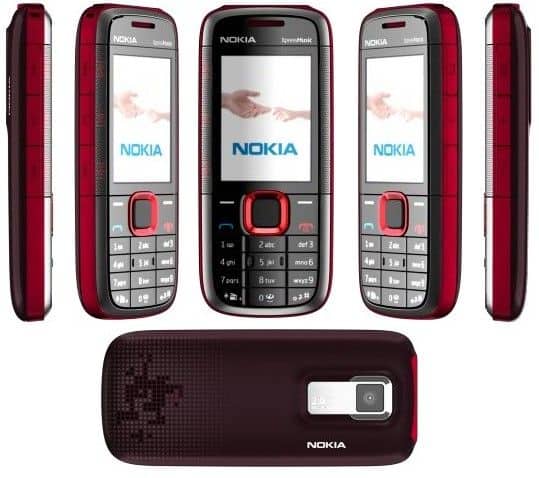
The Nokia 5130 XpressMusic keeps that classic candy bar vibe, you know the sort you saw around a lot on those feature phones in the late 2000 s. It’s measured 107.5 x 46.7 x 14.8 mm, and it weighs just 88 grams so it feels compact and light, kind of simple to toss in a pocket or a smaller carry bag. The body is pretty solid too, it has a plastic shell that feels sturdy, and like it’s put together well. Nokia, as a brand, was kind of known for durability , and this model follows that trend without drama. It handles everyday scuffs and rough handling, and because it’s small and light, it can be less tempting to drop, though, honestly, it still helps that the body feels robust.
The way the phone is made, it really looks like it was, sort of, aimed at music lovers, with those special music control buttons on the side so you can reach play, pause, skip tracks, and tweak the volume without much fuss. They’re placed pretty well and they feel responsive, so you can manage your tunes without digging through the phone’s menus. Then on the front you get a 2-inch TFT screen, resolution 240 x 320 pixels, and underneath that there’s the usual numeric keypad. The buttons there are comfortable, spaced out in a way that feels right, and they give that solid touch response, you know, the tactile kind.
On the back it has a simple 2-megapixel camera, which was enough for basic snapshots back then. The lens sits near the top center, and beside it there’s a small loudspeaker grille, kind of tucked next to it. The overall look is finished with a 3.5mm headphone socket on top, a microUSB port for charging and data moving, and a microSD card slot hiding under the battery cover.
Overall the Nokia 5130 XpressMusic design comes off pretty functional and useful, not flashy or anything, but it does the job, mainly for folks who care about music playback and day to day toughness, so it feels practical, kinda straight forward too.
Display
The Nokia 5130 XpressMusic comes with a 2-inch TFT display at 240 x 320 pixels, giving it around 200 ppi. Sure, for today’s world it may sound tiny and low res, but back then it was pretty normal for feature phones. The panel can show as much as 256,000 colors, so colors look decent, and brightness is okay for everyday basics.
Visually, this display does well enough indoors, the text and graphics are pretty clear and easy to read , though out in the wild, it can act a bit different. Like a lot of non-touchscreen units from that time, direct sunlight is where it really starts to struggle , and then you know, seeing what’s on the screen becomes a chore. Also the screen is small, so it’s not really the best fit for watching stuff or doing web browsing , but it does what it needs to do for the phone’s menu navigation, sending messages, and looking at photos.
One of the nicer points about the display is the power side of it, it’s quite energy efficient . The TFT panel uses very little power when you compare it with newer smartphone displays, and that helps explain the phone’s strong battery endurance. That matters a lot for people who care more about a long-lasting battery than they do about big high-resolution screens.
The Nokia 5130 XpressMusic display is basic, but it’s also perfectly fine for what the phone was built to handle. It’s not meant as a multimedia tool or for gaming , but for music playback, texting, and making calls, the display is more than enough.
User Interface and Software
The Nokia 5130 XpressMusic uses Nokia’s Series 40 operating system , which was a pretty common pick for feature phones in the mid to late 2000s. Series 40 is basically about simplicity, easy to learn , and generally low effort, so it fits well with users who like a direct, no-frills mobile experience.
The user interface is basically put together as a chain of menus and submenus that you can move through using the directional pad ,and the soft keys. The main menu shows a sort of grid of icons ,you get messaging, contacts, music, gallery, settings, and more. The icons are pretty easy to spot ,and the whole layout feels natural, so you can reach the things you want without much wandering around.
Customization is somewhat limited compared with today’s smartphones, but you still can adjust a few details like the wallpaper, themes, and ringtones so it matches your vibe. Also, the phone can run downloadable Java based applications and games, so you can add extra features over time, like an extra layer you didn’t have before.
One of the more stand-out parts of the Nokia 5130 XpressMusic is the music player, it’s built right into the user interface so it’s there when you need it. It’s not flashy, but it works well, with playlist support, album art, and several audio styles ,including MP3, AAC, and WMA. The physical music control buttons on the side are a big deal ,because you can handle play, pause, skip, and skip again without digging through menus first. For people who really care about music ,that convenience matters.
On top of the music features, the phone also includes a basic web browser (Nokia Browser), an FM radio, and a bunch of pre installed tools, like a calculator, a calendar, and an alarm clock. The browser is pretty limited though ,mainly because the screen is small and the data connection is slow (EDGE). Still, it can do occasional web checks, quick searches, or reading emails when you’re on the go and don’t want to wait.
Overall, the user interface of the Nokia 5130 XpressMusic feels pretty straight forward and fairly user friendly. It does not have the top tier options you see on newer smartphone models, but it still delivers a steady and efficient mobile feel for basic things, kind of dependable, you know.
Music and Multimedia Capabilities
Being from Nokia’s XpressMusic line , the 5130 is clearly aimed at being a music focused device. That emphasis shows up in both the hardware design , and the software side, so it becomes a nice option for people who care more about listening than everything else.
Music Player
One of the more handy elements is the presence of dedicated music command keys on the side of the phone. With these keys , you can play, pause , jump to the next track, and tweak the volume. You do not have to unlock the phone , or dig through menus. It makes everything feel effortless while you’re out there, like when you’re walking around, riding the commute, or even working out.
The audio quality on the Nokia 5130 XpressMusic is kinda impressive for a feature phone, I mean for what it is it sounds really solid. The built in loudspeaker comes through pretty clear and loud, but it doesn’t really have bass , and if you crank the volume too high it can start sounding a bit tinny. That said, the whole experience improves a lot once you use headphones. With a decent set of headphones, the sound feels cleaner, and the overall balance is better, so listening actually becomes enjoyable.
Then there is the 3.5mm headphone jack, which makes it easy to use many headphones and earbuds. Audio output stays pretty clean too, not weirdly distorted, more like smooth and controlled. It really works well when you’re not relying only on the speaker.
FM Radio
Aside from the music player, this phone also has an FM radio, which is convenient if you like live broadcasts, podcasts ? not really but radio. The radio menu feels simple enough, you can search stations, save your favorites, and switch between mono and stereo sound. It also supports RDS, so when it’s available you can see station info and sometimes song titles too, which is a nice touch.
To listen, you just plug in a pair of headphones because they act as the antenna. Reception is usually good, and the sound quality is decent, nothing groundbreaking, but it definitely does the job if you want radio on the move.
Multimedia Features
Even though the Nokia 5130 XpressMusic is mostly about music, it still throws in basic media bits for photos and videos. The gallery app lets you browse photo and video collections, and there’s a built in media player that can handle video formats like MP4 and 3GP. However, with the small screen and limited resolution, video viewing is kinda hit or miss. Playback can feel smooth, but the low resolution display doesn’t exactly deliver crisp visuals. So it works, but it’s not the most ideal way to watch anything for long.
The phone also comes with a pretty basic 2-megapixel camera, it can be used to take photos and record videos. The camera itself is very simple, no flash or autofocus, and the image quality is sort of mediocre, mainly when the light is poor. Still it’s enough for casual snapshots and sharing the images via MMS or Bluetooth.
Battery Life
A big highlight of the Nokia 5130 XpressMusic is how well it holds power. It uses a removable 1020 mAh BL-5C battery, giving strong endurance for a feature phone. Nokia’s Series 40 operating system is tuned for power saving , and that small low-resolution screen also helps keep the battery going longer than you’d expect.
In everyday use, the Nokia 5130 XpressMusic can quite easily last several days between charges. That’s with stuff like placing calls, sending messages , listening to music, plus the occasional FM radio session or camera use. If someone mainly leans on the handset for music reproduction , battery performance is especially good. The phone can get about 20-24 hours of uninterrupted tracks, so it works well for longer travel days or even daily commutes.
Charging the device is not complicated. The phone uses a standard Nokia pin charger. Since the battery capacity is fairly small compared to newer phones, it tends to charge fairly quickly, usually a couple of hours to get from empty to full. Because the battery is removable, people could carry a spare cell, which was kind of a normal thing back then, and that extended the total usable time between charges.
Overall, the battery life of the Nokia 5130 XpressMusic is, pretty strong, like one of the most dependable things about it. It gives a steady and long lasting performance which makes it a solid pick for people who want a handset that can go on for days, without all that recharging.
Connectivity and Storage
When it comes to connectivity the Nokia 5130 XpressMusic basically follows the typical feature phone layout of its time. It might not bring the advanced network features you see in newer smartphones, but it covers the key essentials, for a dependable mobile day to day kind of use.
Network and Calling
As for call performance, the voice quality is generally good, you can expect clear audio and solid signal handling. The built in loudspeaker sounds okay for hands free calls, though it tends to work best in quieter places. Also there’s a 3.5mm headphone jack, so wired headsets are an easy option, which feels convenient enough.
Bluetooth and USB
For short range connections, it includes Bluetooth 2.0. This can be used for moving files, hooking up a wireless headset, or pairing with other Bluetooth enabled gadgets. The Bluetooth connection is steady and not hard to operate, but data transfer, it is slower compared to newer Bluetooth versions, so big transfers won’t be all that fast.
The phone also has a microUSB port for charging and moving data, so it sort of covers both needs. Even though this microUSB connection is not as speedy as the newer USB-C standard, it still works, and it tends to match a big variety of charging cords and add on accessories. People can plug the phone into a computer to move music, images ,and other bits, or use Nokia’s PC Suite software to do a backup of their information.
Storage
The Nokia 5130 XpressMusic ships with 30 MB of built in storage, which is pretty small by today’s expectations. That said, the device includes a microSD card slot that takes cards up to 16 GB. This gives you enough room for music, photos, and assorted files. Since the overall idea of the model is music play, the expandable storage is kind of a must have, because it lets you bring along a bigger song collection wherever you end up.
On the file side of things, the organization is fairly simple. There’s a basic file browser where you can sort and reach what’s saved on the internal memory or on the microSD card. The built in space is enough to install a couple of Java based apps and games, but when it comes to saving media and audio, the microSD card is the real key part.
Camera Performance
For the camera, the Nokia 5130 XpressMusic includes a 2 megapixel sensor, pretty normal for feature phones around the late 2000s. It sits on the back of the handset, and there’s no flash ,or autofocus. Because of that, the photo quality is rather basic, and it really does not compare well to modern phone cameras today.
Image Quality
When the lighting is decent, the camera can manage to grab fairly okay photos, good for everyday use. They look sharp enough for checking on your phone, or sending them off as MMS too, but they still don’t have that extra detail plus dynamic range you get from newer smartphone cameras. The colors stay mostly true, yet sometimes they feel a bit subdued compared with those bright, almost punchy shots from more advanced models.
In darker environments, the camera really doesn’t cooperate much. If you don’t use a flash, images taken in low light usually turn out grainy, a little smudged, and noticeably short on fine detail. There’s also a visible shutter lag, so for anything that moves quickly it can feel annoying, like you’re always a second late.
Video Recording
The Nokia 5130 XpressMusic can also record video, but honestly the result is kinda limited. The videos show up at 176 x 144 resolution, roughly 15 frames per second , so you get those low quality clips that are more or less suited for quick, laid back moments. The files are saved in 3GP format, and it’s a very compressed type of container too. That level of compression was pretty normal for feature phones back in the day.
The video side is barebones, but it’s workable for short clips and easy MMS sharing. Still, the tiny resolution plus the low frame rate means they won’t look good on bigger screens, and they definitely won’t satisfy anyone looking for serious recording.
Overall, the camera on the Nokia 5130 XpressMusic is more of a backup feature. It’s there mostly for convenience, not for high-quality photography. It does the job for occasional snapshots and simple video, but it doesn’t really shine, not as a standout part of the device.
Durability and longevity
Back in the early 2000s, a big thing about Nokia phones was that they kinda… didn’t quit so easy, and the Nokia 5130 XpressMusic sort of carries that vibe pretty well. It comes with a durable plastic outer case, built to survive everyday scuffs and small bumps without turning into total chaos, so it feels like a dependable pick for people who want a device that can handle some real wear and tear, without drama.
Build quality
Honestly the build quality is quite good. In your hand the phone feels firm and steady, you know, no weird creaking, no bending or flexing when you press a bit harder. The buttons are also well-made and they respond fast, with a touchy kind of tactile feedback that stays usable even after long stretches. And because it’s small, plus the total weight is fairly light, it also seems less likely to slip from your grasp compared with bigger heavier gadgets.
Longevity
Over the years, a lot of users have said their Nokia 5130 XpressMusic kept working fine long after buying it. There’s a relatively straightforward layout here, and fewer parts that move around, which means there’s less to malfunction than on more complicated devices. Also, the battery is removable which helps a lot , since it can be swapped out when it starts to lose capacity or just gets weaker over time.
Nokia’s reputation for tough phones is not random, and the 5130 XpressMusic kind of proves that point. Even now, when so many modern smartphones feel way more breakable, this phone still works as a sensible backup handset for plenty of people , especially those who care about music features and that long lasting battery life.
So, when the Nokia 5130 XpressMusic first came out, it kinda got thrown into the mix with a bunch of other feature phones, plus some early smartphones, you know. There were a couple usual suspects too like the Sony Ericsson W205 , the Samsung GT-S5230,and the LG Cookie KP500. All of those had good and bad points , but the 5130 XpressMusic really stood out in a kinda obvious way, mostly because it kept pushing music, and it also had that solid sturdy build that people notice.
Sony Ericsson W205
The Sony Ericsson W205 came from Sony Ericsson’s Walkman line, which , similarly to Nokia’s XpressMusic, was basically made for folks who wanted their music first. The W205 did bring a familiar kind of music focus, with a Walkman-branded player, dedicated music buttons and expandable storage using Memory Stick Micro, also called M2. But still, the W205 also had a smaller screen with a lower resolution , and it didn’t include the 3.5mm headphone jack. That jack is a big deal on the Nokia 5130 XpressMusic since it makes the whole setup more flexible for different headphones.
Even though the Sony Ericsson W205 had music features that were pretty close in spirit, most people seemed to think the Nokia 5130 XpressMusic was the better all-around choice. Mainly it was viewed as having stronger build quality, a nicer display , and controls that felt more straightforward , not like you had to wrestle them.
Samsung GT-S5230
The Samsung GT-S5230, or the Samsung Star as some people call it, was kind of an early touchscreen phone that sat in the same sort of budget area as the Nokia 5130 XpressMusic. The Star came with a bigger 3.0-inch touchscreen display, a 3.2-megapixel camera,and it had more, sort of, built in multimedia stuff. Still, it never really had the dedicated music controls. And that whole “music first” feel was what made the Nokia 5130 XpressMusic stand out so much.
The Samsung GT-S5230 felt more modern, mainly because of the touchscreen interface, but it didn’t quite keep up with Nokia 5130 XpressMusic when it came to toughness, battery stamina,or just plain comfort for music playback. If someone cared most about music and reliability, the Nokia model stayed the better pick, mostly no question.
LG Cookie KP500
The LG Cookie KP500 was another early touch screen phone, and it sort of showed up as a rival to the Nokia 5130 XpressMusic. It had a 3.0 inch touchscreen, a 3 megapixel camera, plus it leaned hard into the multimedia vibe. There was even a fairly basic music player built in, but in the end it lacked the proper, dedicated music capabilities. And yeah, the build quality wasn’t exactly on the same level as that Nokia XpressMusic either.
Meanwhile the Nokia 5130 XpressMusic kept pulling people in. Mainly because of those physical buttons for music control,the sturdier design, and the long-lasting battery life. That’s why it stayed a serious contender, even when early touchscreen phones were starting to show up everywhere.
Legacy and Impact
The Nokia 5130 XpressMusic is , you know, still remembered as one of those standout feature phones from back then. It really had this clear slant toward music playback and, on top of that, Nokia’s trademark durability and that easy on-the-hands kind of design. So it turned out to be a popular pick for a whole bunch of different people. Even while smartphones started to gobble up more of the market, the Nokia 5130 XpressMusic stayed a dependable and kind of loved option for folks who wanted a simpler, more focused mobile experience, not all the extra fuss.
Conclusion
In the end the Nokia 5130 XpressMusic feels like a textbook example of Nokia’s strong points during the feature phone era. This was a device made with a specific mission in mind, namely to deliver an affordable , reliable phone with genuinely solid music playback. Sure, it doesn’t bring the advanced stuff modern smartphones do. but it shines in its own space, with that mix of rugged build, plain usability, and real day to day functionality that many users found genuinely appealing.
The phone’s design, build quality, and battery life are the kinds of traits people still mention. especially when someone wants a straightforward mobile experience. The music angle is what anchors it, with dedicated playback buttons, a good-quality audio output and expandable storage that helps it stay practical longer. Even the weak spots, like the basic camera and the missing advanced connectivity, kinda get looked at differently, more like nostalgia than actual faults. because it brings you back to a moment when phones were simpler and focused on doing a few things , really, rather than trying to do everything at once.
In the years since it’s release , the Nokia 5130 XpressMusic has kinda earned a legendary status among mobile phone enthusiasts. It feels like a little snapshot of time when feature phones were really doing their thing at peak level, right before smartphones showed up and basically flipped the industry forever. And if you owned one, it still comes back as a fondly remembered device, a steady companion that actually delivered on its promise of music, on the go , no drama.
When we look back at the wider history of mobile technology , the Nokia 5130 XpressMusic stands out as a symbol of that older era, where phones were defined by meeting certain user needs rather than trying to do everything. It’s kind of a proof, really, of Nokia’s understanding of what people wanted, and their skill at packaging that into something functional but also kinda stylish. For those reasons, the Nokia 5130 XpressMusic will always have a special place in the history of mobile phones.
Nokia 5130 XpressMusic GSM Quadband Phone (Unlocked) Blue: Buy it now
Related Posts





Tech Reviewer & Product Analyst
Định Bia has spent over 10 years testing consumer electronics with a focus on smart technology. He work as a product advisor at Biareview where he helped customers find the right devices for their needs. He personally tests every product featured on this site using a consistent evaluation framework covering quality, durability, and value. All reviews are based on experience, not influenced by the manufacturer.