Design and Build Quality
Aesthetic and Materials
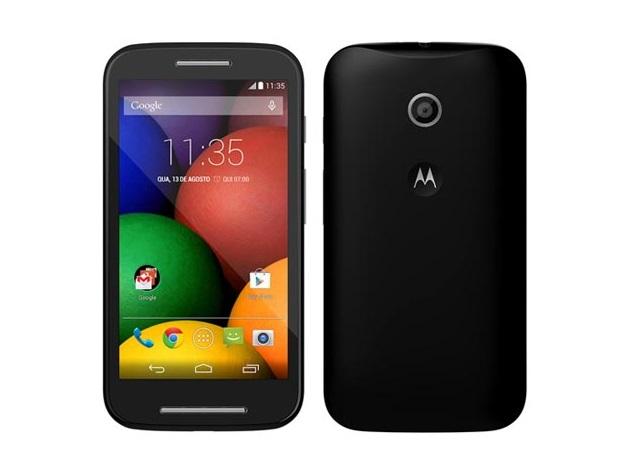
The Motorola Moto E kind of stands out because it feels simple, and the whole look stays pretty functional. That matches the budget friendly idea in a pretty direct way. The 2014 Moto E has a plastic body with a matte finish, and that detail really helps with smudges, meaning fingerprints are less obvious, plus scratches aren’t as dramatic either. Overall the design seems more focused on everyday practicality , durability , and quick usability rather than some fancy “premium” style.
The 2014 Moto E is also pretty rounded, with rounded edges and a back that is slightly curved. It sits nicely in the hand , so holding it doesn’t feel awkward. On the right side you’ll find the physical power and volume keys, and then on the bottom there’s a microUSB port. The headphone jack ends up on the top edge, which is a small but common convenience. The rear cover is removable, so you can get at the battery and SIM card slots without too much fuss.
Ergonomics and Handling
For size, the Moto E measures 124.8 x 64.8 x 12.3 mm , and it weighs around 142 grams. In real use, that makes it compact and pretty easy to handle, it fits into most hands without needing a complicated grip technique. The rounded edges and the gentle curve at the back help with a secure hold, so accidental drops are more unlikely , even during quick movement.
As for build quality, it’s not “premium” obviously, but it still feels solid enough for the price bracket. The plastic frame, along with a slightly textured finish, works like a practical layer for normal daily wear. And yes, the removable back cover matters , because some people like being able to open things up for battery access, or swap in a different SIM card when needed.
Display
Size and Quality
The original Motorola Moto E comes with a 4.3-inch display , resolution is 540 x 960 pixels , and that qHD layout gives you about 256 pixels per inch. The panel itself is an IPS LCD type, which is usually praised for color faithfulness and also those wide sight angles, you know the kind you can tilt without everything looking weird. And the 4.3-inch size is pretty compact, so it tends to fit people who prefer smaller screens, not that bigger feel.
Display Performance
From a day to day angle the Moto E display is , well, fine for its class. You get decent sharpness and enough brightness for most normal tasks. Sure the qHD resolution isnt as crisp as some of the higher end displays out there , but it still looks alright for browsing, messaging , and casual video watching. Colors usually stay pretty accurate and the IPS LCD panel gives you solid viewing angles as well.
In sunlight though it can get a little rough to read. It doesn’t reach the really high brightness you see on more expensive phones, so glare can be a thing. Indoors, and in everyday situations, it’s still a satisfactory experience. Touch response is usually smooth and responsive, even if it doesn’t have that same buttery fluidity you might expect from flagship phones.
Hardware
The second-generation Motorola Moto E , often called the Moto E 2015, is a mid-range smartphone and it’s mostly highlighted by solid build quality, along with specs that make sense for the price you pay.
To deliver something closer to a premium feel, at least within the midrange category, Motorola equipped the Moto 2015 with a 4.5-inch LCD screen that uses IPS technology. The resolution is again 540 x 960 pixels, and that lands around 245 ppi, plus there’s the protection of tempered glass , Gorilla Glass 3.
The front of the machine beside to the screen, the top is also the appearance of the only speakerphone. At the moment a few years ago, bringing the speakerphone out to the front of the phone could be considered a big breakthrough. At present, this detail is becoming more popular and it also appears. Quite useful in some cases.
In addition to the details above, the Moto E facade is equipped with secondary quality VGA camera, of course with this factor, you sure will not be able to ask for pictures beautiful selfie shimmering, it’s enough for video calls. However, the back of the camera is a bit better with a 5-inch camera that can record 720p HD video and support slow-motion recording.
In terms of processing power, the Moto E (2015) scores on its 64-bit Snapdragon 410 with 1.2GHz clock with Adreno 306 GPU and 1 GB of RAM. There is also a Moto E (2015) version running the Snapdragon 200 processor. Here is a performance score for Moto E (2015) measured by popular configuration software.
In general, Motorola Moto E (2015) is quite stable performance, smooth running and handling of essential basic tasks simultaneously, simple entertainment needs of users are still fully meet.
Other specifications include 8 GB of internal memory with up to 32 GB micro-SD memory card slot for users to expand their storage capacity. In addition, Moto E (2015) is equipped with sensor technologies such as acceleration, proximity and familiar features such as FM Radio, A-GPS or GLONASS positioning capabilities. Other connections like Bluetoothe 4.0, Wi-Fi and 4G network connectivity …
Moto E (4th Generation) – 16 GB – Unlocked (AT&T/Sprint/T-Mobile/Verizon) – Black – Prime Exclusive – with Lockscreen Offers & Ads: Buy it now
Moto E (4th Generation) – 16 GB – Unlocked (AT&T/Sprint/T-Mobile/Verizon) – Black: Buy it now
Moto E Plus (4th Generation) – 16 GB – Unlocked (AT&T/Sprint/T-Mobile/Verizon) – Iron Gray – Prime Exclusive – with Lockscreen Offers & Ads: Buy it now
Pin
With a device with a 4.5-inch screen and qHD resolution as the Moto E (2015), getting a Motorola 2390 mAh battery is a plus. The duration of use can last up to 1 day if you only use basic tasks such as call, text or surf the web. And while performing tasks that require continuous processing or a bright screen such as regular gaming or video playback, the loss of energy will be greater. At this time the machine can only be used for half a day.
Camera
The main camera of the machine is 5 MP, but unfortunately it does not come with flash light and the camera also has no outstanding technology. Therefore, you should not be too concerned about the ability to take photos of this Moto E (2015). The camera of Moto E (2015) only gives good picture quality, of course in clear daylight. Left, the ability to capture the night of the device is not impressive.
Battery Life
Battery Specifications
The Motorola Moto E comes with a built in 1,980mAh battery, so it is non removable. Considering the phone’s pretty modest specs and that lower resolution screen, the battery capacity seems meant to squeeze out enough juice for a whole day of regular use. It does not offer fast charging either , so depending on your charger, it can take longer to get back to 100% than on newer handsets.
Battery Performance
Overall, the Moto E battery life feels pretty fair, especially for something budget friendly. If your routine is mostly calls, texts, browsing around, and maybe a bit of music or video now and then , it usually holds up until the end of the day. The power saving parts inside, plus the simpler display, help the device stretch that charge.
For standby behavior, the phone generally does well. When you’re not actively using it, the battery tends to last for extended periods. But if you do heavier stuff, like nonstop social apps , or you keep several things running at the same time, you may find yourself needing a top up more often.
And since there’s no fast charge, the recharging time could feel a bit more sluggish, than what most people get used to with quick-charging phones. Still, if you lean on the fundamentals, the Moto E’s battery behavior usually lands in a good place.
Software Experience
Operating System and User Interface
The first Moto E showed up with Android 4.4 KitKat, then later it got bumped up to Android 5.1 Lollipop , not long after. The handset sticks close to a stock Android kind of setup, so the user interface feels kinda tidy, and also pretty clear. For day to day use , it really leans into simplicity, with only a handful of extras, and that snappy, responsive feel.
On the software side, the Moto E includes the usual Android stuff too, like the notification shade, the app drawer, and a quick settings panel. That near stock approach keeps everything moving smooth, it stays simple to move around in, and you also get access to Google’s typical apps and services.
Software Updates
The Moto E’s update track shows it was aimed at the entry level crowd. It did receive an update to Android 5.1 Lollipop, but after that it didn’t pick up any bigger major upgrades. This kind of stop at that point is pretty common with low-cost devices, because brands often put most of their attention, into newer releases for their higher priced models.
Even so, the near-stock Android feel helps the Moto E stay relatively smooth, across much of its life. People can still see support in the form of security patches and the important updates that Motorola and Google provide, from time to time.
Connectivity and Extras
Connectivity Options
The Motorola Moto E handles, pretty much the essential connectivity things for its category. It has support for 3G networks, which gives steady data speeds and keeps things connected for most people. It also brings Wi‑Fi 802.11 b/g/n, Bluetooth 4.0, and GPS, so you can get by with the usual options.
On the hardware side, the Moto E includes a microUSB 2.0 port for charging as well as data syncing, plus a 3.5mm headphone jack for wired audio. With these connectivity options in place, users can reach the standard communication features and, well, the usual media consumption routines without too much hassle.
Extras
Related Posts




Tech Reviewer & Product Analyst
Định Bia has spent over 10 years testing consumer electronics with a focus on smart technology. He work as a product advisor at Biareview where he helped customers find the right devices for their needs. He personally tests every product featured on this site using a consistent evaluation framework covering quality, durability, and value. All reviews are based on experience, not influenced by the manufacturer.