Introduction
Released around mid 2008, the Nokia N78 showed up as a fairly noticeable add-on in Nokia’s N-series, meant for people who wanted kind of a mix of multimedia, connectivity, and a practical design. In those late 2000s smartphone days it tried to cover a bunch of needs, not just entertainment or photography but also everyday talking and some work-like tasks. In this review, we’ll take a closer look at the Nokia N78, including the design, display, camera results, connections, software, and the whole day to day user experience, more or less.
Design and Build Quality
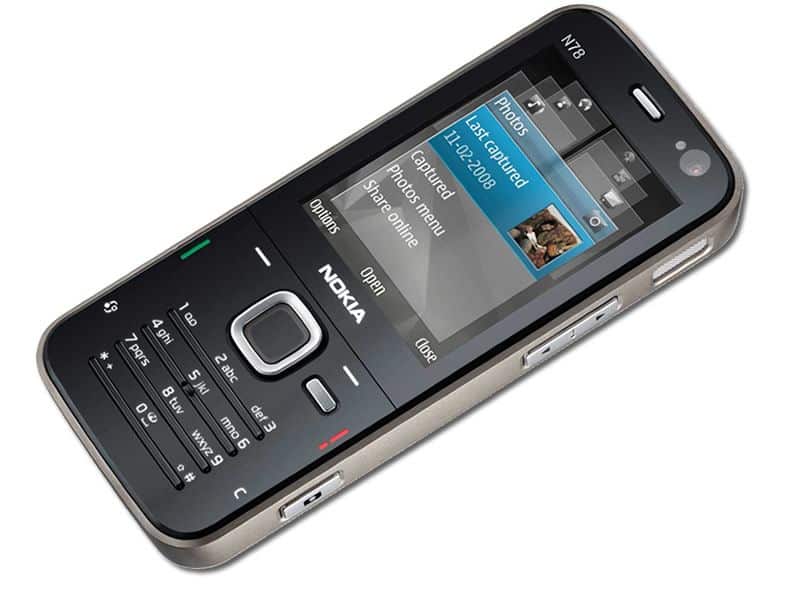
The Nokia N78 was styled with a sleek, modern look, and it generally matched the N-series idea of keeping style tied to function, not just decoration.
Dimensions and Weight: The N78 measured 113 x 49 x 15.1 mm and weighed about 101 grams. So yeah, it felt fairly compact and easy to pocket, and also simple to hold for longer periods. The shape was ergonomic, it sat in the hand comfortably and gave decent support for one handed use, even if you’re moving around.
Material and Finish: You could spot a combination of plastic and metal. On the front, there was a polished finish and a slightly curved surface. The back used matte plastic, which helped with grip, and made it less slippery. Overall, the build felt solid, and the materials seemed to add some real durability.
Keyboard and Controls: The Nokia N78 had a pretty solid keypad, kind of mix of actual pressable buttons and a directional pad . It felt nice in hand, with keys that were spaced out enough, and you got that decent tactile push. For moving around there was a four-way d-pad, so switching through menus and apps was, more or less, straightforward.
Display: On the N78 you got a 2.4-inch TFT display, with a 240 x 320 pixel resolution . Back then the screen size and pixel count seemed normal, even if today it looks a bit modest. The screen colors came off clear and vibrant, and the viewing angles were reasonably decent. Still , if someone was used to later phones with bigger panels, this might have felt a touch small.
Camera Performance:
The Nokia N78 came with a 3.2-megapixel camera, which was a standout thing for that era . It was placed and marketed to attract people who cared about mobile pictures and more multimedia style use.
Photo Quality: That 3.2-megapixel shooter could take photos up to 2048 x 1536 pixels . You also had autofocus along with a built-in LED flash, which really helped when lighting was weak. Overall, the image quality was pretty good, with colors that were reasonably accurate and plenty of clarity. But , in low-light scenes the images could end up a bit grainy, plus the sharpness might drop off.
Camera Interface: The camera interface on the N78 felt pretty user-friendly, and it kind of gave a lot of settings for taking photos. People could mess with things like white balance , exposure, and also color effects. The autofocus option was there too, and it made focusing on a subject more accurate, most of the time. Plus the LED flash was useful when you had to shoot in dark places , it lit things up enough for normal use.
Video Recording: On top of that, the N78 could record video as well, and the max resolution was VGA (640 x 480 pixels). The video itself was decent for its era, but yeah it didn’t have the sharpness or the smooth motion you’d expect from higher-resolution recordings. In practice the video recording was fine for casual moments , but it didn’t really include advanced tools, or any sort of high-definition quality.
Connectivity
Connectivity on the Nokia N78 was broad in a way, so it did a lot, and it was useful for different kinds of communication, plus moving data around, you know sort of versatile.
Cellular Connectivity: The N78 handled GSM 850/900/1800/1900 bands so it stayed compatible with lots of networks, internationally. It also supported 3G using UMTS 900/2100 so web browsing was usually faster , and data transfer felt more responsive than on the older network types.ive than on older network styles.
Wi-Fi: The N78 also came with Wi-Fi 802.11b/g support, so users could join wireless networks for faster internet, and also usually lower data expenses. Wi-Fi was a meaningful feature for people who often used the phone for web access, streaming lite content , and other data-heavy tasks.
Bluetooth: On the Nokia N78 there was Bluetooth 2.0, so it could do wireless links with a bunch of Bluetooth-enabled stuff, like headsets keyboards, and other accessories . In day to day use the Bluetooth seemed steady enough for moving files around and pairing up with wireless peripherals.
USB Connectivity: The device also had a micro-USB port, used for both data transfer and charging. That micro-USB link worked as a kind of handy and universal bridge, for syncing info with a computer, and also for keeping the battery topped up.
GPS: The N78 came with built in GPS, which helped with navigation and location related services. It supported Nokia’s Maps app, so you could look for addresses, points of interest, and get turn by turn directions. Still, GPS performance was basically fine, just it didn’t really include extra upgrades like A-GPS (Assisted GPS) for faster satellite locks.
Software and User Experience
The Nokia N78 ran Symbian S60 3rd Edition, Feature Pack 2 . Back then Symbian was pretty common in that late 2000s era, and it was often seen as stable, also packed with many options.
User Interface: The Symbian S60 interface felt practical, not complicated. The main menu used a grid style of icons, and you could adjust it to show frequently used applications, plus shortcuts. It was pretty intuitive, with straightforward access to apps and system settings. But over time, it started to feel a bit old , compared to newer touch driven interfaces, you know.
Email and Messaging: The N78 sort of gave you solid email and messaging options, so it worked nicely for business users, and also for folks who cared about moving communications along efficiently. The phone was able to handle multiple email accounts, and it came with things like email threading, plus it supported attachments. For messages, the physical keypad made a difference, because it helped people type SMS , MMS , and even instant messages quickly and with decent accuracy, rather than fumbling around.
Productivity Applications: On the productivity side, the N78 included a set of apps meant to help people keep both personal and work tasks under control. The calendar tool had multiple perspectives , daily , weekly , and monthly , so users could set up schedules and stay on top of appointments and events. The contacts manager handled organization for contact information, while the to do list app, the voice recorder, and the calculator were there for the usual variety of tasks, not just one type.
Web Browsing: The N78 also had a built in web browser, but honestly it was limited compared to how modern browsers behave. It could manage basic browsing, sure, but it tended to feel slow , and sometimes awkward when you ran into complicated pages or sites loaded with media. So the whole experience was usable, just not fast enough , and it didn’t have that smooth responsiveness you expect from newer web browsers.
App Store : The N78 ended up featuring Nokia’s Ovi Store , which essentially lets users pull down extra applications and games. Even though the Ovi Store had quite a few options, it still felt, maybe not as complete or as easy to navigate as the app stores you could get on iOS and Android. Also the catalog of apps and games for the N78 was kind of restrained, and the overall app ecosystem wasn’t that lively , not quite as vibrant or quick-moving as what the competitors were doing.
Multimedia Capabilities
The Nokia N78 seemed to be made for people who cared about multimedia stuff, so it came with a set of tools aimed at entertainment , media browsing, and everyday listening.
Music Player : On board you got a built-in music player that handled multiple audio formats, such as MP3, AAC and WMA. The music player used a direct interface, so users could arrange their music library and start playback without too much hassle. There were stereo speakers, plus a 3.5mm headphone jack, giving users more flexibility for listening, whether through external speakers or regular headphones.
FM Radio : The N78 also included an FM radio tuner , so users could catch their preferred radio stations without relying on any internet connection. In practice, the FM radio worked smoothly and delivered a solid set of stations, so overall it boosted the device’s multimedia experience.
Video playback: The N78 supported playing video files in formats like MP4 and 3GP. Its screen size and resolution were kinda modest, but it could still run videos with decent looking output. Overall the viewing was pretty satisfying for casual use , yet it stayed constrained by the same small screen and limited resolution.
Gaming: The device had support for a bunch of games, including stuff that was already installed and also games you could download. The gaming feel was not quite as sharp as what you’d get on newer smartphones , still the N78 gave a nice selection, so it was capable of providing entertainment and a good amount of enjoyment.
Impact and legacy
The Nokia N78 was a solid and worth-remembering entry in Nokia’s N-series, aimed at people who wanted a mix of multimedia functions, connectivity features, and productivity tools. Between its design choices, build quality , and the broad set of features, the N78 became a popular option for users who preferred a balanced smartphone experience.
Strengths:
The N78 had a compact, ergonomic build so it was easier to grasp and carry around.
A 3.2-megapixel camera with autofocus plus an LED flash gave fairly good photos for its era .
It included multiple connection methods , with Wi-Fi, Bluetooth, and GPS.
The built-in music player, FM radio, and overall multimedia features made it more appealing for media listening and everyday entertainment.
Limitations:
The screen size and resolution were a bit modest compared with newer devices, so the multimedia experience could feel a little limited.
The Symbian S60 operating system started to seem outdated compared with newer touch-based platforms, you know like the whole vibe moved on.
Also the app ecosystem and the web browsing experience felt more constrained than what competitors were already offering.
In retrospect , the Nokia N78 kinda marks a transitional era in the evolution of smartphones. It bridged that gap between older methods and newer tech, giving people a practical and pretty well-rounded device for its moment. Sure, it may not have been a complete game-changer in the smartphone market, but it did what it was meant to, and today it still counts as a noticeable piece of Nokia’s legacy.
Conclusion
The Nokia N78, overall, was like a well-rounded smartphone, where multimedia , connectivity and productivity just kind of sat together in a pretty balanced way. Its design and build quality also felt sturdy, and the range of features made it a popular pick for people who wanted something functional and flexible. Sure, the N78 had limitations too, like an older operating system, and the display wasn’t exactly impressive, but for its time it still delivered a pretty satisfactory experience.
In the bigger picture, the N78 was also part of Nokia’s N-series, and it kind of marked a transitional moment in how smartphones were evolving. It bridged the older tech and the newer innovations, giving users a reliable device when they wanted both multimedia plus day-to-day productivity features. The N78’s legacy is mostly in how it managed to match the expectations of its owners while supporting Nokia’s reputation, for producing dependable and well-designed phones.
Looking back, the Nokia N78 is almost a small proof of the leaps in smartphone technology during the late 2000s. It’s still an important thread in Nokia’s history, showing the company’s focus on a well-rounded and functional gadget that could serve many kinds of user needs, not just one narrow style of usage.
NOKIA N78 (UNLCOKED QUADBAND)WIFI,3.2 MP CAMERA,FM RADIO,BLUETOOTH,SILVER COLOR GSM CELL PHONE: Buy it now
Nokia N78 Brown GSM Unlocked Mobile Phone (Copper Brown) – International Version No Warranty: Buy it now
Nokia N78 GSM Unlocked Mobile Phone (White) – International Version No Warranty: Buy it now
Related Posts

Tech Reviewer & Product Analyst
Định Bia has spent over 10 years testing consumer electronics with a focus on smart technology. He work as a product advisor at Biareview where he helped customers find the right devices for their needs. He personally tests every product featured on this site using a consistent evaluation framework covering quality, durability, and value. All reviews are based on experience, not influenced by the manufacturer.