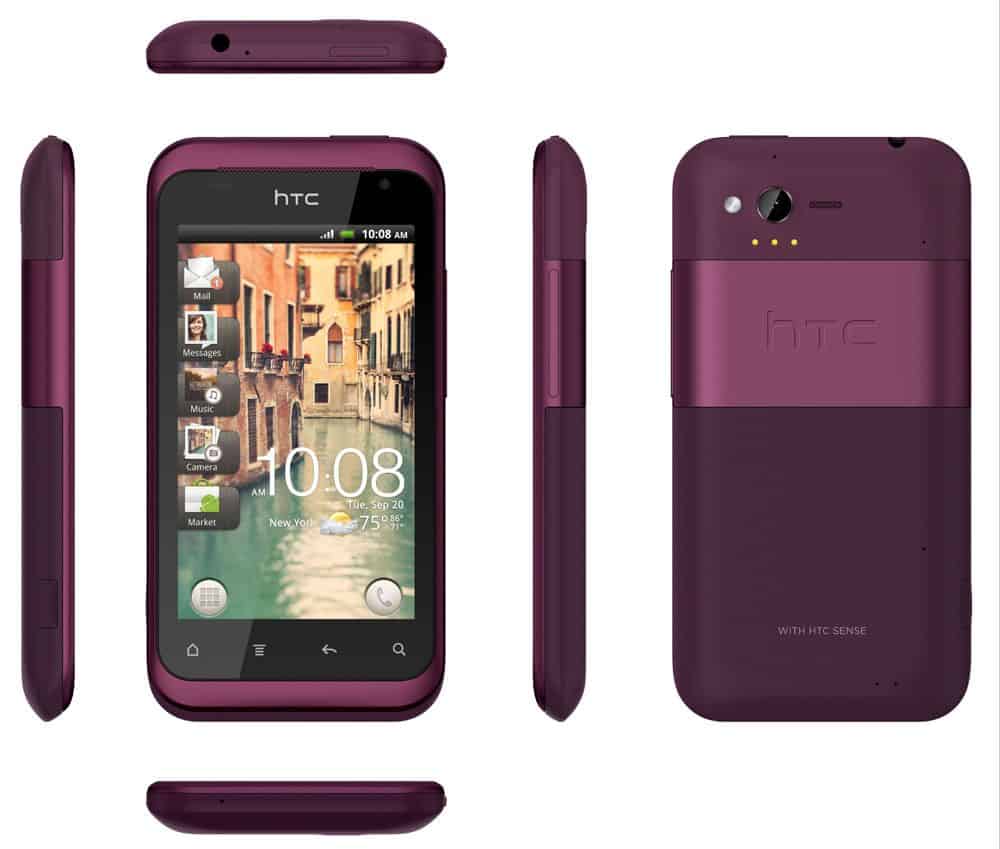
Design and Build Quality
The HTC Rhyme kind a stands out, it mixes looks and everyday usefulness in a way that feels pretty balanced. You can tell someone at least tried to make the device feel elegant, but also practical, so it does n’t just look good sitting around. Basically, the design choices feel aimed at people who want something that looks different while still being easy to live with.
Dimensions and Weight
The HTC Rhyme is roughly 118 x 61.5 x 10.9 mm, and it weighs about 130 grams. Those figures kinda matter, because the handset ends up feeling more compact and it slides into your pocket or rests in your palm with out too much fuss. Also the lighter weight helps across longer use days, it feels a bit less taxing to tote around, and honestly that part is pretty noticeable.
Material and Construction
For materials, the HTC Rhyme goes with a sort of sleek build. It uses a unibody style, and the finish is soft-touch, so your grip feels more secure than with plain hard surfaces. The back uses a smooth matte plastic, it looks kinda neat and also helps to keep fingerprints from being too obvious, at least most of the time. Overall, the build quality seems solid , not flimsy, and there are these small details that make it feel more considered than rushed.
Design Aesthetics
In terms of appearance, the HTC Rhyme comes in a few colors, such as Plum , Tan , and Charcoal. The overall shape is defined by a curved rear, plus a smooth front panel that keeps the look clean. The hardware buttons are built in a discreet way, not overly sticking out, which helps the minimal vibe. One extra thing that’s kind of signature is the charm accessory , it adds a bit of personality and also offers a practical touch, like it’s not only for decoration.
Color Options
The HTC Rhyme color options sort of match its whole vibe, like it wanted to reach people who care about fashion more than just specs. The Plum version, especially, seems made to get noticed, and yeah it adds a little pop to the look, while the Tan and Charcoal picks feel more muted, more low-key. In general these color choices help the phone look nicer overall and they fit different personal styles , or whatever you prefer.
Display and User Interface
On the front the HTC Rhyme comes with a 3.7-inch S-LCD capacitive touchscreen, The resolution sits at 480 x 800 pixels. Even if the screen size and resolution are not exactly massive by today’s standards, back when it launched in 2011 they were still pretty competitive for smartphones. So, it wasn’t falling behind, at least not in the way people might assume.
Screen Quality
That 3.7-inch screen gives a pretty solid viewing experience for its era. The S-LCD panel shows lively colors, and brightness is fine, plus the contrast is decent enough. Pixel density lands around 252 pixels per inch, so for normal stuff—texts, browsing, basic media—the visuals stay crisp. Still, if you spend time on higher-resolution content, you might notice some pixelation.
Touch Sensitivity
The touchscreen on the HTC Rhyme feels pretty responsive and, mostly accurate, giving you a smooth kind of experience when you are moving around the interface and using different applications. It uses capacitive touch tech ,so gestures plus taps get recognized with a decent level of precision. That part is what helps the whole experience feel better, and less frustrating.
User Interface
On the HTC Rhyme you get Android 2.3 Gingerbread ,paired with HTC’s Sense UI 3.5. HTC Sense UI kinda extends Android by bringing in more tweaks, such as widgets, themed looks, and a home screen you can actually rework. The layout is meant to feel straightforward, and it keeps things intuitive with smooth transitions ,along with animations that make everyday use feel easier.
Customization
With the HTC Sense UI, users can personalize their home screens using a mix of widgets and shortcut options, so the phone fits what you prefer. There are also themes and wallpapers supported ,letting you adjust the look and overall mood of the device. The customization choices are fairly broad, so you can end up with a noticeably personalized phone experience.
Performance and Usability
The HTC Rhyme runs on a 1 GHz single-core Qualcomm MSM8255 Snapdragon processor, plus 768 MB of RAM. On first glance those numbers could look a bit small compared with today’s phones, but for the kind of crowd it was aimed at ,and the way people usually used it, they really did make sense, more or less.
Processing Power
That 1 GHz single-core chip gives you decent day to day speed for things like web surfing, social networking and media playback. For normal apps, the phone usually won’t feel overly sluggish, still, if you try to push tougher tasks, you can notice slowdowns. Also, because it’s a single-core setup, the device struggles when you expect lots of things at once, or when you want higher-performance applications running together.
Memory and Storage
You get 16 GB of internal storage on the HTC Rhyme. That tends to be enough for apps, photos/videos, and general files. On top of that, there’s a microSD slot too, so storage can be expanded up to 32 GB. Having the option for additional storage is one of those small but useful features, especially for users who save a lot of content, or just hate deleting stuff.
Battery Life
The phone includes a 1,600 mAh battery, which offers fairly normal battery endurance for its category. In typical use, like browsing, calls, and watching or listening to media, it can often stretch to a full day. But if you’re doing heavy use, or long stretches of multimedia, then you may end up charging more than you’d like, sooner than expected.
Heat Management
Overall, the device’s heat control feels pretty efficient, so during normal use it does not really heat up much. But if you run more intensive stuff, or you just stay on for a long while, the phone can start to feel a little warm. The design itself has adequate ventilation too, like it was made for heat to move out, which helps keep everything comfortable while you’re using it.
Camera and Multimedia
The HTC Rhyme is equipped with a 5-megapixel rear camera along with a VGA front camera. In a way, the camera setup is tuned for people who care about multimedia, and also the whole social sharing thing.
Rear Camera
That 5-megapixel rear camera includes autofocus and an LED flash. In decent lighting, it does a solid job and the photos come out looking fairly sharp with solid detail. Still, once the light drops, it can struggle some, you might notice extra noise and a bit less crispness. For casual pictures, and for posting online, the image output is honestly pretty suitable.
Video Recording
For video, the rear camera supports 720p HD recording. The footage quality is fine for its time, with decent clarity and natural-looking color. On top of the hardware, HTC’s software helps fill in the gaps, offering basic editing options and some simple video effects too.
Front Camera
The VGA front-facing camera , is there for video calls and self-portraits. It is not exactly high-resolution imaging but it still gives decent results, you know for chatting or casual shots. The front camera works, but it does not really feel like a headline feature on the device.
Multimedia Features
The HTC Rhyme leans pretty hard into multimedia stuff, with Beats Audio included and a decent set of multimedia applications. You get a music player that handles different audio formats, like MP3 and AAC . On top of that , Beats Audio boosts playback , so the sound ends up more textured and immersive, like it has more depth than expected.
Music Player
On the HTC Rhyme, the music player feels kinda straightforward enuff for daily use. It lets you build playlists, browse albums and manage your media library. And since Beats Audio is tied in, the whole listening experience is, well improved, which makes the Rhyme a decent pick for people who actually care about music, not just the noise.
FM Radio
There is also an FM radio function, so you can catch live radio broadcasts. It supports RDS, meaning Radio Data System, for extra details about stations and what is playing. With FM radio added, the phone becomes a bit more flexible as a multimedia device.
Connectivity and Network
For connectivity, the HTC Rhyme brings several options, covering different network and wireless technologies. Overall it stays reliable enough, but it is a little behind compared with newer smartphones.
Network Connectivity
The HTC Rhyme supports 3G networks , specifically HSDPA, which helps deliver faster data speeds than typical 2G devices. With 3G connectivity you get smoother web browsing and quicker data transfer overall, even if the phone does not support 4G LTE networks. Because it lacks 4G, the handset performance might feel a bit restricted as network tech kept improving over time .
Bluetooth
This phone comes with Bluetooth 3.0 support, so you can pair it wirelessly with compatible gadgets like headsets speakers, or even other smartphones. Bluetooth makes hands free calling easier, plus file transfers, and audio streaming too , which basically adds more everyday usability.
USB and Data Transfer
The HTC Rhyme has a microUSB port for charging and data transfer. Through the USB connection you can sync information with a computer, move files around, and also recharge the device. The microUSB port works with a wide selection of accessories, giving convenient connection options in daily use.
Wi-Fi
The device supports Wi-Fi 802.11 b/g/n , letting you stay connected for browsing and other online activities. This Wi-Fi feature helps provide a more steady, and often quicker link when you access internet services. So it is well suited for web browsing , and for streaming content as well.
The HTC Rhyme has built in GPS, for location based services and navigation, yknow the usual stuff. It lets you reach mapping and guidance apps, with handy options for trips and location tracking. In day to day situations the GPS performance stays pretty accurate and reliable.
Software and User Experience
On the inside, the HTC Rhyme sort of runs Android 2.3 Gingerbread with HTC’s Sense UI 3.5 sitting right on top. The total software experience is made to feel smooth, and easy to understand too, with those little extra touches from HTC, plus a few additional custom functions.
HTC Sense UI
HTC Sense UI gives you a good looking and customizable layout. You get things like modifiable home screens, widgets, and different themes. The Sense UI polish also brings animations and transitions, which kinda makes the whole interaction feel more fluid. It’s also pretty approachable as an interface, so moving around and finding functions and apps is not hard.
Performance
For normal everyday tasks, the HTC Rhyme does the job fine, things like web browsing, social apps, and media playback. The 1 GHz single core processor together with 768 MB RAM is enough for typical use, but if you jump into heavier applications, performance may lag here and there. Basic multitasking works okay, though more intense work can make it struggle a bit.
Sense UI Features
HTC Sense UI on the Rhyme adds several improvements to the Android Gingerbread experience. Some of the more noticeable options are, for example:
Widgets: Sense UI is kind of full of little widgets for the home screen, for example weather, a calendar, and social media feeds, you know. These widgets show at a glance information, plus they let you jump fast to functions people use a lot.
Lock Screen: The lock screen in HTC Sense UI has customizable shortcuts and a pretty polished, stylish look. Users can reach frequently used apps straight from the lock screen, so the whole interaction feels more streamlined on the device, even if it’s a small change.
HTC Hub: HTC Hub gives you access to more apps and services, like themes, wallpapers and other customizations. Users can download and manage these extras so the device feels more personal, less like “default everything”.
HTC Watch: This app lets users rent or buy movies, and also TV shows, boosting the multimedia side of the Rhyme. It works with the device’s large display too, for a smoother viewing experience.
Application Performance
For the HTC Rhyme, app performance is usually pretty fine compared to what the specs suggest. The device can manage typical apps, such as email, web browsers, and social media apps, with decent efficiency. Still, if someone tries heavier applications or games they might notice slowdowns or odd lag, mainly because of the single core processor and the limited RAM, that combination can be a bit restrictive.
System Updates
The HTC Rhyme came out with Android 2.3 Gingerbread, and ok , HTC did update the Sense UI here and there, but the actual Android version on the device stayed stuck. That means, since it never really moved to newer Android releases, people end up missing all the fresh features, the security improvements, and even the smoother app compatibility you usually get with newer versions of the system.
Camera Performance
Rear Camera
On the HTC Rhyme you get a 5-megapixel rear camera, it includes autofocus and an LED flash. Here’s how it tends to work, from real everyday shots to more tricky moments:
Daylight Photography: In bright settings the rear camera does pretty well, it picks up plenty of detail and delivers images that are fairly crisp. The colors are mostly faithful too, and the camera keeps a decent balance for contrast and overall clarity.
Low-Light Performance: In darker spaces the results drop off. The camera has trouble keeping image quality, so photos may look a bit grainy, and also less refined, with weaker clarity and color accuracy. The LED flash helps, but it can still create uneven illumination, like one side gets lit more than the other.
Camera Software: HTC’s own camera app comes with a handful of options, such as scene modes, plus basic editing tools. The interface is fairly easy to use for taking photos and organizing them, though it might not include some of the more advanced capabilities you see on newer phones today.
Front Camera
The front VGA facing camera on the HTC Rhyme is made more for video calls and self portraits, not so much for something fancy. Video Calls: at VGA resolution it feels okay for video chatting, a workable but pretty basic kind of flow. the footage might not look as sharp as what newer front modules can do, but it still gets the job done for laid back conversations. Self-Portraits: the front camera gives decent enough self portraits, though the resolution plus the overall detail are limited, like you can notice the softness. It works for social media posts and everyday snapshots, however it is not the best choice if you expect top tier photography.
Connectivity and Network
Network Support
On the network side, the HTC Rhyme tackles 3G networks (HSDPA) and it provides enough data speed for browsing, streaming, and the general online everyday stuff. Yet , the lack of 4G LTE support means you can’t really make use of the faster network options you see on newer phones.
Bluetooth Connectivity
Bluetooth is included, specifically Bluetooth 3.0, so it is easier to link up to other gadgets:
Pairing: connecting through Bluetooth is relatively simple, so you can join with headsets, speakers, and other compatible devices. the link tends to stay stable, which helps for audio streaming, and also for moving files around.
Audio Streaming: with Beats Audio involved, the Bluetooth sound experience feels more satisfying. when you pair it with compatible headphones or speakers, you can get fuller, richer sound, rather than something thin.
USB connectivity
The HTC Rhyme uses a microUSB port, for both recharging and moving data around. For data transfer, that microUSB connection makes it fairly straightforward to sync with a computer and swap files between devices. It works with common USB cables and typical accessories. As for charging, the same microUSB port gives practical charging options , including standard charge rates. Also the charger is included in the box, so most people can power up pretty quick and get going without waiting.
Wi-Fi and GPS
Wi‑Fi: The phone supports Wi‑Fi 802.11 b/g/n, so you get dependable wireless internet. You can link to Wi‑Fi networks for swifter browsing and smoother streaming, and that can help you cut back on mobile data usage, quite a bit.
GPS: The HTC Rhyme also brings GPS for location based services and navigation. It’s meant to keep location tracking steady and it works with a range of map and navigation applications.
User experience
Ease of use
The HTC Rhyme’s day to day experience is built to feel natural and approachable. The Sense UI upgrades kind of smooth out the learning curve, with home screens that you can tweak, plus widgets and even themes. Overall the device design tries to keep things seamless ,so everyday interactions feel more pleasant and less fiddly.
Customizability
The HTC Rhyme gives you a bunch of options to mess around with, like themes, wallpapers, and widgets . In other words, you can tune up your home screen, set it up so it feels right for how you use the phone, and generally make the device more yours. HTC Sense UI also goes pretty far with customization, it basically hands you the controls so you can shape the whole look and day-to-day feel.
Conclusion
The HTC Rhyme is a smartphone that kind of mirrors what was going on with design and tech trends back in its era. Between its own unique style, Beats Audio integration, and add-on accessory features , it was trying to deliver something that felt different. You get the compact feel, a solid build quality, plus the ability to customize , which makes it more attractive if you care about appearance and multimedia sound.
Now sure, if you compare it to today’s smartphones, the overall performance and feature set might look modest, but it still counts as a memorable part of HTC’s catalog . What stands out is how strongly it leans into aesthetics and audio quality, showing the brand’s focus on offering a stylish yet practical experience. All in all , the HTC Rhyme marks a meaningful chapter in HTC’s phone history, highlighting the company’s inventive side and its interest in crafting distinctive, fashionable devices.
HTC Rhyme Android Phone (Verizon Wireless): Buy it now
HTC Rhyme 3G Android Smartphone Plum Verizon: Buy it now
HTC Rhyme 6330 Purple Verizon Wireless [Retail-Packaging]: Buy it now
HTC S510b Rhyme G20 3.7 Inch Android Os Unlocked Smartphone -Wine Color: Buy it now
Related Posts






Tech Reviewer & Product Analyst
Định Bia has spent over 10 years testing consumer electronics with a focus on smart technology. He work as a product advisor at Biareview where he helped customers find the right devices for their needs. He personally tests every product featured on this site using a consistent evaluation framework covering quality, durability, and value. All reviews are based on experience, not influenced by the manufacturer.