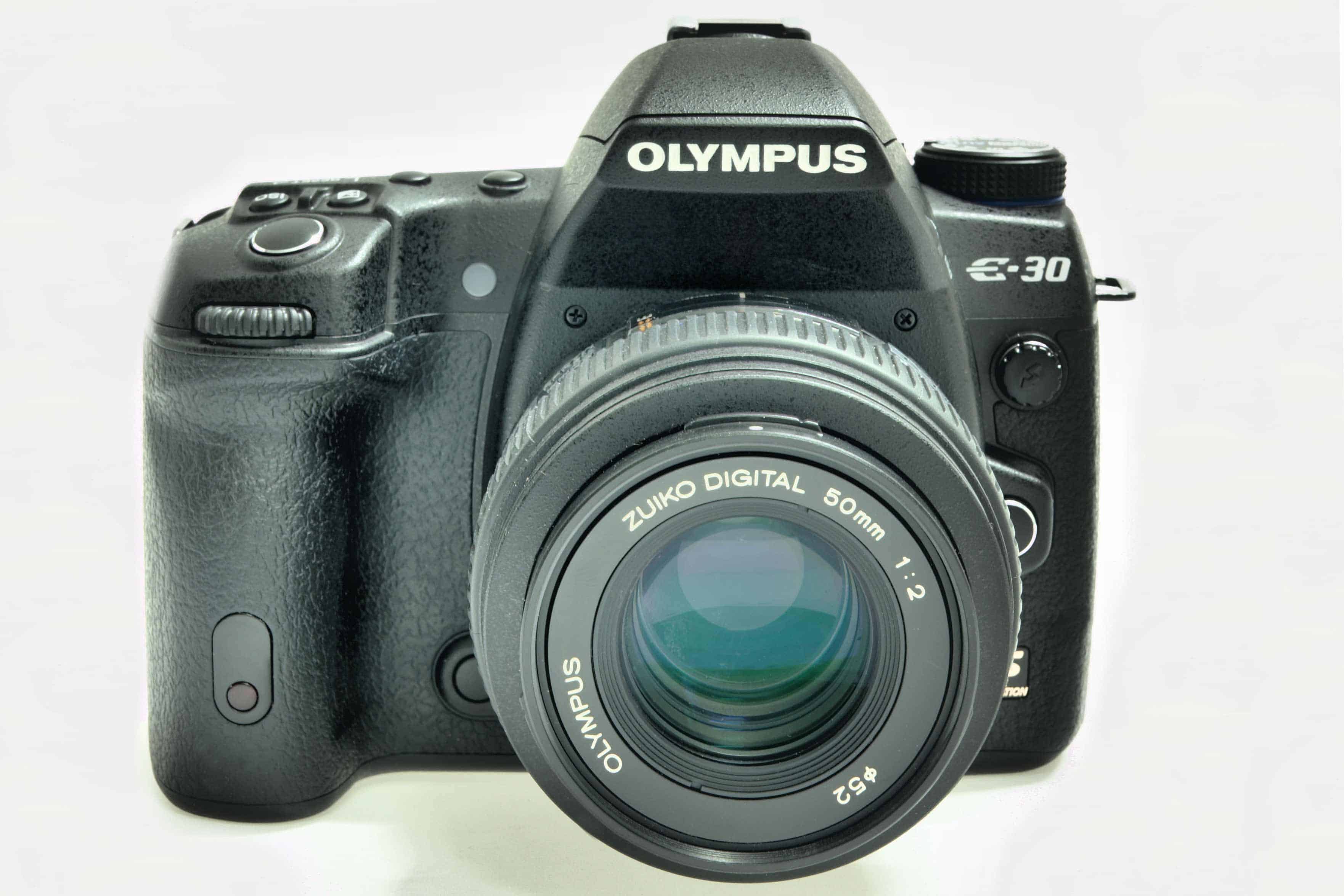
Olympus manufactures the E-30 to compete with the Canon EOS 50D and Nikon D90 in the mid-market segment, which should equip both the high-end Olympus E-3 and the user-friendly features universal of Olympus E-520.
Before the Olympus E-30 was born, Olympus DSLRs were missing a midrange model, where previous rivals such as the Canon 40D, the Nikon D80 and now the Canon 50D, the Nikon D90, or even more. The Nikon D300. The price gap between E-3 (Olympus’s highest-end model) and E-520 (popular model) is $ 900, a huge gap. That makes Olympus lose a lot in the market, of course people who do not have enough money to buy E-3 but do not want to own a low-level models such as the E-520 will “run” to buy the machine other.
Recognizing that, Olympus launched the E-30 to fill the hole between the E-3 and E-520. The camera is also developed on the Four Thirds format like Olympus’ previous DSLRs, equipped with a 12.3 Megapixel LiveMOS sensor and inherits both high-end features of the E-3 and its popular features E-520.
The first touch when holding the Olympus E-30 is quite solid and comfortable, as it is equipped with a hand grip, with a small groove to put the middle finger. On the back, the keys are reasonably arranged, easier to understand and use than in E-3.
One of the most talked about features of Olympus E-30 is “Art Filters”. This is a feature that allows users to add effects to images, much like the default scene modes in compact models, but has a smarter operating mechanism. If as before, the machine interferes with algorithms into the whole picture, then at Olympus E-30, the machine can analyze, calculate and process only the areas needed.
Olympus E30 12.3MP Digital SLR with Image Stabilization (Body Only): Buy it now
Users can choose from six “Art Filters” through the wheel located at the top of the machine. Each time you go through the mode, the screen will show a brief explanation of the mode, giving users the correct choice. This feature gets the help of the latest Olympus TruePic III + image processor.
In addition, the E-30 also inherits very useful features from the E-3, such as the 2.7-inch LCD screen is capable of flip, rotate the corners, making it easy for people to take shots in the location, unfavorable. The 11-point automatic system at the world’s fastest speed has been praised by the Olympus for its E-3. In addition, the E-30 is also rated at 5 frames per second continuous shooting speed and anti-shake system built-in on the machine.
Even so, the Olympus E-30 still has some pretty regrettable shortcomings. The first is to only save images to a single memory card, though equipped with slots for two types of cards are CompactFlash and xD-Picture. If it is possible to save images to two memory cards at the same time, it will be better, because if a bad image is damaged, there will be a backup image.
In addition, although the Art Filters feature can delight many users, the six modes it offers are fixed, with no modes allowing users to customize or customize their own settings. skull. That means that the color neutrality, the amount of noise, the grit in the photos will depend entirely on the algorithms that the machine applies, not depending on the user adjustments. In addition, the Olympus E-30 is also slightly heavier and heavier than its competitors in the same range.
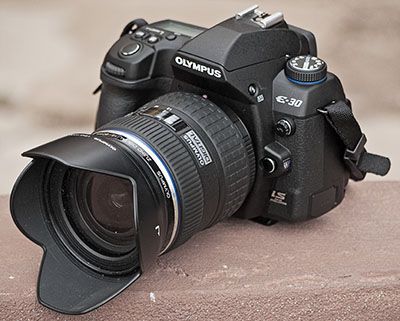
Image Quality and Performance
12.3-megapixel Live MOS sensor, TruePic III+ processor — good color, good detail, nothing surprising there. The Four Thirds sensor has that 2x crop factor, so your lenses effectively double their reach compared to full-frame. Great if you’re shooting telephoto, less great if you wanted to go wide.
Color is genuinely where this camera shines. Olympus has always had a reputation for it, and the E-30 backs it up — punchy, saturated colors right out of the camera, though you can dial it back through the Picture Modes if that’s not your thing. Detail holds up nicely at lower ISOs, and 12.3MP is more than enough for prints or enlargements. Noise shows up as you push ISO, but it stays under control up to 1600 — past that, the noise reduction starts eating into fine detail, which was just how things worked back then.
Dynamic range is respectable — enough to hold onto shadow and highlight detail in landscapes or high-contrast scenes, and the Highlight/Shadow tools help when the exposure gets tricky. ISO goes 100-3200: clean at the bottom, noise more obvious past 800, still workable at 1600, and 3200 is really only for “I need this shot no matter what” situations.
Autofocus is an 11-point system with cross-type sensors — fast enough, accurate enough, and the center point in particular is reliable. It slows down in low light, though the AF assist lamp keeps it usable. Continuous shooting is 5 fps, plenty for sports or wildlife, with a buffer that handles 12 RAW or 24 JPEGs before it needs a breather.
Art Filters are genuinely fun — Pop Art, Soft Focus, Grainy Film, Pin Hole, all applied in-camera, no editing software required. There’s a multiple exposure mode too, stacking up to four shots into one frame, plus four aspect ratios to shoot in — 4:3, 3:2, 16:9, 6:6.
The articulating LCD paired with Live View makes odd angles — macro, low shots, shooting over a crowd — a lot easier, and Live View also supports face detection and contrast-detect AF. In-body stabilization helps across both stills and video, and it’s a real asset handheld or with lenses that don’t stabilize on their own.
Handling is one of the better parts of this camera, comfortable in hand, controls where you’d want them, buttons and dials that feel good to use, and enough customization to make it yours. The menu’s dense — a bit much for a beginner at first but the Super Control Panel gives you a faster route to common settings once you know your way around.
Battery life is solid: roughly 750 shots on the BLM-1, enough for most full days out, though a spare helps if you’re leaning on Live View a lot. Storage is CompactFlash and xD-Picture cards — CF still holds up, xD is basically dead at this point, and it’s worth using a fast CF card if you’re shooting bursts or video.
Video’s modest — VGA at 30fps, fine for quick clips, nowhere near HD, and no mic input means serious video isn’t really an option here.
Being Four Thirds, it opens up a solid range of Zuiko lenses and third-party options, plus accessories, external flashes, battery grips, remotes through the hot shoe.
What’s good: excellent color, solid build, that flexible screen, stabilization that actually helps, and Art Filters that are just fun to mess around with. What’s not: noise creeps in at higher ISOs, video’s basic, the xD card slot is dead weight at this point, and the menu takes some getting used to.
Altogether, a genuinely capable DSLR — strong on color, built well, and the creative tools like Art Filters and multiple exposure give it a personality a lot of cameras from this era didn’t bother with.
Related Posts


Tech Reviewer & Product Analyst
Định Bia has spent over 10 years testing consumer electronics with a focus on smart technology. He work as a product advisor at Biareview where he helped customers find the right devices for their needs. He personally tests every product featured on this site using a consistent evaluation framework covering quality, durability, and value. All reviews are based on experience, not influenced by the manufacturer.