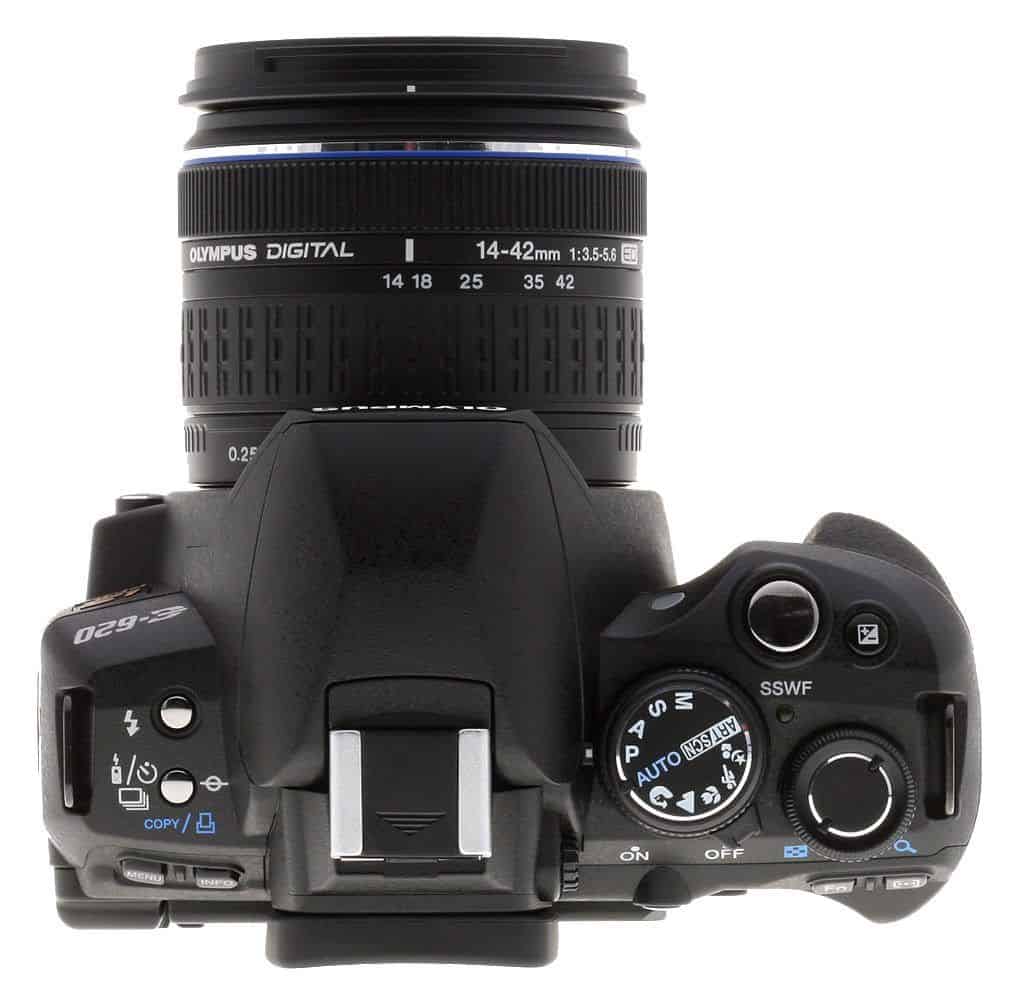
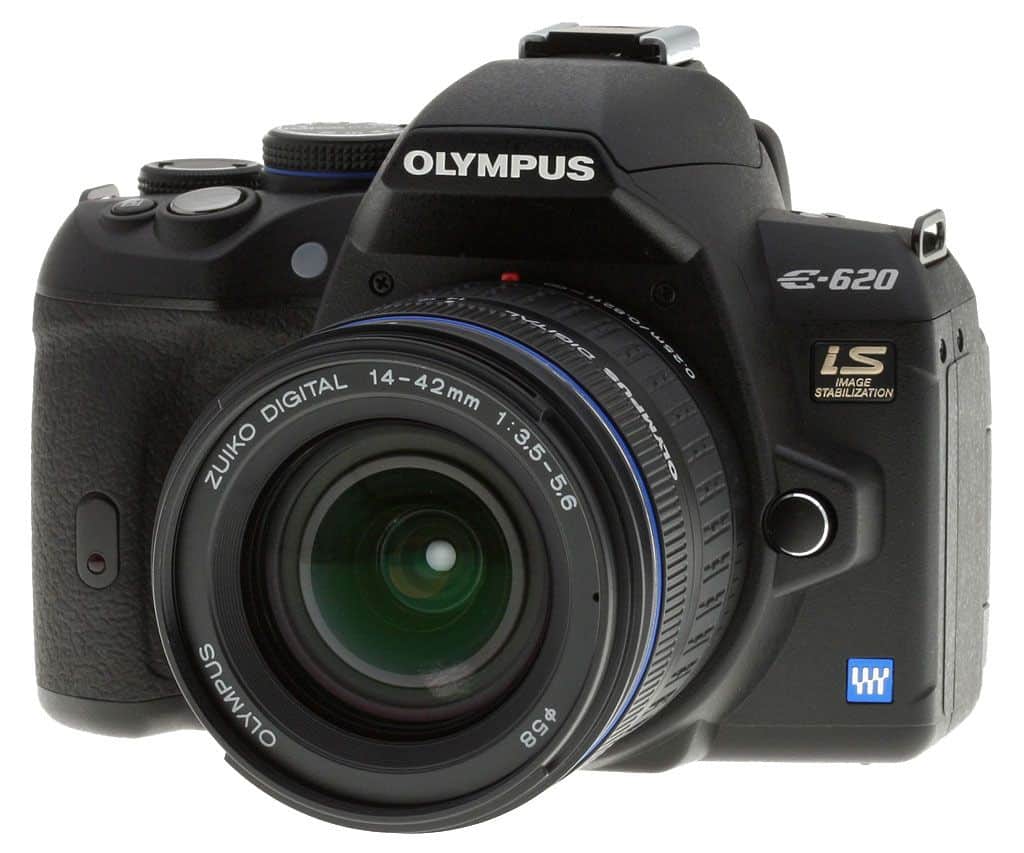
Similar to its previous four-thirds, such as the Olympus E-420 or Olympus E-520, the Olympus E-620 is clearly an up-and-coming upgrade to the super-compact DSLRs ahead of the big photography exhibition. Most PMA world. But to give the E-420 the edge of the line, the E-620 is designed to be smaller and lighter than the E-520, coming close to the world’s smallest DSLR-E-420, while inheriting much of it. High-end features of the Olympus E-30. Olympus desire is that the E-620 will be “killer Canon 450D”.
Some of the basic specifications of the E-620 are similar to those of other E-xxx models, but are slightly improved, such as 4 frames per second, ISO 100-3200, dustproof filters for sensors, Uses two types of cards are traditional xD and Compact Flash, RAW and JPEG capture …
With its compact shape and weight, the E-620 continues to maintain the strengths of the travel DSLR with its IS-like E-520 body shake protection. The display of the E-620 is designed with a resolution of 230,000 dots, rotating to allow for multiple angles, but the HyperCrystal technology has been upgraded from the E-30 version II to the III version, giving a wider viewing angle. And higher anti-glare.
Olympus Evolt E620 12.3MP DSLR with IS, 2.7-inch Swivel LCD with 14-42mm f/3.5-5.6 Zuiko Lens: Buy it now
Olympus Evolt E620 12.3MP DSLR with IS, 2.7-inch Swivel LCD with 14-42mm f/3.5-5.6 and and 40-150mm f/4.0-5.6 ED Zuiko Lenses: Buy it now
Olympus Evolt E620 12.3MP Live MOS Digital SLR Camera with Image Stabilization and 2.7 inch Swivel LCD (Body Only): Buy it now
The idea for Olympus travels besides owning a compact body is also shown through the “Art Scene” feature, which handles “art” photos taken with the integrated software that other DSLRs want. You have to use filters, or use image processing software on your computer. The remarkable effects of this feature include Pop Art to enhance the colors as vibrant as the 1960s artwork, or Soft Focus to slightly blur the ghosting effect, Grainy Film creates particles. As if the picture was taken from old movies or Pin Hole as if the picture was taken through a hole to emphasize the subject in the middle …
Another inherited strength from the E-30 semi- sub-series is also “sharpened” to the E-620’s Multiple Exposure, which allows for pinhole shooting like old-fashioned film cameras. For example, you can take a photograph of a fallen leaf, then take a second picture and insert it in the first picture. Although only supports up to 2 frames, the E-620 allows real-time manipulation in the Live View feature or taking two and then overlapping.
The point-of-focus system is also a valuable legacy feature with 7 points, including up to 5 cross-points (enhanced vertical and horizontal sensor focus). This system also allows fine-tuning the value of each focus point according to the lens on the E-30 as well as the E-3. Along with the latest TruePic III + image processor and 12.3-megapixel resolution, the E-620’s image quality promises to be significantly improved compared to its previous compact DSLRs.
Although developed on a Four-Third format unlike anyone, but because Olympus itself has a long tradition of producing cameras and lenses, the E-620 does not have to worry about compatibility. With over 30 different lens lines of the company as well as flash and other accessories of the E series.
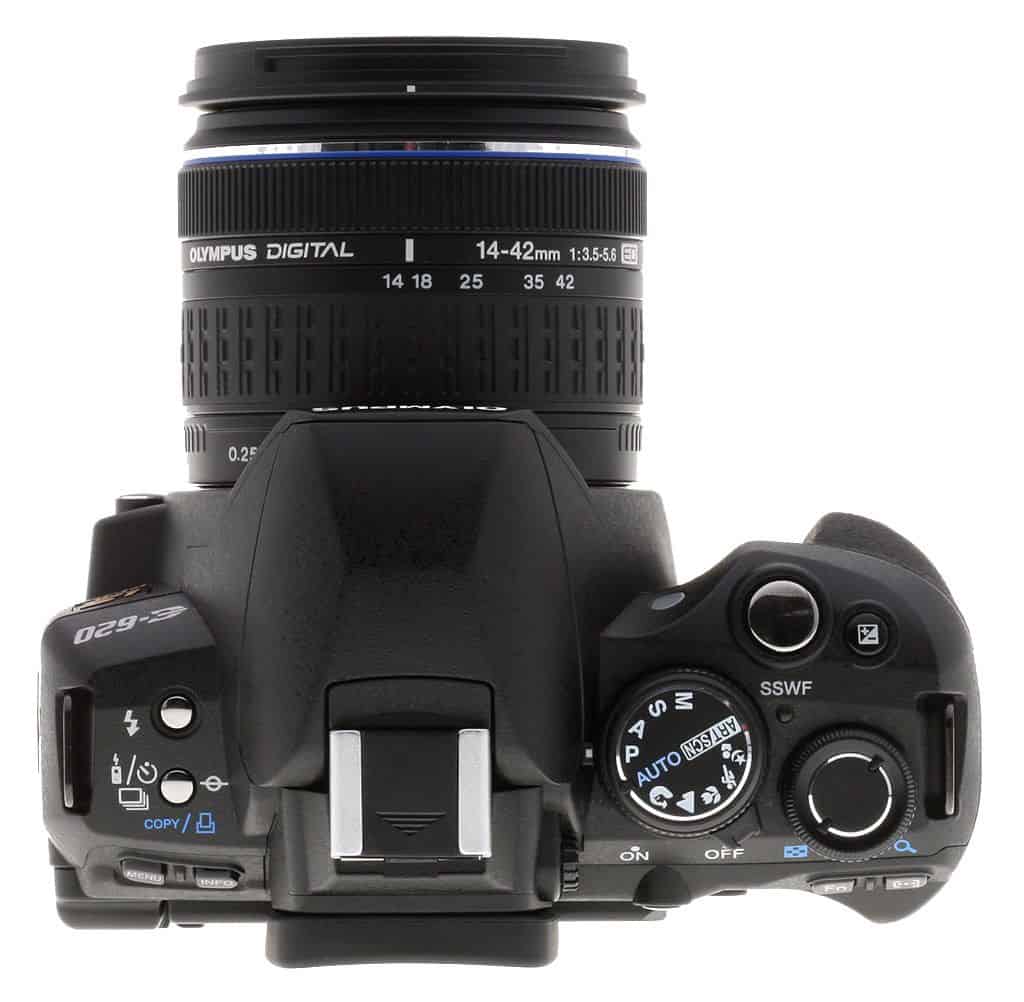
Image Quality
12.3-megapixel Four Thirds Live MOS sensor — smaller than the APS-C chips most competitors were using, but it still holds its own on image quality. 12.3MP is enough for prints and everyday digital use without much compromise.
Color’s genuinely good here, which tracks with Olympus generally — vibrant, believable, works well across most subjects. Detail’s sharp at lower ISOs and stays that way.
Dynamic range is solid, good detail in both highlights and shadows. ISO goes 100-3200 — clean down low, noise starts showing past 800, and while noise reduction helps, it tends to cost you some fine detail along the way.
Autofocus is 7-point phase-detection — dated next to newer cameras, but quick and accurate in decent light. It slows down and gets less dependable once things get dark. Continuous shooting’s 4 fps, respectable for a mid-range body and fine for moderate action, with a buffer that handles short bursts well enough.
In-body stabilization is genuinely one of the best things about this camera — it works with whatever lens you’ve got mounted, and it makes a real difference at slower shutter speeds. Art Filters — Pop Art, Soft Focus, Pale & Light Color, a few others — let you play with looks right in-camera, and there’s a multiple exposure mode for stacking two shots into one.
Live View gives you the option to compose off the LCD, which helps for macro or landscape work, though autofocus switches to contrast-detection there and slows down accordingly. Beyond the usual P/A/S/M modes, there are scene presets — Portrait, Landscape, Night Scene — and Creative Controls for tweaking sharpness, contrast, and saturation yourself.
Handling is excellent comfortable, controls where you’d expect, buttons that feel good, room to customize. Menu’s dense but stays easy enough to navigate, clear display throughout.
Battery’s decent around 500 shots on the BLS-1, enough for most days, spare recommended for longer ones. Storage’s CompactFlash and xD-Picture Card with dual slots for flexibility — CF’s still easy to find, xD less so these days.
No video at all, which stands out even for when this came out, since video was becoming standard in DSLRs around then. If that matters to you, look elsewhere.
What’s good: it’s compact and light, the stabilization genuinely works, the fully articulated screen is handy, the filters are fun, and color reproduction is a real strength. What’s not: low light struggles, the autofocus feels basic by today’s standards, there’s no video whatsoever, and the viewfinder’s on the smaller side compared to what some competitors offer.
Related Posts

Tech Reviewer & Product Analyst
Định Bia has spent over 10 years testing consumer electronics with a focus on smart technology. He work as a product advisor at Biareview where he helped customers find the right devices for their needs. He personally tests every product featured on this site using a consistent evaluation framework covering quality, durability, and value. All reviews are based on experience, not influenced by the manufacturer.