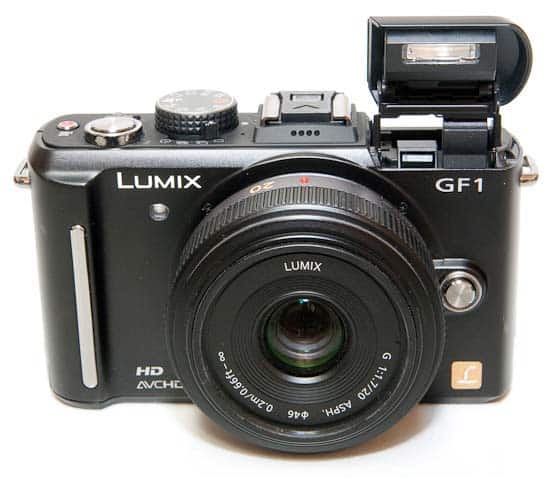
The first impression with the GF1 was a relatively small but solid machine. Loaded up with the card, battery, and 20mm lens, it weighs about 350 grams — well under the Olympus E-P1’s 454 grams with its 17mm lens. Body’s 119 x 71 x 36.3mm, so size-wise you’re basically looking at a midrange compact. Panasonic also carefully prepares its “product” built-in flash hidden at the right corner, above the GF1 logo. The top-of-the-line Hotshoe can be used to attach a headlamp or electronic viewfinder. The capture key responds very quickly and offers a soft feel when moving from focus to capture. The GF1’s rotary select button is designed quite simply with some familiar options like on DSLRs. The dedicated movie key is intended to help users get started quickly without having to go through the system menu.
The GF1’s 3-inch LCD panel is sharp and beautiful than most travel cameras today with a resolution of up to 460,000 pixels. The display icons are small but fairly neatly placed in an intuitive user interface. The large screen size forced Panasonic to cut out the optical viewfinder and replace it with the DMW-LVF1 electronic viewfinder mounted on the hotshoe. LVF1 can rotate 90 degrees on its axis, which is very useful when shooting subjects that are too low as flowers, grasses. However, the viewfinder is disappointing because it only has a magnification of 0.52x and the brightness is average even when attaching a tube as fast as 20mm / 1.7. In contrast, the LCD screen can be used quite well in all lighting conditions because it is equipped with anti-glare coating and high refresh rate.
The GF1 sensor is based on the Micro Four Thirds standard – 17.3 x 13 mm. It can capture up to 4,000 x 3,000 pixels (equivalent to 12.1 Megapixels). In particular, GF1 is equipped with ultrasonic dust protection mechanism as on the high-end DSLR products of Canon and Nikon.
Panasonic Lumix DMC-GF1 12.1MP Micro Four-Thirds Interchangeable Lens Digital Camera with LUMIX G 20mm f/1.7 Aspherical Lens: Buy it now
Panasonic Lumix DMC-GF1 12.1MP Micro Four-Thirds Interchangeable Lens Digital Camera with 14-45mm Lens: Buy it now
According to the review, GF1 gives better image quality than many travel machines, including the most advanced. Contrast and color represent neutrality on JPEG image files. When converted to RAW format, the contrast range extends significantly with the ability to reproduce missing or overexposed areas. At low ISO options, the image is sharp with high detail. When lifting ISO up to 800, noise is still acceptable. Intelligent ISO not only fine-tune brightness but also instantly identify and freeze motion in the image. GF1 performance is also noticeably faster than the Olympus E-P1. The wait time between two JPEGs is 0.7 seconds, decreasing to 0.69 seconds if the file is saved as raw. Continuous shooting speed is also about 2.8 frames per second. The 23-point autofocus system is based on a highly contrasting and extremely fast contrast mechanism. The machine can switch back and forth between single focus, continuous focus or manual focus. Turn on face detection and it’ll find the subject and set focus and exposure accordingly. You can also register specific faces manually — handy if the frame’s got too many potential subjects for it to figure out on its own.
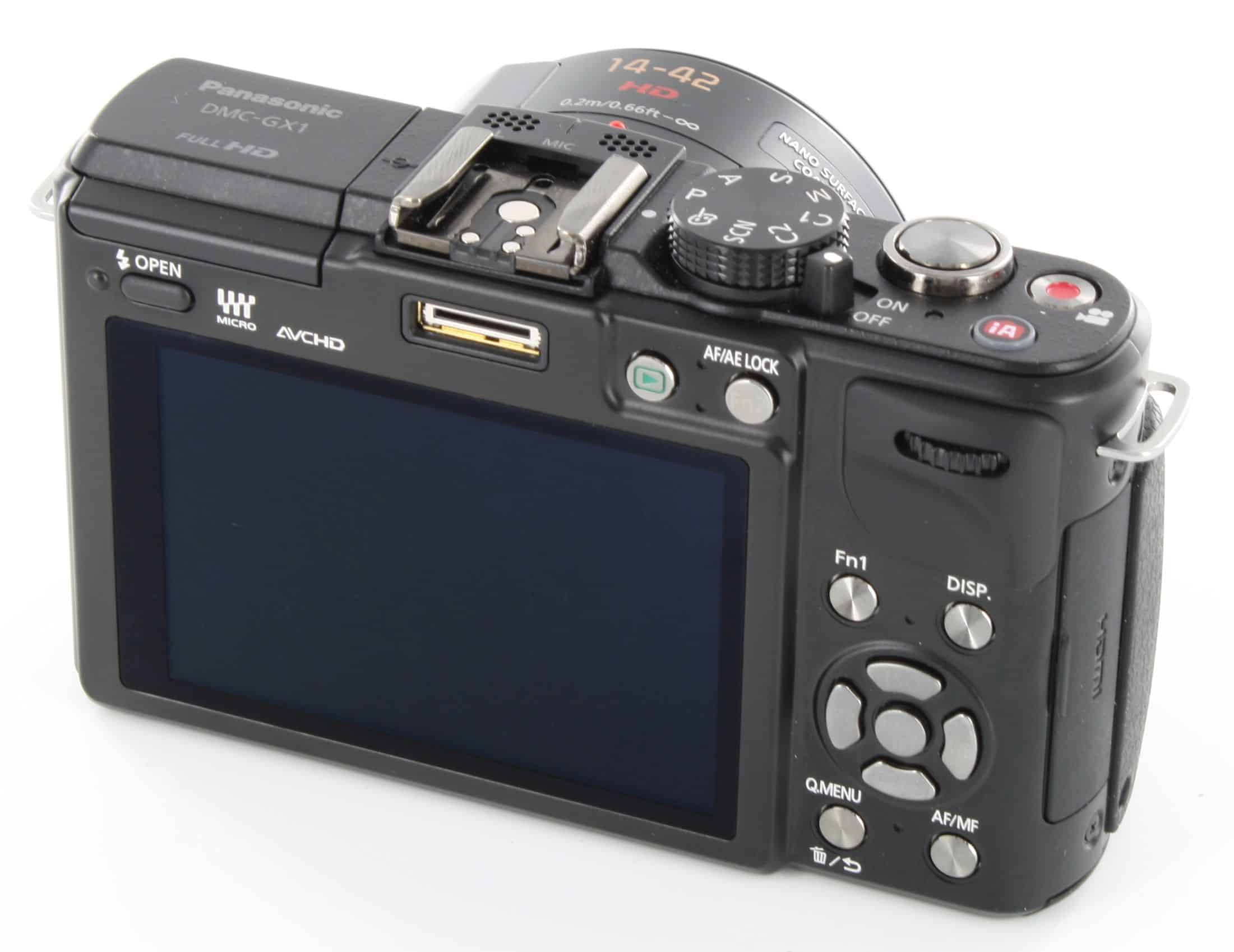
GF1 is capable of 720p or 1080i HD video recording with clear stereo sound. Compression format AVCHD for relatively small capacity but still ensure the highest peak quality. The camera also supports autofocus during the rotation, however, this function is slow and less accurate.
You get the full spread of shooting modes here — Manual, Aperture Priority, Shutter Priority, Program, scene modes, and an Intelligent Auto that just picks settings for you if you’re not ready to think about it yet. My Color mode adds creative effects (Expressive, Retro, Pure, Elegant), Film Mode mimics different film stocks, and there are four aspect ratios to shoot in — 4:3, 3:2, 16:9, 1:1. Built-in flash too, with output you can dial up or down.
Autofocus is contrast-detect, so it’s not chasing DSLR speed, but it’s responsive and accurate for a mirrorless camera from this period. Single-area, multi-area, face detection — covers most of what you’d actually need. Powers on and is ready inside a second, shutter lag’s basically nothing, and continuous shooting runs 3 fps with a buffer deep enough for several shots before it needs to catch its breath.
Image quality is where this camera really delivers, especially with the 20mm f/1.7 lens attached — sharp, detailed, colors that look right, good contrast. 12.1 megapixels gives you enough to crop into without things falling apart. Good light brings well-balanced exposures, dynamic range that’s genuinely wide for this class, and white balance that doesn’t shift no matter what you’re shooting under.
Low light is solid for a camera this size. ISO 100-3200, and the Venus Engine HD processor keeps noise under control — past ISO 800 you’ll start seeing it, but the shots stay usable, more so if you run them through noise reduction afterward.
Video’s 720p at 30fps, AVCHD Lite — genuinely a big deal when this launched. Smooth, decent detail, though obviously nothing like what cameras do now. You can control exposure manually while recording, and that 20mm f/1.7 lens is great for it — wide aperture gets you shallow depth of field and handles low light well. No mic input, unfortunately, so you’re stuck with whatever the built-in mic picks up.
The interface is genuinely one of the best things about this camera — logical menus, controls where you’d expect them, dedicated buttons for ISO, white balance, drive mode. The 3-inch fixed screen is clear and color-accurate in most conditions, and the Quick Menu button means you’re rarely more than a tap away from the setting you need mid-shoot.
Storage’s SD/SDHC, and you can shoot RAW or JPEG — RAW when you want to push image quality and editing room, JPEG when you just want to share fast. USB 2.0 and AV out are both slow next to anything current, but honestly you’d just pull the card and use a reader anyway.
Battery gets you around 380 shots on the DMW-BLB13 — enough for most days, though grab a spare if you’re traveling or shooting a lot.
Bottom line, this is a genuinely good early mirrorless camera — compact, solidly built, and flexible enough to grow with you. Great first interchangeable-lens camera, great lightweight travel option, solid backup for someone who already has a main camera. It doesn’t have modern specs, but between the manual controls and the lens options, there’s real room to actually learn photography with this thing.
Related Posts


Tech Reviewer & Product Analyst
Định Bia has spent over 10 years testing consumer electronics with a focus on smart technology. He work as a product advisor at Biareview where he helped customers find the right devices for their needs. He personally tests every product featured on this site using a consistent evaluation framework covering quality, durability, and value. All reviews are based on experience, not influenced by the manufacturer.