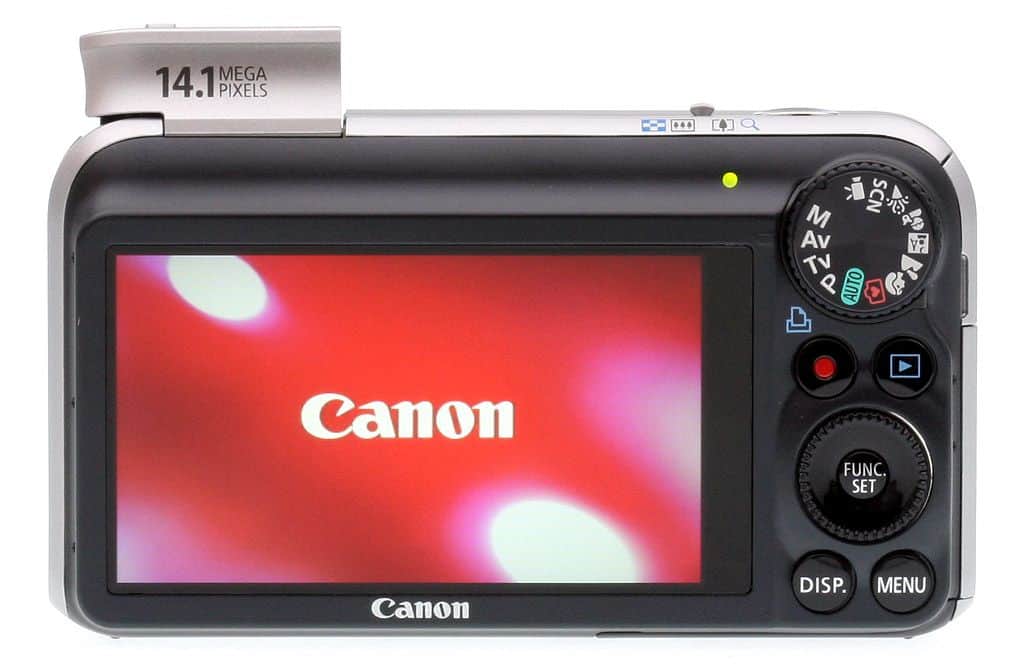
Browsing through the Canon PowerShot SX210 IS is enough to see that this version also comes with a built-in 14.1-megapixel sensor, 14x optical zoom (28- 392mm), full support for aperture modes, automatic shutter, manual and automatic, optical anti-shake, HD video recording and HDMI output.
Advanced advanced modes are not lacking, such as “smart shutter” – take a picture when blink detection, smile or when a new face is added to the frame. Lens applicators such as “miniature”, “fish-eye” and Intelligent light compensation that combines flash and natural light.
It’s a small zoom and a successor to the Canon PowerShot SX200 IS, but the SX210 IS has a much improved shape. In terms of technology, although no improvement steps have leapt, but Canon has tried to make users see the SX210 also “different”, such as the sensor is raised from 12 to 14 million points, optical zoom 12x to 14x. The body rather than the square is designed with a rounded recess around. The buttons are not new but are slightly changed positions. The rotation of the mode changes from the top to the back, quick access to the customization of sketches, and instead displays on the menu are rather inconvenient.
Canon PowerShot SX210IS 14.1 MP Digital Camera with 14x Wide Angle Optical Image Stabilized Zoom and 3.0-Inch LCD – Black (Discontinued by Manufacturer): Buy it now
Canon PowerShot SX210IS 14.1 MP Digital Camera with 14x Wide Angle Optical Image Stabilized Zoom and 3.0-Inch LCD (Purple): Buy it now
An unknown change called the “revamp” or revisit of this version is the zoom button instead of the traditional surround button photography as the Canon models on the SX210 imitate the Sony model, become a small button, next to the shutter button. This is a little difficult for someone who is used to the classic. LCD monitors are also converted from standard size to widescreen.
Although trying to change the form, SX210 still does not create a class quality compared to the predecessor version. On the whole, the SX210 handles every situation well, the picture showing color and sharpness is not bad either. However, the details are still not enough sharpness needed, the image tends to be slightly smooth instead of sharp, and the quality of the image is not uniform, especially toward the edge of the picture.
The SX210 IS, with its compact, yet powerful zoom design and configurations, is enough to meet the needs of today’s most demanding users. However, the image quality is still not worth the size of the monumental and attractive appearance of this version.
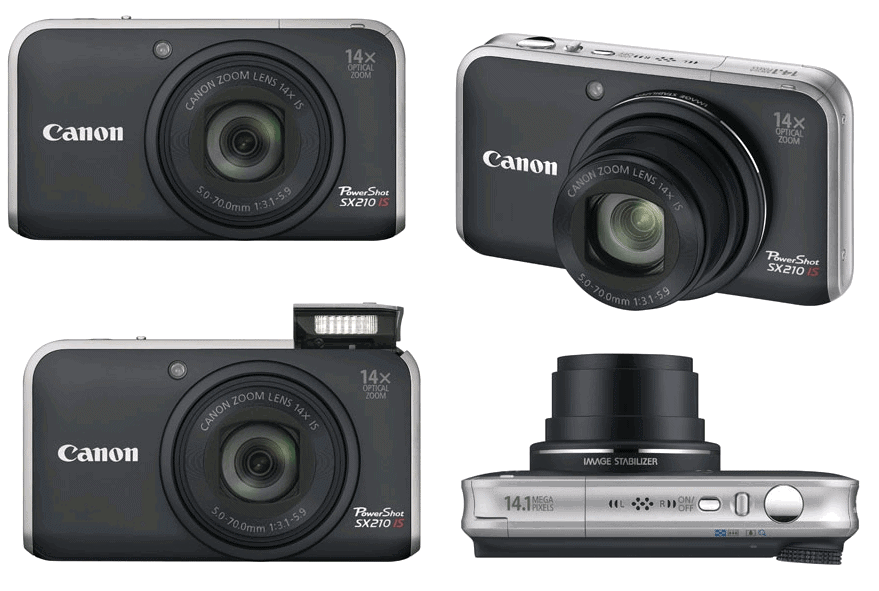
Image Quality
Sensor and Resolution
The 14.1MP CCD sensor was a decent spec when this camera launched. CCDs have mostly died out since — CMOS does more with less noise and less power draw but 14.1MP still gets you clean 11×14 prints without much fuss.
Color’s a highlight, honestly. Accurate, saturated without looking fake, a nice balance most compacts from this era didn’t nail. Dynamic range holds up okay in mixed light, though don’t expect it to dig detail out of deep shadows the way a modern sensor would.
14x zoom, 28-392mm equivalent, f/3.1-5.9 — plenty of reach, and it stays sharp with barely any distortion creeping in. The stabilization is doing real work past 200mm too; hand-hold it without that and you’d just get mush.
Autofocus is contrast-detection, so it’s fine for stationary subjects and starts to lag on anything moving fast or in low light. You get single and continuous AF, which covers most situations.
Burst shooting is where this camera shows its age — about 0.8 fps, with a buffer that only really handles short sequences. Shutter lag stays low most of the time, but push it and you’ll feel the difference next to a modern camera.
Battery’s decent — 250-300 shots on the NB-5L. Fine for a day out, just grab a spare if you’re traveling.
DIGIC 4 keeps it responsive and does a reasonable job controlling noise once the light drops. Intelligent IS is the nicer surprise here: it swaps between normal, panning, and macro on its own, and handheld shots really do come out steadier for it.
Scene modes hit the usual suspects portrait, landscape, night, sports — plus some creative filters if you feel like playing around. Video caps at 720p. Fine for tossing something online, but nobody’s shooting a short film on it.
Compared to what’s out now, the gaps are obvious: resolution (20-60MP is common today), autofocus (phase-detection and hybrid systems track motion far better), video (1080p and 4K are the baseline), and connectivity — no Wi-Fi, no Bluetooth, no cloud backup here at all.
It gets a lot right, easy to use, a genuinely versatile zoom, colors that actually look good. Where it falls down: that 230,000-dot screen is rough by any recent standard, autofocus is slow, battery life is nothing special, and there’s no wireless anything. Still, if all you want is something compact that takes good pictures without a learning curve, it does the job. Just don’t expect fast AF or the ability to shoot straight to your phone, that’s not what this camera is for.
Related Posts


Tech Reviewer & Product Analyst
Định Bia has spent over 10 years testing consumer electronics with a focus on smart technology. He work as a product advisor at Biareview where he helped customers find the right devices for their needs. He personally tests every product featured on this site using a consistent evaluation framework covering quality, durability, and value. All reviews are based on experience, not influenced by the manufacturer.