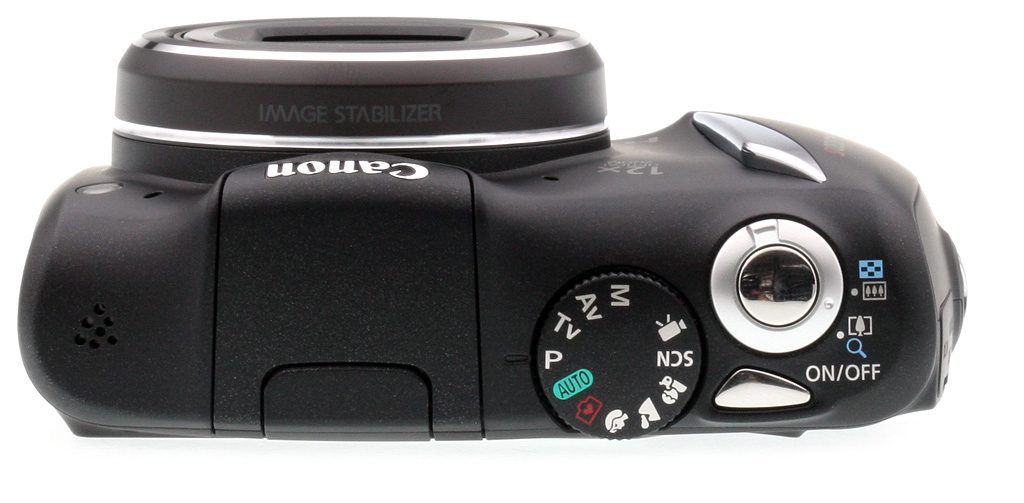
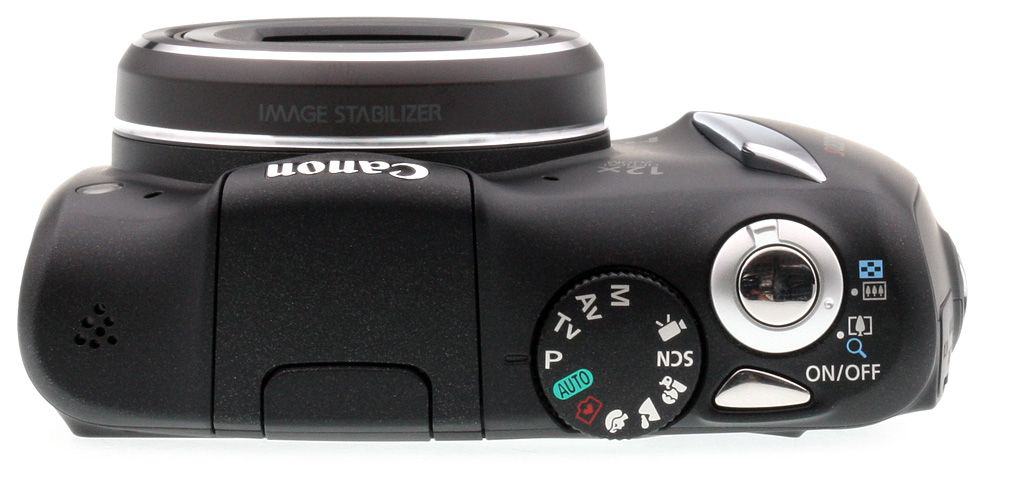
Canon SX130 IS is the successor version of Canon SX120. Equipped with a 12-megapixel sensor, 12x optical zoom with 28-36mm better zoom range, the Canon SX130 IS is also upgraded with a 3-inch LCD, DIGIC 4 image processor, face detection New and 28 default capture modes. Support for the latest SD / SDHC and SDXC cards, this version can shoot 720p HD movies and sell at reasonable rates, in the $ 250 range.
Advantage
– Large 12x optical zoom, 28mm wide angle tube.
– 12 million pixel sensor, DIGIC 4 processor.
– Supports manual shutter capture completely.
– HD movie recording, zoom when shooting, rotation effect.
– Face detection modes with many advanced features.
– Supports high capacity SDXC cards, easy to use AA battery.
– Good image quality, close-up Macro shooting.
Disadvantages
– Design not “luxury” by the plastic shell.
– The shape is quite large but does not support external lights.
– Large 3 inch screen but low resolution 230,000 pixels.
– Noise handling at high ISO.
Canon PowerShot SX130IS 12.1 MP Digital Camera with 12x Wide Angle Optical Image Stabilized Zoom with 3.0-Inch LCD (OLD MODEL): Buy it now
Design and Build Quality
At 104.4 x 74.0 x 82.8mm and 308g, the SX130 IS is compact for a superzoom, striking a decent balance between portability and a grip you can actually hold onto. It’s mostly plastic with some metal, and while you can tell it’s built to a price point, it doesn’t feel cheap in hand — the grip is solid, if a little bulky next to a true point-and-shoot.
The 3.0-inch, 230,000-dot LCD is fine for its era — decent clarity and color, usable from most angles, though it washes out in direct sunlight like most screens of this resolution.
Image Quality
The 12.1MP CCD sensor was standard for the time, before CMOS took over almost entirely. Resolution is enough for prints up to 11×14 inches — competitive when this launched, modest by current standards.
Color looks true to life and feels nice to view. The dynamic range is decent for this price tier. Still, newer sensor designs tend to cope with hard light more easily.
The 12x zoom, listed as 28 to 336mm equivalent at f/3.4 to f/5.6, reaches places you will actually use. Distortion stays low for a lens like this. Optical image stabilization also helps you hold steady at the long end, so handheld shots feel more realistic.
Performance
Focus uses contrast detection. It works for normal photos, but moving subjects can be tough, and low light makes it worse. AF comes in two modes, single and continuous, and they fit most needs.
Shots in burst mode top out at 0.8 frames per second. That rate is not great if you expect action. For one photo, the delay is low, so quick takes are still workable.
On the NB-7L, you get about 250 to 300 shots per full charge. That is fine for a relaxed day out. For longer shoots, it helps to carry a spare.
Features
The DIGIC 4 chip works on fast operation and cuts down on noise. The result is clearer photos, even when the light is not great.
OIS helps too. With it, hand held pictures at higher zoom look sharper than they would without that support.
You also get scene modes like Portrait, Landscape, Night, and Sports. They make point and shoot easier. There are also filters you can try on the spot, so you can skip extra editing if you want.
For video, it reaches 720p only. It looks fine for casual clips, but it does not match what today’s cameras can do.
How It Stacks Up Today
Set against a current camera, the gaps are obvious: modern sensors run 20-60MP with better low-light handling from BSI designs; autofocus systems use far more focus points and hybrid phase/contrast detection; video options now include 4K; and connectivity — Wi-Fi, Bluetooth, NFC, cloud backup — is standard on new cameras and entirely absent here. The SX130 IS also uses physical buttons throughout, with no touchscreen and less customization than what’s typical now.
Pros and Cons
The 12x zoom is genuinely versatile, the controls are intuitive enough for beginners, and OIS does real work reducing shake. The trade-offs are what you’d expect from its era: no wireless connectivity at all, a low-resolution screen, autofocus that lags behind phase-detection systems, and battery life that’s fine but not generous.
Conclusion
For what it was built to do, the SX130 IS still holds up reasonably well — the zoom range and stabilization are the real strengths, and the interface is simple enough that anyone can pick it up and start shooting. It’s clearly dated next to anything current, especially on connectivity and video, so it only makes sense today as a budget or secondhand pick rather than a serious buy against modern alternatives.
Related Posts

Tech Reviewer & Product Analyst
Định Bia has spent over 10 years testing consumer electronics with a focus on smart technology. He work as a product advisor at Biareview where he helped customers find the right devices for their needs. He personally tests every product featured on this site using a consistent evaluation framework covering quality, durability, and value. All reviews are based on experience, not influenced by the manufacturer.