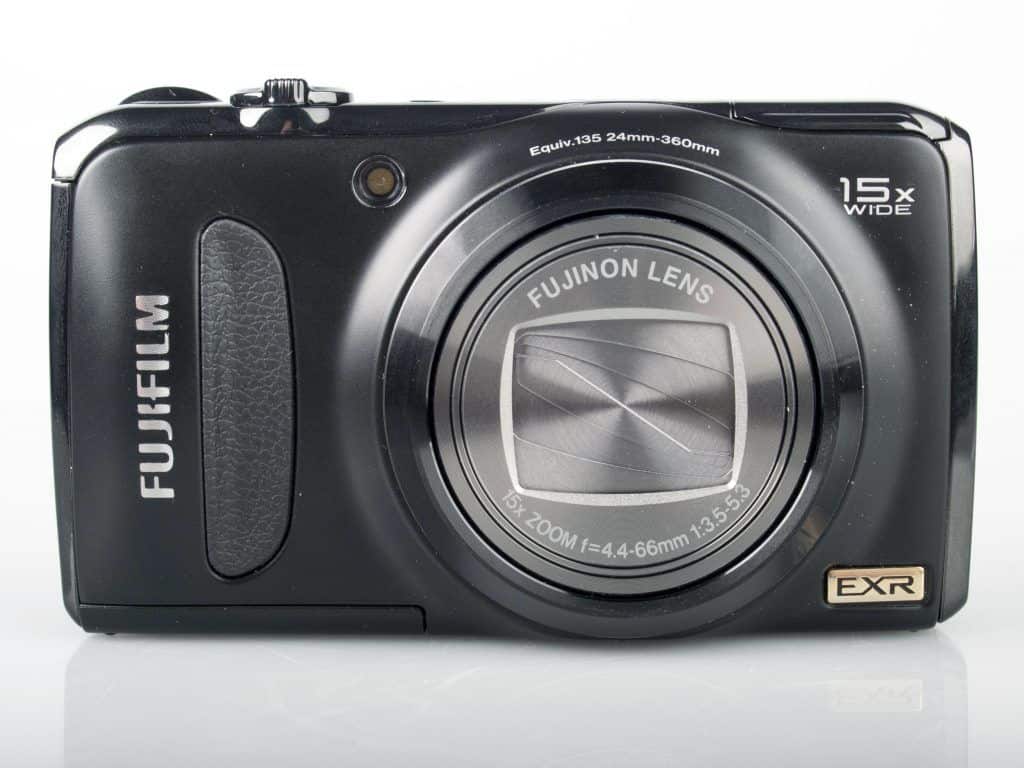
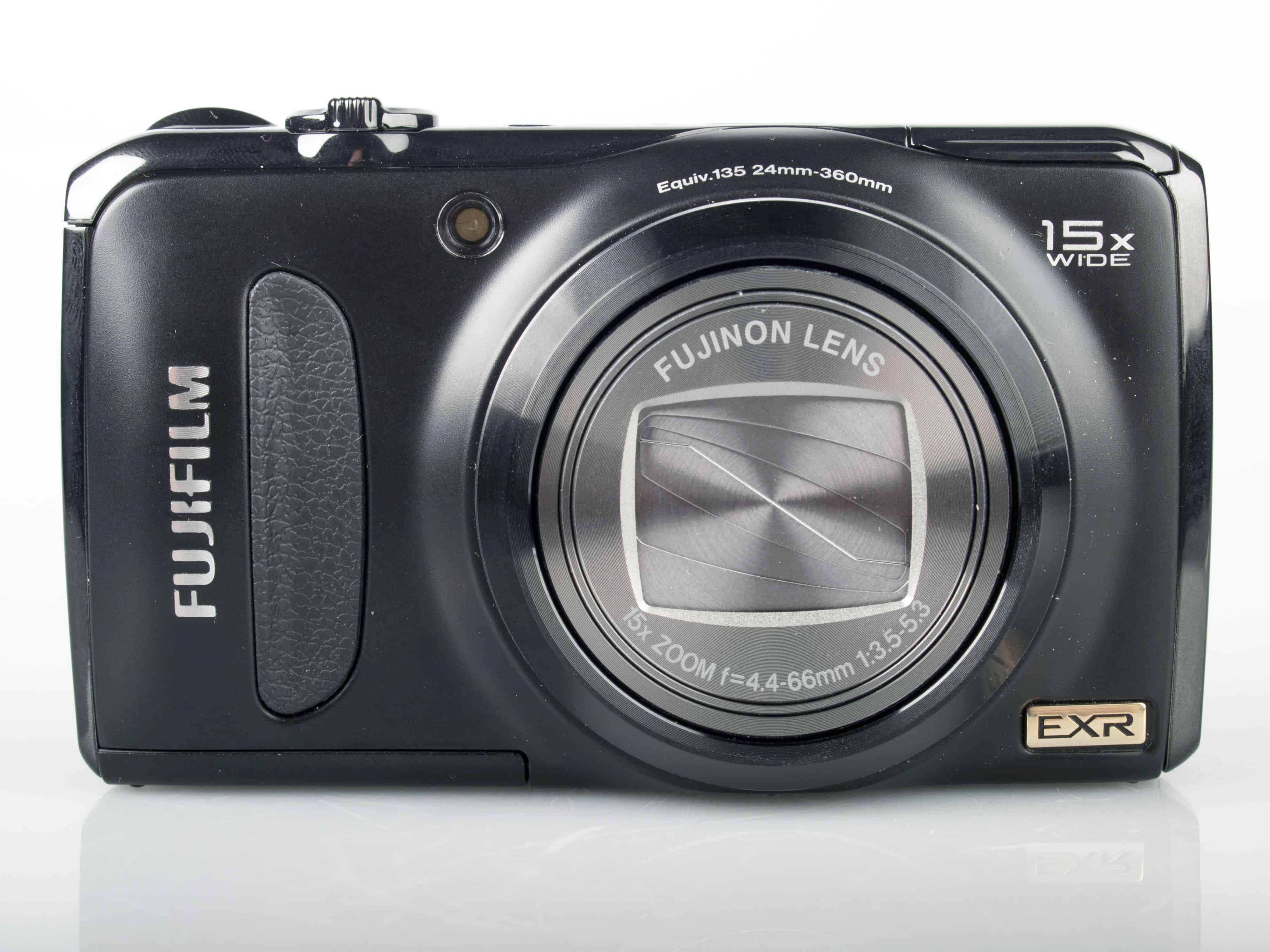
Inheriting a F-type zoom of 10x, the F300EXR features 12 megapixel resolution, 15x optical zoom (24mm-360mm), 3-inch LCD screen, autofocus engine, PASM modes and 720p HD video recording capability.
On the same design as the F series, the F300EXR has been refined by Fujifilm in a more rugged design but is therefore easier to handle. The entire lens occupies a large part of the front. The upper side still includes a shutter button, zoom ring, power button and flash pop up. However, because the lamp is located right next to the left edge, it is difficult to hold both hands because the index finger will have to be translated to the side.
What’s new to the F300EXR is that the mode dial instead of the back has been crossed between the back and the front, which, according to Fujifilm, this design will help to adjust between modes with a quick hand and easier.
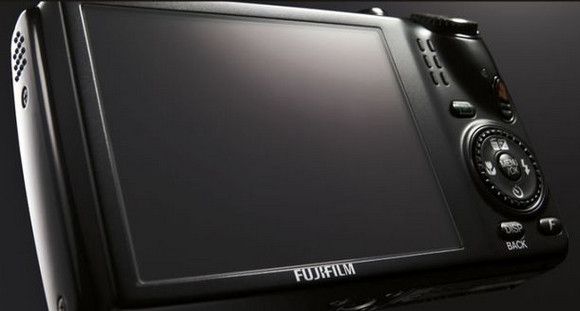
Behind the machine is a large 3 inch LCD screen almost all of the area. The quick access buttons have been converted to rotary wheel and pressed for quick menu navigation or mode selection. The movie button has also been independently made and is quite large, making it very convenient to switch between recording and shooting. But the deeper placement on the right also makes the operation of this button less convenient, especially when holding the machine with one hand.
The highlight of the F300EXR lies in the hybrid mechanism. This mechanism allows the user to choose between phase-in-focus (as in DSLR) or contrast mode. According to Fujifilm, the sensor for phase focus is integrated into the Super CCD EXR sensor of the machine. This mechanism will activate when shooting in good light conditions to take advantage of the speed, while when the light is weak, the contrast control mechanism will automatically be activated.
Following Fujifilm’s Sony, Fujifilm also introduced the new Panorama panning. According to Fujifilm, while companies typically only take 180-degree panoramas, the F300EXR can capture around a complete scene 360 degrees. Actual performance shows that this feature is very effective with good photo collage. The only thing to keep in mind is that the speed when holding the lure must be synchronized, otherwise the machine will error.
Some of the Fujifilm-type operation mechanisms on the F300EXR can make some unfamiliar people feel uncomfortable. For example, when you specialize between PASM modes and EXR mode, the lens fires at its own focal length, so if you’re shooting with a zoom, you have to zoom again, making it more time-consuming. In addition, the F300EXR is designed to remember the pre-installed settings of each mode. When you switch from manual adjustments to shutter-priority, for example, ISO will return the last setting of the shutter priority instead of being preserved in all modes.
FUJIFILM FinePix Digital Camera F300EXR (Black) F FX-F300EXR B 12MP CCD 15x Optical Zoom Wide angle24mm 3.0-inch Display – International Version: Buy it now
In terms of speed, according to Fujifilm, thanks to the phase-focusing mechanism, the focus speed is only 0.158 seconds. Actual usage shows that the focus speed is quite fast, even when the zoom is full, but with enough light.
When the light is low, the camera returns to the normal contrast mode. Although slower, this mechanism works quite well, but sometimes the image is slightly blurry but still within acceptable range for travel generations like the F300EXR.
Despite the impressive ISO range from 100 to 12,800, in terms of image quality, the F300EXR only excels when the ISO is under 400. Up to 800 colors are degraded with noises and no visible detail loss. ISO 1600 and 3200 are too bad, and to achieve a high sensitivity of 12,800 the resolution must be reduced.
Another thing to note is that when shooting with the EXR mode (D-Range Priority contrast modes or High ISO & Low Noise), the resolution of the machine will drop to only 6 million points.
The F300EXR sits in the high-end travel camera segment, going up against big-zoom competitors like the Panasonic TZ10 and Sony HX5V. It skips GPS, but Fujifilm packed in some genuinely useful tech instead — the EXR sensor and its adaptive shooting modes are hard to ignore. A 15x zoom that still starts at a 24mm wide angle is the other headline spec, building on the FinePix 200EXR before it.
Features
EXR sensor. The 12MP EXR CMOS sensor can operate in three modes — High Resolution, Dynamic Range, or High Sensitivity/Low Noise — switching priorities depending on what the scene needs. It’s a genuinely different approach from a standard fixed sensor.
Lens and zoom
The Fujinon 24-360mm lens gives you a 15x stretch. It can frame wide scenes and also reach far targets. There is image stabilization, so the far end is less shaky when you shoot without a tripod.
Shooting modes
You get Auto. There is also EXR, which swaps between sensor settings on its own. Other options include Program, Aperture Priority, Shutter Priority, and full Manual. It also has Scene presets. For wide stitched images, there is a Panorama mode.
Video
Video is 720p HD. Audio is in stereo. Focus stays active while you record, and it tracks during the clip.
Performance
The image results look good in the EXR modes. In High Resolution, you can pull out fine detail for big prints or tighter crops. In Dynamic Range, the camera keeps detail in bright areas and also in shadows when the light is harsh. In High Sensitivity, low light shots look cleaner, with steadier color and less noise. The main point is that you can pick the right mode, instead of living with one compromise.
Autofocus combines phase and contrast detection, which makes it fast and accurate even in tricky light, with face detection and tracking handling portraits well.
Speed is decent — quick startup, quick shot-to-shot, and burst shooting up to 3fps for casual action shots.
User Experience
Controls are logically placed and the menus are easy to navigate — approachable for beginners, with enough manual control (P/A/S/M) for people who want it.
Battery life is listed at about 250 pictures per full charge (NP-50). That usually works for a normal day. For longer trips, it can feel short unless you carry a spare.
The screen measures 3.0 inches. It has 460,000 dots, and it stays easy to read in bright light. It can be used outside too. The detail is solid, but the resolution is not the newest kind.
Versus the Canon SX210 IS, the zoom is very similar at 14x versus 15x. Overall image quality looks close as well. Still, the F300EXR has a point in harsher lighting because its sensor can adjust. For video, its hybrid AF is also better at focusing while you record.
Against the Sony HX5V: the HX5V’s 10x zoom falls short of the F300EXR’s reach, and while its Exmor R sensor handles low light well, it doesn’t match the flexibility of three distinct EXR modes. The HX5V does have GPS, though, which the Fujifilm skips entirely.
Against the Panasonic TZ10: similar story — the TZ10’s 12x zoom is shorter, image quality is close between the two, but again the F300EXR’s sensor flexibility is the differentiator. The TZ10 also has built-in GPS, which the Fujifilm lacks.
Pros and Cons
The EXR sensor is the reason to pick this over similarly specced competitors — genuine adaptability rather than a one-size-fits-all sensor. The 15x zoom, solid low-light performance, and fast hybrid autofocus round it out as a strong all-rounder, and it’s easy enough to use for someone stepping up from a basic point-and-shoot.
On the downside: video tops out at 720p with no Full HD option, there’s no GPS at all (unlike two of its closest competitors), the LCD resolution is average, and battery life is fine but nothing special.
Conclusion
The EXR sensor is what separates this from the pack — most competitors at this price give you one sensor behavior; this gives you three, and they actually matter depending on what you’re shooting. No GPS and no Full HD video are real gaps against some rivals, but if sensor flexibility and zoom range matter more to you than those two features, it still holds up well.
Related Posts

Tech Reviewer & Product Analyst
Định Bia has spent over 10 years testing consumer electronics with a focus on smart technology. He work as a product advisor at Biareview where he helped customers find the right devices for their needs. He personally tests every product featured on this site using a consistent evaluation framework covering quality, durability, and value. All reviews are based on experience, not influenced by the manufacturer.