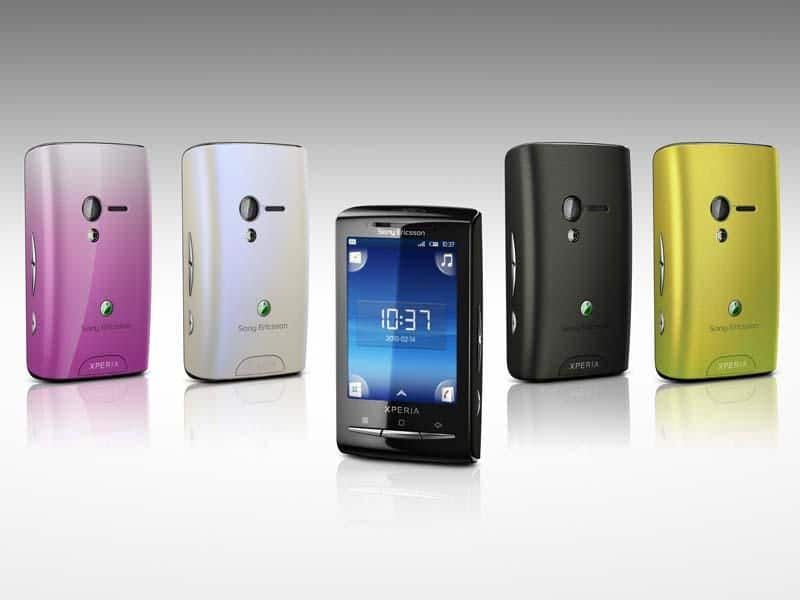
Design, Build Quality
The Sony Xperia X10 Mini was honestly one of the tiniest smartphones ever released, with dimensions of about 83 x 50 x 16 mm and a weight of only 88 grams . It was so compact that it basically slid into your palm or your pocket with no fuss. Even with that small footprint, the build quality of the Xperia X10 Mini came off as solid . The device used a sturdy plastic body, plus it had a removable rear cover, letting you reach the battery, the SIM slot, and also the microSD slot , without having to deal with anything too annoying.
Form Factor and Ergonomics
The whole “smallness” thing was kinda like a double edged sword for this phone. On one side, that compact form factor made it highly portable and it was fairly simple to operate with one hand. But on the other side, the same size meant the screen and keyboard were really little, so it could feel tricky for folks with larger hands , or for people used to bigger, more generous smartphones. Still, Sony Ericsson seemed to sweat the details, because the design was made to be as ergonomic as possible , with rounded edges and a gentle back curve that made the grip feel natural .
Build Quality and Durability
In terms of build quality, the Xperia X10 Mini felt dependable , particularly for such a small device. When you pressed it , it didn’t creak much at all , and there was no noticeable flexing either. The plastic back cover was sold in multiple colors, so you could change up the look , kind of a small customization win. That said , the glossy finish was a magnet for fingerprints and it picked up scratches faster than you might expect, and over time that could dull the overall vibe. The screen itself was scratch-resistant glass, which is a nice detail, though the compact display size also meant it likely took damage more easily from accidental drops.
The Sony Xperia X10 Mini had a 2.55-inch TFT capacitive touchscreen, set at 240 x 320 pixels. It was, you know, small by modern standards ,but for what the phone was, it basically worked fine. The display’s pixel density landed around 157 ppi, and that’s pretty low compared to bigger smartphones. Still, because the panel was tiny, the resolution felt adequate for most day to day tasks.
Display Quality
In general the display quality was decent. Colors looked fairly natural and contrast was OK, not mind blowing but solid. Brightness was enough for being outside, though if you faced direct sunlight you could still struggle to read things clearly. Also, the viewing angles were somewhat limited—look from the side and you’d get color shifting pretty noticeably ,which was kinda typical for many phones back then. The screen size didn’t really help with browsing or typing either, it felt a little cramped. But the whole thing stayed responsive and the touch input was accurate.
Touchscreen Responsiveness
The Xperia X10 Mini uses a capacitive touchscreen, which was a step up from the resistive type you saw on a bunch of older devices. Touch response was quick, and since the display was small it was easier to reach across it with one hand. However, that same smallness made the on screen keyboard feel tight , so typing mistakes happened more often than you would like.
Performance
The Sony Xperia X10 Mini ran on a Qualcomm MSM7227 chip, clocked around 600 MHz, and it came with 128 MB of RAM. Sure, these numbers seem pretty small now, but back then they were pretty normal for a mid-range kind of smartphone, sort of in the right “ballpark”. It also used an Adreno 200 GPU, and that thing delivered decent visuals for everyday chores, and also for more casual play sessions, nothing too wild.
Day-to-Day Performance
When you used it day by day, the Xperia X10 Mini felt decent enough, though you could tell it had limits, in a kind of “it gets the job done” way. It handled the usual basics like calling, texting, and web browsing without too much friction. Still, the limited RAM and processing muscle meant that heavier apps , or doing several things at once, could become a bit of a slog. Pages might load, then pause. And the user interface sometimes showed little bits of stutter when moving around through menus.
Gaming Performance
For gaming, it wasn’t exactly built like a powerhouse, so don’t expect modern titles to behave nicely. But it could still launch simple games, and even older games, with a reasonable amount of smoothness. Casual favorites like Angry Birds and Fruit Ninja generally ran well, but when you tried more demanding games, you could run into lower frame rates, plus longer waiting periods before the action started. On top of that, the smaller display made games less fun than you’d think, because the controls were, cramped , and often awkward to hit accurately, especially during fast moments.
Software
User Interface and Customization
Sony Ericsson put its own skin over Android, so the whole look and feel became a bit more tailored, especially for the small display. The home screen showed four “corners” that you could set up, and each corner could be linked to a different app or task. In practice, it helped a lot to open things you use a lot, without always digging through separate menus, over and over. The launcher also offered its own style of widgets, like a weather module and a music player gadget, so you got a touch more functionality right away.
Even so, the custom interface was, for the most part, easy and pretty straightforward, but it didn’t really give you lots of room to tweak everything. Because the screen was so small there was, not much space for extra widgets or additional shortcuts, so compared with bigger Android devices the experience often felt a little tighter, more constrained, maybe even cramped at times.
Software Updates
One major downside was the limited support timeline. Sure, the Xperia X10 Mini did get upgraded eventually to Android 2.1 , but it never made it to newer releases, like Froyo or Gingerbread. That left users on an older Android base, meaning many features and performance improvements from later versions just never arrived. As time went on , not getting any updates sort of turned into this bigger problem, you know. Newer apps and services started expecting more modern Android builds, and so the phone slowly felt outdated , like without warning or anything. Then it also became more difficult, more and more incompatible over time.
Camera
So the Sony Xperia X10 Mini came with a 5-megapixel rear camera, autofocus, and an LED flash as well. Honestly this camera was one of the more standout things on the phone, it delivered pretty decent pictures for a smartphone that’s so small and also in that kind of price bracket.
Image Quality
When the lighting was good, the X10 Mini camera could pull off sharp, colorful shots with colors that looked pretty true to life. The autofocus seemed to react quickly enough, and the LED flash really did help when the light dropped off, or when you were in dimmer rooms. Still, because the sensor is on the small side, plus the processing isn’t especially powerful, low-light results were kinda rough. A lot of times the images ended up grainy, and the finer details just weren’t really there.
It also had limited manual controls, like, most of the choices were basically handled by the software automatically. So yea it was easy for casual photo taking, but it didn’t really satisfy people who wanted finer adjustments or more creative command over the capture.
Video Recording
For video, the Xperia X10 Mini could record at VGA resolution, 640 x 480 pixels, in 30 frames per second. The video output was fine for basic use, though it definitely wasn’t close to HD video quality you’d see on more advanced smartphones. And since the screen is small, it was kinda hard to line up the shot properly. On top of that, there was no image stabilization, so the footage could turn shaky, especially if you were walking or moving around while recording.
Battery Life
So the Sony Xperia X10 Mini shipped with a 950 mAh removable battery, which is sorta tiny, even for that era, ya know. Still, since the screen stayed small and the internals weren’t really super demanding, the handset never felt like a full on power hog. Overall it somehow still delivered pretty decent battery life for such a little device.
Battery Performance
Day-to-day the Xperia X10 Mini could, usually, stretch to a full day on one charge if you weren’t doing super heavy stuff all the time. Think about calls, texting, simple web browsing, or just listening to music. But if you went into gaming mode or kept watching videos, then yes the battery would start dropping faster. And if someone basically lived on the phone all day, recharging in the evening might be, basically unavoidable.
Removable battery was a nice touch though. It let you bring along a spare battery, or swap it out if it started to degrade later. But yeah, since the capacity was limited from the start, there wasn’t much room for improvements in raw battery endurance. So the overall lifespan kind of stayed tied to that smaller amount of energy.
Connectivity and Multimedia
On the connectivity side, the Xperia X10 Mini included 3G, Wi-Fi, Bluetooth, and GPS. Those were pretty normal smartphone features back then, no big surprises. Yet because the device itself was compact, there were always a few compromises, nothing dramatic , but enough to notice if you were expecting more.
Network Connectivity
The Xperia X10 Mini backed 3G networks , which gave fairly good data speeds for web browsing and grabbing apps. Still , it didn’t support 4G LTE at the time, even though it was starting to show up everywhere, so people looking for quicker mobile data often passed on it.
It also had Wi-Fi, meaning you could hop onto home or public wireless networks for better and more stable internet access. In day to day use the Wi-Fi worked pretty reliably , but the antenna was small , so in spots with iffy coverage the phone sometimes had a harder time holding onto the signal.
Bluetooth and GPS
For connections, the Xperia X10 Mini came with Bluetooth 2.1. This made it possible to pair with a variety of add-ons like wireless headsets, and even car kits. Bluetooth behavior was usually consistent, but since the device is compact, the effective range felt a bit restricted compared to larger phones.
Then there was GPS, used for location based services and navigation apps. Overall, GPS performance was fine, and the phone would usually lock onto a fix in a reasonable amount of time. But the small display made navigation less comfortable, because reading maps and turn by turn directions is harder than on bigger screens. Even so, for occasional trips, the GPS feature was still usable and decent.
Multimedia capabilities
The Sony Xperia X10 Mini kind of came with a media player that handled a bunch of audio and video formats, like MP3, MP4 , WMV, and WAV . The music player itself felt simple enough, and the little screen was decent for browsing and just picking tracks without too much fuss. Sound was pretty decent overall, especially if you used better headphones. Also, having a 3.5mm headphone jack was a real plus, because it let users keep using their favorite headset, with out hunting for an adapter or anything like that.
Video playback, though, was another story. The screen size was kind of a big deal here. Watching videos on the Xperia X10 Mini was not really an enjoyable thing to do, due to the limited resolution and how little space the display gives you. Sure, the phone could play basic video , but it clearly wasn’t meant for long media sessions or extensive viewing.
FM radio
One of the more noticeable, sort of standout, features on the Xperia X10 Mini was the built-in FM radio . This was still relatively rare on smartphones, at least compared to what you’d expect, and it gave people a good alternative when they wanted live broadcasts, without burning data. The radio app was easy to get around with, and reception was generally good as long as the headphones were plugged in, since the headphones basically act as the antenna.
Storage
The Xperia X10 Mini came in with a modest 128 MB of built in storage , and it kinda disappeared pretty fast once the operating system and the pre-installed apps got fully settled. Since that internal space was quite limited, a lot of people just leaned on the microSD card slot, for extra room. The Xperia X10 Mini can work with microSD cards up to 16 GB, so in real life it still gave enough space for stuff like music, photos, and even additional applications.
Storage Management
Keeping storage under control on the Xperia X10 Mini needed a bit of patience. Users had to move files toward the microSD card fairly regularly, and also clear out content they no longer needed. Otherwise, that small internal storage could turn into a real bottleneck. Also, the phone didn’t include apps2SD by default, so several apps stayed in internal memory instead, which steadily cut down the usable space.
User Experience
Overall, the Sony Xperia X10 Mini felt like a blend, of solid points and compromises. On one hand the device was compact, so it was quite easy to carry and good for one handed handling. But on the other hand, that same small design created some friction in day to day usability, and it could affect performance as well.
Ergonomics and Portability
A big reason people liked the Xperia X10 Mini was how portable it was. The phone was small enough to slip into basically any pocket, and the lightweight frame made it simple to keep with you. If your priority was convenience and easy transport, the Xperia X10 Mini was a nice fit, though you’d still have to live with the trade offs.
Usability Challenges
That little screen size, and the cramped keyboard area, kinda created real usability problems. Using the on-screen keyboard felt awkward, mainly for people with larger fingers ,like it was just too easy to hit the wrong keys. Sure the predictive text and auto-correct helped a bit, but the typing mistakes didn’t really go away. Plus the small display made web browsing, and also the whole multimedia viewing thing feel less smooth, and honestly less enjoyable.
Customization and Personalization
Sony Ericsson’s own UI did bring in some customization, in the sense that you could drop apps into the four corners of the home screen, and also use custom widgets. Still, the overall vibe was more restricted than what you’d get on bigger Android phones, you know, the ones with extra screen space and stronger hardware.
Conclusion
The Sony Xperia X10 Mini was, overall, a pretty unusual and forward-leaning smartphone. It had a compact body plus decent performance for that period. It wasn’t perfect though, because you could feel the limitations, especially the small screen and the hardware that stayed rather modest. Even so, it was a good pick for users who really valued portability, and also easy daily use. The camera was pretty decent, the user interface felt custom, and the FM radio was a standout, so those parts definitely boosted its charm.
In today’s market , the Xperia X10 Mini would basically be seen as realy outdated , both for hardware and software. Still, it kind of stays an interesting bit of smartphone history, it shows Sony Ericsson being willing to try different form factors and design ideas, even if it did not always hit the sweet spot. For people who remember the early days of Android smartphones, the Xperia X10 Mini has that nostalgic pull, because it was small, and it felt capable for its era, even while the market was turning into a parade of larger , more complicated devices.
All in all, the Sony Xperia X10 Mini was a decent attempt at making a small but workable smartphone, and it managed to deliver a slightly different user experience that fit a certain kind of user. Sure, it wasnt the most powerful or packed with every feature , but it still carved out a little space for itself, and now it remains one of those memorable parts of the Sony Ericsson Xperia lineup, even if it is mostly remembered with a smile now.
Sony Ericsson X10 Mini E10i Black Unlocked Android Phone (Internation Version No US Warrenty): Buy it now
Sony Ericsson XPERIA X10 mini (E10i) Pearl White Unlocked Import: Buy it now
Sony Ericsson U20 XPERIA X10 MINI PRO RED Unlocked Phone: Buy it now



Tech Reviewer & Product Analyst
Định Bia has spent over 10 years testing consumer electronics with a focus on smart technology. He work as a product advisor at Biareview where he helped customers find the right devices for their needs. He personally tests every product featured on this site using a consistent evaluation framework covering quality, durability, and value. All reviews are based on experience, not influenced by the manufacturer.