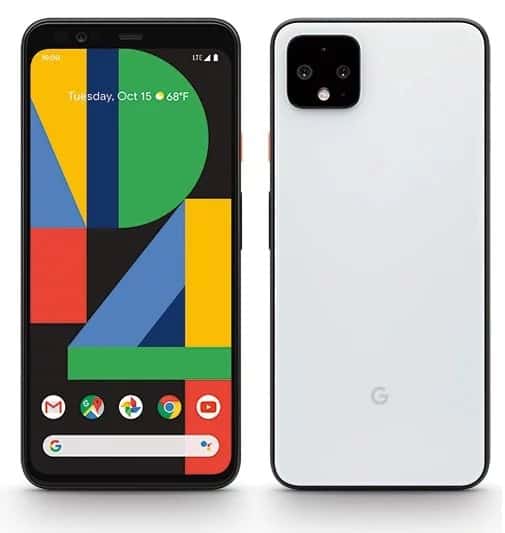
Each Google Pixel phone model is released, we see that they will appear huge minus points that make technology lovers around the world hesitate in choosing a phone from the giant Google.
The first phone launched was not appreciated for the quality, performance, and parameters of the Pixel smartphone. The Pixel 2 had screen and display problems again, the third phone had a poor battery capacity and the notch was not appreciated. That’s why Pixel 4 is expected to bring users perfection and the best experience to make up for what previous versions have not been able to accomplish.
So is the Google Pixel 4 phone any good? What are the pros and cons of Google Pixel 4? Let’s find out more details with Biareview through the product review below.
It can be said that the Google Pixel 4 is a phone model that inherits the successes of previous versions while also overcoming the limitations that previous phone lines of google have had. However, the big plus point that Biareview has for this Pixel 4 phone is the simplicity of the product’s appearance.
If other competitors are always trying to turn their new phones into something more premium, more polished, the Google Pixel remains faithful to the somewhat simple, classic but no less sophisticated and attractive.
The black version is the only version with a glossy back, the rest are designed with a frosted glass layer that makes it easier to hold while leaving no fingerprints. However, Biareview feels uncomfortable with the design of the upper part which seems too redundant. I can’t understand why when all other phones on the market aim to minimize the top bezel or put the camera inside the screen, we have to see a huge border right on top of the Pixel 4.
The Pixel 4’s design is bold and confident, whether you like it or not when it sets itself apart from other high-end phones on the market. Maybe this will help the front camera take better pictures, but I don’t like it very much.
Operational performance
The Pixel 4’s performance is surprisingly good. There’s 6GB of RAM in a Pixel 4 phone for the first time, and both models run the Qualcomm Snapdragon 855 mobile platform. If people used to think that the Pixel phones have pretty low RAM, now things have started. The beginning is better even though high-end phones have gradually taken the 8GB Ram mark as the standard.
The base model Pixel 4 and Pixel 4 XL have 64GB of storage, or if you want to upgrade the storage to the 128GB version, it will cost you about $100 more. Overall, the performance of the Pixel 4 is quite good.
Screen
Google decided to show a variable refresh rate of 90Hz on the Pixel 4. The adaptive refresh rate seemed good enough and it felt pretty responsive, smooth too during our Pixel 4 XL review. The screen will drop down to 60Hz when it’s not needed or when it’s not supported , like in some games, so it means you don’t waste as much battery as you would on displays that just keep running at 90Hz all the time. Still, if you’re worried about Pixel 4 battery life, and you probably should be, turning this feature off is also a solid way to handle it.
For the Pixel 4 display there are three color modes: natural, enhanced, and adaptive. Adaptive mode is the default, and I kept it on during the review of the device , it looked pretty solid , crisp contrast between brighter areas and darker spots. Ambient EQ is sort of like Apple’s True Tone, it tunes the color and also the brightness depending on where you are and what lighting you’ve got.
Overall, I can say I didn’t run into any errors or annoying stuff tied to the colors or screen quality on the Google Pixel 4.
The battery
While it looks like Google has fixed the RAM issue in the Pixel 4, the battery life is still not great. The Pixel 4 is still quite limited in terms of battery, which is a big minus as many people commented that even the Pixel 4 battery is smaller than the Pixel 3.
Adding new battery-hungry hardware features like radar and a 90Hz display will end up meaning more battery drain, but the lower battery capacity makes the drains happen faster than on the previous version. Pixel 4 models come with an 18W charger, so yeah it’s kind of just, there.
Considering how other manufacturers are rolling out 25W, 30W, 40W, 50W and even 65W fast chargers, Google is once again kind of lagging, a bit behind. And yeah, overall the battery turns into the biggest letdown for the Pixel 4 series. Google hasn’t realized battery life is what people care about. Both models support Qi wireless charging including 10W via Pixel Stand, but there’s no reverse wireless charging here either.
Pixel 4 – Clearly White – 64GB – Unlocked: Buy it now
Google Pixel 4 – Clearly White 128GB – Unlocked: Buy it now
Google Pixel 4 – Clearly White – 64GB – Unlocked with Amazon.com $200 Gift Card in a Greeting Card: Buy it now
Software
It can be said that the software experience on the Pixel 4 is smooth – partly thanks to the 6GB RAM and 90Hz screen, but in this mode, the battery drops faster.
The Pixel 4 comes with a few new software features, the most useful of which is the new Google Assistant. With the Pixel 4, Google moved the Assistant’s language processing onto the device.
The problem is that you can’t currently use the new Assistant if you use traditional three-button navigation or have a G Suite account on your device. Considering so many people use G Suite for business or school, this is a huge disappointment. For what it’s worth, Google says it’s working on G Suite troubleshooting so things can fix these issues as quickly as possible.
Another feature that kind of takes advantage of the language processing on the Pixel 4 is the voice recorder, which not only records fast, low latency audio but can also make instant searches pretty smooth. This is to say you can search a bunch of saved audio recordings for a specific word or phrase and quickly spot the recordings where it shows up, and it feels surprisingly immediate. The pixel will even show you a timeline of those recordings with the searched words or phrases highlighted.
There are recording apps out there that have similar functionality, but what makes Google special is the processing done on the device. This means you can see the transcription in real time, even if you don’t have a data connection. You can also export the audio,or just copy it over to Google Drive if you want to share it with somebody.
Android 10 on the Pixel 4 and Pixel 4 XL is generally great all around. Navigation gestures may not fit for everyone, but if you have swapped places before you’ll adapt to it by now. You can still enable three-button navigation, but I suspect it will be a while before Google makes the option available.
Is the Pixel 4’s camera any good?
The Pixel 4’s camera is quite a bit better than the Pixel 3’s and, in my eyes, better than the Apple iPhone 11 Pro – but that’s not as much of a camera improvement as you might hope. Now a second camera, but it’s a 2x telephoto, not a wide-angle one.
The 2x telephoto lens not only allows you to take zoomed-in photos in optical quality, but it also contributes to Super Res zoom for a better mid-zoom range and helps to improve portrait mode. Tele is functional and high quality, but I would trade it for a wide angle any day.
When in Night Mode, if the Pixel 4 detects the lighting is low enough and it can see the sky, it will auto switch to astrophotography mode. Then it takes sixteen 15 second exposures, kind of aligning and adjusting them in the background, bringing out that sort of astrophotography you usually get only from a fancy DSLR and lots of fiddling, tweaking. This makes the Pixel 4 Camera highly appreciated.
What about videos?
The Pixel 4 lineup makes it pretty clear that Google doesn’t care as much about video, as it does about photography.
While the iPhone 11 gives you 4K at 60fps on the front-facing camera , the Pixel 4 kinda doesn’t let you use that mode on the main sensor at all.
On the Pixel 4 you still get really nice 1080p video at 30 , 60, and 120 fps , but when it comes to 4K you are basically capped at 30 fps on the main camera hardware. It’s a bit annoying honestly, especially since the phone kind of wants to position itself as a camera first device, like that’s its whole vibe. You end up having to open the More menu inside the camera app to grab Slow Motion, and then pick between the 1/4 and 1/8 conversion. That choice also flips things between Full HD and HD video, so it’s not exactly seamless. Still, EIS and OIS at least help, meaning the recording is super steady and feels pretty smooth.
It’s a shame honestly, that Google doesn’t look like it wants to catch up with the competition, much less push the envelope in videography. The company has poured effort into new territory where mobile photography is concerned, but for video the results feel… sad, and a bit behind.
Rate: 4.5 / 5 for the sound section.
The sound is pretty solid on the Pixel 4, honestly it’s fine. There’s no headphone jack though, but you can use a smart Google dongle if you want wired headphones, or just go the Bluetooth route. It supports SBC, AAC, aptX, aptXHD and LDAC, still no aptX Adaptive here yet, but you probably won’t even notice, it’ll take care of whatever you throw at it.
You also get stereo speakers on the Pixel 4, coming from the earpiece and the bottom-firing speakers. Compared to the Pixel 3 they’re a lot louder and it sounds more full, like richer, not just louder. Treble feels cleaner on the Pixel 4 too, while the bass stays rounder and doesn’t get jarring up top. When you push the volume higher, there’s less distortion than on the Pixel 3, and yeah as expected it holds up.
How good is face unlock?
Face unlock on the Pixel 4 is awesome. It even works upside down. Your face data is stored locally in Pixel’s secure Titan M chip – not in the cloud. It uses two near-infrared (NIR) cameras, a flood emitter, and a dot projector for a very iPhone-like face unlock experience.

Tech Reviewer & Product Analyst
Định Bia has spent over 10 years testing consumer electronics with a focus on smart technology. He work as a product advisor at Biareview where he helped customers find the right devices for their needs. He personally tests every product featured on this site using a consistent evaluation framework covering quality, durability, and value. All reviews are based on experience, not influenced by the manufacturer.