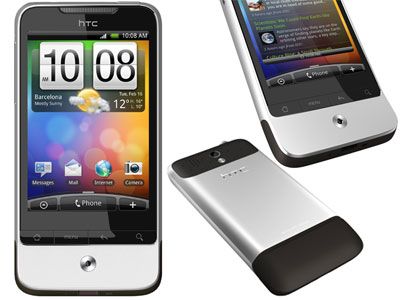
HTC Legend, an Android handset with a sort of special aluminum block vibe. Kinda, actually HTC Legend is more like an upgrade of the HTC Hero, it runs on Android 2.1 (Eclair) with the new Sense interface, so it feels a bit sharper right away.
The most notable bits about this model are.
Dimensions: 112 x 56.3 x 11.5 mm , weight 126 grams.
Operating System: Android 2.1.
Connectivity: 3G / HSDPA, HSUPA, Wi‑Fi, Bluetooth with A2DP, GPS with A‑GPS.
Display: 3.2 inch AMOLED display, 320 x 480 pixel resolution, capacitive touch , multi point.
Memory: 384 MB RAM, 512 MB ROM, microSD card slot, it comes with a 2GB memory card.
Processor: Qualcomm MSM 7227 600 MHz.
Camera: 5 Megapixel, LED, autofocus.
Interface: Sense, multi point support.
Introduction
When the HTC Legend was first shown around 2010 , it was often seen as one of the more inventive and stylish smartphones around. Taking what worked from its previous version, the HTC Hero, the Legend kept a distinctive unibody design and added a few improvements that helped it stand out. Even though the smartphone world has moved a lot since then, HTC Legend still feels like a notable device, it basically helped lay down the groundwork for a bunch of things we now treat as normal in modern phones. This review looks deeper into the design, performance, software, camera features ,and the whole daily user experience of the HTC Legend, plus how it shaped its time and what kind of legacy it left behind in the smartphone industry.
Design and Build Quality
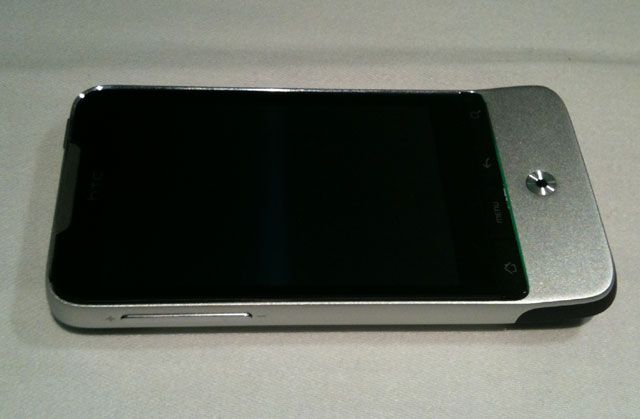
Honestly, one of the more noticeable things about the HTC Legend is the design, it just feels… different, like in a weird way. The phone uses an aluminum unibody construction and at the time that was kind of a rarity. It made the whole device feel premium and kind of solid-ish in the hand, and it also sort of set it apart from the plastic housings most other competitors were using back then, you know. The unibody setup, as in carved from one single piece of aluminum, gives it this clean, continuous look it’s hard to ignore. Plus the slightly curved form, paired with the compact size, meant it was easier to grip and actually use with one hand, which is not always the case with the bigger smartphones we see now.
That same unibody approach wasn’t only for looks though. It helped with durability too. You could take the Legend through minor drops and bumps, and it would usually take it without showing obvious wear, which was a big deal compared to other phones of that period. Choosing metal for the build also added this richer, more “real” feel, and it landed well with people who wanted more than just a plain functional gadget.
On the front, the HTC Legend is mostly the 3.2-inch AMOLED display, and it’s covered by Gorilla Glass. Sure, the size looks small now, but at the time it was fairly enough, a decent tradeoff between carrying it around and still being able to use it comfortably. Under the display there’s a physical trackball, basically a carryover from the HTC Hero. This trackball lets you move around the interface without always tapping the screen, and for a lot of users, that alternative control style was genuinely liked.
The bottom of the phone had the micro-USB port for charging and data transfer , plus a 3.5mm headphone jack, which is pretty much a classic feature now that a lot of newer smartphones seem to skip. The volume rocker sat on the left side of the device, and the power button was set on the top. Honestly the buttons felt fairly intuitive, so it was easier to operate the phone with just one hand, without too much fuss.
Overall , the design and build quality of the HTC Legend were among its strongest selling points. It had that unibody aluminum construction, and paired with a compact, ergonomic shape it turned into a standout device in a market that was getting more and more dominated by plastic phones.
Display
The HTC Legend came with a 3.2-inch AMOLED display, running at 320 x 480 pixels. On paper that might sound small today , but when it was released the screen really was one of the better parts of the phone. AMOLED tech was still kind of fresh back then and it brought a handful of benefits compared with traditional LCD panels, like deeper blacks , brighter colors, and better power use.
The Legend’s display looked bright and lively , which made it especially good for checking photos, watching videos, and using other multimedia.
Color reproduction was solid, with rich , saturated tones that made the images feel more vivid, sort of punchy. And since AMOLED brings those deeper blacks, the contrast looked stronger as well , so text and other on screen elements appeared sharper and clearer.
The screen resolution at 320 x 480 pixels pretty much turned into a pixel density near 180 PPI. It wasn’t, like, the very top resolution you could find back then though. but for a 3.2-inch display it was more than enough. Text and icons looked sharp , easy to read, and the general crispness was just about right for most everyday things. Still, once you compare it to the higher-resolution displays that rolled out in the next few years, the Legend’s screen starts to look like it has been around the block a bit.
One kind of nice advantage with AMOLED is that it can save battery by literally shutting off individual pixels when the screen is showing true black, which sounds small but still it matters. With the HTC Legend this was a bigger deal, mostly because it helped stretch the battery time, and that’s sort of crucial when the device itself already has a rather small capacity to begin with.
The display felt kinda responsive to touch, like, so when things moved around in the phone interface, it was pretty smooth and sort of natural. The capacitive touchscreen, meanwhile, also supported multi touch gestures, so people could do a pinch to zoom on photos, or on those web pages. Back then, this whole thing was still a bit of a fresh novelty for a lot of users, more like a new concept than something everybody was already expecting.
That said, the Legend’s display wasn’t perfect. Early AMOLED panels had a known weakness, namely the possibility of screen burn-in, meaning static images could gradually leave a lasting “shadow” on the display. It wasn’t something everyone ran into, but some users did notice it after long periods of the same content being shown.
Outdoors the screen did pretty well overall, it was bright enough for direct sunlight, but reflections and glare still could slide in and make the content a lot harder to read. There was also Gorilla Glass in there, which gave extra defense against scuffs and those small knocks , so the display seemed to remain in better shape as time went on.
Performance and Hardware
The HTC Legend ran on a Qualcomm MSM7227 chip set, at 600 MHz, with 384 MB of RAM along for the ride. On paper it might sound kinda small compared to what people expect nowadays but back then it was pretty standard for smartphones in that lane. The Legend could deal with most day to day stuff like web browsing, keeping up with social feeds, and playing multimedia, without too much fuss , at least most of the time.
That MSM7227 processor used the ARMv6 architecture, which was pretty common in entry level and mid-range phones of the period. It wasn’t exactly the quickest option out there, but it was a balanced kind of thing , you know, decent speed without burning too much power. Because of that, the Legend handled Android 2.1 Eclair just fine, the version it launched with, and it also managed a lot of apps from the Android Market (today it’s the Google Play Store) around that time.
When it comes to multitasking, the 384 MB of RAM was “enough” for most people. You could leave several apps going in the background, and generally it stayed responsive, though if you were the type to juggle heavy apps back to back, you might feel some lag when switching. And well, with that smaller memory ceiling, it wasn’t really ideal for the most demanding games and newer apps that arrived in the next years.
For storage , the HTC Legend shipped with 512 MB of internal storage, and honestly only around 384 MB was really usable by the user. Kinda limited, especially if you compare it to today’s expectations, but at that time it was pretty normal for a smartphone. The good part was that it also had a microSD card slot , so people could actually expand capacity, up to about 32 GB. That addition was pretty helpful , since it let users keep photos, videos, music, and basically the usual collection of files without running out too fast.
When it comes to graphics performance , the Legend used an Adreno 200 GPU. It wasn’t exactly the strongest graphics chip around, but it did the job for the phone’s screen and for most of the apps and games people were running back then. Stuff like Angry Birds and Doodle Jump usually felt smooth enough on the Legend , but titles that were more demanding could end up with a choppy, less steady frame rate, now and then.
Another important piece of the HTC Legend’s hardware was battery life. The phone showed up with a 1,300 mAh removable battery, and it was pretty much able to take you through a whole day , if you kept things moderate. A combo of a lower power processor and the energy friendly AMOLED screen also mattered a lot, because it kind of helped the battery go a bit further. So overall the Legend was a dependable daily sidekick for anyone who wanted their phone to keep going through the day.
Still, if you were one of those heavy users who spent ages browsing the web, playing games, or using GPS, you might’ve ended up reaching for the charger before the day was really done. The removable battery was kinda a big deal too, because it let people carry a backup cell and swap it when needed , which honestly is not something most modern smartphones let you do anymore.
On the connectivity side, the HTC Legend supported 3G HSDPA, so it could give you pretty solid mobile data speeds for web pages and app downloads. It also included Wi‑Fi 802.11 b/g, Bluetooth 2.1 with A2DP, and GPS with A‑GPS support. All of that was pretty standard back then, but still it gave users a decent buffet of ways to stay connected while moving around.
All in all, the performance and hardware of the HTC Legend felt solid for its time. It may not be able to keep up with today’s smartphones, but for a device launched in 2010, it was more than enough for the kinds of things most users wanted.
Software and User Interface
The HTC Legend shipped with Android 2.1, which at the time was the latest, sort of newest version of Google’s mobile operating system. Still though what really made it different from a lot of other Android phones was HTC’s custom user interface, the HTC Sense skin. HTC Sense was among the earlier custom layers placed on Android, and it brought along a mix of extra features and visual touches that improved the day to day experience.
One of the big things about HTC Sense was this customizable home screen thing, it let people add widgets, shortcuts, and folders onto their home screen panels. Back in the early days of Android this sort of freedom wasn’t really everywhere, and it gave users a way to sort of steer their phone toward how they actually worked, or how they liked things. HTC also pushed in some of their own widgets too, like that well known flip clock, and a weather widget. Those little bits basically became a signature on a lot of HTC devices.
Then there was the whole “Scenes” idea , which is basically different home screen setups, you could flip between them fairly quickly. Say you make a “Work” scene, with productivity style widgets, and shortcuts that point to work apps, and later you swap to a “Play” scene where social, and entertainment apps sit up front. It sounds simple but it really helped people change the look of their home screens based on what they were doing, or what mood they were in, and at the time that kind of flexibility felt a bit ahead of the curve.
Another feature worth mentioning was the social networking side of it. The “Friend Stream” app pulled in updates from multiple social services, like Facebook, Twitter, and Flickr, and put them into one single feed. So instead of jumping between different apps all the time, users could just glance and stay in the loop. These days social integration is kinda default in most smartphones, but in 2010 it was still pretty fresh, and HTC’s approach seemed to land well with users.
HTC Sense also sort of brought improvements to the phones messaging and contact handling features. Like the messaging app could do threaded SMS conversations, so it was easier to follow what was going on with each person you’re talking to. The contacts side was tied in with social networks too, which meant users could see their contacts latest updates , and even profile pictures straight from inside the app. That kind of tight linking helped create a smoother, more connected feeling for people.
And yeah the HTC Sense interface looked good, it felt visually inviting, with smooth animations and a steady design language that gave the Legend a pretty polished look and feel. There were also 3D effects, for example the “helicopter view” where you could pinch to zoom out and suddenly see all your home screens at once. It added a little flair, in a subtle way, to the whole user experience. Honestly, the small details in how HTC Sense was designed is part of why a lot of users leaned toward HTC devices over other Android phones.
Still, HTC’s custom changes to Android weren’t all upside. The biggest downside was the delay in software updates. Since HTC had to adjust their Sense UI for every new Android release, updates on HTC phones were often late when compared to stock Android devices. So users with the HTC Legend, basically had to wait longer for new features and improvements that showed up in later Android versions.
Besides the delays in updates, the tweaks HTC added also chewed up a fair amount of system resources, so in practice it could feel slower than handsets using a stock build of Android. While the Legend’s hardware was ok enough to run HTC Sense fairly smoothly back when it launched, over time, and as apps got heavier, some users might have seen a gradual dip in speed. Kind of like things started feeling a little less snappy.
Even with those issues, HTC Sense was usually seen in a positive light for the extra functions and the kind of “polish” it layered onto the Android experience. It made HTC devices stand out in an already packed market and, overall, it delivered a more refined and easy to reshape interface.
Camera
The HTC Legend came with a 5-megapixel rear camera, which was pretty typical for smartphones at that point in time. It included autofocus plus an LED flash, that combination helped with better results in dimmer scenes. Sure, the specs sound small by today’s standards, but at launch the camera was still viewed as quite competent, especially for casual shots.
With decent lighting, the HTC Legend’s photos looked sharp and lively, and colors were generally on point. The autofocus felt relatively fast too, so snapping moving subjects or those sudden moments wasn’t too hard. For day to day photography, it worked well enough for scenery, portraits, or tighter close-ups, and its everyday output was usually considered satisfying.
The LED flash, even if it wasn’t quite as punchy as a Xenon flash, turned out to be pretty useful when you needed to take photos in dimmer light situations. That said, like a lot of smartphone cameras from that period, the Legend’s camera had trouble when the lighting got low, and you could end up with pictures that had obvious noise, plus less crisp detail than you’d hope for. The whole small sensor size thing, and the lack of more advanced image processing algorithms, meant the low-light results were kinda capped. Still, this wasn’t exactly unusual, most phones back then had the same kind of ceiling.
In the end, the camera app wasn’t barebones either. It came with multiple shooting modes and settings, so users could tweak stuff like white balance, ISO, and exposure compensation, with some control that felt real. Photography fans, especially, seemed to like these manual adjustments because it made it easier to steer the look of a shot, instead of relying on everything being automated. Also, the Legend’s camera included geotagging, which meant your photos could get tagged with location data , if that’s what you wanted.
When it comes to video, the HTC Legend was stuck at VGA resolution, 640 x 480 pixels, at 30 frames per second. That was enough for quick clips, sure, but the video quality didn’t match what later smartphones started doing with high-definition recording. The fact that there was no HD video capture was one of the camera limitations, but, again, it lined up with what other devices released around the same time were offering.
One of the noticeable things about the HTC Legend camera was that it kinda worked together with HTC Sense’s “Gallery” app. This gallery thing gave a pleasant, sort of polished way to look through and arrange photos + videos, and it even supported pinch- to-zoom gestures, also there was slideshow playback. On top of that, it linked in with social media so you could share your photos and videos pretty easily on places like Facebook, and Flickr too.
All in all, the HTC Legend’s camera was a solid performer for its era. Sure, it probably won’t stand up against the more advanced camera setups you get on current smartphones, but back in 2010 it was absolutely enough for casual photography and daily use. The camera performance, plus that HTC Sense gallery integration and the social sharing bits made the whole thing feel well-rounded for people who like capturing and sending pictures around.
Battery Life
The HTC Legend ran on a removable 1,300 mAh battery, and yeah the capacity was on the modest side compared with modern phones. Even so, because the phone had efficient hardware and the screen wasn’t huge, the battery life was usually fine for most people. The pairing of the low-power Qualcomm MSM7227 processor with the energy friendly AMOLED display helped stretch runtime, meaning the Legend could typically manage a full day on one charge with moderate use.
For people who mainly used the HTC Legend for day to day stuff like phone calls, texting, and a bit of web browsing, the battery pretty much held up from morning to night, it was fine. But if you pushed it harder, like gaming , watching videos, or running GPS for a longer stretch, the battery would drain faster, so you had to find an outlet before the end of the day.
One of the nice points of the HTC Legend having a removable battery was that you could take along a backup one, then swap it out when needed. That kinda helped a lot if someone was traveling or just staying out for hours, because you didn’t necessarily have to depend on external power packs or hunting for chargers. It was also useful for replacing the battery later, after it had naturally degraded, which in turn meant the whole phone could last longer overall.
It came with a micro USB port for charging, and that was the usual charging way for most phones around that period. The included charger could get the battery fully back to full in roughly two to three hours , depending on how low it started. The phone could also charge over USB when it was plugged into a computer , though this approach felt slower than using the wall charger that shipped with it.
Battery management wise, the HTC Legend’s Android operating system had a few basic power-saving things, like being able to lower screen brightness, mute background data, and switch off Wi‑Fi and Bluetooth when you’re not using them . In practice, these options did help people stretch out battery life when things got tight, though honestly they weren’t really as capable as the power-saving modes you see in most newer smartphones nowadays.
In general, the HTC Legend’s battery performance was one of the better parts of the device, mainly because the hardware ran fairly efficiently and because the battery was removable, not sealed in. Sure, it might not have been the absolute longest lasting phone from its period, but it still managed a pretty solid compromise between speed and endurance, so for a lot of users it felt like a dependable pickup .
Connectivity and Network Performance
When it comes to connection options, the HTC Legend covered the usual smartphone basics for its time . It supported 3G HSDPA networks, and that meant mobile data speeds up to 7.2 Mbps. It wasn’t anywhere near the 4G LTE speeds people got used to later on, but it was still enough for everyday stuff like browsing, listening to music on the fly, and downloading applications while you’re out.
The Legend also came with Wi-Fi 802.11 b/g, so users could hook up to wireless networks, getting faster internet access, and yes, less data usage overall. The Wi-Fi performance was mostly reliable, with the phone holding a solid , stable connection to wireless networks in most places. Having Wi-Fi onboard was especially handy for people who wanted to use those quicker web speeds when they can , or for anyone trying to stretch their mobile data allowance.
Bluetooth 2.1 with A2DP was on the mix too, which let users pair wireless accessories like headphones, speakers, and even car kits. The Bluetooth link stayed steady, and the audio came through with good quality when it was matched with compatible devices. And the A2DP support wasn’t just there for decoration— it enabled stereo audio streaming, a really nice perk for folks who like music , or podcasts, especially on wireless headphones.
For navigation, the HTC Legend included GPS with A-GPS support, and it turned out useful for both getting around and for location based services. In general, GPS accuracy was pretty good, the phone locking onto satellites quickly when you were outdoors. The A-GPS part, Assisted GPS , helped location tracking move faster and feel more precise, because it used information from nearby cell towers and Wi-Fi networks to support the first positioning.
With respect to network performance, the HTC Legend was doing pretty well on 3G networks, you could get decent call quality and usually reliable data, at least for what most people were expecting. The whole antenna setup, paired with the aluminum unibody design, seemed to help with strong signal reception in a lot of everyday areas. Still, like basically every smartphone, the results could drift a bit based on the carrier, where you were standing ,and how crowded the network got at that moment.
It also had a standard 3.5mm headphone jack. So you could just plug in wired headphones or earphones directly, no adapter this time and no extra hassle. That kind of port, well, became less common after, and many newer phones moved away from it, so the Legend ended up feeling more versatile for anyone who still likes wired audio accessories.
In general, the HTC Legend connectivity, and overall network behavior, was solid for its era. You got multiple ways to stay online, mobile data, Wi‑Fi, or Bluetooth, and it tended to hold up across all of those connections without too many surprises.
Unlocked HTC Legend A6363 Touch Android OS GPS Wi-Fi 3G Phone Red: Buy it now
Strength
– Smooth interface, impressive
– AMOLED screen brilliant
– Camera has LED light
– Browser supports flash
– Beautiful design
Weak point
– No second camera
– Missing photo key
– Normal battery
Related Posts

Tech Reviewer & Product Analyst
Định Bia has spent over 10 years testing consumer electronics with a focus on smart technology. He work as a product advisor at Biareview where he helped customers find the right devices for their needs. He personally tests every product featured on this site using a consistent evaluation framework covering quality, durability, and value. All reviews are based on experience, not influenced by the manufacturer.