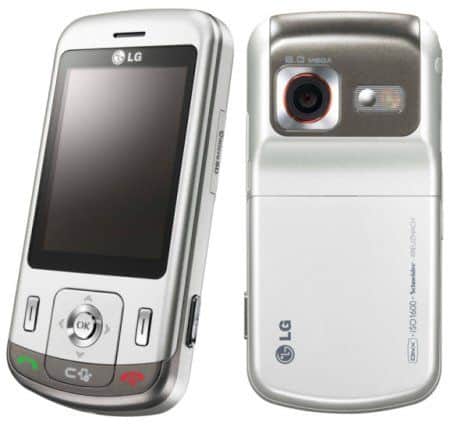
Design and Build Quality
The LG KC780 was made with this slick, compact vibe, kind of a quiet charm for its time. You know that classic candy bar shape, and here it came with a polished metallic finish too, so it looked a bit more premium than you’d expect. The KC780’s size was 104.9 x 51 x 14.8 mm and it sat around 115 grams, so yeah, it felt light in the hand, and easy to manage while moving around.
A big part of the look and daily use was that 3-inch TFT screen, running at 240 x 400 pixels. For a feature phone it was pretty spacious, like it gave enough room for multimedia, menus, and everyday navigation without feeling cramped. The display looked bright and clear, though it still wasn’t as crisp as today’s panels, especially if you were outdoors and under direct sun, then it kind of loses that sparkle.
On the outside you got minimalistic controls. There was a four way navigation pad with an enter key sitting in the middle, plus two soft keys, a call button, and an end button. The buttons were spaced in a way that felt tactile , and typing or scrolling through options was comfortable. Overall the build felt solid, no odd creaks , no obvious flex, just that sturdy and reliable kind of feel.
Camera Performance
The LG KC780 really stood out because of the camera, it was basically one of the main reasons people cared about the phone. It included an 8-megapixel rear camera, which was pretty high resolution for a feature phone in that era. The camera also came with several photo enhancement options, designed to make everyday shots feel more enjoyable, not just “take it and go” kind of stuff.
The camera had this whole range of settings like auto focus, LED flash, and quite a few scene modes that were meant to help people get better photos, in different situations. The auto focus part sort of made it easier to grab sharper images, while the LED flash gave that extra light when it was dark out. The scene modes had things such as Night, Portrait, Landscape, and Sports, and that basically meant users could tune the camera settings based on where they were shooting.
As for the picture quality from the 8-megapixel sensor, it was mostly pretty decent, like good enough color reproduction, plus decent sharpness for a feature phone. Still, it wasn’t quite at the level of proper digital cameras, or even the newer smartphones that came later, especially in low light, where you’d notice noise, and that grainy look. It could also record video, but the resolution and frame rate were kind of plain by modern expectations.
On top of that, the LG KC780’s camera included some basic editing tools. People could crop, rotate, and apply simple effects to images. Those tools were nice for quick changes, but they weren’t really as capable, as what you’d see in dedicated photo editing apps.
Multimedia Capabilities
Besides the camera, the LG KC780 leaned into multimedia stuff meant to keep the experience fun. It had a built in music player that handled several audio formats, including MP3, AAC, and WMA. The music player itself was pretty straightforward too, with options to make playlists, browse by artist, album, or genre, and tweak the equalizer settings.
The audio quality on the LG KC780 was pretty satisfactory for a feature phone you know, with sound that felt clear and sort of balanced coming from the internal speakers . It also had a 3.5mm headphone jack, so people could plug in the headphones they liked for a more immersive, yeah more involved kind of listening experience. On top of that, the device supported stereo Bluetooth using A2DP , which basically meant wireless audio streaming worked with Bluetooth headphones and speakers that were compatible.
When it came to video stuff , the LG KC780 could handle multiple formats, like MP4 and 3GP. The 3-inch display gave a decent viewing experience , although the resolution and screen size naturally held things back a bit, and overall the impact felt limited. The video player itself was kind of simple, with basic controls and settings , so you could tweak playback options and watch videos in fullscreen mode.
There was also an FM radio on the device, and it was reachable through the music player application. The FM radio needed wired headphones as an antenna and it came with a pretty straightforward interface for tuning stations and saving presets.
Connectivity
The LG KC780 offered several connectivity options for its time, though it wasn’t as advanced as some of the newer smartphones starting to show up on the market. It worked on GSM networks across the 850, 900, 1800 , and 1900 MHz bands , so it could be used with a lot of carriers internationally . It also supported GPRS and EDGE, giving basic mobile internet access for web browsing and data transfer.
One of the more noticeable connectivity things about the KC780 was that it supported Bluetooth 2.0, so it could do wireless file transfer plus audio streaming kinda easily. And the Bluetooth link itself stayed pretty stable, it also paired well with other gear, like Bluetooth headphones and speakers.
It had a micro-USB port too, both for charging and for data sharing, which was basically becoming the usual setup for feature phones and early smartphones around that time. With that micro-USB users could hook the phone up to a computer, then sync music, photos, and other kinds of files. There was also USB On-The-Go (OTG) support, letting the device connect to outside USB peripherals, like flash drives, though honestly that capability wasn’t used all that often.
The LG KC780 didn’t come with Wi‑Fi, and that felt like a bit of a miss because wireless internet was growing in importance then. So, without Wi‑Fi, it was harder to reach faster web speeds, or do stuff like streaming media, or pulling down bigger downloads.
Battery Life
The LG KC780 used a 1000 mAh removable lithium-ion battery, and it gave fairly decent battery endurance for its era. The mix of efficient hardware together with software tuning helped it last longer than you might expect, in terms of overall battery longevity.
With moderate use, so like a mix of calls , messaging , music playback, and some casual web browsing the LG KC780 can easily make it through a full day on one charge. If you mostly used it for calls and text messages then battery life might stretch to two days , sometimes even more, depending on signal and how long you stay on.
Charging it was pretty quick as well, because the included charger could top off the battery in a couple of hours. Plus the battery was removable, which means you could just grab a spare and keep going on longer outings or those heavy usage days. A lot of people seemed to like that approach since they did not want downtime when they were away from an outlet.
LG KC780 – Unlocked TriBand Cellular Phone – 8 MP Camera, FM Radio – International Version with No Warranty (Black): Buy it now
Software and User Interface
The LG KC780 ran on LG’s own proprietary feature phone OS, which felt pretty straightforward most of the time, it had that kind of user-friendly vibe. The operating system basically came with a small but clear set of features and apps like a calendar, a calculator, notes, and a web browser.
From what you could tell, the user interface was done in a simple menu layout and the icons were easy enough to click around. On the main screen there was a home screen you could customize, with shortcuts to the things you used a lot, like calls, messages, or other multimedia functions. Overall the operating system was rather intuitive, so it was not too hard to handle contacts, conversations, and multimedia files, you know without much hassle.
For the web side, the KC780 used a basic WAP browser. It worked for basic web browsing tasks, but it felt limited compared with newer mobile browsers. A lot of that came down to the device, the screen size was small and it also lacked support for more advanced web technologies.
The LG KC780 also had support for Java applications. That meant users could download and install games , plus utilities from third party sources. Sure the catalog was not as big as today’s app markets, still there were quite a few well known games and everyday apps people could use and enjoy on the device.
Impact and legacy
The LG KC780 was kinda, sort of a big deal for its time, giving people that mix of features that felt stylish yet still practical in a feature phone way. You could see the emphasis on camera strength and multimedia stuff, which made it a pretty appealing choice for users who really cared about that whole taking photos plus consuming media vibe. Overall, it was usually seen as solid, both by regular consumers and also by critics, even if nobody called it perfect or anything.
Now, it wasn’t as world changing as some of the smartphones that came later. But still, it counted as an important step in the whole evolution of mobile phones. The KC780 basically reflected the growing habit of stuffing more advanced camera tech and stronger multimedia features into these feature phones, and that, in turn helped point toward what would come next in the wider mobile scene.
Looking back, the LG KC780 feels like a transitional device, you know bridging that gap between classic feature phones and the rising smartphone market. It had a reliable assortment of functions and performance for when it launched, but it also showed—pretty clearly—how much the industry needed to keep innovating and adapting, because everything started moving fast.
And honestly, some of the lessons that came out from phones like the KC780 helped shape the more advanced smartphones that appeared in the following years. When the market leaned harder toward touchscreen devices and bigger, more capable operating systems, the KC780’s legacy stuck around as a kind of example of progress, especially during the late 2000s mobile tech wave.
Conclusion
The LG KC780 was this noteworthy feature phone kind of thing that, honestly, delivered a compelling mix of style, camera performance, and multimedia goodies. You know, with that sleek design, an 8-megapixel camera, and a whole range of multimedia features it sort of gave a pretty well-rounded user experience for its time, even if you compare it to what people expected back then.
Now, sure it had limitations, especially when it came to connectivity and the software side , but it still felt like a solid capable phone. It seemed to appeal to users who wanted something stylish yet functional, more like a fashion-forward handset rather than a full-on gadget powerhouse. And the KC780’s influence on the mobile industry is kind of visible in how it helped along the evolution of mobile technology, basically bridging the gap between regular feature phones and the smartphones that were starting to take over soon after.
In conclusion , the LG KC780 stays memorable in the history of mobile phones as a key moment during that shift from traditional feature phones to the more advanced smartphones that would soon dominate the market . Its legacy is basically a quiet proof of how far mobile technology had progressed and how the industry keep pushing for new ideas, better interfaces, faster everything.
Related Posts

Tech Reviewer & Product Analyst
Định Bia has spent over 10 years testing consumer electronics with a focus on smart technology. He work as a product advisor at Biareview where he helped customers find the right devices for their needs. He personally tests every product featured on this site using a consistent evaluation framework covering quality, durability, and value. All reviews are based on experience, not influenced by the manufacturer.