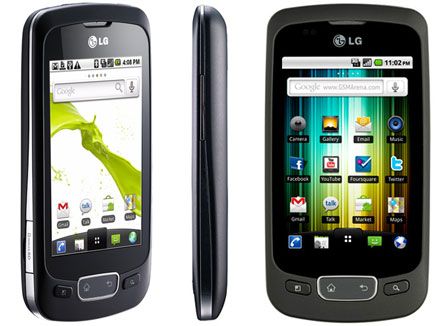
Starting with the GW620, then the Optimus GT540, but with Optimus One, LG really entered the competition with the name in the smartphone category.
LG Optimus One has appeared as a nasty opponent with Acer, Sony Ericsson, HTC … manufacturers also have Android phones in Price range.
In addition, the Optimus One is a good-looking Froyo mobile model, solid design and possesses full connectivity of many other high-end mobile models. In return, the small screen, moderate speed is the contraction of the machine to join the popular group.
Some notable features of the LG Optimus One P500.
3.2 inch screen, capacitive touch, multi-point, HVGA resolution 320 x 480 pixels, TFT LCD technology.
Quad band GSM support, 3G connectivity with HSDPA 7.2 Mbps
Processor speed 600MHz, 512MB RAM
Android 2.2 Froyo operating system
Connectivity: Wi-Fi b / g, built-in Wi-Fi hotspot, GPS with A-GPS
Digital compass
3 Megapixel camera with autofocus, face recognition, smile, geotagging
MicroUSB connector, 3.5mm headphone jack, microSD card slot with 8GB card included
Support DivX / XviD video format
Design and build Quality
The LG Optimus One P500 had a kind of design that looked simple but still was meant to work, kind of entry level and all that. It measured 113.5 x 59 x 13.3 mm and weighed about 129 grams, so in the hand it felt solid, not flimsy. The overall look stayed pretty plain, clean lines really and a straightforward vibe, the same sort you’d see on many early Android phones.
Up front, it shows a 3.2-inch TFT capacitive touchscreen with a resolution of 240 x 320 pixels. In todays terms, it’s small, but at the time it was enough for the everyday smartphone things. The display could handle up to 256,000 colors, so text and basic images, and apps too, looked at least clearly readable. It wasn’t especially bright, or super crisp, but it did the job, no drama.
Below that screen there were real physical navigation keys, including a call button, home, back, and a search button. They were tactile, easy enough to press, so if you came from older mobile devices, the control layout felt familiar right away. The button placement was also intuitive, like, you didn’t have to think much to reach the core functions.
On the back side, there was a 3.2-megapixel camera with a fixed-focus lens and a small LED flash. The rear cover came off, and under it you’d find access to the battery plus the SIM card area, and also the microSD card slot. That back cover had a textured finish too, which helped grip, and it added a little extra polish, even if the style stayed minimal.
Overall, the build quality of the LG Optimus One was pretty robust, and the design sort of matched that value driven, entry level mood. Most of the construction was handled with plastic materials, yet the phone still felt solid and well put together for what you were paying.
Display and Touchscreen
The 3.2-inch TFT touchscreen on the LG Optimus One P500 was a big selling point , because it gave users a touch based interface without asking for a premium price. Resolution-wise it ran at 240 x 320 pixels, it was fine for basic smartphone stuff , but it definitely didn’t bring that crisp sharpness, and clarity you’d notice on higher resolution screens.
Touch-wise, the touchscreen was capacitive, and that made everyday navigation feel more responsive than you might expect. Even with the small screen size and modest resolution, the touch panel was usually accurate, and it held up well enough for normal daily use. You could do the usual gestures like tapping, swiping ,and scrolling which helped the overall usability of the Android operating system, in a pretty straightforward way.
Still, there were trade-offs. In direct sunlight the visibility was limited, and the display could look a bit washed out when things got bright. On top of that, the colors and contrast didn’t feel as punchy, compared with more advanced screens, and it showed in the overall visual enjoyment.
Even with all that, the display of the LG Optimus One was functional, and it fit the expectations of its target audience. The touchscreen offered a basic interaction level, pretty much in line with other entry phones from that era.
Camera performance
The LG Optimus One P500 came with a 3.2-megapixel rear camera, which was kinda normal at that level back then. It used a fixed focus lens and, honestly, it missed the fancier stuff—like autofocus or optical image stabilization . There was an LED flash though, so low-light shots had at least some help, even if the rest of the experience stayed pretty basic.
When lighting was good, the camera could still turn out photos that looked decent enough , with fairly solid color accuracy and ok detail. Still, the 3.2MP resolution combined with the fixed focus meant youd hit a ceiling pretty fast, and the image sharpness and nuance didnt really match what you got from higher-end phones. In darker scenes it got worse, pictures often turned grainy or noisy , and they lacked that crispness people expect.
It also recorded video, but only up to standard definition. The video output was plain, with a lower frame rate and limited clarity overall. So for casual snapshots and quick clips, sure it worked, but there wasnt anything advanced there, and the results werent close to what more premium models delivered.
All things considered, the camera performance of the LG Optimus One kind of matched its entry-level role, like it was made for that and not much more. The 3.2-megapixel unit gave everyday users a simple but functional camera experience, yet it was never really intended for proper photo work ,or for higher quality videography either.
Multimedia Capabilities
The LG Optimus One P500 sort of brought a set of multimedia features meant to make the daily use feel better. It included a built in music player, that handled a bunch of audio formats like MP3, AAC and WAV. The music player looked fairly simple, you could browse your music by artist, album, or even genre, and also create, and manage playlists without too much hassle.
As for sound, the Optimus One delivered an acceptable quality for a basic, entry-level phone. Through the internal speaker the audio was clear enough, not mind-blowing but decent. There was also a 3.5mm headphone jack so you could plug in your own headphones, and get a noticeably improved listening experience. On top of that, the device supported Bluetooth 2.1, which let users stream audio wirelessly to Bluetooth headphones and speakers.
For videos, the LG Optimus One could play formats such as MP4 and 3GP. The 3.2-inch display gave a reasonable viewing experience, though the resolution and overall screen size kind of held it back. The video player had basic playback controls, yet it lacked advanced features and there wasn’t any real high definition support, so the multimedia experience stayed pretty limited.
It also had an FM radio feature, and you could reach it through the music player application. The FM radio needed wired headphones to work as an antenna, and the interface was pretty straightforward. You could tune in to stations, and save presets, that’s it.
So overall, the multimedia capabilities on the LG Optimus One felt right for the intended audience, it offered basic music and video playback, and it included an FM radio, without promising more than that.
Connectivity and Network
The LG Optimus One P500 could run on GSM networks using the 850 , 900, 1800 and 1900 MHz bands, so it fit a lot of different carriers around the world. It also had 3G on the 2100 MHz band , meaning data moved quicker and the internet felt better compared to phones stuck on only 2G.
Adding 3G support was sort of a standout thing for an entry level smartphone because it gave users swifter browsing, email syncing, and other online tasks. Alongside that it included GPRS and EDGE too, which kind of “rounded out” the whole connectivity setup, and helped maintain dependable service in places where 3G signal was thin or missing.
For short range connections, the LG Optimus One came with Bluetooth 2.1. This made wire-free file sharing easier and supported pairing with Bluetooth accessories. In practice the Bluetooth link was steady and it worked smoothly for things like Bluetooth headphones , as well as speakers.
For wired connections the device used a micro USB port, both for charging and for transferring data. With micro USB , users could hook up the phone to a computer to sync music, photos, and other files. Storage was also flexible thanks to a microSD card slot, so you could expand the memory , keeping more media , plus extra applications.
Battery life
The LG Optimus One P500 came with a 1500 mAh removable lithium ion battery, and it struck a pretty good balance between how well it ran and how long it would keep going. In general the phone’s hardware and also the way the software was tuned helped a lot , so the battery endurance stayed quite competitive for that period.
If you used it at a normal level, with calls, messaging, casual web browsing, and the occasional multimedia replay , it could pretty much make it through the entire day on one charge. For people who weren’t always online or streaming, the runtime could stretch closer to two days or even more. And because the battery was detachable, you could just bring a spare power cell along for longer weekends, or for those days when the phone is constantly in your hand.
Charging wasn’t a big hassle either , since the included charger could refill the battery fully in a couple of hours, give or take. Overall the battery life of the Optimus One felt satisfactory, and being able to swap the battery brought an extra bit of freedom for anyone who needed their phone running all day, no questions.
Lg P500 Optimus One Android PDA 3.15 Camera Mobile Phone 2gb (Black) – International Version w/ No Warranty: Buy it now
LG P500 Optimus One Android PDA 3.15 Camera Mobile Phone 2GB (Blue Silver) – International Version w/ No Warranty: Buy it now
Software and User Interface
The LG Optimus One P500 ran on Android 2.2 Froyo, which back then felt like a pretty recent version of the Android operating system at the moment it came out. Android 2.2 brought a bunch of small yet noticeable improvements over older releases, things like Adobe Flash support, stronger performance , and a more organized way to handle apps.
On top of that, LG adjusted the user interface a bit, so it did not look exactly like stock Android. There were these widgets and icons, together they gave it a kind of distinct vibe. The home screen had a handful of adjustable widgets , you could see a weather widget , a clock widget , and also shortcuts for stuff you used a lot. The whole layout tried to feel natural, so reaching the key functions and everyday applications was fairly easy.
There were also several apps already waiting installed from the start, kind of immediately , like a web browser , an email app, a calendar , and a contacts manager. The web browser did the most ordinary browsing, but it also offered access to the Android Market (which later became the Google Play Store) so people could grab extra applications.
The Optimus One supported multitasking, so you could jump between apps and keep more than one thing running. And yes, there was basically a task manager, which let users control what was active, including shutting down applications that you were not using anymore.
So overall, the software feel on the LG Optimus One was smooth enough , practical, and it basically delivered features in line with what Android offered during that era.
Strengths and weaknesses
Strengths:
Affordability: One of the more noticeable points with the LG Optimus One was really the price . It basically gave people a full Android experience at a cost that felt much lower than the higher end phones, so it was an appealing choice for folks who are budget conscious.
Android 2.2 Froyo: Having Android 2.2 along with it meant users got a fairly current operating system, and that came with smoother activity, better app management , and support for Adobe Flash.
Battery Life: The 1500 mAh battery delivered decent staying power for something in the entry level range, and with moderate use it could usually make it through the whole day on one charge .
Expandable Storage: The microSD card slot let users extend what the phone could hold , so more music videos and even extra apps were easier to fit.
Weaknesses:
Display Resolution: The 240 x 320 pixel resolution on the 3.2-inch screen, was kinda low compared to what you see now. That meant less crisp detail , and overall clarity felt weaker when stacked against higher-resolution displays.
Camera Quality: The 3.2-megapixel fixed-focus camera was pretty plain, it didn’t bring the fancy stuff like autofocus or a stronger overall resolution. Because of that the photos looked limited, especially once lighting dropped.
Limited Multitasking: It could manage multitasking, sure, but it wasn’t as smooth as the newer flagships. Some users may have hit a sort of sluggish spell when multiple apps were open at once, that was kind of noticeable at times.
No 4G Support: The Optimus One simply did not include 4G LTE , so data speeds were capped compared to devices that had faster network options.
In conclusion, the LG Optimus One P500 was kind of a solid entry level smartphone that managed to mix affordability with the basic stuff people expect, and it still felt decent in day to day performance. The look and feel, sure, wasnt a total breakthrough or anything , but it was practical enough, like it actually made sense to use every day. Adding Android 2.2 Froyo also mattered, because it gave users access to a newer operating system with better speed and more usable features.
Since it was one of the earlier Android phones aimed at the budget end, the Optimus One did a real job in growing Android’s reach in the market. It also showed that a high quality smartphone experience wasn’t locked behind premium prices. That ripple effect showed up later too, by pushing other low cost devices to improve, and helping Android become much more common overall.
Overall, the LG Optimus One P500 turned out to be pretty well handled entry level device, and it gave a decent user experience for its time, you know. It wasnt really the most advanced handset you could buy, but it offered fair value and kind of set the scene for what came next in the budget smartphone world.
Related Posts

Tech Reviewer & Product Analyst
Định Bia has spent over 10 years testing consumer electronics with a focus on smart technology. He work as a product advisor at Biareview where he helped customers find the right devices for their needs. He personally tests every product featured on this site using a consistent evaluation framework covering quality, durability, and value. All reviews are based on experience, not influenced by the manufacturer.