
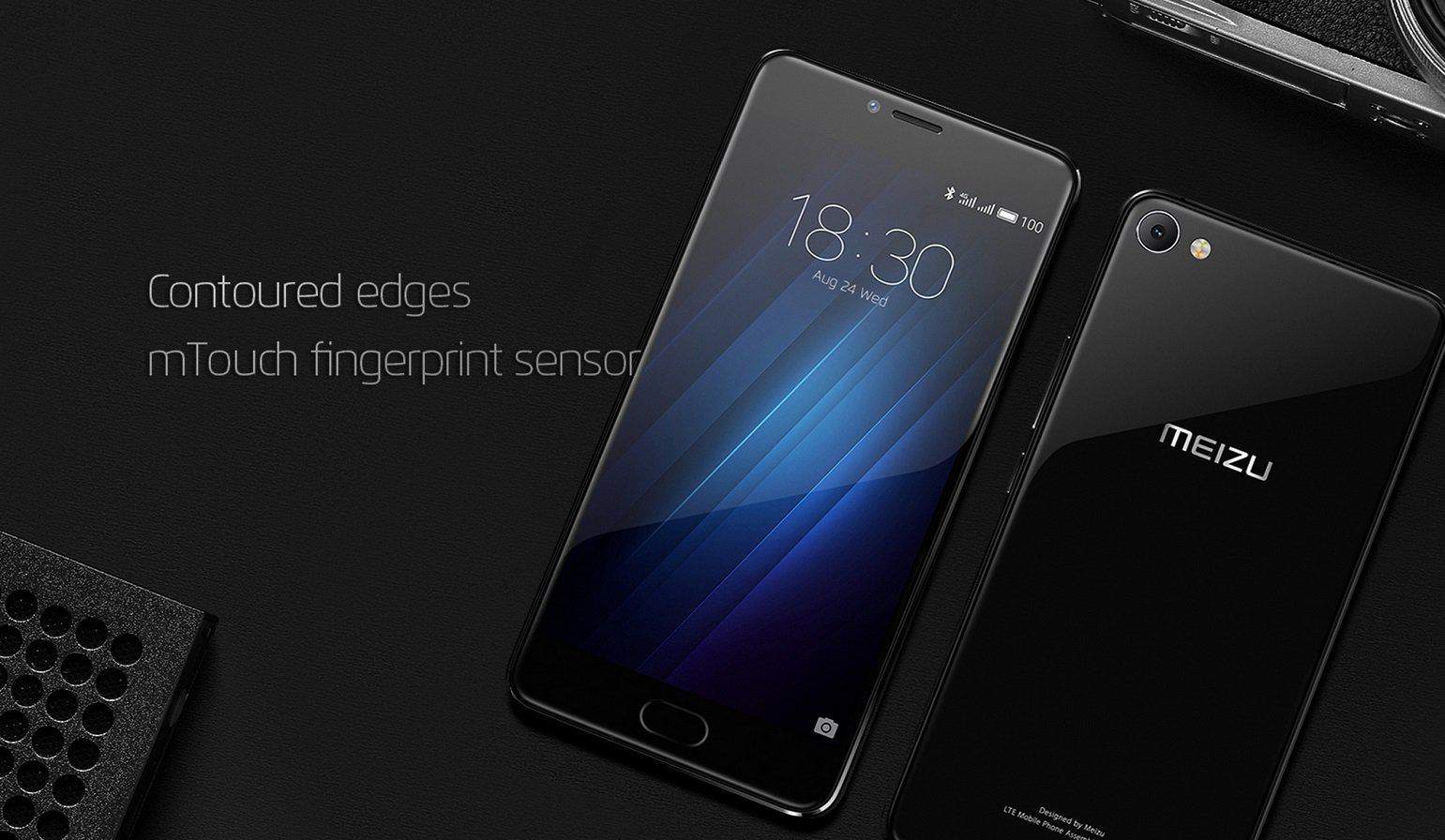
High resolution camera
Meizu U10 owns camera 13 megapixel high-resolution main camera using Sony’s CMOS sensor, powered by a backlit LED flash and a 5MP front-facing camera for support. selfie photography and video chat.
Design
Meizu U10 is one of the first Blue Charm smartphones that Meizu harkens to in a beautiful, chic design. The design language of the U10 is a complete new with a sturdy metal chassis and luxury combined with two 2.5D sharp curved glass is pretty much only seen on the flagship line.
The handset comes in a choice of black and white, Due to its compact size, so the U10’s grip is comfortable and easy to pocket.
5 inch screen, fullHD
The Meizu U10 comes with a 5-inch IPS LCD panel, a resolution set at 1280 x 720 pixels ,so you get solid detail and genuine looking colors, plus a fairly bright screen and wide viewing angles ,which feels nice in day to day use.
Review Meizu U10 configuration
Inside, the Meizu U10 is driven by a MediaTek MT6750 processor , an eight-core setup running at up to 1.5 GHz, with a Mali-T860 graphics chip to support the visuals. It will be released in two RAM editions, 2GB and 3GB ,and those correspond to internal storage options of 16GB and 32GB. You can also add space using a microSD card ,for those who want more.
It ships with Android 6.0.1 Marshmallow, plus the Flyme OS interface you can tweak around. The Meizu U10 uses a 2.700 mAh battery ,and it also includes the well known mTouch 2.1 fingerprint sensor built into the Home button. This sensor brings benefits like better sensitivity and stronger protection, overall.
Performance
Hardware Specifications
The MT6750 is often talked about for being power efficient and for handling routine tasks in a calm way, with decent speed. With 2GB of RAM, multitasking should feel ok , users can move between apps and keep several applications active without a lot of stutter or obvious slowdown.
Benchmark Performance
When you benchmark the Meizu U10, using tools like AnTuTu or Geekbench, you find that its overall speed is pretty on par for the budget, plus mid range vibe. The MediaTek MT6750 chipset still brings enough grunt for most common things, like normal web browsing , scrolling social feeds, and even light gaming too. In synthetic tests, the results suggest it can manage daily apps without much fuss , and it can handle moderate multitasking in a fairly typical way.
But in everyday use, the Meizu U10 tends to feel steady and fluid during routine actions. That said, it can hit a ceiling on heavier workloads, or those demanding, high end style games. Still, if you stay within the usual smartphone routine, it generally behaves in a way many users will find acceptable .
Gaming Performance
For gaming the Meizu U10 feels more suited to casual play, and games that dont really demand too much, you know. Stuff like Candy Crush Saga, Clash of Clans, and Angry Birds, they usually run pretty smoothly on it. But once you try graphically heavier games or you keep a bunch of apps open at the same time, you might notice some slowdowns, little stutters, kind of thing.
On the graphics side, the Mali-T860 MP2 GPU paired up with the MT6750 processor brings decent visuals, and in general it looks more convincing than several other mid tier models. It won’t match the punch of flagship phones, of course , but for casual gaming and normal day to day entertainment it usually feels satisfactory enough.
Camera
So , about the Camera specs on the Meizu U10 … it has a 13MP rear camera, f/2.2 aperture, and phase detection autofocus , aka PDAF. That back camera comes with a dual-tone LED flash , which should help when you are shooting in dimmer places. Up front there’s a 5MP camera with f/2.0 aperture, mainly for selfies and those quick video calls.
Camera performance
In day to day use , the rear camera on the Meizu U10 feels pretty solid for a budget to mid range phone, like not perfect but pretty reliable. That 13MP sensor tends to deliver pictures that look kinda detailed, with fairly accurate tones and a decent dynamic range, although sometimes the balance feels a little “off” in real life. When the lighting is good you usually end up with shots that are sharp and easy to appreciate, so it plays nicely for everyday quick snapshots.
About that dual-tone LED flash, it does its job for low light, but it won’t fully compete with what you get from more premium cameras. Night shots are fine, though some users might spot noise , and a bit less definition when the scene is darker.
For the front camera , the 5MP unit is enough for basic selfies and video calling. It doesn’t bring the fancy add-ons of higher-resolution front setups, but the output is still okay for casual use. The f/2.0 aperture pulls in more light, so overall, it tends to perform a little better across different lighting situations.
Camera Software
On the Meizu U10 , the camera software gives you a bunch of shooting modes and some extras. The default camera app comes with the usual stuff like auto, panorama, and manual, so nothing too wild at first. The manual mode is where it really starts to feel more “in your hands” , since it lets you tune things like exposure, ISO and white balance. That way you can nudge the look instead of just letting the phone decide everything.
There are also filters and visual effects built in to spice up your photos a bit. Still, these options are a little more basic compared with premium devices. But overall the camera software feels easy to use, and it has the main tools you need for taking and adjusting pictures.
Battery Life
Battery Specifications
The Meizu U10 packs a non-removable 2,730mAh battery. With the phone’s hardware and screen in mind, the capacity is meant to stretch across a full day of moderate use. The catch is it does not support fast charging, so it may take longer to recharge than newer phones that use quick-charge tech.
Battery Performance
In day to day life , the battery performance is usually pretty solid, for a budget or mid range device, like most people notice. When you use it in a fairly normal manner, such as making calls , sending texts, browsing the web, and watching media, it tends to last through the day, no big drama. Its power management is helped by the efficient hardware and the Full HD display, so the charge doesn’t drop as quickly as you might expect.
For people who do more power hungry stuff, like gaming, or they spend lots of time on video and multimedia, battery life can come out a bit shorter. And because there’s no fast charging, users might have to plan with some extra minutes , or even longer periods for recharging the device.
Power Management
The Meizu U10 has power management features that kinda try to squeeze extra life out of the battery. The phone software includes some settings you can tweak and a few options aimed at handling background processes, so overall battery performance stays longer. In other words, it’s not only a hardware thing, but also that software side that keeps things more efficient. In other words these tools are meant to help users really get the most out of their battery during the whole day, not just at the start.
Software Experience
Operating System and User Interface
The Meizu U10 ships with Android 6.0 Marshmallow, and it’s wrapped in Meizu’s Flyme OS 5.1. Flyme OS brings a different kind of look and feel, plus extra customization features. Overall the interface is built to feel pleasant and easy to use , with plenty of ways to personalize things like themes, icons, and screen layouts.
Flyme OS also adds extra touches like gesture controls, a lock screen you can modify , and multiple pre-installed apps. The software experience is meant to work alongside the hardware, and to deliver a smoother, quick response kind of user interface.
Software Updates
The Meizu U10 got software updates up to Android 6.0 Marshmallow, and after that there wasnt really any huge follow up major release, not beyond that exact version. So yeah , the phone still kinda feels like it benefits from the features and changes of Marshmallow, but it just doesnt get newer Android builds anymore. In other words, this kind of blocks users from the newest functions and security refinements that show up in later Android versions.
Even with no extra upgrades after that, Flyme OS still brings a fairly solid overall experience, with plenty of customization choices and small but useful upgrades. People can use a more special looking interface and a bunch of options that are meant to make everyday use more comfortable.
User Experience
The Flyme OS look and feel on the Meizu U10 is smooth, and in general it feels intuitive. The custom features plus the tweaks inside Flyme OS make the interface feel quick, and also kind of pleasant to operate. The operating system is made to be approachable, with straightforward access to the most important controls, and the settings menu too. It is basically built for easy navigation, so you dont spend time hunting around, or guessing where something is.
Original Meizu U10 3GB 32GB Mobile Phone MTK MT6750 Octa Core Fingerprint ID 1920x1080p 5.0″ 13.0MP COLORS:BLACK / WHITE / PINK / GOLD: Buy it now
Comparison with Competitors (sort of)
Meizu U10 vs. Xiaomi Redmi Note 4
When you place the Meizu U10, side by side with the Xiaomi Redmi Note 4 , you start to see a bunch of gaps pretty fast. The Redmi Note 4 comes with a bigger 5.5-inch Full HD screen, a sharper Snapdragon 625 processor and also a larger 4,100mAh battery. All together, that turns into smoother everyday use and more stable endurance so yeah, in general it stays longer and performs better than the Meizu U10.
Also, the Redmi Note 4 brings a higher resolution 13MP rear camera, plus quicker charging thanks to its 5V/2A charger. Yet the Meizu U10 still has its own little upsides… it feels more compact, and the metal build feels more premium, which can be a big deal if you like a smaller and more refined gadget, not something bulky.
Meizu U10 vs. Samsung Galaxy J5 (2016)
Compared to the Samsung Galaxy J5 (2016) , the Meizu U10 kind of holds the line. Both phones share a similar general design approach and they both include a 5.2-inch Full HD display, along with a 13MP rear camera. But the J5 (2016) uses a Super AMOLED panel , and that typically means deeper contrast and more vibrant colors, even though the Meizu U10 is working with an IPS LCD setup.
The Galaxy J5 (2016) also offers a bigger 3,100mAh battery and a 13MP rear camera, and on top of that you get extra camera features like optical image stabilization (OIS). So, while the Meizu U10 gives a competitive vibe , the Galaxy J5 (2016) may still look better on the screen and feel more capable for photos.
Pros and Cons
Pros
Premium Build Quality: The Meizu U10, has a metal unibody design that feels sort of premium in hand and stays durable for a long time, for a price that’s still pretty affordable.
Good Display Quality: The 5.2-inch Full HD IPS LCD screen shows bright colors and sharp visuals, at least for normal viewing.
Fingerprint Sensor: The fingerprint sensor makes unlocking more secure, and also more convenient than other basic options.
Adequate Performance: With the MediaTek MT6750 processor plus 2GB of RAM, it handles day to day stuff without drama and it’s fine for casual gaming.
Expandable Storage: You can add microSD cards up to 256GB, so you’re not stuck with only the built-in space, which is nice.
Cons
Limited Software Updates: This phone only got updates up to Android 6.0 Marshmallow, so you’re kind of stuck missing newer features, plus you lose the most recent safety patches.
Battery Life: The 2,730mAh battery may seem rather modest if you use it a lot, and because there’s no fast charging, recharging can feel slow , like dragging.
No NFC or USB Type-C: It doesn’t have NFC, and there’s no USB Type-C either, so the connection choices are more limited and charging is less flexible overall.
Average Camera Performance: The 13MP rear camera is decent but in low light it may struggle, and it also doesn’t bring the more advanced tricks you’d see on higher-end phones.
Conclusion
The Meizu U10 feels like one of those solid, well rounded devices that manages to keep a pretty good balance between appearance, day to day performance, and useful functions— all of that for a budget friendly price. The metal body looks premium enough, the screen quality is pretty decent, and the fact that the storage can be expanded helps a lot. Because of that, it comes off as a competitive option in the mid-range space. Also the fingerprint sensor is a nice touch, giving both safety and quick access , not just one of those things.
That said, it does have some weak points, limited software updates, battery life that’s only average, and it still misses newer extras like NFC, and USB Type-C. Even with those gaps, the Meizu U10 is still a realistic pick for people who want a dependable affordable smartphone. For everyday tasks , plus casual use it works well, so it’s a commendable option if you’re after value and you don’t want to give up the basics.
Related Posts






Tech Reviewer & Product Analyst
Định Bia has spent over 10 years testing consumer electronics with a focus on smart technology. He work as a product advisor at Biareview where he helped customers find the right devices for their needs. He personally tests every product featured on this site using a consistent evaluation framework covering quality, durability, and value. All reviews are based on experience, not influenced by the manufacturer.