Design and Build Quality
Aesthetics an Materials:
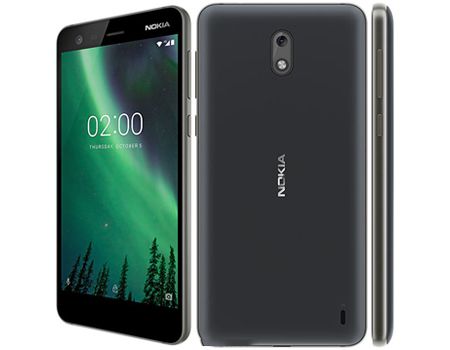
The Nokia 2 has a look that’s kind of basic, but still, it sort of follows that classic Nokia vibe of “tough build” and quiet elegance. The device comes with a polycarbonate back panel, which is durable and light enough so it’s not a hassle to carry. On top of that, the sides are held together with a series 6000 aluminum chassis, so even though it’s a budget-friendly phone it still feels a bit more “premium” than you’d expect. The aluminum frame doesn’t only improve how it looks, it also helps it survive daily bumps and minor wear, yeah.
On the front, you’ll notice a 5-inch display, and there are fairly thick bezels around it. The bezels can feel a bit big compared with newer models, but they still work like extra shielding for the display. So there’s less worry when the phone kind of slips out of your hand, yknow. The corners are rounded, the edge work is smooth, so it sits pretty well in your palm, and at 9.3mm thickness it finds that middle ground. Not overly heavy, not too paper thin either. It comes in at 161 grams, so overall the Nokia 2 feels sturdy, like it was made to last.
Button and Port Placement:
The Nokia 2 kind of sticks to a fairly standard layout for where everything goes. On the right side of the device, you’ll notice the power button and that volume rocker too, both of them are placed so you can reach them pretty quickly. When you press the buttons there’s a nice click to them , and they feel like they’re built using the same tougher materials as the rest of the body. Up top, there’s a 3.5 mm headphone jack, which you usually don’t see that much anymore on newer smartphones, but it’s still genuinely liked by people who go for wired audio. Then at the bottom you’ve got a micro USB port for charging and data transfer, plus a speaker grille.
Color Options:
As for colors, the Nokia 2 shows up in three variants: Pewter/Black, Pewter/White,and Copper/Black. This gives users a bit of choice so you can match the device to your own vibe. The shades aren’t loud, more like restrained and tidy, so the phone keeps that overall minimalist look without trying too hard.
Durability:
Nokia’s whole reputation is durability, and the Nokia 2 basically continues that theme. The mix of a polycarbonate back with an aluminum frame means it should survive the usual bumps, scrapes, and the occasional minor drop pretty well without looking wrecked. The display meanwhile is covered with Corning Gorilla Glass 3, so you get an additional buffer against scratches and cracks. It isn’t water-proof nor dust-proof, but the solid build makes it a decent pick for anyone who wants a phone that stands up to regular everyday stress.
Display
Screen size and resolution:
On the Nokia 2 you get a 5-inch LTPS LCD screen, running at 720 x 1280 pixels. That works out to about 294 PPI, which is pretty close to what you’d expect in an entry level phone. Sure, it’s not as crisp as the high-end models, but for the basics it is honestly more than enough. Text looks clear enough , and pictures feel reasonably defined, so browsing and reading are comfortable , and videos do what they should without too much complaining.
Color and brightness:
In terms of color reproduction the Nokia 2 screen is decent. The shades look fairly natural, not crazy over saturated , so it doesn’t feel harsh. That said, color accuracy isn’t in the same league as premium devices. There’s a small lean toward cooler tones, but for everyday stuff like social media scrolling, web pages, and simple video watching , most people should be satisfied.
Brightness is fine too, with a max level that handles most indoor lighting situations pretty well. In bright daylight though, especially direct sun, the display can seem a bit washed out and somehow harder to read . The handset also has adaptive brightness, so it changes the screen intensity based on the surroundings, but sometimes it acts a little slowly, it feels like you only notice the adjustment after a moment, kinda late.
Viewing angles:
On the Nokia 2’s display, the viewing angles are pretty decent, you get low color shift and only mild brightness loss even if the screen is tilted, like sideways. This matters quite a bit if you share your screen with someone, or you just end up holding your phone at whatever angle feels comfortable. Now, the angles obviously aren’t as wide as what you’d see on pricier devices with higher end panels, but honestly they still look more than ok for a budget smartphone.
Touch responsiveness:
Touch performance on the Nokia 2 feels pretty solid, with input detection that seems accurate, steady, and sort of “locks in” on contact. The display also has multi-touch, so pinch to zoom, and multi-finger swipes they generally behave the way you want. In most apps and games gestures land where you expect them. Still , there are times the touch response feels a little less fluid than what you get on higher end smartphones, mainly when you’re using heavier apps, or running into more demanding screens.
The whole product is clearly aimed at ordinary users. People who need a phone for the basic daily needs, not really a device that lives for entertainment.
Specs wise, the Nokia 2 comes with Snapdragon 212, paired with 1GB RAM, and it includes 8GB of internal storage. Because it runs the original Android with minimal customization, the phone can still handle smooth everyday tasks, and even some light titles. And since it uses Google’s system, you also get that bonus of uploading original photos to Google Photos, which is not restricted to just “other brothers” or anything like that.
The advantage of the Nokia 2 is that it is equipped with the IP52 water resistance capability that allows it to travel in the rain. The 6000 series aluminum chassis and Gorilla Glass tempered glass provide good protection against external influences. Special 4,100mAh battery for a rather modest configuration and 5 inch HD screen allows the machine to operate continuously from morning until midnight. Below we will detail the battery life of this product.
First evaluation with PCMark software, a software that simulates various tasks such as playing games, surfing the web, watching videos, editing images … Before the test I carried out full charge 100%, the software will automatically Run until the remaining battery capacity is 20%. In this test the Nokia 2 phone gives time up to 12h53 minutes.
The number is really impressive as it still has 20% of battery life. If continued, then the theory can completely reach 16 hours of continuous operation. During the test I set the brightness and volume fixed at 50%. This brightness is suitable for indoor use in normal conditions.
Each task takes 1 hour,so yeah pretty straightforward
Now for tasks that use the network the battery life will be more costly in the test when the software is involved, but the average of just under 10% per task for continuous use for 1 hour can be said to be too impressive. Actual on-screen time is about 10 hours. If the demand is just right then 2 days of use is the number that can be reached. And if you increase continuous on-screen time, then intensive use from morning until late night is possible
After a detailed review of the battery life for the Nokia 2, you can see that this is a great product for people who have high battery needs. With lightweight water resistance, plus durable durability, the Nokia 2 was born to cater to these needs
Camera
Rear Camera
The Nokia 2 comes with an 8MP rear camera with an f/2.7 aperture and autofocus. The camera specifications are kind of modest, but the camera performs reasonably well when there’s good lighting around. Photos taken in daylight or well lit environments are generally sharp and detailed,with accurate color reproduction too. The camera app includes a few basic features, like HDR, panorama mode, and a manual mode that lets users adjust settings such as white balance and ISO.
Still, the camera’s output drops quite a bit in darker environments. That seems mostly tied to the relatively small aperture and the fact that it doesn’t come with many modern tricks like optical image stabilization. So, when you take photos in low light they usually end up looking noisy, and the finer textures just don’t show up as they should. Also the autofocus doesn’t always behave great in dim lighting, so you can get blurry shots even when you try to hold steady. The LED flash is helpful sometimes, but it also often causes overexposed faces and those colors can turn kinda strange, not very natural.
Front Camera:
For the front, the Nokia 2 uses a 5MP sensor with fixed focus. It’s perfectly fine for selfies and video calls, and in decent lighting the results look decent. But just like the rear lens, it loses ground at night images can become grainy, and detail fades fast. The camera app has some beauty modes and filters, which are entertaining to play with but they don’t really upgrade the overall image quality in a meaningful way.
Video Recording:
On the Nokia 2 , both the front and the back cameras can shoot video in 720p. For casual stuff it’s mostly o.k., like filming quick moments with friends or making short clips for social media. But since there is no image stabilization, the footage can end up looking a little shaky, especially if you’re walking around, or moving while recording you know. The audio is sort of middle of the road too: the microphone captures speech clearly enough , but it doesn’t add much depth or richness to what you end up hearing.
Battery Life
Battery Capacity:
The Nokia 2 kinda nails the whole battery thing. It comes with a 4,100mAh battery, and yeah it’s notably bigger than you’d usually see on a budget smartphone. That bigger capacity, plus the phone’s relatively modest power needs , means the Nokia 2 can keep going for a long time. In other words , the whole setup feels made for endurance.
Real-World Battery Performance:
Day-to-day, the Nokia 2’s battery life is probably its most likable part. When you use it in a moderate way , like web browsing, scrolling through social media, texting, and making calls , it can often reach around two days on just one charge. And if you’re the type that uses it for simpler stuff most of the time , then you might squeeze out even more time than that.
Now, if you push it harder—think streaming videos, running games, or relying on GPS— it still usually holds up for a full day before you need to plug in. So for people who really care about stamina, it’s a solid pick, and you don’t have to keep a charger or power bank in your bag every single moment.
Charging:
Honestly, one downside with the Nokia 2 battery performance is the charging speed. It only does standard 5W charging via the micro USB port, and yeah that’s pretty slow nowadays. Going from 0% up to 100% can easily take a few hours, so in practice it’s smarter to leave it charging overnight, or just plug it in when you’re not in a rush. It’s kind of a letdown that there’s no fast charging either , and the absence of USB-C is noticeable too. Still, this feels expected when you remember the phone is basically budget oriented and they cut a few corners.
Software Experience
Stock Android Experience:
The Nokia 2 uses a near-stock Android 7.1.1 Nougat setup , so the day to day experience is clean, calm, and not cluttered. A big plus here is that you don’t get a bunch of bloatware, or those heavy custom themes that other budget phones love to cram in. Because of that, the whole interface feels more straightforward. And the phone tends to run more steadily, since there are fewer background apps chewing through system resources, rather than running wild.
Android One Program:
With the Android One program behind it, the Nokia 2 is set up to receive regular security updates and the more important Android upgrades. That promise matters a lot for people who care about software safety, and want to stay current instead of being stuck in old patch levels. It originally shipped with Android Nougat, then later got updated to Android 8.1 Oreo. On top of that , Nokia also supplied security patches as part of their update rhythm, so at least the maintenance part didn’t completely disappear.
The user interface on the Nokia 2 is kind of simple , and it feels pretty direct, with little in the way of visual distractions. The home screen, the app drawer, and even the notification shade mostly stick to the usual Android setup so if you already know Android it should be easier to move around on the device. Also, the lack of a ton of extra pre loaded apps means you end up with more storage space for the things you actually want to use, instead of apps you never touch.
Customization options:
Now for tweaking , the Nokia 2 with stock Android is mostly minimalistic, but you still get the basics. You can swap the wallpaper, place widgets on the home screen, and bundle apps into folders. Still, the amount of customization is pretty restrained compared to other Android skins that let you do heavier theming and UI tweaks, like changing more details and styles. So this “keep it simple” approach can be either a good thing or a bad thing depending on how picky the user is, and what they expect.
Performance of software:
Even though the software looks clean , the Nokia 2 performance can be slowish at times, especially when you start using more demanding apps or doing multitasking. With 1GB of RAM and the Snapdragon 212 , everyday tasks are fine but once the workload gets bigger, it kind of fights back. You might see minor delays or that stuttering feeling when moving through the interface, and it gets more noticeable when several apps are idling in the background, like multiple processes taking their turn.
Connectivity
Network Support:
The Nokia 2 brings with it a selection of network bands, so it can play nice with most GSM networks across the globe. It’s a dual SIM device, meaning you can run two SIM cards at the same time, pretty handy for travelers or anyone who wants to keep work and home contacts apart. Still, there is a catch, the phone does 4G LTE only on one SIM slot , while the second slot is capped at 3G or 2G networks depending on coverage.
Wi-Fi and Bluetooth:
Wi-Fi on this device comes in 802.11 b/g/n form, which is pretty typical for entry level smart phones. It works steadily on 2.4GHz networks, but it doesn’t include 5GHz support. So if your router is dual band and you prefer the calmer 5GHz channel for quicker downloads, you’ll be stuck with the slower option here, at least on this model.
Bluetooth 4.1 is also present, letting you hook up accessories in a reliable way , like earbuds headphones, portable speakers, and even smartwatches. It isn’t the newest Bluetooth generation, but it does cover most daily needs well and usually delivers a fair range and dependable pairing.
GPS and Location Services:
The Nokia 2 comes with GPS, A-GPS, GLONASS, and BDS kind of setup for location services, so navigation is usually accurate and pretty steady. When you use it with navigation apps like Google Maps, the phone tends to lock in quickly and keeps the tracking pretty on point. So, it works well if you depend on your smartphone for directions, plus all those location related things.
Other Connectivity Features:
There’s also FM radio on board , which is honestly getting more uncommon in today’s smartphones, but it is still a plus for people who like local stations. For wired accessories, the micro USB port supports OTG , meaning you can plug in external devices like USB drives for extra storage or for file transfers.
Audio and Multimedia
Speaker Quality:
The Nokia 2 uses a single bottom-firing speaker. It gets loud enough for everyday stuff, but it does not really have that depth and richness you might expect. For casual use, like YouTube videos or music in a quiet room, the audio feels fine, even comfortable. That said, when volume goes higher, it can turn tinny and start sounding a bit distorted. And because there are no stereo speakers, the difference is obvious compared with more expensive phones.
Headphone Audio:
If you want a nicer audio experience , it’s kind of suggested to pair the Nokia 2 with headphones. The 3.5mm headphone socket gives you a usual audio output, and with a solid pair of headphones the sound comes out pretty decent. Now, it’s not exactly the kind of output that feels loud or super nuanced like higher-end models, but honestly it’s more than enough for everyday listening , you know, casual music and podcasts. The phone also includes basic equalizer controls, so you can tweak the audio tone a bit to match what you like.
Media Playback:
When it comes to movies , shows , and video stuff , the Nokia 2’s screen along with its audio arrangement is fine for consumption, even if it won’t really impress anyone. The 5-inch panel at 720p looks decent for watching videos, with acceptable color handling and decent sharpness. Streaming on YouTube or Netflix usually feels smooth , yet you can still notice the lower resolution, especially if you’re coming from phones with Full HD or better screens.
For music playback , there’s a basic music player app on the Nokia 2, and you can also grab third-party options from the Google Play Store. In general it supports a range of audio and video formats, so it stays reasonably flexible for different media types.
Nokia 2 – 8GB – Unlocked Smartphone (AT&T/T-Mobile) – 5″ Screen – Black: Buy it now
Nokia 2 TA-1035 8GB Unlocked GSM Phone w/ 8MP Camera – Black: Buy it now
Related Posts


Tech Reviewer & Product Analyst
Định Bia has spent over 10 years testing consumer electronics with a focus on smart technology. He work as a product advisor at Biareview where he helped customers find the right devices for their needs. He personally tests every product featured on this site using a consistent evaluation framework covering quality, durability, and value. All reviews are based on experience, not influenced by the manufacturer.