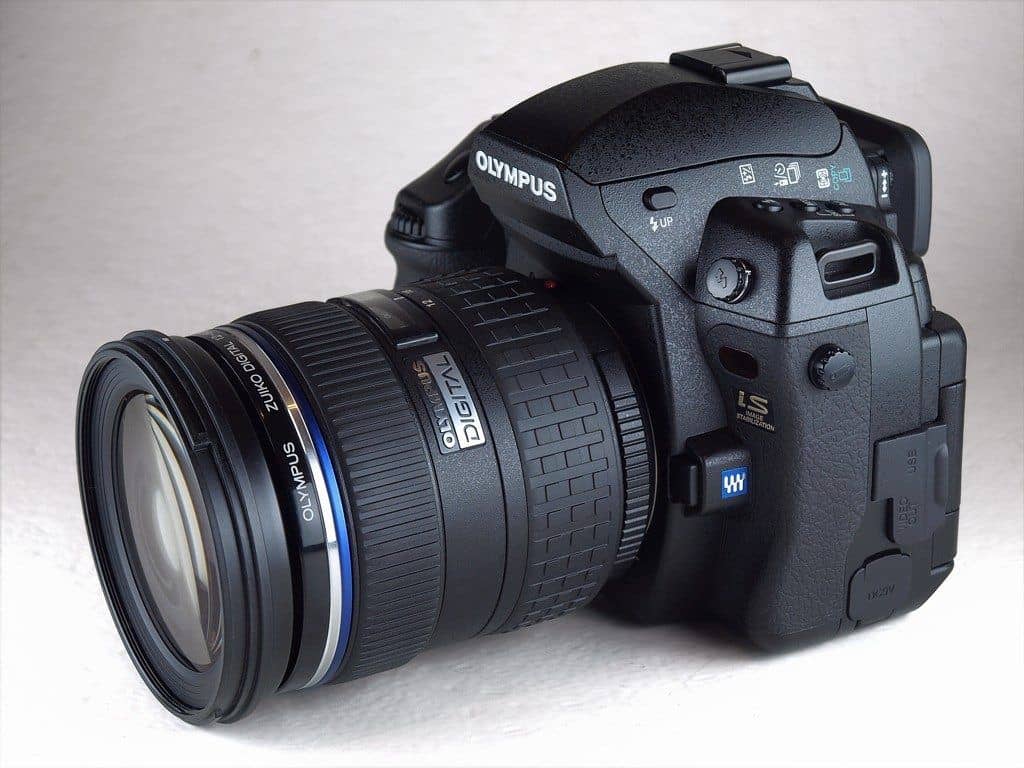
The Olympus E-3’s professional camera (SLR) looks “solid” in style with a sturdy magnesium alloy body with damp and dustproof capability with very tight cover.
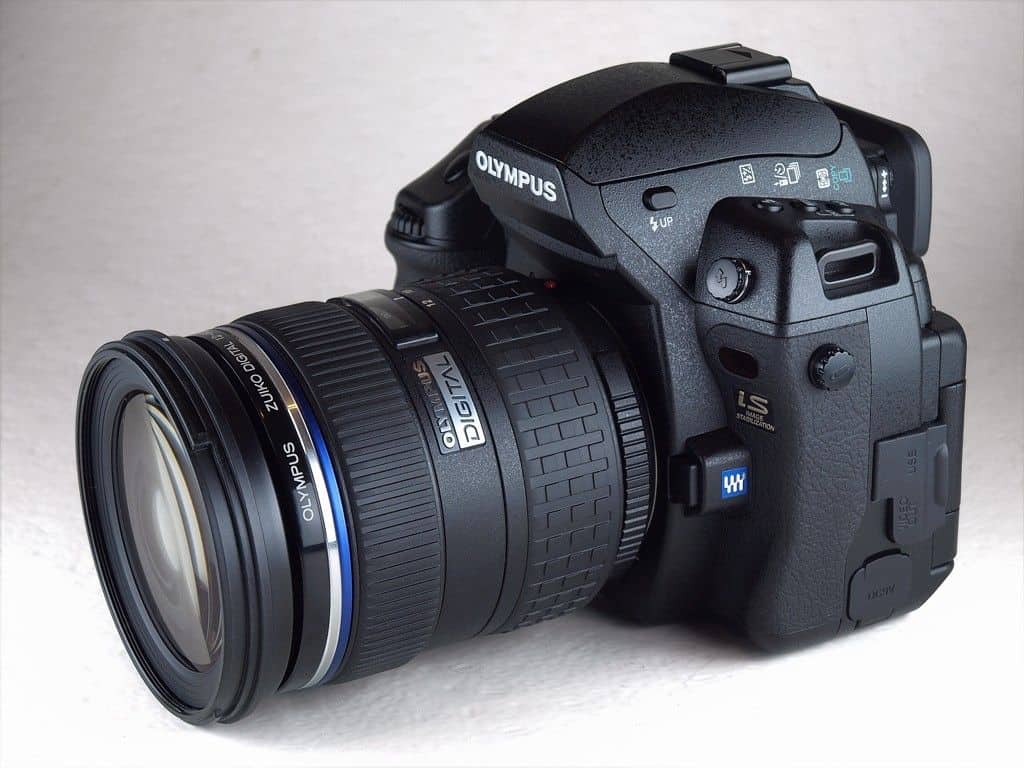
The Olympus E-3’s professional camera (SLR) looks “solid” in style with a sturdy magnesium alloy body with damp and dustproof capability with very tight cover.
The 10.1-megapixel camera uses the latest Live MOS sensor and the latest TruPic III processor, which prevents image shake on the sensor.
The test lens is the Olympus Zuiko Digital ED 12-60mm F2.8-4.0 SWD (equivalent to 24-120mm).
With an optical viewfinder that can be adjusted to go-on and full display of shooting parameters from pass / speed to white balance or ISO … very convenient. It is also very soft rubber coated so it is very pleasant to look at. The 2.5″ HyperCrystal LCD (230,000 pixels) can be rotated in two directions, which is very” beneficial “when you want to capture difficult angles, while the Live View feature displays 100% of the shots.
The camera also has a built-in dock option for taking pictures vertically, for external flash.
A large monochrome LCD on the top of the unit with all the details and a separate illumination if combined with the information in the viewfinder.
You also do not have to be afraid of dust when replacing the lens because Olympus has a Supersonic Wave Filter supersonic with a vibration of 30,000 times a second to wipe dust off the sensor.
The machine supports a variety of memory cards: CompactFlash I / II, Microdrive, xD.
High speed USB 2.0 interface, video output, direct charging port.
Battery-powered rechargeable BLM-1 Li-ion battery.
Olympus Evolt E-3 10.1MP Digital SLR Camera with Mechanical Image Stabilization (Body Only): Buy it now
Overview
Olympus’s flagship DSLR — built for people who cared more about durability and control than resolution numbers.
Design and build
Magnesium alloy, and it feels like it. This is a camera built to survive getting dropped, or at least to make you feel better about the risk. The grip holds up through a long day of shooting, and the controls sit close enough to the viewfinder that you’re not hunting for a button mid-shot. Weather sealing keeps dust and rain out. That’s not a spec-sheet checkbox if you actually shoot outdoors, it’s the difference between finishing the shoot and packing up the second clouds roll in. The screen rotates for awkward angles. Its resolution, though, hasn’t aged well.
Sensor and processor
10.1 megapixels looks small today, but back when this camera launched, it was plenty for professional prints. The Live MOS sensor gets colors right and holds detail, and the TruePic III processor speeds things along while keeping noise in check.
Autofocus and ISO
The 11-point cross-type AF locks on fast, even in tricky light, and stays sharp on moving subjects. ISO caps at 3200. Clean at the low end, a bit grainy at the top, but nothing that ruins a shot.
Image stabilization
Five-axis, in-body, and it works. Handheld shots and long lenses both benefit — less shake, sharper results, more shooting situations open up.
Usability
Manual and automatic modes both feel natural, and the menus stay out of your way. Live View shoots off the LCD instead of the viewfinder good for awkward angles, and the rotating screen only helps. Buttons are customizable, settings save, the kind of thing that matters once you’ve shot with this camera for a year and know exactly how you want it set up. Connectivity hasn’t aged well, though: USB and HDMI, no wireless in sight.
Canon’s 40D keeps pace on resolution and autofocus, pulls slightly ahead at high ISO, and has the bigger screen, but has no weather sealing and no stabilization. Nikon’s D300 shoots sharper and handles the dark better, at the cost of the sealed body and rotating screen. The Pentax K10D is close enough that the real deciding factor is just which one feels right in your hand.
Bottom line
Weather sealing, real in-body stabilization, and autofocus that doesn’t hesitate — that’s what the E-3 offers, and it’s still a solid choice for anyone shooting somewhere rough. It won’t match newer cameras on resolution or low light, and it has no wireless features to speak of, but if durability tops your list, it earns its place.
Related Posts

Tech Reviewer & Product Analyst
Định Bia has spent over 10 years testing consumer electronics with a focus on smart technology. He work as a product advisor at Biareview where he helped customers find the right devices for their needs. He personally tests every product featured on this site using a consistent evaluation framework covering quality, durability, and value. All reviews are based on experience, not influenced by the manufacturer.