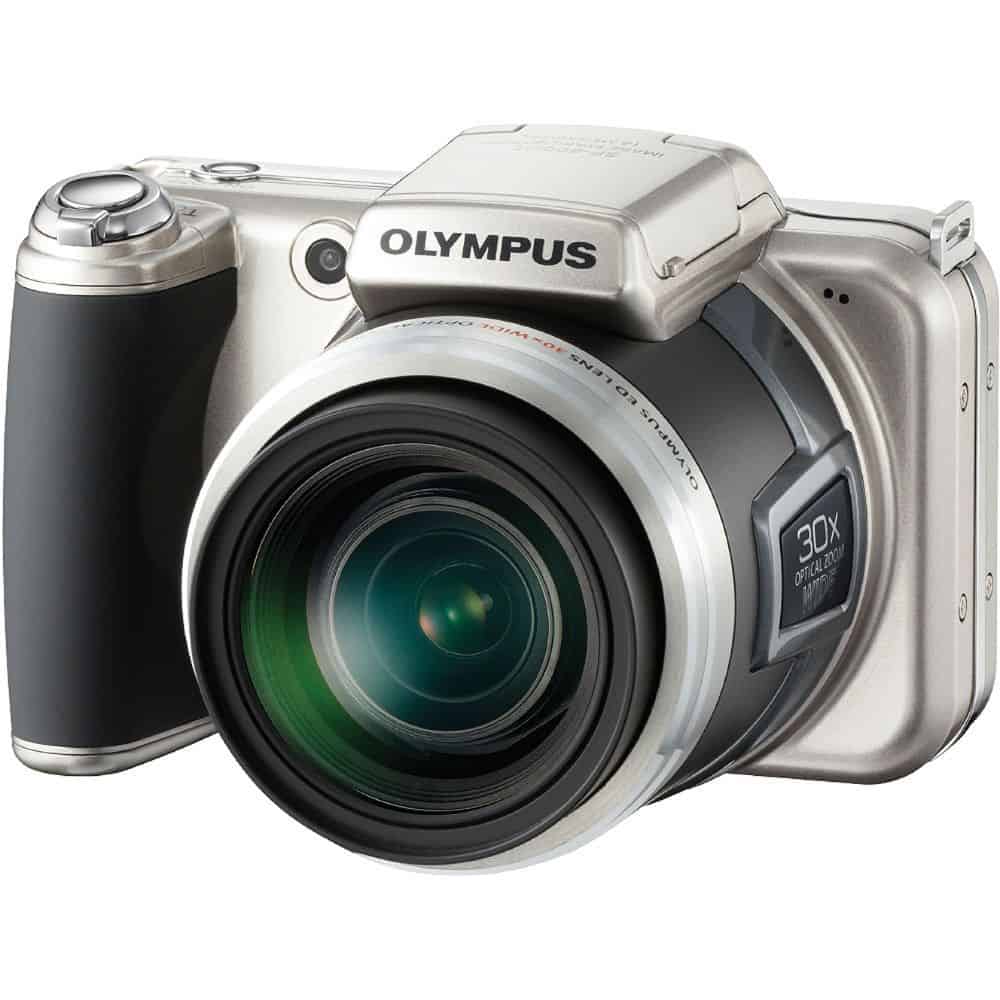
The SP-800UZ features the “Ultra Zoom-UZ” family of 2010, which simplifies usage and style; Highlights with an optical zoom of up to 30X (equivalent to 28-840mm) are supported with dual anti-shake technology.
The front features a 30X lens.
The top side with a streamlined control system, only the power button (ON / OFF), zoom and capture.
The back of the LCD is 3 “wide (16: 9) and the dedicated button for camcorder (orange) and below is a compact control system.
USB interface and high definition (HD) movies.
The “slender” hand grips and the tripod mount deflect to the battery compartment.
The machine uses SDHC cards, Li-ion batteries.
Olympus SP-800UZ 14MP Digital Camera with 30x Wide Angle Dual Image Stabilized Zoom and 3.0 inch LCD (Old Model): Buy it now
Design and Build
The SP-800UZ is plastic with a metal-like finish — gives it a sturdier feel than it really has. It’s 107 x 71 x 41mm, about 300 grams — small for something packing a 30x zoom, but you’ll still notice it’s chunkier than a regular point-and-shoot. Comfortable grip though, feels solid once it’s in your hand.
The contoured grip holds securely, controls sit where you’d reach for them. Mode dial on the right side. The back carries a 3-inch LCD and the usual menu, playback, and setting buttons. Layout makes sense, though smaller hands might find the body a bit much to wrap around.
The 3-inch LCD is 230,000 pixels — low-res these days, but bright and clear enough for framing shots and working the menus. Take it into direct sun and it starts to struggle.
The lens is the whole reason to consider this camera: 30x optical zoom, 28-840mm equivalent. Wide landscape one moment, something far off the next, no lens swap needed. Aperture’s f/3.5 at the wide end, f/5.4 at telephoto — nothing for low light, but that’s not why anyone’s buying this thing.
Performance
A 14-megapixel CCD sensor gives you enough for prints up to 11×14. Detail holds up; noise creeps in as you push the ISO higher. Solid enough for casual shooting.
Olympus’s TruePic III engine handles processing — accurate colors, decent noise reduction, responsive enough shooting and navigating menus.
Autofocus is contrast-detection, standard for this class of camera. Reliable on still subjects, slower than phase-detection, and it falls behind once something moves or the light drops.
You get full auto, a few scene modes (portrait, landscape, night scene), and a manual mode covering ISO, white balance, exposure compensation.
Image quality holds up well given the zoom range — sharp, vibrant in good light. Push the ISO and noise becomes noticeable; low light is where this camera shows its limits.
Video runs 720p at 30fps — clear, smooth footage for a compact. The mic does an okay job; want better audio, bring an external mic.
Battery covers a normal day of shooting. Heavy use means packing a spare, and actual runtime depends on how you’re using it.
Other Features
The whole interface is built to stay out of your way — mode dial, labeled buttons, a big LCD for framing and reviewing, though bright sun cuts into that.
Scene modes cover portrait, landscape, macro, night, and more, each tuning settings automatically so you don’t need much photography knowledge to get a good shot.
Face detection keeps faces sharp and properly exposed. Smile shutter fires on its own when it catches a smile — handy for candid shots.
Digital stabilization cuts down on camera shake, especially useful at long focal lengths or in low light. It’s not optical stabilization, so don’t expect the same results, but it helps.
Built-in flash covers close-ups and shadow fill, with auto, red-eye reduction, and fill flash modes.
Storage is xD-Picture Cards, not SD — less common now, though still findable and compatible with older Olympus cameras.
A few in-camera effects — black and white, sepia, other styles — for playing with looks without opening editing software.
Manual controls stay basic: exposure compensation, white balance, ISO. Enough to step outside full auto if you want to.
Bottom Line
The 30x zoom is why this camera exists — 28-840mm equivalent covers more ground than most compacts even attempt. Pair that with an easy interface, solid image quality, and HD video, and you’ve got a genuinely capable all-rounder.
Low light is weak, the LCD is basic, there’s no viewfinder. Manual controls don’t go very deep either, and xD cards are more hassle than they’re worth next to SD.
But if you want one camera that goes from a landscape to something far off without swapping lenses, and low light isn’t what you’re shooting, the SP-800UZ still holds up.
Related Posts

Tech Reviewer & Product Analyst
Định Bia has spent over 10 years testing consumer electronics with a focus on smart technology. He work as a product advisor at Biareview where he helped customers find the right devices for their needs. He personally tests every product featured on this site using a consistent evaluation framework covering quality, durability, and value. All reviews are based on experience, not influenced by the manufacturer.