Design and Build Quality
Dimensions and Weight
So the Sony Ericsson Xperia Active comes in at about 92 x 55 x 16.5 mm and it weighs roughly 110 grams. In practice that puts it in the smaller side of smartphones from that period, so it feels easier to grip and move around. That compact feel is good for people who want a lighter, smaller device, that can tuck into a pocket, or be worn on an armband while working out, pretty handy in the field.
Material and Construction
The Xperia Active leans hard into a rugged approach, really focused on durability and not panicking too much when you face rain, dust, or the usual daily chaos. The overall build kind of centers around a few key points like this:
Water Resistance: It’s rated IP67, basically dust tight and it can handle being submerged in water up to 1 meter, for around 30 minutes. Because of that, it works fine in wet weather situations and it suits activities where water contact is more than just a maybe thing.
Shock Resistance: This phone is built to live through bumps and drops , with reinforced corners plus a sturdy frame underneath. The notion is pretty simple, really , if you’re the kind of person who tosses their phone in a bag, or drops it now and again, the rugged look is supposed to cushion those hits and impacts.
Corning Gorilla Glass: On top of that, the display uses Corning Gorilla Glass. That helps the screen stay steadier against scratches and crack attempts. It’s also a useful detail for anyone who tends to accidentally drop the phone, or drag it around without much care.
Design Aesthetics
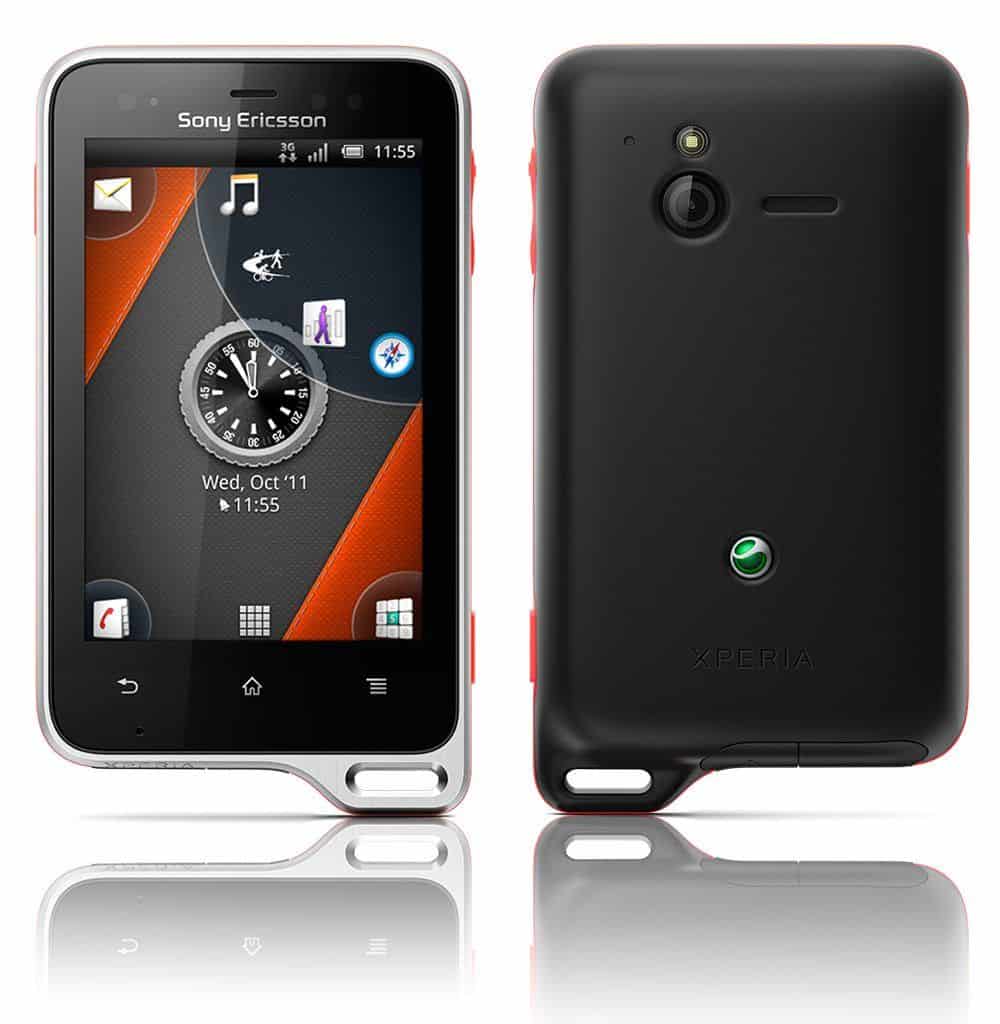
Visually, the Xperia Active looks practical, almost like it was built for function first, then style second. There’s a rougher outer layer, plus rubberized edges that give you extra grip. The physical buttons are tucked in pretty well and they’re placed where you can reach them quickly, without fumbling too much. And yeah, it’s sold in multiple colors—black, white, and orange—so you can pick something that feels right to you, even if the whole vibe is rugged.
Color Options
For the Xperia Active, the color options kind of do a nice job covering different vibes, from the tried-and-true black and white, to that brighter orange. In practice, these colors let you pick what fits your personal style, but the whole device still keeps that rugged kind of look, intact.
Display and User Interface
Screen Specifications
The Sony Ericsson Xperia Active comes with a 3-inch TFT touchscreen, resolution 320 x 480 pixels. It’s true, the screen size and the resolution aren’t huge by today’s standards , but for what this phone is meant to do, it was pretty workable.
Screen Quality: That 3-inch display gives pretty clear visuals for its size, with decent color accuracy plus brightness. The pixel density is about 192 pixels per inch, so day to day stuff looks sharp enough, still, when you try to view more detailed content you might notice some pixelation.
Touch Sensitivity: The touchscreen feels responsive, and the navigation doesn’t lag too much , at least in normal use. It also supports multitouch gestures which makes it easier to handle different functions without too much fuss.
User Interface
The Xperia Active runs on Android 2.3 Gingerbread, and it also uses Sony Ericsson’s own UI overlay, more or less.
Sony Ericsson UI: This custom layer brings extra features on top of the standard Android experience. It includes widgets, themes , and a home screen that’s adjusted so you can reach common apps and functions a bit faster.
Customization Options: You can personalize the home screens using multiple widgets like weather updates , calendar reminders, and social media style feeds. Overall, those customization options help you tune the device a little more to your preferences, and that makes the day to day experience feel smoother.
Performance
So the Xperia Active runs on a 1 GHz single-core Qualcomm MSM8255 Snapdragon , and it has 512 MB RAM. Back then sure, this looked okay , but compared to today’s phones it’s pretty much a more basic setup for performance.
Processing Power: This 1 GHz single-core chip does the job for normal stuff like browsing, social networking, and media playback. Day to day it feels reasonably smooth enough, but if you start throwing heavier apps at it , users can notice slowdowns sooner than they would on newer devices.
Memory and Storage: The Xperia Active comes with 512 MB of internal storage, and yes, you can add more with a microSD card, up to 32 GB. That expandable storage is useful because it gives more room for apps, photos, music , and various files.
Battery Life: There’s a 1200 mAh battery inside, and for its category it tends to last pretty decently. In typical use , meaning web browsing, calling, and streaming or playing media , it can usually cover a full day. Still, if you use it a lot, expect more frequent charging.
Heat Management: The device usually handles heat in a decent way, with only minor warming during regular routines. If you run intensive tasks for longer periods it can get warm, though performance drops are typically limited.
Camera and Multimedia
Rear Camera
The Sony Ericsson Xperia Active is fitted with a 5-megapixel rear camera , it includes autofocus and an LED flash too:
Image Quality: That 5 MP camera produces images with acceptable detail and decent color in good lighting. For casual photos and quick social media posts it does fine, but in low light it can be more limited, so results may look softer or darker than you’d hope.
Low light performance: the camera does ok, but in darker scenes it starts getting kinda rough… more noise, and less crisp detail than you’d hope. the LED flash helps a little, but you might notice uneven lighting , like some parts are brighter than others, and it’s not super consistent.
Camera software: on the Xperia Active the camera apps are pretty basic really. you get scene modes and some photo effects. the menus are simple and fairly friendly, so it’s not hard to tap, capture, and then organize your shots.
Video recording
Rear camera video goes up to 720p HD, so it’s limited, but still usable for the era.
Video quality: overall it’s satisfactory for the time, the footage looks fairly clear and stays reasonably sharp. you can also see Sony Ericsson’s software tweaks working in the background, which is helpful for smoothing things out.
Video software: there are options for video effects, plus basic editing tools. so users can improve what they recorded and make small adjustments without much hassle.
Front camera
The Xperia Active has no front-facing camera, so that means no self portraits and it’s awkward for video calls. this absence stands out, especially since front cameras were becoming more common on smartphones in the early 2010s, almost everywhere, by then.
Multimedia features
The Xperia Active kinda brings a bunch of multimedia options, like , music, radio, and video, all together in one place , so it feels not too limited.
Music player: It comes with a music player that handles several audio formats, like MP3 and AAC. There’s a fairly easy interface for handling tracks and tunes, plus you can make playlists and go through the media library without too much hassle.
FM radio: There is also an FM radio so you can catch live broadcasts. The FM radio even supports RDS (Radio Data System) which adds extra details such as station info and broadcast context.
Video playback: For videos, the device supports playback for multiple formats, including MP4 and AVI. The 3-inch screen gives a decent look for its size, yet if you’re after a larger display, you might feel kinda boxed in , depending on what you watch.
Connectivity and network
Network support
The Sony Ericsson Xperia Active works with 3G networks, specifically HSDPA, and that gives you decent bandwidth for browsing, streaming, and other online tasks:
3G connectivity: This support helps with pretty smooth data exchange and internet access. Still, it lacks 4G LTE support so as network tech moves ahead, your speeds and options could feel more restricted over time.
Bluetooth Connectivity
So the Xperia Active has Bluetooth 2.1 for wireless connections, and yes it does work pretty well overall. Pairing is not really a big deal , users can link it up with headsets, portable speakers and other compatible devices. The link stays steady, and it seems reliable enough for audio streaming and also for moving files around.
For Audio Streaming, the device can stream audio over Bluetooth to compatible gear , which is helpful if you want to listen to music or you need hands-free calling. It’s kind of like convenient listening on the go, without the hassle.
USB Connectivity
On the USB side, there is a microUSB port , mainly for data transfer and charging. With Data Transfer, the microUSB helps with syncing with a computer, sending over files, and keeping the phone powered. It works with standard USB cables and usual accessories, so you don’t have to hunt for anything special.
Charging is also supported through the microUSB port at typical charging speeds. There’s a charger included in the box, so users can start charging quickly and just get on with it, without waiting.
Wi-Fi and GPS
Wi-Fi: The Xperia Active also comes with Wi-Fi 802.11 b/g/n, so you can tap into wireless internet for browsing and other online things. This gives a pretty dependable link when you’re on internet services, plus it can help cut down on mobile data usage, which is a good bonus.
GPS: The device includes GPS too for location based features and navigation. GPS performance feels accurate and steady, so it should work smoothly with most common map and navigation applications.
Software and User Experience
Operating System
The Xperia Active runs on Android 2.3 Gingerbread, plus Sony Ericsson’s own custom UI overlay which kinda makes it feel different from plain Android. Sony Ericsson UI: this custom layer adds extra upgrades to the typical Android experience, like home screens that can be tweaked, plus widgets and themes. The whole interface is meant to feel easy, and rather intuitive too, with fluid movement, smooth transitions and a lot of animations that look pleasing.
Performance
Overall, the Xperia Active handles stuff in a way that matches what the specs suggest. it manages day to day actions , like web browsing, social apps, and media playback , with reasonable efficiency:
App performance, for everyday stuff it kinda works fine, but as soon as you go into heavier tasks, or juggling multiple apps at once, you might notice a bit of stutter or slowing , not sure. The 1 GHz single core processor along with 512 MB of RAM is ok for basic use, yet it’s not really designed for the more demanding kind of multitasking.
System Updates: It shipped with Android 2.3 Gingerbread, and although Sony Ericsson rolled out updates to the custom UI, the Android version itself stayed stuck. because there were no upgrades to newer Android releases, users don’t get the later features, and also miss out on security fixes that come with newer releases.
User Feedback
What people say about the Xperia Active is mostly positive. Many users like the sturdy, rugged build, and the overall durability. The water- and shock-resistance is a big reason it suits an active lifestyle, especially for people that want less worry around daily rough use. Still, some users mention that performance can feel limited sometimes, and also that there’s no front-facing camera , which is inconvenient for selfies and video calls.
Market Impact and Legacy
Market Position
The Sony Ericsson Xperia Active was kind of placed in the market as a rugged smartphone for people with an active lifestyle , you know. It had this durability and a fairly compact body size that really helped it look different compared to other devices in the Sony Ericsson lineup, and it basically catered to folks who wanted a dependable phone for the outside life and fitness routines.
Target Audience: It was aimed at users who needed a phone that can handle environmental trouble like water, dust, and everyday physical knocks, all that kind of stuff. That means outdoor enthusiasts, athletes, and also people who are often doing activities that are pretty physically demanding, even if it’s not “sport” exactly.
Competitors: The Xperia Active had to deal with other rugged smartphones and more outdoors oriented devices. Even so, it still managed to stand out a bit, mainly because of the water resistance and the shockproof style design, which gave it a clearer angle in a pretty specific market niche.
Sales and Popularity
The Xperia Active got a positive response, mostly tied to its rugged build and real day-to-day durability. The small size plus the specialized features were a strong match for users who wanted a smartphone that could handle rough conditions. That said, its performance specs were kind of modest, and the limited support for future software updates might have held back its wider market success, overall.
Sales Performance: The Xperia Active’s sales really got shaped by what was going on in the smartphone world, like competition and all those shifting technology trends. It did get noticed for being tough, sure, but it kinda struggled to grab a wider chunk of the market, mainly because newer phones showed up with more advanced specs and a lot more feature rich options.
User Adoption: The device ended up with a loyal little crowd, especially among people who cared about ruggedness and dependable operation. The distinctive design choices, plus its practical features, added to why folks would pick it, yet there were also limitations in how it performed and a lack of more advanced capabilities, so for the more tech-savvy audience, it may have felt a bit too plain, and that likely kept adoption from spreading as much.
Legacy
The Sony Ericsson Xperia Active still has a noticeable spot in Sony Ericsson’s story, because it was one of those early rugged smartphone moves. In a way, it showcases the brand’s attempt to answer the needs of users who wanted a device that’s durable, resilient, and doesn’t fold easily under pressure.
Design Influence : The Xperia Active’s tough build, basically became a reference point for later rugged phones, pushing future models to go for stronger construction and higher resistance in harsh environments, in a sort of quiet, persistent way.
Technological Advancements: Even if the Xperia Active was very much a product of its moment, its overall layout and feature set pointed to the rising expectation that smartphones should handle extreme conditions. That expectation is still around now, you see many brands offering rugged devices for outdoor work, and industrial tasks too, almost like it never went away.
Conclusion
The Sony Ericsson Xperia Active kinda felt like a pioneering thing, a rugged smartphone meant for people who live actively and also want durability , not just another shiny slab. Its small size, water and shock resistance, and overall tough build kinda made it a sensible pick for anyone needing a phone that can take rough conditions without panicking.
Strengths
Durability: The Xperia Active’s water and shock resistance, plus the reinforced body, made it a good fit for outside use and physically demanding routines.
Design: The device’s compact, functional layout along with its rugged features gave it this uncommon place in the smartphone space.
Customization: The custom user interface and the personalization options let users shape their own experience, more or less like they wanted.
Weaknesses
Performance limitations: The device had a single-core processor, plus limited RAM , so day to day it felt okay but when you tried more demanding apps or did heavy multitasking it got a bit sluggish.
Camera quality: The rear camera worked well enough for casual shots, yet in low light it was kind of hit or miss. Also there was no front facing camera , which meant no real video calls , and the whole self-portrait option was basically off the table.
Software updates: Because the Xperia Active stuck with Android 2.3 Gingerbread , in a fixed way, people were left out of later features and security improvements that came with newer Android versions.
In summary, the Sony Ericsson Xperia Active is kinda an important stepping stone for rugged smartphones. It leaned hard on durability, a compact build, and a few specialized functions, showing Sony Ericsson was aiming at folks who needed something tough and dependable. Sure, it had bumps with performance and it also struggled with market adoption, but the legacy still stands , as a clear example of experimentation and progress in the rugged smartphone category.
Sony Ericsson Xperia Active ST17i Black WiFi Android 3G Cell Phone: Buy it now



Tech Reviewer & Product Analyst
Định Bia has spent over 10 years testing consumer electronics with a focus on smart technology. He work as a product advisor at Biareview where he helped customers find the right devices for their needs. He personally tests every product featured on this site using a consistent evaluation framework covering quality, durability, and value. All reviews are based on experience, not influenced by the manufacturer.