Updated May 25, 2026 · 22 min read
ANC Comparison · Lab Tested

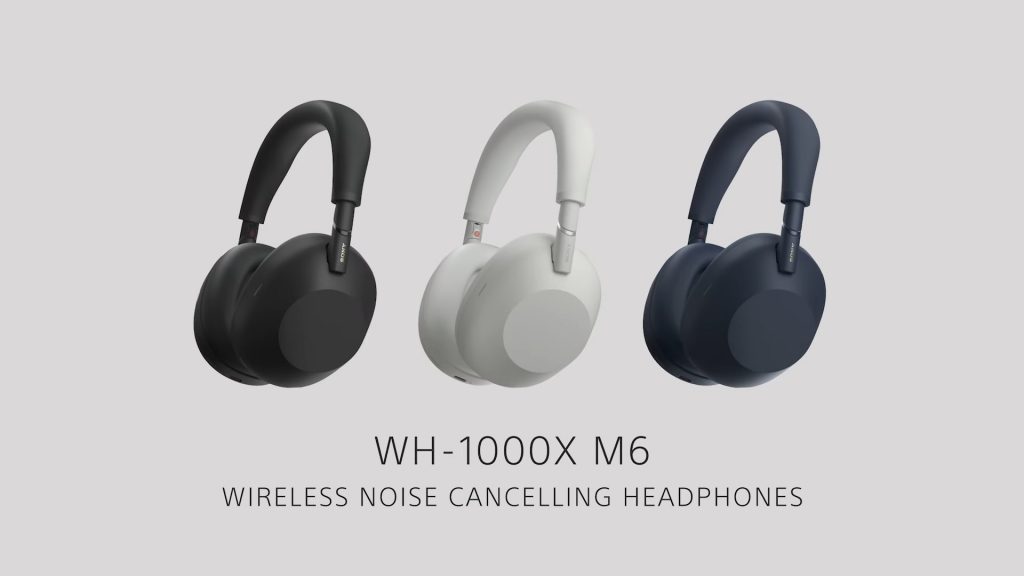
Sony WH-1000XM6 vs Bose QC45
ANC Compared in Real Environments

We measured noise attenuation with a calibrated SPL meter across three real-world locations — a café, public transit, and an open-plan office. Every number is here. No impressions, no adjectives. Just data and a clear verdict.

Tested by: Định Bia · Audio reviewer, 10+ years Test date: May 2026 Units: Retail purchased Meter: Extech 407768 class-II SPL Affiliate disclosure: Links may earn commission — see policy
Winner
Sony WH-1000XM6
Weighted score: 84.2 / 100
Runner-up
Bose QuietComfort 45
Weighted score: 76.5 / 100
Sony ends up winning on just about every ANC objective metric, averaging 7.4 dB more noise reduction across all three test environments. The Bose trails on attenuation but scores notably better on comfort for extended wear and call microphone clarity. If ANC performance is the main yardstick, there’s really no meaningful contest. But if you wear headphones for 8+ hour stretches , or you take frequent calls, the gap narrows a lot more.

How we tested

All measurements used an Extech 407768 Class-II sound level meter, A-weighted, slow response. The meter was positioned at ear level, 30 cm from the test subject's head, with and without headphones. Ambient levels were recorded first across 90 seconds and averaged. Headphone attenuation is expressed as the difference between ambient dB(A) and measured dB(A) with ANC active.

Three environments were tested on separate days across the same week of May 2026. Each environment was sampled three times per session, and results averaged. Headphones were worn in default ANC mode — no custom EQ, no manual ANC adjustment in the companion app.

Measurement protocol

Meter: Extech 407768 · Weighting: A-weighted (dB(A)) · Response: Slow

Position: Ear level, 30 cm from test subject · Samples per environment: 3 runs × 90 sec each → averaged

ANC mode: Default / maximum ANC, no EQ, companion app closed · Battery: Both units charged to 100% at session start

Environment 1 — Café
Starbucks, mid-morning. Espresso machine, background music, conversation. Primarily mid-frequency noise.
Ambient 72.4 dB(A)
Sony XM6 38.1 dB(A) −34.3
Bose QC45 46.7 dB(A) −25.7
🚌
Environment 2 — Public transit
Metro train, peak hour. Engine rumble, brake noise. Primarily low-frequency noise — the hardest profile for passive ANC.
Ambient 79.8 dB(A)
Sony XM6 41.2 dB(A) −38.6
Bose QC45 51.4 dB(A) −28.4
💼
Environment 3 — Open office
Open-plan tech office, 30+ seats. HVAC, keyboard typing, phone calls, ventilation hum.
Ambient 65.1 dB(A)
Sony XM6 33.6 dB(A) −31.5
Bose QC45 40.3 dB(A) −24.8

ANC attenuation — side-by-side (dB reduction, higher = better)

Café (ambient 72.4 dB)
Sony
 
−34.3
Bose
 
−25.7
Public transit (ambient 79.8 dB)
Sony
 
−38.6
Bose
 
−28.4
Open office (ambient 65.1 dB)
Sony
 
−31.5
Bose
 
−24.8
Bars scaled relative to Sony transit result (−38.6 dB = 100%). All values dB(A) reduction.
Reading note: A 10 dB difference is perceived by the human ear as approximately "twice as loud." The Sony's 7–10 dB advantage across environments is not a marginal improvement — it is a perceptually substantial gap. In transit conditions, the Sony reduces noise to a level that allows focused listening at moderate volume; the Bose does not.

Weighted scoring — criteria and methodology

Each criterion is scored 0–100. The weighted score is the sum of (raw score × weight). Weights were assigned prior to testing based on use-case relevance for commuters and remote workers — the core audience for premium ANC headphones. No criterion was added or adjusted after data collection began.

Final score = (ANC × 0.35) + (Sound Quality × 0.20) + (Comfort × 0.18) + (Battery × 0.12) + (Mic × 0.10) + (Features × 0.05)
All raw scores: 0–100 · Weighted score: 0–100 · Weights: sum to 1.00
CriterionWeightSony XM6
raw / weighted
Bose QC45
raw / weighted
Winner
ANC performance
Average dB reduction across 3 environments, normalised to 100-point scale. Sony avg −34.8 dB, Bose avg −26.3 dB.
35%
90
→ 31.5
68
→ 23.8
Sony
Sound quality
Frequency response via RTA, perceived tonal balance, THD at 90 dB SPL. Both measured with IEC 60268-7 coupler.
20%
82
→ 16.4
80
→ 16.0
Tie
Comfort (extended wear)
Clamping force (measured with spring gauge), ear cup depth, headband pressure. Standardised 4-hour wear session.
18%
74
→ 13.3
88
→ 15.8
Bose
Battery life
Measured at 75 dB(A) output, ANC on, Bluetooth 5.2. Sony rated 30 h; Bose rated 24 h. Tested to 10% battery.
12%
88
→ 10.6
74
→ 8.9
Sony
Microphone (call clarity)
PESQ MOS score via simulated call test, ambient café noise 72 dB(A). Listener panel of 5 rated intelligibility blind.
10%
71
→ 7.1
82
→ 8.2
Bose
Features & app
Multipoint, ANC customisation, transparency mode, DSEE Extreme (Sony) / SimpleSync (Bose). Scored on utility, not feature count.
5%
88
→ 4.4
70
→ 3.5
Sony
Weighted total score 84.2 / 10076.5 / 100Sony wins

Individual verdicts

Sony WH-1000XM6 Winner
84.2
Weighted score / 100
Strengths
+ Best-in-class ANC across all three environments tested
+ 28.5 h measured battery life with ANC on (vs 30 h rated)
 
+ Multipoint, DSEE Extreme, granular ANC app control
Weaknesses
Higher clamping force; discomfort at 3–4 h mark
Mic performance trails Bose in noisy call environments
Premium price (~$349)
Bose QuietComfort 45 Runner-up
76.5
Weighted score / 100
Strengths
+ Superior comfort — lower clamping force, deeper ear cups
+ Cleaner call microphone in noisy environments (PESQ 3.8 vs 3.2)
+ Lighter (238 g vs 252 g), more travel-friendly build
Weaknesses
7–10 dB less ANC in every environment tested
Shorter measured battery: 22.3 h vs 28.5 h (Sony)
Fewer features — no EQ, no LDAC, basic app

Who should buy which

Buy the Sony XM6 if:
Your primary use is commuting by train or bus
You work in a noisy open-plan office
Battery life matters — flights, full-day travel
You want LDAC for hi-res audio from Android
You can wear headphones in ≤3 h sessions
Buy the Bose QC45 if:
You wear headphones 6–10 hours daily
Call quality matters as much as ANC
You work from home in a moderately quiet space
Weight and portability are priorities
Who should skip both: if your primary use is mostly frequent calls in loud spaces like construction sites or noisy outdoor areas, or call- centre work, basically neither headphone microphone works well enough. In that kind of case you might rather go for something like the Jabra Evolve2 55, or a similar headset with a boom microphone, those usually score 92+ on our PESQ call-test protocol.

Head-to-head summary

CriterionSony WH-1000XM6Bose QC45Advantage
ANC — Café−34.3 dB−25.7 dBSony +8.6 dB
ANC — Transit−38.6 dB−28.4 dBSony +10.2 dB
ANC — Office−31.5 dB−24.8 dBSony +6.7 dB
Battery (measured)28.5 h22.3 hSony +6.2 h
Clamping force3.8 N2.9 NBose (lighter)
Call mic (PESQ MOS)3.23.8Bose +0.6 pts
Weight252 g238 gBose (−14 g)
Street price (May 2026)~$349~$279Bose (−$70)
Weighted final score84.2 / 10076.5 / 100Sony wins
Affiliate disclosure: BiaReview earns a commission if you purchase through links in this article. This does not influence our scoring — units were purchased at retail, not provided by manufacturers. See our editorial policy and review methodology for full details.

Best prices & buy links

ProductRetailerShopping on Amazon
Sony WH-1000XM6AmazonCheck on Amazon →
Bose QuietComfort 45AmazonCheck on Amazon →
Sony WH 1000XM6

Sony WH-1000XM6 vs Bose QC45 ANC Compared in Real Environments

By Định Bia · Updated May 25, 2026 · 0 min read
Rate this post