
Design
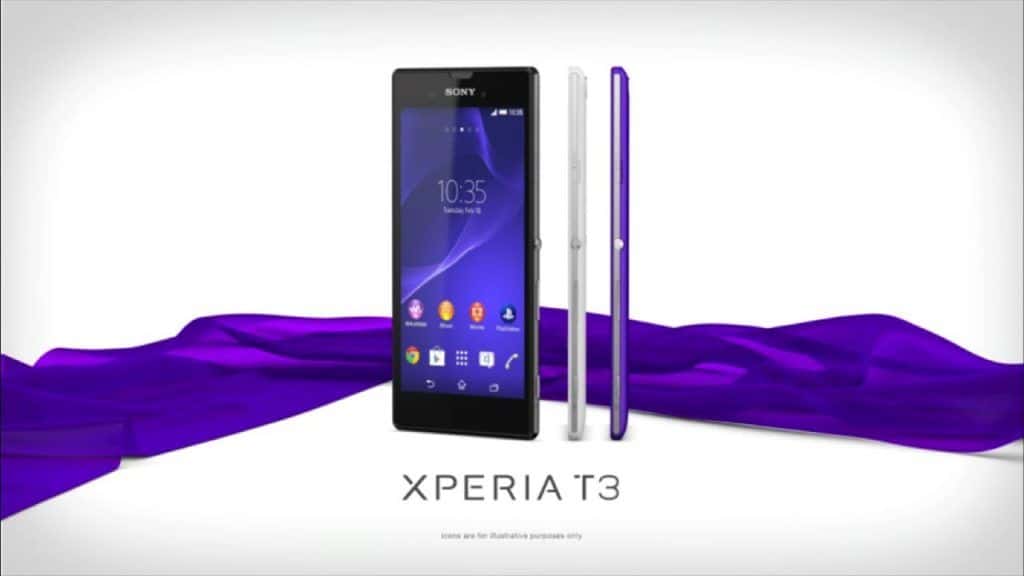
Sony still holds the Omni Balance design on the Sony Xperia T3, which has many similarities to the Sony Xperia T2 Ultra. Owning a 5.3-inch screen, but due to the thick bezel makes the machine size increase significantly, while the white version will reveal the border is quite rough feeling compared to the overall design. This is also the second version after the Sony Xperia M2 uses the same color glass on the white version.
Above the front we have a speaker phone, the front camera is only 1.1 mpx with the sensor. What I do not like most about the design of the Xperia T3 is the bottom edge of the screen. Despite the wide margin but Sony did not make use of them to put three touch buttons that put these three buttons into the screen so that the actual use area is reduced.
The back of the Xperia T3 is made of rough plastic and hand-grip when held, no slippery feel even though the machine is designed to be only 7 mm thin. The camera behind the resolution of 8 MP with the flash is placed in the left corner, the middle of the machine is the NFC logo, the manufacturer logo and the words XPERIA.
The minus sign in the back design is the position of the speakerphone. There are many smartphones on the market that are “complain” because of the layout of the speakers on the back, when users listen to music with this speaker and put the machine on the table, the sound quality will be greatly reduced.
The biggest plus of the Xperia T3 is the border of the screen surrounded by shiny steel. The use of steel material also makes the frame more stable, limiting scratches than the metal frame on the Xperia Z2.
Screen
The Xperia T3 uses a 5.3 “TFT LCD screen, IPS resolution HD resolution (720 x 1,280 pixels), 277 ppi pixel density, but still produces good images using Triluminos technology and BRAVIA Engine 2. This is also technology applied on Bravia TV products.
The actual test shows that the images displayed on the Xperia T3 screen are eye-catching, fonts and icons without the phenomenon of porosity and brightness is quite good. You can comfortably watch movies on your computer screen without worrying about display quality issues.
In fact, the angle of the Xperia T3 is better than the Xperia M2. However, when you tilt the camera around an angle of> 30 degrees, the color has a bias yellow phenomenon.
Display
a. Screen Specifications
The Xperia T3 comes with a 5.3-inch IPS LCD display, running at 720 x 1280 pixels. Because of that, the pixel density comes to about 277 PPI , or pixels per inch. The overall screen size feels pretty big too, so it creates this immersive feel for a bunch of tasks, like scrolling around and media playback.
b. Display Quality
In terms of display quality the Xperia T3 is rather decent, especially since it sits in the mid-range class. The IPS LCD panel keeps colors looking believable and contrast pretty solid , so the visuals feel pleasant overall. Sure, 720p isn’t as razor sharp as Full HD or those higher setups, but it still works well for most people. Indoors the brightness is fine, still, in direct sunlight you may notice it losing a bit of punch.
c. Brightness and Outdoor Visibility
The Xperia T3 screen handles different lighting conditions in a reasonable way. Indoors, the brightness level is enough , and outdoors it stays readable, even if glare can become a nuisance when the sun is strong. The IPS design also helps with viewing angles, so the screen doesn’t just “fade” when you’re not staring straight at it.
d. Touch Sensitivity
Touch performance on the Xperia T3 is responsive and pretty on point. The touchscreen supports multi-touch gestures, and the interaction with the OS plus apps feels smooth. Overall it’s dependable, with little noticeable lag, so actions register quickly and without weird hesitation.
SONY XPERIA T3 D5103 8GB 8G LTE 4G INTERNATIONAL VERSION NO WARRANTY – BLACK: Buy it now
SONY XPERIA T3 D5103 8GB 8G LTE 4G INTERNATIONAL VERSION NO WARRANTY – WHITE: Buy it now
Performance and camera
So, for a mid range device, the Xperia T3 s setup is kinda modest, like noth ing too crazy. It has a 1.4GHz quad-core Snapdragon processor, pretty much like the Xperia T2 Ultra, plus 1GB of RAM. The rear camera sits at 8 megapixels , and the front one is 1.1 megapixels. For the storage, you end up with 8GB of internal memory, and a 2,500mAh battery as well.
The whole phone runs Android KitKat 4.4, and it uses the same kind of Sony interface as the other Xperia models. In the Personalization section it looks a bit simplified, and some things are scaled down, like, if you click the Home button twice, to pull the notification bar it may not feel as responsive as you’d expect.
Honestly, the Xperia T3 isn’t really aimed at selfies, because Sony stuck with just a 1.1 megapixel front camera. On the back side, the 8 megapixel camera comes with Exmor CS technology and Sony CMOS sensor stuff.
When I tried the main camera in decent light, it gave me fresh, detailed color photos, you know the kind that look clean. But outside, the sun’s color ends up pale, and the brightness is kind of the weak point here. The colors don’t look fully true, plus you notice a lot of “grain” when scenes get tricky or darker.
All in all, the Xperia T3 is a solid match for people who want a large screen smartphone, with a polished, stylish and elegant design, and it stays light at only 148g.
Battery Life
a. Battery Specifications
The Xperia T3 comes with a non- removable 2,500 mAh battery. Honestly, that capacity is on the smaller side, yet it’s meant to hold up through a day of regular routines. The whole idea is to keep performance fairly steady while also not draining power too fast, so the result is a fairly decent battery life for a mid-range phone.
b. Battery Performance
Battery behavior on the Xperia T3 is, in most cases, pretty enough. You can usually get through a full day of normal use, especially if you’re doing stuff like browsing , checking social media, and streaming or playing light media in between. If you go heavy—constant apps, lots of screen time , and more demanding tasks—then you might want to recharge before the day fully ends. Still, it tends to feel steady and dependable for most people.
c. Charging Speed
The Xperia T3 uses standard charging, with a typical turnaround of about 2 to 2.5 hours from low power. There’s no advanced fast-charging feature here, so if you’re in a hurry, plan a longer recharge window. In its era, the charging speed is fairly competitive, even if newer models now come with rapid charging that can restore power much sooner.
d. Power Management Features
The device comes with several power management features , meant to help battery life in a better way. In practice, users can reach battery saver modes , tune screen brightness , and also handle background applications more carefully so the battery performs longer. Taken together, these tools help people stretch their battery endurance and control energy usage more effectively, yes, without too much hassle.
Software and User Experience
a. Operating System
The Xperia T3 shipped originally with Android 4.4.2 KitKat, plus a customized Sony UI overlay. This software foundation supports a steady and usable day-to-day experience, with a bunch of options and improvements that are tuned around Sony’s own hardware.
b. User Interface
On the Xperia T3, Sony UI gives a tidy, adjustable user experience. You’ll find multiple Sony-specific features , including custom widgets, theme layouts and also built-in apps. Users can customize their home screens, change the settings quickly, and jump into different themes to make everything feel a bit more personal. Overall, the software feels fluid and easy to navigate, it leans heavily into being user friendly , even when you are doing basic tasks.
c. Performance and Stability
In terms of software, the Xperia T3 is usually stable, and it tends to stay smooth during most activities. The phone uses a customized version of Android , so it includes extra functions and improvements while still keeping things relatively clean visually. Users can generally count on a dependable and enjoyable routine, with updates that sometimes arrive to fix issues, boost performance a little , and add some new capabilities along the way.
d. Updates and Support
The Xperia T3 initially got regular software updates , things like security patches and small performance tweaks. That said, the ongoing support can feel a bit narrow , because newer models have rolled out and manufacturers tend to shift priorities. For people who are really after the newest Android features and ongoing updates , the situation might be less than ideal. Still, the phone keeps working fine, and for most users it delivers a pretty decent, steady experience overall.
Connectivity
a. Network and Signal
The Xperia T3 brings 4G LTE connectivity, so mobile data usually feels quick enough for everyday use. It also handles 3G and 2G networks, which is useful when you’re in places where coverage is spotty or older infrastructure is common. In general, signal reception is pretty good , and connections stay stable in most situations. Of course, network behavior may change based on your provider and where you are geographically.
b. Wi-Fi and Bluetooth
When it comes to Wi‑Fi, the Xperia T3 is fairly solid , delivering stable and dependable connections for most routine tasks. Wi‑Fi is fine for streaming video, browsing, and general online services, though speeds can swing depending on Wi‑Fi quality and the actual signal level you have. In practice, this means you can keep internet access consistent at home, and in many public spots too.
Bluetooth 4.0 is supported , which lets you link up with plenty of Bluetooth devices, like headphones, portable speakers, and even smartwatches. The Bluetooth experience is usually dependable , with decent connection stability and a workable range. Pairing tends to be simple, and Bluetooth works well for audio playback and data sharing, without too much drama most of the time.
c. GPS and navigation
The Xperia T3 comes with GPS built in, so it can do location tracking, and it helps with navigation in general. In day to day use, GPS performance is usually quite decent, like it gets you dependable positioning for maps apps and other location based functions. Also there is A‑GPS , (Assisted GPS) which is meant to speed things up, and it boosts accuracy, particularly in places where the satellite signal is not great.
That said, the GPS side on the Xperia T3 is still kind of “fine” rather than being truly cutting edge or anything. Newer phones often bring extra, or more sophisticated, location technologies, so things feel smoother in real use. Still, for normal navigation tasks this handset is a practical choice and the whole experience is pretty satisfactory for most folks who just want basic GPS functionality, nothing too complicated.
d. USB and charging ports
On the Xperia T3 you get a micro‑USB 2.0 port, used for both charging and data transfer. It’s a standard USB setup for its time, so the transfer speeds are what you’d expect, and it lets you connect the phone to PCs, chargers, and various accessories. The same micro‑USB port also supports USB OTG (On‑The‑Go), so you can attach external storage, and even some keyboards and similar add ons.
Having USB OTG is a nice bit of extra flexibility, because it basically widens what you can connect and use on the phone. The micro‑USB port itself is also pretty common for that smartphone era, so you get broad accessory compatibility, and fewer “will this cable work?” situations.
Audio
a. Speaker Performance
The Xperia T3 comes with a single bottom firing speaker, so the audio is pretty decent for everyday things. You get sound that is clear enough and basically adequate for phone calls , alerts , and regular media playback. It probably won’t give you that deep , lush tone you see on more expensive phones that use advanced audio tech, but it still goes along well for casual listening and typical sound needs.
b. Headphone Output
There’s a 3.5mm headphone jack on the device, which makes it easy to hook up whatever wired headset or earbuds you already have. In general the headphone output sounds good for music and video, and it gives a fairly detailed presentation. Still, the fidelity may not match newer devices that use better audio components or more polished tuning , but for most people it feels usable and satisfying.
c. Call Quality
On calls, the Xperia T3 usually does a solid job , with audio that stays clear and interference that stays pretty low. The mic and speaker pairing works well for voice conversations, so you can expect steady performance in most settings. Of course, call quality can be influenced by network coverage, plus signal strength, but overall it gives a reasonable experience for daily communication.
Conclusion
The Sony Xperia T3 i s, in a way , a pretty solid mid-range smartphone, it brings together a nice mix of style, day to day performance, and value. Launched back in 2014, it felt mostly made for people who wanted something that hits that middle point , between what it can do and what it costs. The overall look is sleek enough, the display is decent, and the fact that storage can be expanded makes it a sensible pick for anyone shopping the mid-range slice.
The Xperia T3’s design and overall build quality are honestly pretty admirable, with a slim silhouette and a polished kind of look. That 5.3-inch display, sure it isn’t the sharpest resolution around, but it still manages respectable color fidelity and contrast , particularly if you compare it to similar phones in that same price band. For everyday pace, performance is fine for routine stuff , the Snapdragon 400 chipset together with 1 GB of RAM keeps everything moving in a dependable manner for regular use, not really flashy but also not annoying.
Camera side of it , you get decent results for casual snapshots, with solid image quality when the light is good. Battery life is usually enough to get you through a full day of moderate activity, and the expandable storage adds a bit of extra room later on. On software it also stays steady, with a clean interface, and features you can tweak without too much hassle , nothing overly complicated.
Sure, the Xperia T3 does miss a few advanced features you’d expect from higher-end models. But it still works as a practical option for users who want a mid-range smartphone, that also looks stylish and performs in a dependable manner. With competitive pricing, and a strong value for money, it becomes a fairly convincing choice for those who care more about affordability and real utility than premium extras.
Overall, the Sony Xperia T3 reflects a balanced compromise between design, performance, and cost, so it’s a noteworthy option in the mid-range smartphone market. If you are looking for a device that combines style with practicality, then the Xperia T3 remains , still relevant, and overall appealing.
Related Posts


Tech Reviewer & Product Analyst
Định Bia has spent over 10 years testing consumer electronics with a focus on smart technology. He work as a product advisor at Biareview where he helped customers find the right devices for their needs. He personally tests every product featured on this site using a consistent evaluation framework covering quality, durability, and value. All reviews are based on experience, not influenced by the manufacturer.