Advantages
– Luxury and different designs.
– Excellent display.
– Great performance in the segment.
– Comfortable battery life 1 day.
– MIUI many customizable, smooth.
– Camera improves, removes fun fonts.
Defect
– Poor recording quality of video recording
– Easy to scratch camera border.
– Remove 3.5mm headphone port.
– Non-waterproof IP67 / 68.
Design and separate screen between all copies
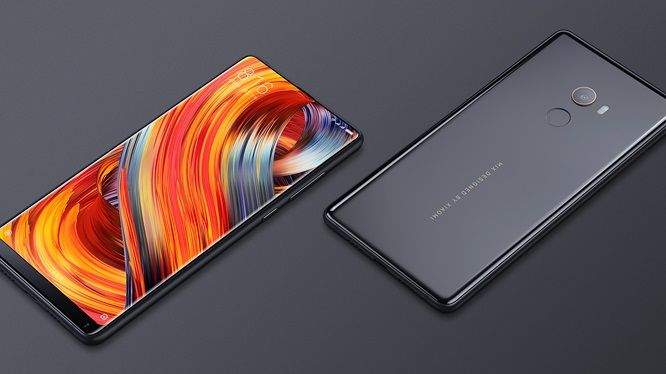
Holding the XiaoMi MIX 2S in the palm, the flat back and the monolithic feel of the ceramic material gives a different feel, compared to any flagship currently on the market, unless you have used the MIX previous life.
This Mi MIX 2S version is a black ceramic material with a gold-plated camera border, it is difficult to scratch when used on a daily basis, but quite slippery when placed on the table if it falls, it will surely break. It is best to use the protective case included in the box, while ensuring safety and limiting the affected camera border.
Through each lifetime, MIX with square-plated frame with the feeling of hand, MIX 2 bo curves and more but not really perfect. Then MIX 2S completes almost everything from the frame, the level of machining, both in terms of weight and hand tightness.
However, the machine still has unpleasant points such as smooth, easy to stick fingerprints, especially the machine “attracts” dust in the camera position, frame connection – back, speaker, … Xiaomi has omitted the water resistance IP67 / 68, which should have been the standard on 2017 flagships.
Continuing to maintain the version 2.0 overflow screen, not “rabbit ears”, still more compact than many other smartphones, the screen on Mi MIX 2S is still very beautiful as the first time we saw MIX.
The 6-inch aspect ratio of 18: 9, with FullHD + resolution on the IPS LCD panel is more than enough for the daily experience. Xiaomi has never disappointed users with the quality and clarity of the display panels, everything seems to float on the glass.
Performance never bothered
Xiaomi has always been like that, equipping its super products with the most quintessential things with the powerful Snapdragon 845, along with 6GB of RAM – 64GB ROM, making this the best performance device in the genuine segment current time.
With the top configuration, choosing Xiaomi Mi MIX 2S to meet all the needs of heavy graphics gaming, handling complex tasks is too reasonable for at least 2 years.
However, the only minus point during the experience is probably because of the Android device. Sounds funny? But with this super product, sometimes use still has a status of app stop suddenly, jerking lag. Although it happened occasionally, it made me a few unsatisfied points.
Xiaomi Mi Mix 2S (64GB, 6GB RAM) 5.99″ FHD+ Display, Snapdragon 845, AI Dual Camera, Global 4G LTE Dual SIM GSM Factory Unlocked (White): Buy it now
The interface is smooth, simple and full-featured
Once opened, the device is pre-installed with Android 8.0 Oreo version and the latest MIUI V9.5 interface and fresh updates such as edge screen swipe gestures, UX / UI for better optimization, effective software management Results, multitasking split screen useful, …
In the process of use, many of you seem to like gestures to swipe back, home or multitasking on MIUI V9.5, personally, I find it quite inconvenient in some situations because Android is not really optimal for swipe like this.
Significant upgrade camera in MIX series
Mi MIX 2S is the first high-end device from Xiaomi equipped with tele dual camera cluster to erase fonts, and also carries the mission to overcome the disadvantages of camera image quality in the previous generation.
Thanks to the larger sensor size, combined with improved focus, adding a little bit of A.I makes the image quality in full light and backlit conditions very impressive.
With the ability to identify more than 200 different scenes, depending on the situation, AI will provide parameters such as saturation, contrast, exposure, etc. But most of the cases, it seems that The picture only makes it more colorful and richer than the original image, but AI does not have too many changes.
The difference of MIX 2S comes from dual camera cluster that supports capturing accurate fonts. If Mi 6 is Xiaomi’s response when proving that it can also make dual telephoto cameras to erase good fonts, MIX 2S is an eloquent war declaration to Apple iPhone X and Samsung Galaxy S9 Plus.
When updating to MIUI V9.6, the camera section will come with a few features such as adjusting the background blur, changing the bokeh.
In addition to having an extra sub-removal camera, the ability to capture night on Mi MIX 2S is a lot of tech magazine said that is long jump compared to Xiaomi MIX 2 brother.
MIX 2S completely improved the ability to focus, noise reduction as well as reproduce the underexposed detail area much better.
The photo has a good balance – good at a decent level, good detail and color doesn’t wash away too much.
The only dissatisfaction is probably due to the ability to record video when shooting on Mi MIX 2S, the sound of noise and wind filter is not really good, if not bad for such segment.
Camera
So, the camera setup on the Xiaomi Mi MIX 2S feels like a real step up compared to what came before it, mostly because it tries to beef up both the hardware side and the software side , in a sort of , you know , well rounded way. The back has a dual camera arrangement, and you get a 12MP wide angle lens with an f/1.8 aperture plus a 12MP telephoto lens at f/2.4. On the wide angle specifically there’s 4-axis optical image stabilization (OIS), which is handy for cutting down shake, so blur is less of a problem in pictures and clips, especially when light is kinda weak.
That main 12MP wide sensor, the Sony IMX363, tends to hold its own across different lighting. Under daylight the Mi MIX 2S delivers sharp enough detail and colors that look lively but still grounded, not all weirdly shifted. The dynamic range is fairly strong too, with HDR that really helps keep bright areas and darker areas in balance, so the shots end up looking properly exposed. Then there’s the telephoto lens giving you 2x optical zoom, which means you can get nearer to what you’re shooting without turning the image into mush.
Also, the portrait style comes from using both cameras, and it tends to throw a nice bokeh look. Edge detection is decent, and the background blur comes out fairly natural, like it doesn’t overdo it too much.
Low light performance is kind of where the Mi MIX 2S actually shows off a bit. the wide f/1.8 aperture, mixed with those larger 1.4µm pixels and OIS, helps it grab more light,so you get brighter images plus clearer results even when lighting is difficult or sort of dim. the noise is kept pretty well under control too, and the fine textures still look sharp,so overall it lands as one of the stronger low-light camera options in its own class.
As for the front-facing camera, you get a 5MP sensor with an f/2.0 aperture. honestly it does the job for selfies and video calls, but the awkward part is the positioning, because the front camera sits on the bottom bezel. that means you may need to change how you hold the phone, or in some cases you end up flipping the device just to get a more conventional angle. image quality looks decent, with solid color handling and natural-ish skin tones. still, it can’t match the rear cameras in terms of sheer detail or low-light reach.
Video recording on the Mi MIX 2S is also pretty impressive. it supports 4K at 30fps, and the footage comes out crisp, with accurate colors and smoother stabilization that benefits from OIS. there’s also slow motion support at 1080p up to 240fps, which makes it fun for capturing quick action and fast moving subjects with more dramatic timing.
On the Mi MIX 2S the camera software feels kinda feature rich, you get a bunch of modes plus a lot of settings , all meant to make photos more comfortable to shoot, and kinda easier to tune on the fly. The AI scene detection is one of the better bits, it sort of automatically spots different environments and then it tweaks the camera parameters too. Honestly this works especially well for beginner folks, because it takes away some of the guesswork when you’re trying to get a really good shot outdoors , indoors , you know in different situations.
All in all, the camera output on the Xiaomi Mi MIX 2S is quite commendable. You end up with a versatile arrangement that performs well across a range of lighting and scenarios. The stronger low light handling, plus those AI guided refinements, really make it a solid candidate when you care about camera results.
Software and User Experience
The Xiaomi Mi MIX 2S uses MIUI, Xiaomi’s custom Android skin, which ships out of the box based on Android 8.0 Oreo, and later updates are available to newer Android versions. MIUI is famous for having lots of personalization options , a fairly friendly interface, and a ton of features that serve both casual users and people who like to tinker. That said, MIUI can also feel polarizing at times, because it departs quite a bit from the stock Android feel , and the overall experience changes more than you might expect.
MIUI Interface and Customization: The MIUI experience on the Mi MIX 2S feels pretty distinct, like it’s aiming for a clean and vibrant look, with heavy emphasis on aesthetics plus practicality. One thing you’ll notice right away compared to stock Android is that there’s no app drawer by default . Instead, Xiaomi puts everything straight onto the home screens, so the whole layout looks a bit more “front and center”. In a way it kind of mirrors the iOS interface, and some people might like that, while others will kinda miss the extra organization that an app drawer usually gives. That said, Xiaomi doesn’t lock you in completely, and you can always install third party launchers if you want a different vibe or organization style.
MIUI also brings a ton of customization choices, from themes, and wallpapers, to icon packs, and even fonts. Xiaomi’s theme store is large enough that users can personalize the device without too much effort. On top of that, the notification shade and quick settings area can be adjusted too , and you can move the tiles around so everything sits where you expect it.
MIUI is kinda packed with a lot of features meant to boost productivity and daily convenience. There is this standout feature called Second Space, it lets you make a separate sort of secure area right on the same device. That’s especially handy if you need to keep your personal files and work stuff separate , or if you’re sharing the phone with family members and you don’t want everything mixed together.
Then there’s Dual Apps , which basically allows running two instances of the same app at the same time. It’s really helpful for social media and messaging apps, you know, when you want to juggle multiple accounts on one phone without all the logins confusion.
Also MIUI gesture navigation feels well thought out, it gives you a smoother, more intuitive alternative than those usual on-screen buttons. The gestures are pretty close to what you’ll find on iOS, swipes from the bottom of the display can take you home, pull up recent apps, or let you switch between tasks. Honestly the learning curve is pretty small, and before you know it, the motions turn into second nature.
Pre-Installed Apps and Bloatware: One downside of MIUI is that there’s often some bloatware, or basically pre-installed apps that may not feel very helpful for everyone. Sure some of these apps can be uninstalled, but others are baked pretty deep into the system and they just cannot be removed. That can be annoying for people who want a cleaner software vibe, with less stuff already there. Still, Xiaomi has been making efforts lately to trim down the bloatware amount in newer updates, so users can disable or hide apps they do not plan to use, which helps a bit.
Updates and Support: Xiaomi’s reputation is kind of mixed with software updates. On one hand, Xiaomi is known for pushing regular MIUI updates, and that’s nice. On the other hand, those updates don’t always line up with the newest Android version. Like for example the Mi MIX 2S, got MIUI 12 updates, but it doesn’t necessarily mean it’s also running the most current Android release. Even so, Xiaomi’s updates come fairly often, and they still add new functions and performance tweaks, so the phone can stay useful and relevant even when newer devices get released.
User Experience: the Mi MIX 2S overall feels smooth and quick , mostly because the hardware is strong and the software is pretty well tuned. MIUI kinda aims for that fast, fluid vibe, and honestly it comes through in everyday use. Animations look clean, apps open quickly , and when you switch between tasks the system usually keeps up without much fuss.
That said, it’s not all perfect. some people might feel like MIUI is a bit too pushy with memory management, and that it can close background apps sooner than what other Android skins do. There is a setting for that, so you can change things, but it might take a little bit of fiddling to land on the sweet spot between raw performance and keeping apps alive in the back.
So yeah, in summary, MIUI on the Mi MIX 2S gives a rich, feature heavy experience, with plenty of customization, plus a bunch of productivity minded tools. It may not be everyone’s cup of tea , especially if you want the stock Android feel. Still, if you like adjusting settings, and you enjoy making the device your own, MIUI fits pretty well.
Battery Life
The Xiaomi Mi MIX 2S comes with a 3,400mAh battery, which isn’t the biggest capacity around in its segment, but it still feels pretty fair when you consider the phone’s hardware and what the software does to help it. Battery life is kind of a dealbreaker for many smartphone people, and the Mi MIX 2S manages to keep things steady between endurance and overall responsiveness.
Day to day use: In normal life, the Mi MIX 2S can usually hang on for a whole day, even with moderate to heavier usage. That means things like checking the web , watching videos, scrolling through social apps, and yes, some occasional gaming too. On calmer days, when you’re not constantly running everything at once, the phone can stretch into the second day too. So it’s a bit more dependable for people who don’t always find a charger nearby.
A big reason for this decent battery behavior is MIUI’s power management approach, which can be pretty aggressive, and i mean, it does help. It tends to rein in background tasks and fine tunes power usage depending on how you actually use the device. Still, like I said before, it can cause more frequent app interruptions. If that becomes annoying, you can tweak those behaviors inside the settings, and it usually gets more comfortable.
Screen-On Time and Standby : On the Mi MIX 2S , screen-on time , SOT , usually sits around 5 to 7 hours depending on how you use it. If you spend time on video streaming or even gaming, it tends to draw more power, while things like reading , or quick messaging , feel a lot gentler on the battery. For standby, performance is honestly pretty solid too, you don’t see much battery drain when the phone is just sitting there doing nothing , and that’s largely because MIUI handles background tasks in a rather efficient way.
Charging : The Mi MIX 2S supports Quick Charge 3.0 as well as wireless charging, which is kind of a first for the Mi MIX line. With the included 18W fast charger, it can go from 0% to roughly 50% in just under half an hour , then a complete charge takes about 90 minutes. Wireless charging is slower than the wired route of course , but it’s still a handy add-on and it definitely contributes to that “premium vibe”. It supports 7.5W wireless charging, which is pretty much the norm for most Qi compatible chargers out there.
In conclusion, the Xiaomi Mi MIX 2S battery experience is quite reliable, you can typically get about a full day of everyday use on one charge, plus it has both fast charging and wireless charging. Even though it may not be the biggest battery capacity in the world, the phone’s smart power management helps it cope well with daily needs, not just for a short burst of activity.
Connectivity + audio, kinda. The Xiaomi Mi MIX 2S has a pretty broad list of ways to stay connected, so it works well not only for calling and messaging but also when you just want to stream or watch stuff.
For cellular and wireless stuff , it supports a lot of 4G LTE bands , so it should fit with most carriers around the world. That matters especially if you travel a lot, because you still get steady service when you change regions. There’s also dual-SIM functionality, which lets you handle two phone numbers at the same time. Honestly, it’s useful if you want to keep work and personal life separate, or if you prefer local SIM cards while abroad.
On the wireless side, Wi‑Fi connectivity is solid, it supports dual-band Wi‑Fi with 802.11 a/b/g/n/ac, helping you get fast , consistent internet at home or in public places. Bluetooth 5.0 is there too, which brings better range and speed, plus it’s easier to connect to multiple accessories at the same time, like wireless headphones and even fitness trackers.
There is NFC as well, which means you can use mobile payments through services like Google Pay, plus it can help with quick tap-to-pair setup for compatible devices. Having NFC is a nice bonus because it adds extra everyday functionality, especially in areas where contactless payments are normal and everywhere.
Audio quality on the Mi MIX 2S is kinda good overall, but it also shows a few limits. There’s just one bottom facing speaker, and it can get pretty loud, the sound stays crisp and clear, with only minor distortion when you push the volume up. That said, the lack of true stereo speakers is noticeable, especially if you’re watching videos , or playing games, you really feel that something is missing. For casual listening it’s more than fine, but if you care a lot about sound quality then headphones or external speakers might suit you better.
Also, like mentioned before, the Mi MIX 2S doesn’t include a 3.5mm headphone jack, so yes, that can be annoying if you rely on wired headphones. Luckily Xiaomi throws in a USB-C to 3.5mm adapter in the box, which makes it easy to keep using those wired accessories. The USB-C port also supports digital audio output, so with compatible headphones you can get a cleaner, higher quality experience.
For wireless audio, the Mi MIX 2S supports stronger codecs like aptX and LDAC. That usually means better sound over Bluetooth, compared to older codec setups, as long as the other device also supports them. This is a nice perk for anyone using wireless earbuds or wireless over ear headphones, because it helps keep the audio experience from sounding too compressed.
In short, the Xiaomi Mi MIX 2S has strong connectivity and audio options, covering communication , media time, and mobile payments without much fuss. The audio performance isn’t mind blowing, but it’s definitely enough for most people. Plus the wireless support is a convenient bonus, overall.







Tech Reviewer & Product Analyst
Định Bia has spent over 10 years testing consumer electronics with a focus on smart technology. He work as a product advisor at Biareview where he helped customers find the right devices for their needs. He personally tests every product featured on this site using a consistent evaluation framework covering quality, durability, and value. All reviews are based on experience, not influenced by the manufacturer.