Design
As mentioned above, Xiaomi Redmi Note 2 has an unobtrusive design but it is hard to find the sloppy spots that Xiaomi left on this phone.
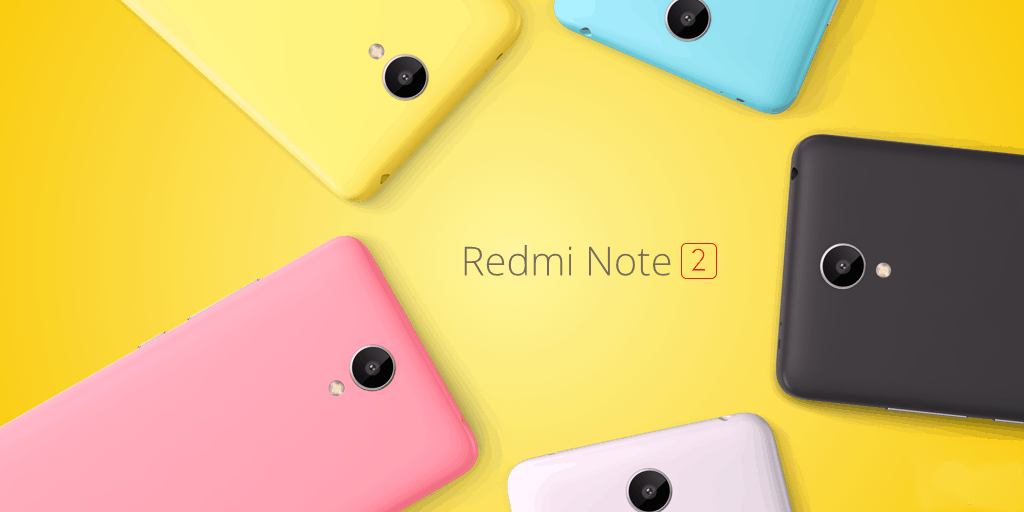
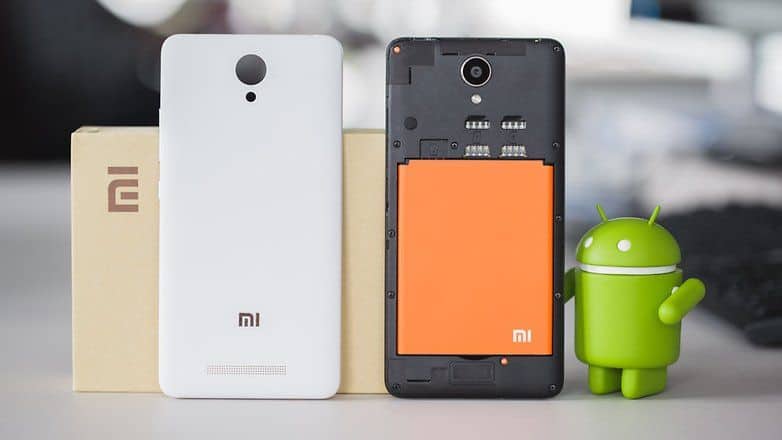
No need for a little bit of creativity or breakthrough on the product, Redmi Note 2 adheres to the design principles of “books” such as the dorsal surface to firmly grip, The back is painted with lacquer to prevent dust.
All of the options that Xiaomi has chosen are always a safety option, which helps the phone can not be criticized at all but nothing to praise when it is like so many phones on the market.
Display
Si z e and resolution, you know, the Redmi Note 2 came with a 5.5 inch IPS LCD screen, and the resolution was 1080 x 1920 pixels. That works out to roughly 401 ppi for pixel density. Honestly it felt like a big leap compared with the 720p panel on the earlier Redmi Note, so the Redmi Note 2 kind of matched a lot of more expensive phones when it comes to how sharp things looked.
The Full HD layout gave really crisp visuals, which made it convenient for web browsing, reading, casual gaming ,and watching videos. Text looked clean and the images had a good amount of detail. Overall, the viewing experience was pretty excellent ,especially for a device in that price range.
Color accuracy and brightness
On the Redmi Note 2, the IPS LCD panel delivered solid color accuracy and wide viewing angles, not just from straight in front. The colors looked lively but not too ridiculously over cooked. It reproduced a broad gamut of shades with decent fidelity, and the color temperature leaned a bit on the cooler side. Still, you could tone that down or tune it properly from the settings, depending on what you like.
Brightness-wise, it also held up well. With a peak brightness of about 450 nits, the screen stayed readable in most indoor situations and was fine outdoors too, for the most part. But if you were in direct sunlight, then yeah it could get harder to see, which was pretty typical for LCD panels from that era.
Contrast and viewing angles
The contrast ratio on the Redmi Note 2’s screen was pretty good, giving deep blacks and crisp whites, but it just could not quite keep up with what you get from OLED panels. The viewing angles looked nice too, like color shifting was kept low, and brightness didn’t really drop too hard when you moved your head around. Because of that, it felt pretty good for showing stuff to others, you know, the display stays fairly legible and steady even from different seats, or slightly off-axis views.
Touch responsiveness
Touch behavior on the Redmi Note 2 was mostly on point. The display tracked taps and swipes accurately enough, without the usual laggy feeling. It also handled up to 10-point multitouch, which is frankly more than enough for most people doing everyday stuff. And the capacitive touch buttons sitting under the screen were equally responsive, they pressed smoothly and made the overall navigation feel efficient and calm.
Overall, the Redmi Note 2’s display ended up being a standout, it offered a fairly high-res, vivid, and snappy experience that honestly went past what you’d expect from a budget smartphone. So yeah, this was a big part of why the phone had appeal, it made the device look like a serious option, especially in the mid-range conversation.
Focus on the experience
Xiaomi always knows when to use less money when even in the low segment, the Redmi Note 2 is still full of features, especially in features that are less noticeable to users and difficult to become a marketing tool.
The screen uses Full HD resolution on a 5 “screen size for pixel density of up to 401 ppi and 2GB of RAM are high above average, so it makes users forget what they are using. Use a cheap phone.
Especially on the screen, Full HD is the resolutio is still popular in high-end products because the 2K screen does not prove the necessary advantage, so on this side Redmi note 2 is rated higher than the Other products at same price.

Redmi Note 2 5.5 inch MIUI V7 Smart Phone, MediaTek Helio X10 MT6795 Octa Core 2.0GHz, ROM: 16GB, RAM: 2GB, Support GPS, GSM & WCDMA & FDD-LTE(White): Buy it now
Configuration above average
Referring to the configuration, Redmi Note 2 is the test Xiaomi wanted for Mediatek when it decided to use the Helio X10 line with the 8-core A72 cortex running at 2.2 GHz. In addition to such towering stats, the Helio X10 also features dozens of top-notch features that Flagship also craved.
Try running a benchmark on the 64-bit chip of the familiar Antutu software, Redmi Note 2 scores over 41,000, followed closely behind the flagship Samsung Galaxy S5. Of course when it comes to details, the X10 is only slightly better than Snapdragon 801 of S5, but far less than the ability to handle 3D graphics. This will make Redmi Note 2 run the game with the top graphics today as Modern Combat 5 slightly decline frame and that is indispensable for a cheap phone.
Pin
The Helio X10 or earlier Mediatek chips are well known for energy savings and are not hot-tempered, so the latest SoC series – Helio will also inherit that superiority.
While the battery that Xiaomi equipped for Redmi Note 2 with a capacity of more than 3000 mAh is not a small number. Therefore, the expectation of more than one working day is reasonable.
Performance
Processor and GPU
The Xiaomi Redmi Note 2 was powered by the MediaTek Helio X10 chipset, and it came with an octa core Cortex-A53 processor running at about 2.0 GHz . Alongside that, there was a PowerVR G6200 GPU which basically gave the phone decent graphics, for the most part.
The Helio X10 was a pretty steady processor, it handled everyday stuff like web surfing, social networking and multitasking without too much trouble. It also managed heavier applications, such as gaming or video playback , with a kind of calm effort. The octa-core design helped the handset juggle several processes at once, so the overall feel stayed smooth and responsive.
RAM and Storage Options
The Redmi Note 2 was sold in two main versions, one with 2 GB of RAM and 16 GB of built in storage, and another with 2 GB of RAM plus 32 GB of internal storage. For daily use 2 GB RAM is fine, however if you multitasked a lot , or used more demanding apps, you could notice slowdowns and sometimes you’d need to close things running in the background.
As for storage, it was kind of tight on the 16 GB model, although the device did support microSD cards up to 32 GB. That meant users could enlarge the memory, which felt really useful for people who wanted to keep lots of media, or install more applications. In that sense the expansion option was a nice touch, even if the base capacity wasn’t huge.
Real World Performance
Honestly in real world use, the Redmi Note 2 did pretty well for the money, like it surprised me a bit. Most apps opened fast, and moving around the user interface felt pretty smooth overall, maybe a little uneven sometimes but nothing major. It handled casual games without any fuss, and even heavier titles such as Asphalt 8 were still playable, only there was some occasional stuttering when the action got more demanding. You know those few moments where the frames hesitate , then it goes back to normal.
Multitasking mostly felt fine, though the 2 GB RAM could be a bit of a bottleneck if you tried to juggle several heavier apps at once. Still for everyday activities , like messaging, browsing, and basic media, the phone felt dependable and steady enough, giving what you’d call a reliable and consistent experience.
Benchmark Performance
When it comes to benchmarks , the Redmi Note 2 put up scores that were fairly competitive for its price bracket, honestly. In AnTuTu , which is a well-known benchmarking tool , it scored around 45,000 points , and for that time it was pretty impressive for a mid range device. In Geekbench it landed at roughly 800 for single core, and about 4,000 for multi core too. Taken together these results put the Redmi Note 2 in a good spot compared with other mid range smartphones , showing solid performance strength in a more measurable, and kind of straightforward way.
Camera
Rear Camera Specifications
The Xiaomi Redmi Note 2 came with a 13 MP rear camera , it used an f/2.2 aperture and phase detection autofocus (PDAF). There was also an LED flash, for helping with low light moments , you know, when things get dark. The sensor was sourced from Samsung, and it’s generally known for putting out solid camera modules, not just okay ones.
That 13 MP camera was a big deal for a budget device, it provided high resolution and basically a bunch of shooting modes you could try. The PDAF part was the kind of feature you don’t always expect at this price, because it helped with faster and more reliable focusing, especially for moving subjects , or when the lighting was kinda awkward.
Image Quality
When lighting was decent the Redmi Note 2’s rear camera looked kinda impressive for the price. The photos came out sharp , with solid detail and the colors were fairly accurate , plus the dynamic range felt reasonably balanced. Outside it handled landscapes well and indoors, with bright lights it also stayed consistent. Overall, the images kept a nice level of texture, and the color feel was natural, pleasant, and easy on the eyes.
Still , low-light performance wasn’t great , not even close. In darker scenes the image quality dropped noticeably. You’d see more noise, less crisp sharpness, and colors that didn’t look as true. The LED flash did help a bit, but it couldn’t fully fix the sensor limitations once the environment got dim, so the results were kind of limited even with the extra light.
The camera app came with a bunch of shooting modes like HDR, Panorama and Night Mode, so people could try out different styles, kinda. HDR was especially handy when the scene had lots of contrast ,it helped even out the exposure between the light parts and the darker parts, though it sometimes made pictures look a bit too artificial, not always though. Panorama mode was pretty solid for wide landscape scenes ,it stitched the frames together quite smoothly without obvious distortion or that weird bending effect.
So yeah overall, the Redmi Note 2 ’s camera wasn’t perfect, particularly in low light, but it was pretty capable for a budget phone. In decent lighting it performed well enough, and those built in features plus the shooting modes made it more flexible for everyday, relaxed photography.
Video Recording
The Redmi Note 2 could record 1080p video at 30 frames per second. The video looked decent for its category, with decent detail and solid color accuracy when the lighting was good. During recording the autofocus was usually dependable, even if it would sometimes hunt for focus in trickier ,busy scenes.
One thing that stood out was the absence of optical image stabilization (OIS), so handheld footage could get shaky, especially when you’re walking or panning. This is basically what you’d expect from a lower cost device, but it’s still something to keep in mind. There was electronic image stabilization (EIS) too, it did help somewhat, but it just doesn’t match what OIS can do.
Audio during video was fine, it captured clear voices and sounds, although it also picked up a noticeable amount of background noise. All in all, the Redmi Note 2 ’s video recording was satisfactory for casual use ,particularly considering the price you pay.
Front Camera
The front-facing camera on the Redmi Note 2 came with a 5 MP sensor and an f/2.0 aperture, and honestly it did fine for selfies, plus those video calls when the light is kind of right. In bright environments the pictures looked crisp enough, with decent color balance, so sharing to social media felt pretty natural, like it just works.
Still, just like the rear camera, it sort of lost its grip in low light. In the darker scenes the shots get a bit grainy, and the details are not as crisp so, you can kinda tell the camera is having a hard time. Xiaomi also packed in a bunch of beauty modes and little filters right inside the camera app, so you get that skin smoothing effect plus other small adjustments. Honestly it’s one of those things most people sorta expect from this kind of phone.
For video calls the front camera was smooth, and the video stayed clear for the most part, making it a dependable choice for everyday communication. Overall the front camera was a solid option for a budget smartphone, good for casual selfies and not too annoying video calls, even if it’s not chasing any high end camera vibes.
Battery Life
Battery Capacity and Longevity
The Xiaomi Redmi Note 2 had a removable 3,060 mAh battery. Basically on paper that’s a decent capacity for a phone with a 5.5-inch Full HD screen, and honestly in real life it gave enough charge to get you through the day with moderate use.
Day to day, the battery performance was pretty steady, usually landing around 5-6 hours of screen-on time depending on what you were doing. That “mix” could be browsing, social apps, some gaming, and video playback, which is basically the usual routine. If you were more relaxed and used it lightly, the Redmi Note 2 could easily stretch to a full day or even more, on one charge. But if you’re a heavy user, especially someone who games a lot or streams a ton of video, then you might end up needing a recharge sometime by the evening.
Power Management
Xiaomi’s MIUI software had a bunch of power management options, meant to stretch battery life in a sort of steady way. In practice, users could jump into a battery saver mode that curbed background activity, and toned down performance a bit so energy is not wasted. It also showed quite detailed battery usage stats, so people could spot which apps were really draining power and then adjust them accordingly.
On top of that, the Helio X10 processor was pretty energy savvy, especially during lighter work. That meant the Redmi Note 2 kept a decent equilibrium between speed and battery endurance. So overall, users could use the phone’s features without the constant, okay when do I have to recharge, feeling.
Charging Speed
The Redmi Note 2 offered fast charging, and honestly for a budget phone that’s a really nice touch. The package included a 10W charger, and that setup could bring the battery from 0 to 50% in roughly 30 minutes. For a full charge, expect around 1.5 to 2 hours, which felt fair considering the battery size.
Having fast charging included meant that if someone needed a quick top-up while the day was still rolling on, they could do it relatively fast. That makes the whole experience more practical, especially for users who are always moving around, or mostly busy.
Related Posts






Tech Reviewer & Product Analyst
Định Bia has spent over 10 years testing consumer electronics with a focus on smart technology. He work as a product advisor at Biareview where he helped customers find the right devices for their needs. He personally tests every product featured on this site using a consistent evaluation framework covering quality, durability, and value. All reviews are based on experience, not influenced by the manufacturer.