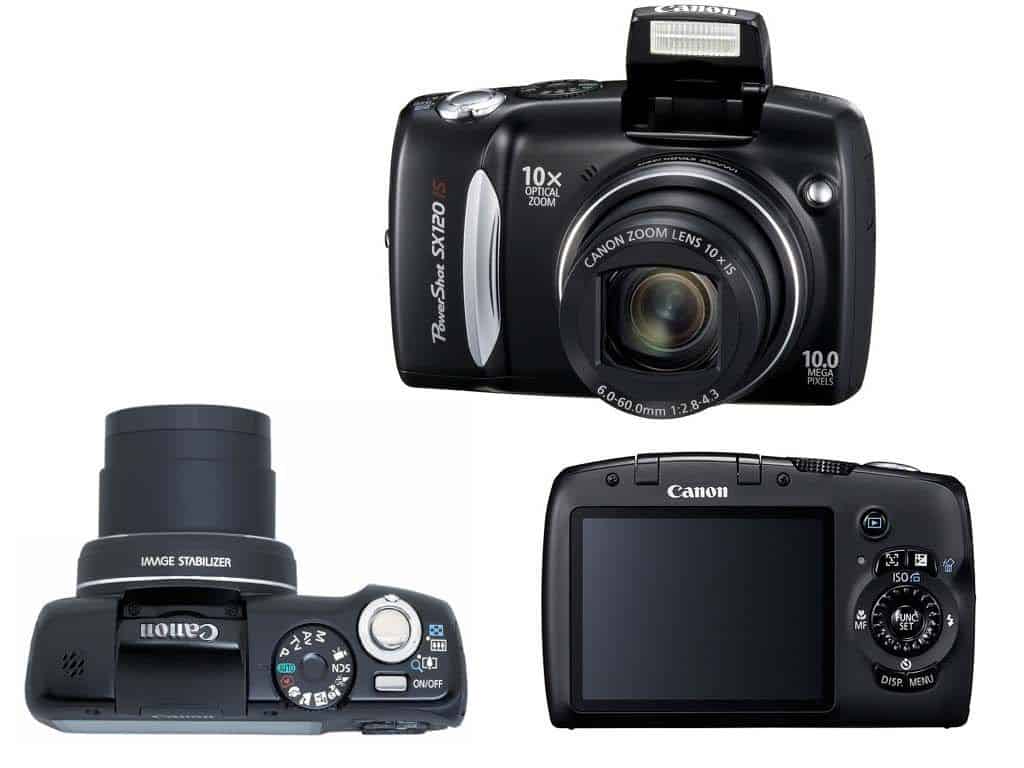
Basically, this machine has not taken a significant leap forward, but only improved a bit of new technology at the same price as the SX110 IS launched in 2008. The new machine, of course, still inherits excellent image quality of Canon, but still sluggish in execution.
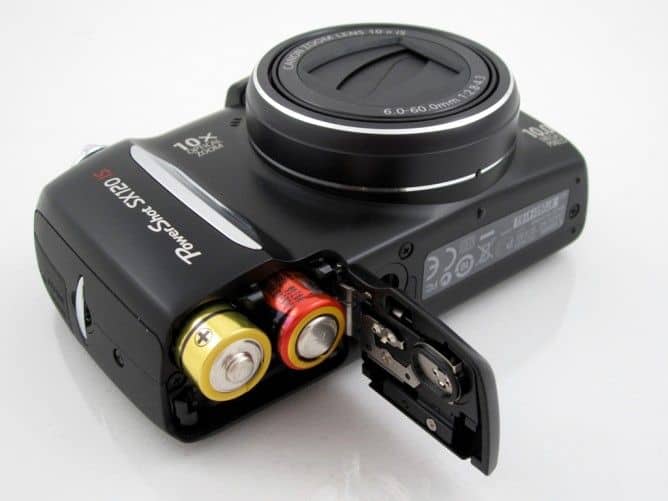
Although the SX120 IS is stiffer than the Panasonic models, it can also be worn in a jacket pocket. Weight is also not as light as the 10x optical zoom lens and two AA batteries occupy most of its 295 gram load. The SX120 IS is also large enough to hold hands firmly, the body looks a bit slippery, but the handle on the right has improved. The plastic case, but the SX120 IS still feel solid. Unlike the big zoom cameras powered by AA batteries, the SX120 IS only uses two batteries instead of four, so the usage time is relatively limited. When using NiMH rechargeable NiMH rechargeable batteries for peace of mind.
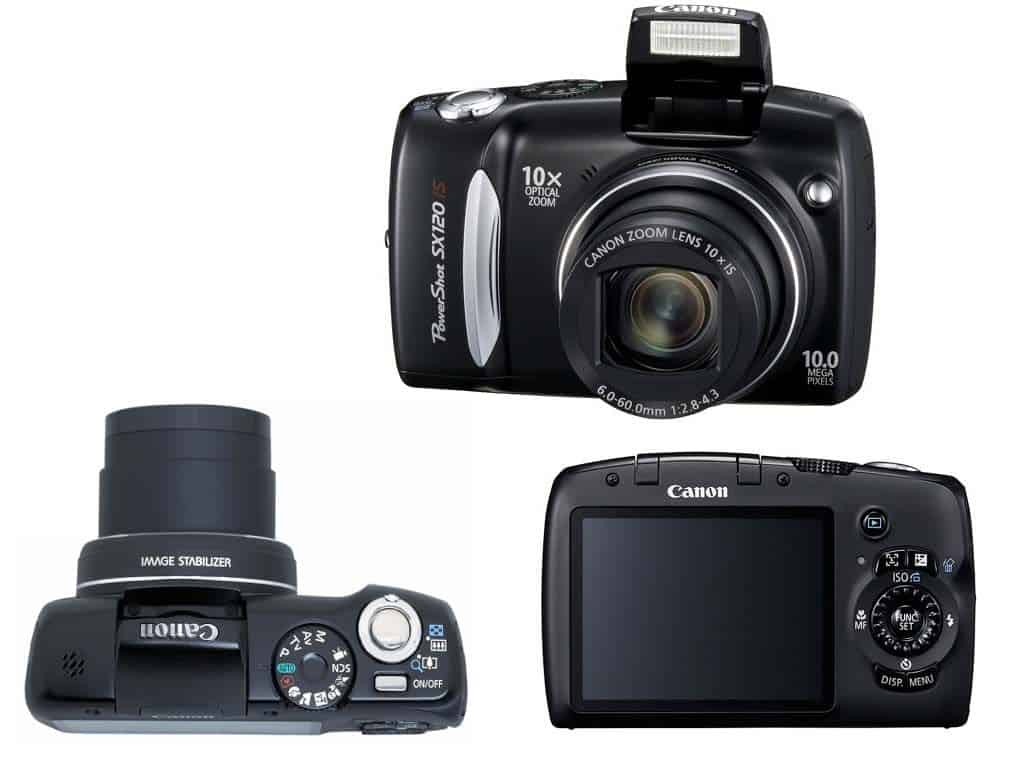
The control key is quite similar to SX110 IS. The Face detection, Display, Menu, and Exposure Compensation buttons are located around the rotating wheel and are all on the right side of the 3-inch LCD. Wheel around the Func / Set button can be set to 4-way to adjust ISO, focus (manual, normal, and macro), flash, and timer. The PictBridge (direct print) function, previously in the lower left corner of the screen, has been removed. The viewfinder is located between the right side of the LCD and the dimple.
With the SX120 IS, Canon offers pre-set scene modes (Portrait, Landscape, Night Snapshot, Indoor, Indoor, Kids & Pets) on the wheel (Mode dial). Specialized shooting scenes (Sunset,Snow, Fireworks, Foliage, Aquarium, Beach, and ISO 3200) into a unique SCN mode on the wheel. Wheel mode also has full manual semi-manual options, full manual adjustment. Canon’s Smart Auto mode allows you to choose the right scene based on the analysis of the camera based on parameters such as face, brightness, color, distance and movement. Easy mode makes shooting completely automatic without having to tune anything. Video recording only at VGA resolution, no optical zoom when recording and mono audio.
Canon PowerShot SX120IS 10MP Digital Camera with 10x Optical Images Stabilized Zoom and 3-inch LCD: Buy it now
Canon Powershot SX120 IS 10MP Digital Camera (Black): Buy it now
The SX120 IS is just average. The time from start up to shooting time is 2.5 seconds, also normal in super zoom. Focusing delays in high and low contrast situations of 0.6 and 0.7 seconds – are also acceptable. However, the time between two shots is quite slow: 2.6 seconds without flash and up to 6.1 seconds if flash. Continuous shooting mode is also mediocre, 0.8 frames per second.
If you have to find a reason to choose SX120 rather than the competition then it is image quality. However, not too remarkable. Interference began to be noticeable at ISO 400, but overall it was still beautiful and detailed. The image is rather mottled at ISO 800 but the detail is not lost significantly. Even ISO 1,600 images can be used without worrying too much of the noise. Super-zoom machines often suffer from distortion effects, however, the SX120 is a bit overwhelmed, even though the lens does not have a wide angle. Purple borders and red borders are quite clear in scenes with high contrast, however, this phenomenon is also common in super-zoom. The color of the SX120 is bright and beautiful in general, and the exposure is quite accurate even though it can not avoid too bright in some cases.
This is a genuinely capable little zoom camera. It stacks up fine against similar options like the Sony Cyber-shot DSC-H20 or the Panasonic Lumix DMC-TZ7 — Canon edges ahead slightly on image quality, but that edge basically disappears once you’re printing under 8×12 or just looking at shots on a screen.
Powers on and is ready in about 1.5 seconds. Autofocus is quick and accurate even when the light drops, shutter lag is barely noticeable, and continuous shooting runs about 1.1 fps — fine for casual stuff. Stabilization actually earns its keep, letting you shoot handheld at slower shutter speeds without blur creeping in. Battery life is solid too: two AAs get you roughly 200 shots, and since AAs are everywhere, this ends up being a genuinely easy camera to travel with.
Image quality punches above its class — vibrant colors, good contrast, sharp detail. 10 megapixels is plenty for large prints or cropping without losing much. Good light brings accurate color and well-balanced exposure, decent range in both highlights and shadows, and white balance holds up across different lighting.
Low light is the usual weak spot for a sensor this size — past ISO 400 you start seeing noise, though the wide aperture and stabilization help offset it, and noise reduction does a reasonable job without eating too much detail. Macro, though, is genuinely good: 1cm minimum focus distance means you can get right up on small objects with nice sharpness and background blur.
Video’s VGA — 640×480 at 30fps — basic even for when this camera came out, but fine for sharing online or watching on a small screen. Zoom works during recording, though it’s slow and a bit noisy, and autofocus can lag behind fast subjects. No mic input, so audio’s stuck with the built-in mic, which picks up handling noise easily.
The interface is where this camera really shines: clean menus, a mode dial for fast access, dedicated buttons for ISO, exposure comp, and macro. Easy Mode picks settings automatically for beginners, and there’s room to grow into manual control once you’re ready. Grip feels solid, buttons are responsive, and the 3-inch LCD looks good — just hard to see outdoors in direct sun since it doesn’t tilt.
Storage runs SD, SDHC, or MMC, shooting JPEG stills and AVI video. AV output lets you hook up to a TV (standard-def only), and there’s USB 2.0 for transfers — slow by today’s standards, though you’d probably just pull the SD card and use a reader anyway.
What’s good: the 10x stabilized zoom, genuinely nice image quality, an interface that’s actually pleasant to use, real manual controls if you want them, compact size, cheap secondhand, and AA batteries you can buy anywhere. What’s not: the fixed screen struggles in sunlight, video is basic VGA, noise shows up past ISO 400, zooming during video is slow and noisy, no mic input, and USB transfers are sluggish.
Still a genuinely useful camera for travel, family photos, macro shots, or just learning how manual controls work. It’s not trying to compete with anything current but the price, the ease of use, and how reliable it is keep it worth considering, especially picked up used.
Related Posts

Tech Reviewer & Product Analyst
Định Bia has spent over 10 years testing consumer electronics with a focus on smart technology. He work as a product advisor at Biareview where he helped customers find the right devices for their needs. He personally tests every product featured on this site using a consistent evaluation framework covering quality, durability, and value. All reviews are based on experience, not influenced by the manufacturer.