Design and Build Quality
a. Physical Design
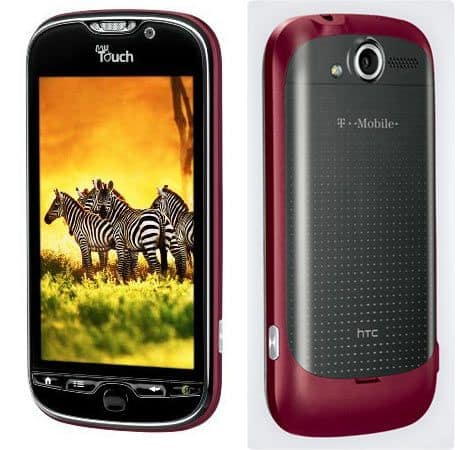
The HTC myTouch 4G has a sleek, modern look that feels pretty on par with other HTC smartphones from that time period. It shows a 3.8-inch WVGA TFT screen, running at 480 x 800 pixels. The display looks lively and the color output is fairly strong, but it can seem a bit aged when you compare it with today’s super high resolution panels. Up front there’s a capacitive touch screen plus four physical keys Home, Menu, Back, and Search , so navigation feels comfortable and pretty familiar for Android users.
A notable part of the myTouch 4G is the way it’s put together. Overall it gives a solid impression, using a mix of plastic and metal components. The back is textured, that texture helps you hold onto it better, and it also gives the phone its own sort of visual identity. In the center of the back you’ll also find a 5 MP camera with an LED flash, placed there so using it is easy without much fuss.
b. Build Quality
The myTouch 4G is constructed with durability in mind, and it shows. That plastic and metal blend gives it a firm, dependable structure, while the textured rear surface adds extra grip in daily situations. In hand it feels sturdy, and the whole unit seems made to handle normal, everyday usage. In many ways the build quality mirrors HTC’s approach: deliver something reliable, balanced, and fairly well engineered.
Display
a. Screen Quality
On the 3.8 inch TFT screen of the HTC myTouch 4G you get a resolution of 480 x 800 pixels. Back then, it felt pretty fine for day to day stuff, like maps, messaging,and quick browsing, even though it doesn’t really keep up with today’s standards, if we’re being honest. The colors look reasonably accurate and the brightness levels are ok, but it may not have that bright pop or crisp definition you get from newer AMOLED screens or higher resolution panels.
In general the TFT arrangement gives you fairly decent viewing angles and it behaves well indoors. Still, if you take it outside, the situation can get a bit weaker, reflections can interfere and the brightness, while not awful, is usually lower than what newer displays tend to offer.
b. Touch Sensitivity
That capacitive touch screen is quite responsive, and the scrolling feels smooth. It supports multitouch moves, like pinch to zoom and also quick swiping, so navigating the interface stays fairly fluid. In terms of touch feel, it lines up with other phones from the same era, so Android gestures and typical apps work without too much fuss.
Performance
a. Hardware Specifications
The HTC myTouch 4G runs on a 1 GHz Qualcomm Snapdragon QSD8255 processor. It’s paired with 768 MB of RAM, which was a solid match for its release period. For most things you’d normally do, the phone keeps things moving in a smooth way, though it’s not designed for heavy modern workloads. There is also 16 GB of internal storage included, that should be enough for applications, photos or music, and everyday files, at least for the time when it was new.
b. System performance
The combo of the Snapdragon processor and 768 MB of RAM gives fairly adequate performance for using Android 2.2 (Froyo) and all its related applications. The myTouch 4G manages day to day stuff like web browsing, social media, and media playback with a pretty steady feel. Switching between tasks is mostly smooth, but the pace can slip a bit if you try to run several heavier apps at the same time .
c. Storage
On the storage side, there’s 16 GB of internal memory, so the myTouch 4G gives a decent amount of room for applications and personal media. That said, it doesn’t include a microSD card slot for expansion, so users who need more space may hit a wall sooner than expected. Still, back then 16 GB was seen as fairly generous, and it tended to cover most peoples needs .
Software
a. Android 2.2 (Froyo)
The HTC myTouch 4G arrives with Android 2.2, also named Froyo. When it came out, Froyo was kind of a big deal, with several upgrades vs earlier editions. You got more speed, a far more practical way to manage apps and even Adobe Flash support, which was pretty much a usual sales argument back then. At the same time the software added various changes like a redesigned home screen, a browsing experience that feels smoother, and better connectivity with Google services.
b. HTC Sense UI
HTC’s custom Sense UI sits on top of the Android operating system, kind of like layered i guess, giving people a different sort of look and feel. The Sense UI brings in a handful of features and add-ons, for example customizable widgets, a smoother launcher, and some visual adjustments that make everything seem a bit more polished. Overall the interface is meant to boost usability, and yes, to feel more engaging than plain stock Android , which is pretty much the point.
c. Pre-installed Apps
The myTouch 4G shows up with a bunch of apps already installed. This includes well known Google services like Gmail, Google Maps,and YouTube . Then HTC also adds its own collection of tools and little utilities, such as HTC Footprints, HTC Peep (for Twitter) and HTC Mail. All of these help with day to day tasks, and they connect fairly well with Android’s main functions, so it doesn’t feel like everything is isolated.
Multimedia Features
a. Audio and Speaker Quality
The HTC myTouch 4G uses a standard speaker placed at the bottom. It manages to keep audio fairly clear for phone calls, and it handles media playback okay too, but it doesn’t really have the same depth or loudness you might find on newer devices that use more advanced audio technologies. Now, HTC’s Sense UI does include a few touches that can improve how things sound a little, still the speaker hardware itself stays pretty basic compared to current phones.
b. Camera
So, the myTouch 4G comes with a 5 MP back camera, plus an LED flash, sort of standard. It does the basics though, you know, for taking pics and filming brief videos. Back then the image quality was pretty okay, with decent color rendition and enough texture when the lighting is good. But in darker scenes it struggles a lot, the low-light results are limited, and it also misses most of the fancier imaging touches you see on newer smartphones. There’s no real “wow” factor there, just reliable enough.
The camera app is pretty normal in terms of features, auto-focus, panorama mode, and a few scene presets. For casual shooting it works, but it kinda stays behind compared to those newer devices that lean on more advanced imaging technology and processing.
c. Video Playback
The myTouch 4G has a 3.8-inch screen, and for watching videos it feels decent, not amazing, but satisfactory. It supports multiple video formats, and for most stuff the playback is smooth. The speaker is, well adequate, but it does not really deliver an immersive soundscape when you’re watching. Overall the multimedia performance is competent, though, it isn’t exceptional when you compare it to what people expect today.
Connectivity
a. 4G Connectivity
One of the main bits of the HTC myTouch 4G is its ability to work with 4G networks. When it was launched, 4G counted as a pretty big step up from 3G , mainly because it brought faster data speeds and smoother internet behavior. The phone pretty much leans on 4G connectivity to give you a nicer browsing session, faster downloads and steadier streaming.
b. Other Connectivity Options
Along with 4G, the myTouch 4G also includes Wi-Fi, Bluetooth 2.1 and GPS. With Wi-Fi , people can reach the web through wireless hotspots, and Bluetooth lets you pair with other gadgets for file exchange and audio streaming . GPS then handles location based services, plus navigation.
c. Ports and Slots
The HTC myTouch 4G has a micro-USB port, for both charging and data syncing. It also includes a 3.5 mm headphone jack, for audio output. The device does not come with a microSD card slot though, so expandable storage is basically gone, which can be annoying if you want extra space. Still, the ports and the slots it does have cover the everyday connectivity needs for most users, pretty much.
Battery Life
a. Battery Specifications
The HTC myTouch 4G runs on a 1,300 mAh lithium-ion cell, though it’s not exactly a firecracker, it is still pretty reliable for day to day carry. In normal situations you can usually squeeze about a day of use from a single charge. That said, the actual battery experience can swing a lot, mostly because of things like screen brightness, how often data is on, and how much multimedia is consumed
b. Battery Performance
In real world usage, the myTouch 4G battery life feels pretty typical for the time, not amazing but not disappointing either. Most users will get a full day with everyday stuff like calls, web surfing, and music or video playback. If you’re a heavy user, you might be recharging more often, especially when you keep 4G active for long stretches or you watch a lot of media
Pros and Cons
a. Pros
4G Connectivity: Since 4G is built in, the data travels quicker and the overall internet just feels smoother like, so browsing and streaming are more responsive in practice.
Solid Build Quality: The device is made with a stronger construction, blending plastic with metal elements, which adds extra strength and also that more polished touch.
Decent Performance: There is a 1 GHz processor, with 768 MB of RAM, it runs Android 2.2 and everyday apps in a way that feels pretty steady and fluid enough.
HTC Sense UI: The Sense user interface brings extra features and a bit of personalization, which makes daily navigation feel more tuned to you.
b. Cons
Outdated Hardware: That 1 GHz processor and 768 MB of RAM feel a bit underpowered, especially when you compare them to today’s phones with multi-core setups and more RAM.
Limited Storage: There’s no expandable option, so users can’t easily enlarge storage past the device’s built in 16 GB, which can be annoying.
Modest Display Resolution: The 480 x 800 resolution comes off low these days , and it reduces screen sharpness, plus the finer details are harder to see.
Basic Camera Performance: The 5 MP rear camera is usable, but it doesn’t really bring the advanced features or the higher resolution you’d expect from current smartphones. Low-light shots are especially restricted here, and that usually lowers overall photo quality, like noticeably.
User Experience
a. Interface and Usability
The HTC Sense UI , placed on top of Android 2.2 gives a more tailored experience that kind of improves day to day usability . You get things like customizable home screens weather widgets , and a standout clock plus weather app. The Sense UI tries to make the whole experience more engaging, with a more personal vibe compared to stock Android, even if the base system is older.
b. Performance in everyday use
In day-to-day use, the HTC myTouch 4G kinda performs ok, mostly for things like web browsing , email, social media, and media playback. It tends to run these tasks smoothly, even if some people end up noticing small slowdowns when they try heavier applications or when multitasking a lot. Also, the 4G connection is a clear step up, you can feel it in faster data transfer, and the browsing as well as streaming feels more fluid.
c. Battery life and charging
Battery life on the HTC myTouch 4G is usually enough for a full day if the use stays moderate. Still, if someone is a heavy user , for example streaming video a lot or relying on GPS frequently, they may need to top up sooner than expected. Charging is fairly reasonable, and the phone supports common charging routines , nothing overly special but it works like you would expect.
Conclusion
The HTC myTouch 4G was kinda a big deal back then, it gave that mix of speed, connectivity and also multimedia stuff. Overall it felt pretty smooth, mostly because of the 4G connectivity, the custom HTC Sense UI, and just a sturdy, well-built design. Now sure, if you compare it to today’s phones, the hardware and software seem old, but in 2010 the myTouch 4G was still a strong contender, especially for people who wanted a fast device with the freshest connectivity features around.
Its legacy is mostly about being an early adopter of 4G tech and for helping shape HTC’s smartphone lineup. In a way it sits in that middle chapter, between the first wave of smart phones and the later, more advanced devices that followed shortly after. You could say it bridged the gap, like a quiet transition moment in the mobile world.
And as tech keeps moving forward, the HTC myTouch 4G basically reminds us of how far smart phones have gone. It also highlights why innovation matters, because it keeps pushing the next future of mobile devices. Its influence on the industry and its place in HTC’s history make it a device that’s easier to remember and worth noting, even now, in the bigger mobile technology picture.
HTC MyTouch 4g Android Unlocked Phone (Black): Buy it now
HTC myTouch Slide 4G Unlocked GSM Android Phone, Black, 1.2Ghz, 8MP, 4GB Internal Memory: Buy it now
Tmobile Mytouch 4g Unlock Cell Phone By Htc. 5mp Camera + Front Camera for Video Chat – Plum Color: Buy it now
Related Posts

Tech Reviewer & Product Analyst
Định Bia has spent over 10 years testing consumer electronics with a focus on smart technology. He work as a product advisor at Biareview where he helped customers find the right devices for their needs. He personally tests every product featured on this site using a consistent evaluation framework covering quality, durability, and value. All reviews are based on experience, not influenced by the manufacturer.