Design and Build Quality
a. Physical Design
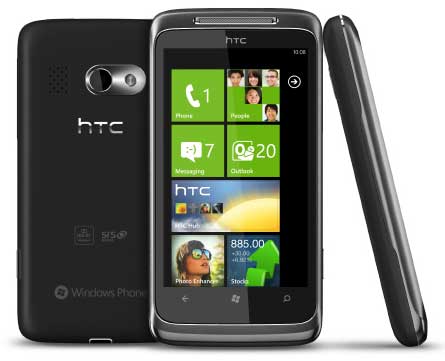
The HTC Surround is kinda instantly recognizable, because the design feels a bit signature. It comes with a 3.8-inch LCD screen, running at 480 x 800 pixels resolution. Around that screen there’s this bold metal border, which gives it that more premium vibe. On the front you’ll also find three capacitive touch buttons, Back , Home and Search. They’re laid out in a straightforward way but still look clean.
Probably the most eye-catching part is the sliding speaker setup. The Surround has a special speaker bar that can glide out from behind the display, and when it does, you get a pair of stereo speakers revealed. HTC clearly aimed this idea at improving how sound comes across, especially during media playback , and yes, even when gaming.
b. Build Quality
Overall, the Surround feels well made. It uses a mix of metal and plastic, and that combo really works. The metal edging around the display, plus the speaker bar itself, adds strength and a touch of sophistication. In your hand it doesn’t feel flimsy, and the sliding mechanism , while being an interesting novelty, still feels sturdy enough to handle everyday use.
On the back, you get plastic with a lightly textured finish, so it’s easier to hold and less likely to slip. There’s also a 5 MP camera with an LED flash, and the HTC logo is displayed fairly clearly. All together, the build quality seems to reflect HTC’s focus on small details and a commitment to that “premium” feel, rather than just looking good on paper.
Display
a. Screen Quality
The HTC Surround comes with a 3.8-inch LCD screen, you get 480 x 800 pixels resolution. Back then, this was pretty normal for smartphones, but nowadays it feels a bit restrained. Still, the visuals look clear enough, and sharp for daily scrolling and checking, even if newer handsets moved toward higher resolutions.
Color reproduction is actually reliable, and the viewing angles are decent too. However, it might not feel as lively as AMOLED displays. Brightness is fine indoors, but if you try it under direct sun, it may not pop as much as more recent screens, so you can notice that limitation.
b. Touch Sensitivity
The Surround uses a capacitive touch surface, and it feels responsive, kind of smooth when you swipe. It supports multitouch gestures, so pinch-to-zoom works without much fuss, plus the other touch interactions also run nicely. Overall touch sensitivity matches what you’d expect from other devices of its time. So it’s quite okay for moving through the Windows Phone 7 interface, no major hiccups or lag.
Performance
a. Hardware specifications
The HTC Surround is powered by a Qualcomm Snapdragon QSD8250 processor , clocked near 1 GHz, and it comes with 448 MB of RAM. For the period when it released this setup sounded quite capable, though nowadays even midrange phones carry more force and also bigger memory… so it has been overtaken pretty clearly.
b. System performance
With the Snapdragon chip together with that 448 MB of RAM the handset can still manage Windows Phone 7 and most of its apps in a basically smooth way. Everyday things, like web browsing, checking social feeds , and running music or video, usually feel “fine” and not too sluggish. Still, once you step into heavier apps, or you try to keep multiple processes alive at once, the small memory budget can start to bite.
c. Storage
The HTC Surround includes 16 GB of internal storage , which at the time was honestly a solid amount. But it doesn’t really offer a way to extend storage , so users are stuck with the built-in 16 GB and that’s it. Back in 2010 this might have fit many people’s routines, yet today’s phones often give far more storage, plus expandable options, so there is noticeably more flexibility.
Software
a. Windows Phone 7
The HTC Surround was among the early devices to run Windows Phone 7, which was Microsoft’s try to come back into the smartphone market using a brand new operating system. Windows Phone 7 brought a fresh, tile based interface that feels simpler, and kind of easier to navigate. The OS has a pretty recognizable Start screen, with live tiles that push real-time updates, plus quick routes to apps and information.
b. User Interface
The Windows Phone 7 interface is made to feel natural, and also looks good. That tile layout can be adjusted, so users can pin their favorite apps and even contacts right onto the Start screen. There’s also that smooth linking of social networks and messaging services inside the operating system, which makes the whole experience feel seamless for people that care a lot about staying connected, and communicating without friction.
c. Pre-installed Apps
On the HTC Surround you get several apps and services already there, including Microsoft Office Mobile for basic document editing and viewing. Beyond that, there’s a web browser, an email client, and a media player. Also, the device gives access to the Windows Phone Marketplace, where users can grab download and install extra apps and games.
Multimedia Features
a. Speaker System
One of the more obvious selling points of the HTC Surround is, its dedicated speaker system. There’s this sliding speaker bar that shows stereo speakers, and it honestly helps with the whole audio vibe for media playback and gaming. The speakers push out sound that is clear and also loud enough, so it works for watching videos, listening to music, and even playing games with audio.
The speaker mechanism feels well made, good sound quality, and solid volume output. On top of that, Dolby Mobile and SRS Surround sound technologies are included , which kind of bumps the audio experience up a notch, making the sound seem richer and more immersive, rather than flat.
b. Camera
The HTC Surround comes with a 5 MP rear camera, plus an LED flash. The camera is there mostly for basic tasks, including things like auto-focus and a macro mode. For casual photography the results are acceptable, but compared to today’s smartphones, it really does fall short. Modern phones often bring higher megapixel counts, and they rely on more advanced imaging technologies too.
Low-light performance is limited, mainly because advanced image processing capabilities are not really present. Still, in well-lit environments the camera can be used for quick snapshots and for recording videos that are good enough for everyday use.
Battery Life
a. Battery Specifications
The HTC Surround gets its power from a 1,230 mAh lithium-ion battery. In general it feels like the battery life is just enough for moderate routines, giving about a day of use after one single charge. Still, battery performance isn’t always the same, it can swing a bit depending on your habits, like the screen brightness, media playback sessions, and even how steady your network connectivity is.
b. Battery Performance
Practically speaking, the battery life of the HTC Surround is pretty standard for what devices from that era were doing. Most users should manage a full day with normal stuff such as web browsing, phone calls and regular media consumption. But if you’re a heavy user, you might be plugging it in more often especially when you are doing nonstop multimedia playback, or gaming for long stretches.
Pros and Cons
a. Pros
Unique Speaker Mechanism: The sliding speaker bar gives you a more lively audio experience, which makes it well suited for media playback and gaming.
Solid Build Quality: The metal and plastic mix helps it stay durable, while also giving that more premium feel.
Windows Phone 7 Integration: The phone uses the Windows Phone 7 operating system, it’s user-friendly and also looks nice on top of that.
Decent Internal Storage: With 16 GB of internal storage, there’s plenty of room for applications and media files.
b. Cons
Outdated hardware: that 1 GHz processor , and the 448 MB of RAM are pretty seen as low power these days , like compared to most modern gadgets.
Limited storage: since there is no real expandable storage, people kinda get boxed in, and cannot easily upscale the available capacity.
Modest display resolution: the 480 x 800 setup feels rather low, in terms of todays expectations, which ends up reducing screen clarity and even the fine details.
Basic camera performance: the 5 MP camera, does not bring much in the way of advanced options and it also struggles in darker scenes, low light stuff.
Conclusion
The HTC Surround was sort of a distinctive, and also innovative phone for its time, and it was especially known for that unusual speaker mechanism. It also had a part in bringing Windows Phone 7 into the market. Even if the hardware spec sheets look modest now , the Surround still managed to deliver a solid day to day experience, thanks to its sturdy build, decent overall speed, and multimedia capabilities.
In the early Windows Phone ecosystem, it helped set a tone, and its effort to be different with one standout feature makes the HTC Surround feel memorable. It basically reflects that phase of testing and change in mobile tech, acting like a bridge between early smartphone experiments and the more capable devices that came later.
As technology keeps moving forward, the HTC Surround works as a reminder, of how far smartphones have progressed, and of why innovation really matters for shaping what mobile devices become next.
HTC Surround T8788 Windows 7 phone (At&t) (4.7 x 2.4 x 0.5 inches ; 5.8 ounces): Buy it now




Tech Reviewer & Product Analyst
Định Bia has spent over 10 years testing consumer electronics with a focus on smart technology. He work as a product advisor at Biareview where he helped customers find the right devices for their needs. He personally tests every product featured on this site using a consistent evaluation framework covering quality, durability, and value. All reviews are based on experience, not influenced by the manufacturer.