Design and Build Quality
a. Overall Aesthetics
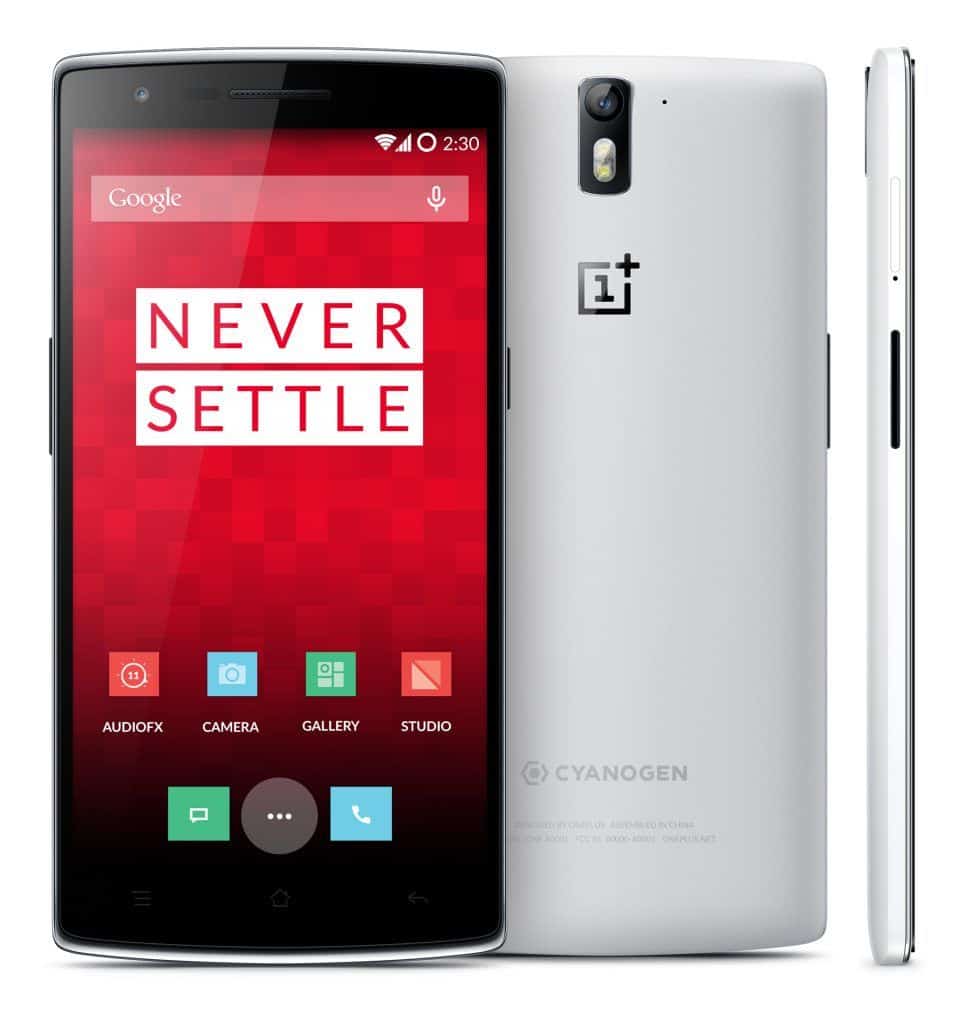
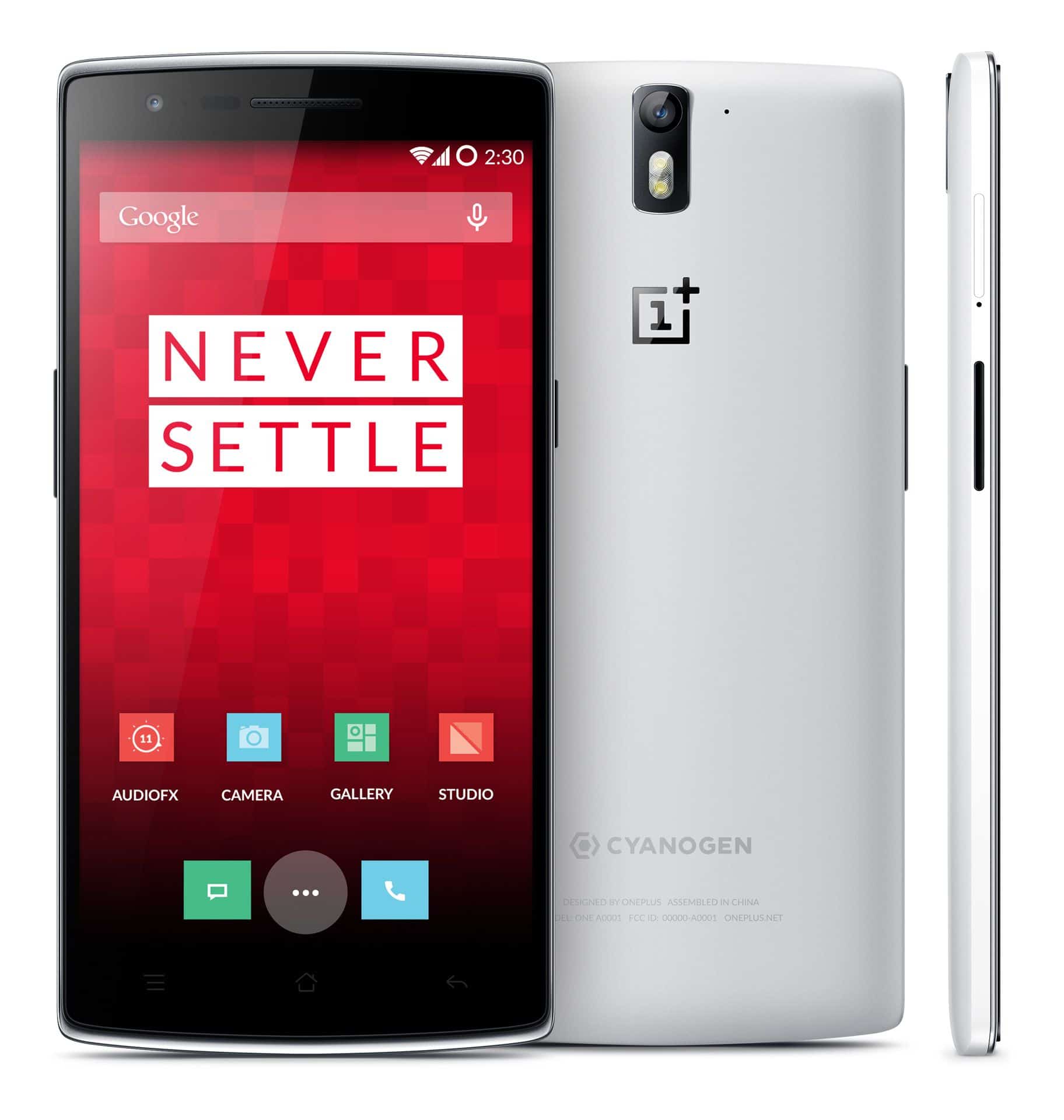
The OnePlus One’s design feels kinda understated, but still elegant in a practical way . It has a minimalist look, plus a sturdy build that doesn’t try too hard. In terms of dimensions it comes in at 152.9 x 75.9 x 8.9 mm , and it weighs 162 grams. There are a few finishes to choose from, including the signature Sandstone Black, which gives you this textured , grippy kind of surface. Honestly that textured back panel was one of the most noticeable things, it adds style but also helps with day to day handling.
b. Build Quality
When it comes to build quality , the OnePlus One holds up nicely, especially considering the price bracket. The body uses a mix of plastic and metal which helps it feel solid. The back casing is plastic but it feels tough, and it also manages to resist fingerprints pretty well. Meanwhile the metal frame brings extra sturdiness and overall confidence to the structure . Even with the more affordable cost, the phone feels premium and pretty well put together.
c. Ergonomics
Ergonomically, the OnePlus One works well, it sits comfortably in your hand thanks to its rounded edges and the fact that the size is still manageable . The curved rear surface improves grip and makes it easier to use without constantly shifting your hold. Buttons are placed in a fairly intuitive way, with the power button and the volume rockers reachable without much effort. Overall the form factor supports one-handed usage pretty well , though people with smaller hands might still think it’s a little awkward after a while.
d. Durability
While the OnePlus One does not include official IP ratings for splash or dust resistance, it’s built to handle everyday use in a normal way. The textured rear cover kind of helps shield it from small scuffs, and the metal frame gives a bit more protection against jolts. Still, like most smartphones, it’s smart to rely on a protective case so you can reduce the risk after a slip, or an unexpected drop.
This device is, let’s say, a real hybrid of the front vibe from the OPPO Find 7 and the back approach of the Moto X. It’s not too hard to grasp why, since the founder and operator of OnePlus used to be an OPPO director before all of this.
For design, it shows a 5.5 ” IPS LCD display with 1080p HD resolution, and a pixel density that can reach around 401 ppi. On top of that, it’s covered by Gorilla Glass 3. There’s also a thin bezel edge that creates a clean feel, a bit elegant, almost too neat. The size of the OnePlus One is 152.9 x 75.9 x 8.9mm, which is pretty close to the Oppo Find 7 at 152.6 x 75 x 9.2mm , but it ends up a little slimmer, and it tips the scale at only 162 g. A standout detail is that the user can pick the back bumper style with different trims and visual textures , denim , bamboo , kevlar , silk , sandstone, and more.
In other words, the OnePlus One keeps a 5.5 inch IPS LCD panel at 1080p HD, pixel density up to 401 ppi, plus Gorilla Glass 3 tempered glass protection. The bezel stays rather slim, and overall the look feels light, and pretty refined. Dimensions are 152.9×75.9×8.9 mm, similar to Oppo Find 7 (152.6x75x9.2 mm), though slightly thinner, and it weighs just 162 g. The notable perk is that bundles can be chosen with bold colors and tactile feels: denim, bamboo, kevlar, silk, sandstone.
Performance
a. Processor and RAM
The OnePlus One is powered by the Qualcomm Snapdragon 801 chipset, with a quad core processor running at 2.5 GHz and well, 3 GB of RAM behind it. At the time of release the Snapdragon 801 was pretty much a top level chip, so overall it brought strong momentum for day to day tasks and heavier stuff too.
b. Benchmark Performance
On benchmark tests the OnePlus One turns in a solid showing, it kind of matches the “flagship killer” label people gave it. The Snapdragon 801 chipset keeps things moving fast across many apps, especially when you are switching between tasks, plus gaming workloads. Basic activities feel smooth and responsive, and the usual scrolling and app launching doesn’t get stuck. In general, benchmark standings put the OnePlus One close to the best devices from its time, rather than sitting in the middle.
c. Gaming Performance
For gaming, the OnePlus One feels better than you’d expect for the specs. Games that were popular around its launch period run along nicely, usually with strong frame rates and decent visual quality. It can manage most titles without big slowdowns, but of course newer and more demanding games might push it harder than it wants. Still, for people who like mobile gaming, the OnePlus One delivers a pretty satisfactory experience, not perfect, but definitely playable and enjoyable.
d. Multitasking
With 3 GB of RAM , the OnePlus One handles multitasking pretty well, like users can jump between applications and do multiple things without too much lag. There’s enough memory to keep the whole process fairly smooth, although once you go into heavier applications things can slow a bit. For most normal multitasking use , the OnePlus One gives a dependable and efficient kind of experience.
On the hardware side, the OnePlus One shows its edge using Qualcomm’s Snapdragon 801 quad-core processor, paired with as much as 3GB of RAM. It also includes a 3100mAh battery, and you get two storage variants, 16GB and 64GB, but unfortunately there is no MicroSD support for memory cards.
On the back, OnePlus installs a 13-megapixel Sony IMX214 sensor on this newest phone. With this kind of solid camera, the OnePlus One can be used for serious work, even by a professional photographer doing 4K video recording. In particular, the camera supports a fast shutter speed of 0.3 seconds, and that is often compared with several standalone cameras on the market today.
The captured images come out with accurate colors , and the dual-LED flash helps when lighting is weak. Still, in difficult environments you may notice some noise or slightly reduced fine detail. Inside the camera app, there are multiple options, like HDR and different shooting modes, so the experience feels more flexible for taking better photos.
c. Camera Features
The camera app includes a set of features such as HDR, panorama, and a manual mode . Because of that, users can try different shooting approaches and get better photography results. Even if it does not include every advanced tool you see on newer devices , it still feels capable enough for casual photos, and for everyday use it works quite satisfactorily.
d. Front Camera
On the OnePlus One you get a 5 megapixel front camera for selfies and video calls, yes. In bright rooms or outdoors it kinda works nicely, giving shots that look pretty clear and detailed. Still, when the light gets dim, the front camera tends to lose some fine detail and overall crispness, it’s not exactly great there. So it is fine for casual moments, though it wont match what you see on higher resolution front cameras in newer phones , you know.
Battery Life
a. Battery Specifications
The OnePlus One comes with a 3,100 mAh non-removable battery. That capacity is pretty decent, especially for the device size and what it draws in power. It’s built with the expectation of giving you a full day of power with moderate to quite heavy use.
b. Battery Performance
Battery performance is usually good on the OnePlus One. Most people should be able to get through a whole day using it normally, things like web browsing, streaming media, and regular calls. Of course, the actual endurance depends on how you use the phone and which options you’ve chosen. If your usage is intense, you might find yourself needing to plug it in before the day fully ends, but in general it remains dependable.
c. Charging Speed
The OnePlus One uses pretty standard charging tech, with a usual charge time of about 2 to 2.5 hours. It doesn’t really come with those fancy fast-charging features, so you’ll want to budget for a longer charging period if you actually need it. Charging performance is, kinda, decent for its era though , newer phones with fast recharge can top up way faster .
d. Power Management Features
On the power side, the device brings in a few battery saving tricks. Users can jump into battery saver modes, tweak screen brightness settings, and also rein in background applications, so the battery lasts longer. Taken together , these options make it easier to stretch battery life and keep power usage under control.
Software and User Experience
a. Operating System
The OnePlus One first shipped with CyanogenMod 11S , which is based on Android 4.4.2 KitKat . This system gives you a customized Android setup , with extra tools and upgrades. Later on, the device also got updates toward newer Android versions , like Android 5.0 Lollipop, and there was an option to switch over to OxygenOS, which is OnePlus’s own custom ROM.
b. User Interface
The CyanogenMod 11S user interface on the OnePlus One feels pretty clean and, uh, easy to adjust. It’s made to be intuitive and user-friendly, not too complicated, with a bunch of personalization options and extra features. People can tweak their home screens, mess around with settings, and also grab themes plus widgets, to make the whole thing more enjoyable. Overall the system is smooth and quick to respond, and it keeps bloatware pretty low, so it stays on the efficient side.
c. Performance and Stability
In day to day use, the software is usually stable. Most tasks run smoothly, and the device doesn’t seem to struggle much unless you push it hard. It’s a customized Android build that brings extra enhancements, but still keeps a rather clean interface. Users can usually count on a dependable and pleasant experience, plus there are updates sometimes, to tighten things up performance wise and also add little new bits here and there.
d. Updates and Support
At first the OnePlus One got frequent software updates, though the support kind of drops as time goes on and newer phones show up. The updates typically cover security patches and some feature upgrades, but if someone’s chasing the newest Android functions, they might run into limited support. Still, the device’s software stays usable and generally keeps working well, so for most users it remains a decent and satisfactory setup.
Connectivity
a. Network and Signal
The OnePlus One comes with 4G LTE connectivity, so in practice you can get some pretty quick mobile data speeds. It also works on 3G, and 2G networks too, which makes it kind of handy when you’re in places where the coverage is weaker or inconsistent. Signal reception tends to be pretty solid, with connections that don’t usually drop too much in most everyday spots. That said, overall network performance can swing a bit depending on the network provider ,and also where you are geographically.
b. Wi-Fi and Bluetooth
On the Wi-Fi side, the OnePlus One supports 802.11 a/b/g/n, which helps it deliver steady connectivity and usable speed for web browsing, streaming, and downloads. Wi-Fi performance is generally stable, and coverage is decent especially where the signal is strong. Basically, the Wi-Fi features make it easier for users to get a smooth internet experience at home, out in public spaces ,or even at work.
Bluetooth 4.0 is also present on the OnePlus One. This lets it connect to a variety of accessories ,like headphones ,speakers, and other gadgets you might have around. Bluetooth performance is reliable overall, with stable links and a reasonable operating range. Pairing is usually easy, and the device supports common profiles for audio and for data sharing. While Bluetooth 4.0 isn’t the newest on the market, it still works fine for most normal.
c. GPS and Navigation
The OnePlus One comes with GPS functionality, so it can do location tracking, for navigation and location based services. In most cases, GPS performance is pretty accurate , and the location tracking feels dependable for normal navigation stuff. It also has A-GPS, Assisted GPS, which helps location lock faster and with better accuracy, especially when things get a bit rough outdoors, or inside buildings. That said, even if it works well for everyday needs , it might feel a little less cutting-edge than newer phones that use newer location technologies.
d. USB and Charging Ports
On the OnePlus One you get a micro-USB 2.0 port, mainly for charging and data transfer. This “older standard” kind of USB port supports data speeds that fit its time, so you can still hook it up to computers, chargers, and other add-ons. The micro-USB port also includes USB OTG , On-The-Go, letting you connect things like external storage, a keyboard, and other accessories. With USB OTG, the whole setup becomes more flexible , basically it widens what you can connect without much hassle.
Audio
a. Speaker Performance
The OnePlus One has a single speaker at the bottom, firing downward, and it gives sound that’s good enough for daily life. You can hear phone calls clearly, notifications come through fine, and media playback is decent. It does not really have the deep, rich kind of audio you might expect from higher end models that use more advanced audio tech , but for casual listening, and general audio needs, it still holds up pretty well.
b. Headphone Output
For headphone use, the device brings a 3.5mm headphone jack which lets you plug in your preferred wired headphones or earbuds. In practice the headphone output manages good audio quality for music and media playback, and the sound comes through pretty clear, with enough detail to feel satisfying, even if it doesn’t fully reach the high fidelity you often see in more recent devices that include advanced audio components. Still, having the 3.5mm jack, it helps keep things compatible with lots of wired audio accessories so you are not stuck with one particular type.
c. Call Quality
On calls, the OnePlus One is mostly solid. The microphone and speaker handle voice calls well ,so conversations sound clean and interference stays fairly low. Most people should find call performance dependable across day to day situations, but of course it can change a bit depending on network coverage and signal strength, like when the reception gets weak. So overall the call quality is satisfactory for everyday use.
Conclusion
The OnePlus One really stands out as a remarkable smartphone that pushed against the usual expectations back in 2014. It had high-end specifications, a good looking design, and a pricing strategy that felt competitive, which is why it gained that “Flagship Killer” kind of reputation. The OnePlus One’s mix of strong performance, solid build quality, and affordability made it a tempting option for buyers who want premium features, yet still want to stay within a budget price that feels more sensible.
The device display , while not the absolute highest resolution out there, still manages to look pretty vibrant with solid contrast too. The Snapdragon 801 processor paired with 3 GB of RAM gives you sturdy performance for most everyday things, from multitasking to gaming. The camera gives decent shots overall, but it can get a bit uncertain in low light, like it just wont hold up as well. Battery life is fine , you can usually stretch it to a full day, even if you’re doing moderate to heavy use.
As for the OnePlus One software, it comes from CyanogenMod 11S and then later OxygenOS, and it feels clean, calm, and easy to tweak. Performance stays reliable, the interface is customizable, and everything tends to run without too much drama. In terms of connections, you get Wi-Fi, Bluetooth and GPS , pretty standard and working as you’d expect. Still, the missing microSD , meaning no expandable storage is a real downside for people who keep lots of files.
All in all, the OnePlus One is still a good candidate worth noting, it kind of set a high bar for value and speed back then. Its method of throwing in high end features at a price that didnt scare people off , really clicked with a lot of consumers. That’s also why OnePlus became a notable name in the smartphone scene. If you’re looking for a budget friendly phone but still want premium capabilities, the OnePlus One remains a solid option , and honestly it still shows how value driven innovation can move the mobile industry forward.
OnePlus One A0001 4G LTE 3GB-RAM 64GB-ROM 5.5 Inch International Version – No Warranty – Sandstone Black: Buy it now





Tech Reviewer & Product Analyst
Định Bia has spent over 10 years testing consumer electronics with a focus on smart technology. He work as a product advisor at Biareview where he helped customers find the right devices for their needs. He personally tests every product featured on this site using a consistent evaluation framework covering quality, durability, and value. All reviews are based on experience, not influenced by the manufacturer.