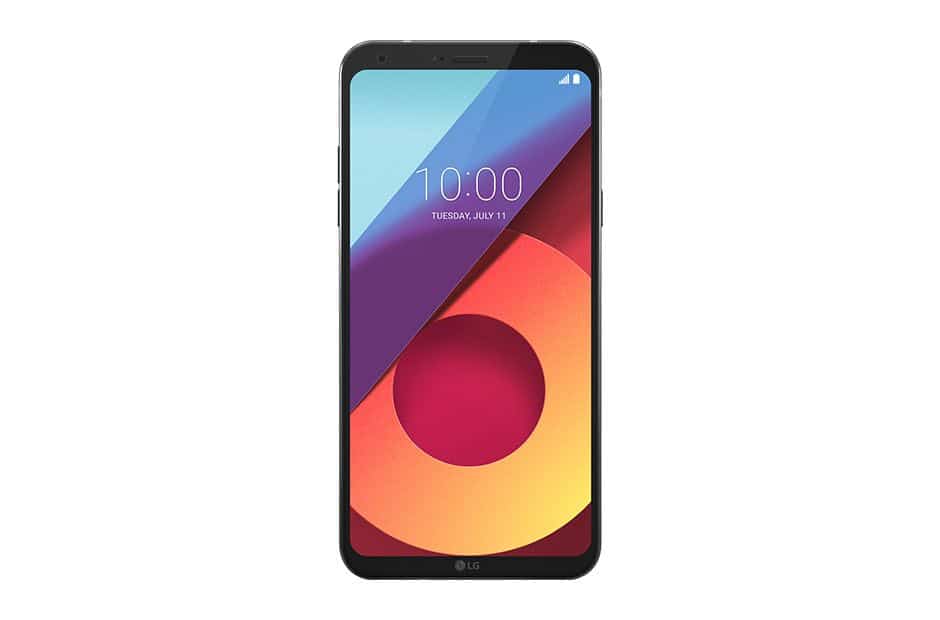
Design and Build Quality
The LG Q6 kind of shines right away when it comes to how it looks , and also how it feels. LG seemed to really go for a premium vibe, and, well , in a lot of ways they nailed it. The Q6 borrows a lot from the look of the LG G6 too, especially with that FullVision display, it has an 18:9 ratio and very thin bezels, so everything feels more “modern” and less bulky.
Materials and Build
For the frame, the Q6 uses 7000 series aluminum which is , honestly, lightweight yet tough, so the phone has a solid grip in the hand. But the back isn’t glass, it’s plastic . That’s more of a tradeoff LG had to make, and it helps keep the price in check. The plastic back doesn’t have the same upscale feel you’d expect from glass, yet it’s less likely to crack, and it still shows off a glossy, nice finish.
There are multiple color options , like Astro Black, Ice Platinum and Mystic White, so you can pick something that matches your own style. Still, that plastic back tends to catch fingerprints and smudges, so you might find yourself wiping it more often than you’d want.
Ergonomics
In terms of size , the LG Q6 weighs about 149 grams, and it measures 142.5 x 69.3 x 8.1 mm. It’s compact, it’s light, so it’s comfortable to hold and use with one hand, even when you’re moving around. The rounded corners and the 2.5D curved glass up front also help, everything feels smoother , and less awkward while you’re gripping it.
Button placement is pretty sensible , with the power key on the right side and the volume rockers on the left. Still, there’s a big thing missing compared to many phones in the same tier, the LG Q6 doesn’t include a fingerprint scanner, which is kinda noticeable for both security and everyday convenience.
Durability
The LG Q6 is MIL-STD-810G compliant, so it has gone through military-grade durability tests, including drops, vibration tests, and really extreme temperatures too. For a lot of people that translates into a bit of peace of mind, like the phone can handle the kind of everyday roughness you get while commuting, or tossing it into a bag. Still, there is no official water resistance or dust protection rating, so you should not treat it like a tough outdoors tool. If the weather gets harsh, or you’re around sand/dirt a lot, it’s better to be careful.
Display
The display is pretty much one of the headline traits of the LG Q6. You’re looking at a 5.5-inch IPS LCD panel, with a resolution of 1080 x 2160 pixels, and that puts the pixel density around 442 ppi. When it launched, the 18:9 aspect ratio felt pretty modern, because it gives you a taller view, which makes browsing, video watching ,and even games feel more spacious. It’s one of those small design choices that actually changes how content fills the screen.
Screen Quality
On the panel side, the IPS LCD setup delivers lively colors and solid contrast, plus brightness that generally stays usable even when you’re outside or under strong light. But, it still doesn’t quite reach the ultra-deep blacks and punchy color style you see in AMOLED options from more premium models. The FullVision approach also keeps bezels on the minimum, so the whole thing looks more immersive, and it really makes good use of the screen space.
There’s more going on too, because the screen supports HDR10 content. That’s kinda surprising for a mid-range phone, and it lets users enjoy videos with stronger color depth and contrast. On the downside, there’s no Always-On Display feature, which is something people often associate with LG’s higher-end devices, so some users might find that omission a letdown, or just plain annoying.
Performance
Under the hood, the LG Q6 is kinda powered by the Qualcomm Snapdragon 435 processor, it’s an octa core chipset running roughly 1.4 GHz. Then you also get 3GB of RAM with 32GB of built in storage, and yes, you can expand it with a microSD card slot, up to 256GB. Basically the Snapdragon 435 choice looks like a budget focused move but, you know it also brings some little downsides in how fast the phone feels.
Day to Day Performance
Day to day use is pretty okay, the LG Q6 takes care of things like web browsing, social media, and messaging without a big fuss. The user interface feels fairly steady, apps generally open in a decent amount of time. Still, the Snapdragon 435 isn’t really a heavyweight, and you can see that pretty quick once you run the more demanding apps or start multitasking like crazy.
Some folks might notice short slowdowns or little stutters when you bounce between apps, particularly if you leave a bunch of apps going in the background. Sure gaming works on the Q6, but don’t go in thinking it’ll manage visually heavy titles like PUBG Mobile or Asphalt 9 on higher settings. More casual games and simpler titles glide along, but once you try to push the device to its limit there is a pretty clear performance drop.
Benchmarks
If we talk about benchmarks, the LG Q6 kinda scores, fairly modestly. Like in Geekbench 4, it tends to land around 650 for single core and roughly 2,500 for multi core tests, so yeah it stays in the same neighborhood as other phones powered by the Snapdragon 435. But even so, these numbers are only enough for basic stuff, they still fall short compared to those higher mid range or flagship devices, especially ones running the Snapdragon 600 series and beyond.
For graphics, the Adreno 505 kinda handles the entire rendering job, but it is not really that powerful all the way through. This constraint can make it a bit more difficult for the phone to show complex 3D scenes in a fluid way, without that noticeable stutter or lag. So sure the LG Q6 can play games, but the best vibe comes from sticking to simpler titles or games that are older and don’t demand a lot of graphical horsepower, because newer 3D games may feel kind of restrained.
Camera Performance
The LG Q6 has a 13MP rear camera with an f/ 2.2 aperture, and then a 5MP front facing camera with a wide angle lens. On paper these specs look pretty normal for a mid range phone, though really, the question becomes well, how does that camera behave day to day when you’re actually using it?
Rear Camera
The 13MP back camera, is pretty decent for photos when you’re in good lighting. Most pictures come out sharp enough, and the colors feel accurate, plus the contrast is usually nice. The camera app is also kind of straightforward, it’s easy to navigate and use, and it includes things like HDR, panorama, and a set of filters that basically help people get a little creative with their shots.
But once the light drops, it starts to struggle. The f/2.2 aperture is not terrible, yet it doesn’t pull in quite as much light as the wider aperture lenses you see in more premium devices. So in darker places you can end up with images that look grainy, or slightly soft, particularly if you’re trying to shoot in low-light rooms or outside at night. On top of that there’s no optical image stabilization (OIS), and that makes it harder to lock in sharp focus when you’re shooting after dark.
For video, the Q6 can film up to 1080p at 30fps. The footage is fine for everyday, casual filming, though no 4K recording is a drawback if you’re aiming for more detailed, higher resolution videos. Also, the lack of OIS shows up during recording too, and shaky clips can happen if you don’t keep the phone steady enough.
Front Camera
The 5MP front-facing camera on the LG Q6 is kinda one of the more interesting bits. There is a 100-degree wide angle lens, which is useful if you’re trying to fit more people in a selfie, or just grab extra background without walking back. You can switch that wide-angle mode on or off depending on what you feel like using at the moment.
As for the image quality , it does pretty well when lighting is decent, and you’ll get sharp-ish selfies with skin tones that are fairly accurate. But, just like the rear camera, it doesn’t love low light. In darker scenes the photos end up a bit softer , and there’s more noise than you might expect. You also get a beauty mode, which helps hide small blemishes and uneven texture, although sometimes it smooths a little too much and the result looks processed, maybe even slightly artificial.
Software Experience
The LG Q6 arrives with Android 7.1.1 Nougat straight off the shelf, along with LG’s own custom overlay sitting on top. The LG interface is usually packed full of options and extra touches, but then again that same stuff can make it feel a little bit heavy handed compared to plain stock Android.
User Interface
The user interface on the LG Q6 looks pretty nice overall, a bit like it’s always trying to stay colorful with icons that pop, and there are lots of customization stuff, you know , themes, icon shapes, and even the way the home screen is laid out so it can match what someone likes. On top of that, the settings menu feels mostly organized, so it’s fairly simple to hop around and locate specific options without too much hunting.
Still, the LG skin has a few weak spots. Some users may feel it’s kinda cluttered, because there are many pre-installed apps and extra features that people might never touch. You also run into app duplication, like you get both Google’s and LG’s own versions for things such as messaging, calendar, and the browser. That extra bloatware ends up eating up storage space, and since it can’t really be removed, it’s probably a downside for anyone who wants a cleaner, calmer experience.
Software Features
One of the more noticeable software features on the LG Q6 is the facial recognition. It lets you unlock your phone just by looking at it, which is a decent alternative to the usual PIN or pattern unlock method. It’s worth saying though it isn’t as secure as a fingerprint sensor, or as strong as more advanced facial recognition on newer higher-end phones. In decent lighting it performs okay, but in darker rooms or when your angle is a little off, it can act up. It also tends to be slower, and less dependable compared to what you’ll see on premium devices.
Beyond that, there’s Smart Doctor, which is meant to help users keep things running smoother by clearing cache and spotting apps that might be draining battery. Then there’s LG’s Capture+ feature , and that one lets you take notes or draw on screenshots. That can be useful if you want to quickly scribble an idea, or mark up an image without going through extra steps.
Battery life on the LG Q6 is mostly what you’d expect for a mid-range phone. It comes with a 3,000mAh battery that isn’t removable ,so you’re basically stuck with whatever it can provide. For its size and category, that capacity feels pretty normal. Since it also has a 5.5-inch Full HD screen and a mid-range processor, the battery is generally enough to get you through the full day, especially if you aren’t constantly on high brightness.
In day to day terms, the LG Q6 tends to do well. With regular use—like browsing the web, scrolling social media, and doing the occasional video stream—most users should be able to make it until night, without needing that mid day recharge. On calmer days, where you’re not really pushing it, it can stretch closer to two days of battery performance. A big reason for this is the power-efficient Snapdragon 435, and also the fact the 1080p display isn’t overly demanding in everyday settings, especially when screen-on time stays reasonable.
If you switch to heavier habits, though, things change. Gaming or hours of continuous video can drain the battery faster than you probably want. The overall performance still feels steady even when you’re using it more, but it’s not “wow” level. People who regularly run demanding apps may end up plugging it in by evening, instead of comfortably forgetting about charging until later.
Charging Speed
The LG Q6 has standard charging speeds, and it doesn’t really carry fast charging features, so the whole recharging process can feel a bit slower than on newer phones where that quicker tech is already built in. With the charger that comes in the box, you should plan for around two hours for a full charge starting from 0% and reaching 100%. It’s not exactly speedy, but honestly it matches what a lot of mid range devices from that time period did too, so it stays pretty consistent.
Connectivity and Features
In terms of connectivity, the LG Q6 brings the usual mid tier set of options. There are a couple things that stand out, but overall it does what most people expect.
Connectivity
You get 4G LTE, so mobile internet should run at solid speeds if you’re on a supported network. It also includes standard Wi‑Fi 802.11 b/g/n, plus Bluetooth 4.2, and GPS. Between all of that, most day to day needs should be covered without too much fuss.
One thing that’s missing is NFC. That near field communication option is a drawback if you actually use it, since it can help with mobile payments and some quick sharing routines. If you do not care about those kinds of actions then it might not matter much, but it is still worth noting before purchase.
The Q6 also has a 3.5mm headphone jack, and that’s becoming much rarer these days. For anyone who still likes wired audio, or just has not moved over to wireless headphones yet, this is a really nice bonus, even if it sounds small.
MicroSD Card Slot
So the LG Q6 actually has a microSD card slot, and it can take expandable storage up to 256GB. That’s kinda useful if you keep running out of room on your phone , especially for apps, photos, videos, and all those other bits of media. Honestly, being able to grow the storage is a pretty big win compared to some competitors that stick to fixed internal storage and call it a day.
Audio Quality
For audio, the LG Q6 comes with a single bottom-firing speaker. The sound you get is clear enough, but it doesn’t really have much depth or that full, rich feeling you might want. It works for casual listening, but if you’re the type who cares a lot about high-quality audio experiences , you might feel disappointed. Also because the speaker sits at the bottom, it can get covered up pretty easily when you’re holding the phone in landscape mode, like when you’re watching videos or playing games.
As for the 3.5mm headphone jack, audio there is generally pretty good. You get decent output and the listening experience is basically satisfactory for most people. There aren’t any fancy audio enhancements, like Dolby Atmos or something similar, but the standard performance is still fine, and most users should be okay with it.
Software updates and support
About software updates, the LG Q6’s situation is kinda mixed, not really smooth all the way through. It shipped with Android 7.1.1 Nougat to start, and yes it did get an update to Android 8.0 Oreo, but then it kind of stops there. It didn’t really move on to later Android releases. And that pattern, honestly, is pretty typical for a lot of mid-range or budget phones, where companies put more effort into flagship models, and the rest just… waits.
When you don’t get frequent updates, there can be consequences, like security gaps over time, plus you miss out on the newest functions and tweaks. So if someone cares a lot about the latest Android version , security patches, they may see it as a drawback. On the other hand, if you’re not chasing every update, the Q6 still feels steady enough, and it stays usable without much drama.
Pricing and value
When the LG Q6 first showed up, it was kind of aimed at being an affordable mid-range phone, with that “premium-looking” vibe. Because of that it offered decent value for the money, especially with stuff like the FullVision display and MIL-STD-810G durability.
Now though, in today’s market, with newer models coming out and tech improving fast, the Q6 doesn’t really shine in raw performance or cutting-edge features anymore. Still, it can be like a decent pick for people who want a budget option, with a pretty attractive design, and also everyday performance that feels solid. And that price friendliness, plus a more tougher build, and expandable storage, all of it together makes it a reasonable choice for anyone who wants a dependable smartphone, without paying too much.
Final thoughts
The LG Q6 kind of delivers a nice mix for anyone who wants a mid-range smartphone with a little bit of premium vibe in the looks. The FullVision display , and the overall build quality , feel more polished than a lot of other phones you’ll see around this same price. Also the battery life is pretty steady and the expandable storage really helps if you tend to keep more apps, photos and stuff than you should.
That said , you also have to think about where it gets weaker. The Snapdragon 435 does the job for basic tasks sure, but it’s just not strong enough for heavy apps or that kind of intensive gaming , especially if you expect smooth performance all the time. And yeah the camera is also a letdown in darker scenes, where newer competitors usually do much better. Then there’s the missing NFC and the fact it doesn’t get software updates for long , those details can matter a lot to some buyers
So in conclusion, the LG Q6 is still a pretty well rounded device for its cost , with a handful of features that stand out for its class. It won’t be much of a battle for higher end models or the brand-new phones on the market, but it does give you a pretty sensible mix of design, everyday usefulness,and affordability. If you’re the type who cares more about a phone that feels sturdy and good looking, rather than going after top tier performance, the LG Q6 really stays a solid pick.
LG Q6-32 GB – Unlocked (AT&T/T-Mobile) – Platinum – Prime Exclusive: Buy it now
LG Q6 (M700DSN) 3GB / 32GB 5.5-inches Dual SIM Factory Unlocked – International Stock No Warranty (Astro Black): Buy it now
LG G6-32 GB – Unlocked (AT&T/T-Mobile/Verizon) – Platinum – Prime Exclusive: Buy it now
Related Posts

Tech Reviewer & Product Analyst
Định Bia has spent over 10 years testing consumer electronics with a focus on smart technology. He work as a product advisor at Biareview where he helped customers find the right devices for their needs. He personally tests every product featured on this site using a consistent evaluation framework covering quality, durability, and value. All reviews are based on experience, not influenced by the manufacturer.