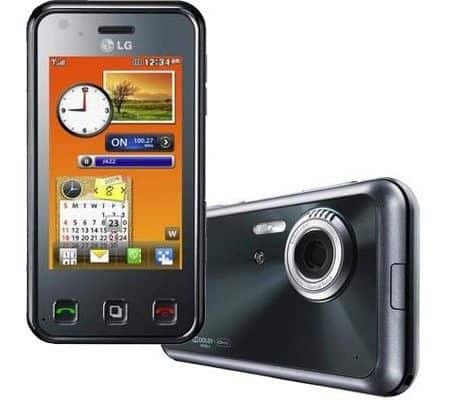
Design and Build Quality
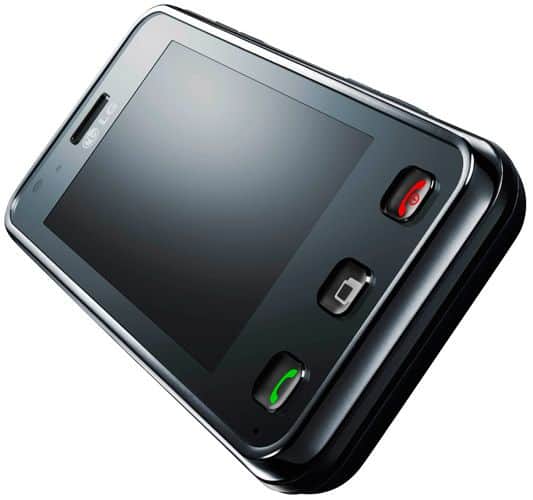
The LG Renoir was kind of designed with this sleek, minimalist vibe , which was very much like a lot of other high-end phones back then. It came in a glossy black plastic casing with chrome accents, so it looks and feels kinda premium. On the front, you mostly get this big 3-inch resistive touchscreen, and then only three physical buttons sit under it. Those are the call , send and end keys, plus one back button. Not having a real physical keypad or keyboard was a pretty noticeable change from earlier LG models, you know, it really showed that shift towards touch-first interfaces.
On the size side, it comes out to 107.8 x 55.9 x 14 mm, and it weighs 110 grams, so overall it felt compact , pretty light, and pretty easy to carry or use with one hand. The build itself felt solid , sturdy enough when you hold it, but that glossy plastic did start showing fingerprints and smudges pretty fast, like it’s kinda eager about it. On the side, there’s also a dedicated camera button on the right, along with the volume controls and a microSD card slot. Turn it around and the back has an 8-megapixel camera , plus a Xenon flash and a small speaker grille.
Overall, the LG Renoir’s design was functional enough but also stylish, with a layout that makes it straightforward to reach the important features. The resistive touchscreen wasn’t as smooth or responsive as capacitive screens that later became the usual thing, but it still worked for basic navigation and media. Still, because you need a firmer press to register touch, the whole experience could feel a bit less fluid, especially compared to the more responsive capacitive approach you saw on phones like the iPhone 3G.
The LG Renoir came with a 3-inch TFT resistive touchscreen, running at 240 x 400 pixels, and the pixel density was roughly 155 ppi. It wasn’t, you know, top tier compared to some rivals around that time, but overall it still felt fine for day to day stuff, like browsing, and little social checks. Like checking messages, scrolling through menus, or using basic apps. It could display up to 256,000 colors, and that kinda helped images and videos look more lively, with pretty decent detail for the era.
But here’s the catch, the resistive bit. Unlike capacitive screens that react to even a light tap, resistive touch panels sort of need more actual pressure to acknowledge what you’re doing. So on the Renoir the whole touch feel was less agile, like not as snappy, and honestly it could get a bit sluggish, especially while you were moving through menus, or when you were trying to type on the on-screen keyboard. Basically you had to press a little harder than most people got used to later, on newer phones with that smoother faster touch response. That can be pretty annoying if you’re expecting that immediate, quick buttery reaction right away.
On top of that, the viewing angles were limited too. If you looked from the side, the colors and contrast gradually faded, not great for sharing the screen or just using it at an angle. And in direct sunlight it was even more tricky, since readability dropped and the display could be hard to see without shade. Many users ended up manually raising brightness or just finding a better spot. Even with all that, the display still managed to cover the basics, like browsing photos, watching videos, and handling everyday navigation in the user interface.
Camera Capabilities
One of the more standout things about the LG Renoir was, honestly its 8-megapixel camera which was a big reason people paid attention back then around the release. It came with a Schneider-Kreuznach lens, and that really helped it feel more credible , like a proper camera phone not just a basic handset. On top of that , the device had a Xenon flash, autofocus, image stabilization ,and a bunch of advanced shooting modes. So overall it ended up being one of the most capable mobile cameras you could find in 2008.
When it came to what you actually got in photos, the Renoir delivered impressive results for a phone. You could see sharp detail, colors looked pretty accurate ,and low-light performance was decent rather than disappointing. The Xenon flash was a highlight, it worked well indoors and at night , giving enough light without that harsher look some LED flashes tend to have. Plus, it offered this broad range of shooting modes—smile detection, blink detection, panorama, and continuous shot, so you could test different styles, instead of being stuck with just one “safe” option.
For moving images, the LG Renoir could record video in VGA quality ( 640 x 480 ) at 30 frames per second. The video looked decent back then, motion stayed smooth and colors came through in a pretty solid way. There was also slow-motion video recording, where footage is captured at a reduced frame rate, which creates that more dramatic vibe. Even if the video side wasn’t as advanced as dedicated camcorders, it was more than adequate for casual use.
The Renoir’s camera interface felt intuitive, sort of easy to navigate, with on screen controls you could use to tweak things like white balance ISO and exposure. It also had face detection, and that would lock focus on faces that showed up in the frame, so portraits came out sharp and pretty well exposed, even when lighting was a bit odd. Plus being able to manually adjust camera settings was a nice extra, because it gave users a bit more say over how their photos turned out.
All things considered, the LG Renoir’s camera was one of those standout features that kinda separated it from a lot of other smartphones from that era. It probably couldn’t match dedicated digital cameras for image quality, but it still stood as one of the best camera phones around, with a mix of features and options that really appealed to photography fans.
LG KC910 Renoir Touch Screen 8MP Camera Wifi GPS Unlocked Tri Band (Black): Buy it now
LG KC910 Renoir Black 8 megapixel touchscreen multimedia phone GSM Unlocked Tri Band phone: Buy it now
Multimedia Features
The LG Renoir was kind of marketed as a multimedia powerhouse, and it did come with a bunch of features meant to level up the user entertainment vibe. It supported a variety of audio/video formats , like MP3, AAC, WMA, and MPEG4, so most everyday media files should work without much fuss.
The Renoir’s music player felt pretty well thought out, with a user friendly interface that made it easier to scan through tracks and manage a music library. It had album art, playlists, and shuffle repeat modes ,so it basically covers the usual music needs in one place. The device also included a built in FM radio that came with RDS support, which lets you hear your preferred stations while you’re out and about. Headphone output sounded good too, with clear audio and enough volume. Still, the built in speaker wasn’t as strong—there was less depth and clarity, so long listening sessions may not feel as enjoyable.
For video playback, the Renoir handled standard definition files pretty decently, the kind of smooth performance you expect for normal mobile viewing. The 3 inch display was not really meant for long movies, mostly because of its resolution and overall size, but it’s fine for short clips, plus quick mobile video watching. It also had a TV out feature, letting the phone or device connect to a television for a bigger screen. That was handy when you wanted to share photos and videos with friends, or family, especially in small gatherings.
Beside its audio an video abilities, the LG Renoir kinda came with a bunch of extra multimedia bits, like an image editor, a video editor, and a document reader. The image editor let people do fairly basic photo tweaks, for example trimming, flipping, and putting on filters. The video editor did something similar for video snippets, so you could cut clips down and combine them straight on the device. And the document viewer handled common formats, including PDF and Microsoft Office files, which made the Renoir feel useful for both leisure time and work stuff.
User Interface and Software
The LG Renoir used a proprietary operating system, with a user interface designed by LG itself. It was touch oriented, with bigger icons and menus made for the resistive touchscreen. The home screen had a customizable setup, so you could place shortcuts and widgets to get quick info, like for weather updates, news, or even social media refreshes.
Using the interface was usually pretty easy, but the resistive panel often needed a stronger press, and that could sometimes make the whole thing feel less smooth. The on-screen keyboard, which you’d use to type messages and emails, worked okay but it wasn’t as snappy as the virtual keyboards people get on capacitive touchscreen phones. If typing felt annoying, accuracy could be improved by using a stylus, which many users seemed to prefer when the touch experience felt a little too imprecise.
The LG Renoir rolled out preloaded with a handful of applications, like a web browser, an email client, and some extra multimedia apps. The browser did work, but it was kind of tied down by the device’s hardware as well as the software, so the web experience felt pretty simple. It was enough for casual browsing , but if you tried anything more involved it didn’t really shine or keep up in a satisfying way. Meanwhile the email client handled common mail services , such as Gmail and Yahoo, so users could manage their inbox straight from the phone.
The Renoir also carried a bundle of Google apps , including Google Maps, YouTube, and Google Search. These were practical for getting information quickly while out and about, but the results depended heavily on the phone’s processing power and the internet connection. Having those apps on board looked like LG and Google were closely aligned, and it was kind of a preview of what would come later , when newer smartphones would be built around the Android operating system.
Beyond the factory apps, the LG Renoir offered support for Java-based applications, meaning users could download and install extra software from third party sources. Still, there was no proper app store , or dedicated marketplace, which made discovering and installing new apps feel more difficult than on devices powered by iOS or Android.
Connectivity wasn’t just “there” on the LG Renoir, it was kinda well stocked, with support for 3G HSDPA , Wi-Fi, Bluetooth, and GPS. The 3G part meant mobile data felt relatively quick, so users could browse the web, stream media, and basically grab downloads while moving. On top of that there was Wi-Fi , which let you hop onto wireless networks for even quicker internet speeds whenever those options were around.
Bluetooth was also handy. The Renoir could pair with all sorts of accessories—wireless headsets, car kits, and other Bluetooth-enabled gear. It used Bluetooth 2.0 with ADP (Advanced Audio Distribution Profile) so audio streaming stayed clean and more like you’d expect. Besides that, there were additional profiles too, for things like file transfer, syncing data, and other everyday connections you might need.
Then there’s GPS, which honestly felt like one of the better points. With GPS onboard , the device doubled as a navigation tool. A navigation app was already pre-installed , and it used the GPS functionality to deliver turn-by-turn directions. Sure, the experience wasn’t quite as smooth as you’d get from dedicated GPS devices, but it’s still convenient if you only need navigation sometimes. And if you preferred, the GPS could also be reused by third-party apps like Google Maps, so location based services had more room to work.
In terms of physical connectivity, the LG Renoir had a microUSB port for charging and data transfer, and yeah it was also used as the connection point for the bundled TV-out cable. That cable basically let people show whatever was on their phone on a bigger screen, not the most fancy idea but it worked. Then there’s the microSD card slot, which gave expandable storage, with support for cards up to 16GB . That part mattered a lot, especially if you had a media collection and didn’t want it stuck in limited internal space.
Performance
As for performance, the LG Renoir ran on a 500 MHz processor, which was… fine for what the device was aiming to do, but definitely not cutting-edge at the time. Day to day it usually felt reasonably smooth, like for calls, sending messages, and looking through photos. Still, when you tried something heavier, or when you had multitasking going on , the phone could start dragging, with lag you could notice while switching between apps or when navigating through more complex menus.
The resistive touchscreen, while workable, also sort of dragged down the overall experience, mainly because it responded slower than capacitive touchscreens do. So, using it felt less fluid and a bit less natural , particularly if you were used to later smartphone interfaces. Even typing on the virtual keyboard could turn into a chore at times, because it often needed more careful, deliberate taps to land the right letters, or to register them properly.
Battery life on the LG Renoir felt pretty decent I mean, with a 1000 mAh battery that somehow still managed to last through a full day if you used it moderately. That sort of day meant calls, sending texts, snapping photos, and doing some light web browsing. But when you pushed harder things like GPS navigation, longer video recording, or just extended time online the battery would drain faster, so yeah, you’d likely need to recharge it by the end of the day. Also the battery was removable which was a small win for people who liked having the option to pack a spare cell for longer stretches, just in case.
User Experience
The overall user experience on the LG Renoir kind of leaned into its multimedia and photography strengths, while also dealing with the limits of a resistive touchscreen and a proprietary operating system. If you were mostly after a phone that could do advanced camera work, the Renoir could look like a pretty compelling option, especially because it offered features that seemed ahead of its time in the mobile photo world.
There was an 8-megapixel camera in the mix, plus advanced shooting modes, and it also came with a Xenon flash, so the Renoir held up as a serious competitor in the growing camera phone market. People who cared about photography would probably like the way it produced images and videos, and how straightforward it was for capturing and editing media, even if the interface wasn’t exactly the most modern thing around.
However for users looking for a more general smartphone vibe, the Renoir’s resistive touch screen and its proprietary OS might have felt like an issue, sort of drawbacks. The touch experience, while still working , wasn’t as agile or buttery as capacitive touchscreens, and by then those were basically the thing the industry was moving toward. Also, the app world seemed a bit thin, and because there wasn’t a dedicated app store, it became harder for people to really tune up the device or broaden what it could do beyond the apps that were already loaded.
Conclusion
The LG Renoir ended up being an important device in the mobile phone timeline, especially because it pushed forward the idea of camera phones. Its 8-megapixel camera, Xenon flash, and a selection of advanced photography options helped it stand out from a lot of what other models at the time were doing, and that made it pretty appealing to users who cared about mobile photography.
Beyond that, the device’s look, construction feel, and multimedia abilities were solid too, which supported a more complete mobile experience for entertainment and work type needs. Features like GPS, Wi‑Fi, and TV-out also showed LG’s intention to deliver a full package, so the Renoir wasn’t only about the camera, not at all.
However, the Renoir was not completely without its limitations, it was kind of a mixed bag in a way. The resistive touchscreen , even though it did work, felt more sluggish and less pleasant compared to capacitive touchscreens that were starting to become the standard across the industry. And then there was the proprietary operating system , with its fairly narrow app ecosystem, which kinda held back the device’s appeal in a market that was increasingly craving customization, plus broader app availability.
Still, despite those downsides, the LG Renoir remains worth remembering , especially in the broader timeline of mobile phones. People tend to recall it for its camera technology that felt pioneering , and also for how it fit into the shift toward touch-based interfaces. It’s almost like a snapshot of that era, when mobile phones were changing fast, manufacturers experimenting with new functions and designs, just trying to grab the attention of a larger and more demanding crowd.
Looking back, you could argue the LG Renoir was somewhat ahead of its time , mainly because it put a strong spotlight on mobile photography. It might not have reached the same iconic level as some of its rivals but it still mattered, in the sense that it helped nudge mobile technology forward. In the end, it paved a route for later breakthroughs in camera phones and multimedia devices.
Related Posts

Tech Reviewer & Product Analyst
Định Bia has spent over 10 years testing consumer electronics with a focus on smart technology. He work as a product advisor at Biareview where he helped customers find the right devices for their needs. He personally tests every product featured on this site using a consistent evaluation framework covering quality, durability, and value. All reviews are based on experience, not influenced by the manufacturer.